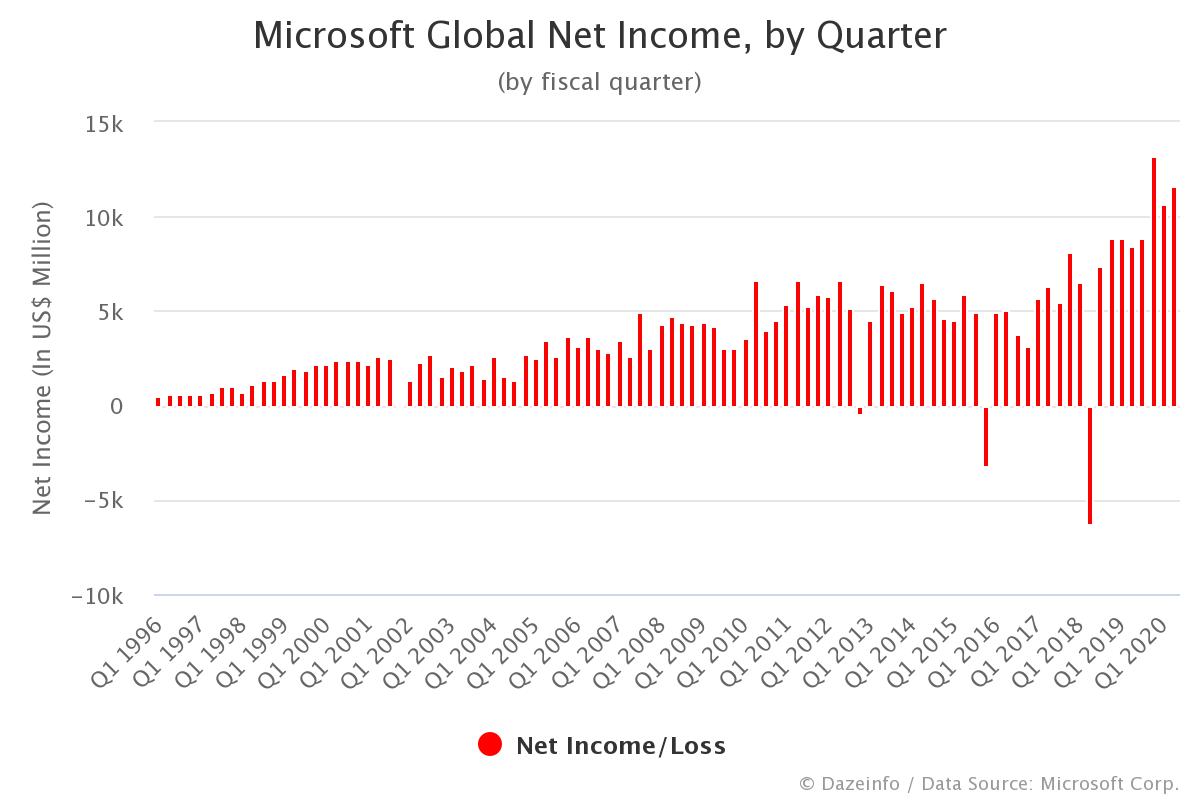
In 2019, Microsoft’s net worth was most commonly measured by its market capitalization, which crossed the historic $1 trillion milestone in April of that year. From a fundamental accounting perspective, the company’s total equity (book value) stood at approximately $102.33 billion at the end of its 2019 fiscal year.
The year 2019 represents a pivotal era in corporate history, marking the moment Microsoft solidified its transition from a traditional software vendor to a dominant cloud computing powerhouse. To understand what the 2019 Microsoft net worth was, one must look beyond a single number and examine the interplay between market sentiment, quarterly earnings, and the strategic pivot led by CEO Satya Nadella. Looking back from 2026, the 2019 fiscal year remains a textbook example of how a legacy tech giant can successfully reinvent itself to achieve record-breaking valuations.
Defining Corporate Net Worth: Market Cap vs. Book Value
When people ask "what is the net worth" of a massive corporation like Microsoft, they are usually referring to one of two distinct financial metrics: Market Capitalization or Shareholders' Equity.
Market Capitalization (The Market's Valuation)
Market capitalization is the total dollar market value of a company's outstanding shares of stock. It represents what the public is willing to pay to own the company. In 2019, Microsoft’s market cap fluctuated but generally trended upward. By late 2019, the company’s valuation hovered between $1.1 trillion and $1.2 trillion. This made Microsoft one of the most valuable publicly traded companies in the world, frequently competing with Apple and Amazon for the top spot.
Shareholders' Equity (The Accounting Valuation)
Shareholders' equity, often called the "book value" or the true accounting net worth, is calculated as total assets minus total liabilities. According to the Microsoft 2019 Annual Report, the company reported total assets of $286.56 billion and total liabilities of $184.23 billion. This resulted in a book value net worth of $102.33 billion. The massive gap between the book value and the market cap ($102 billion vs. $1.2 trillion) reflects the "premium" investors were willing to pay for Microsoft’s future growth potential, brand equity, and intellectual property.
The Drivers of Microsoft's $1 Trillion Milestone in 2019
The surge in Microsoft’s net worth during 2019 was not an accident; it was the result of a multi-year strategy focused on "Mobile First, Cloud First." Several key business segments contributed to this massive valuation.
The Azure Cloud Revolution
In 2019, Azure was the primary engine of growth. While Amazon Web Services (AWS) held a larger total market share, Azure was growing at a much faster rate—often exceeding 60% year-over-year revenue growth in quarterly reports. Investors rewarded this growth because cloud services provide high-margin, recurring revenue. Azure’s integration with existing enterprise software made it the logical choice for Fortune 500 companies undergoing digital transformation.
Productivity and Business Processes
This segment includes the Office 365 suite, LinkedIn, and Dynamics. In 2019, Microsoft successfully migrated the majority of its enterprise users from one-time software purchases to the Office 365 subscription model (SaaS). This shift provided a predictable cash flow that significantly boosted the company's valuation. LinkedIn also emerged as a strong contributor, with revenue increasing by roughly 28% in the 2019 fiscal year as it integrated more deeply into the Microsoft ecosystem.
More Personal Computing
While often considered the "legacy" side of the business, the More Personal Computing segment—comprising Windows, Gaming (Xbox), Surface, and Search advertising—remained a cash cow. In 2019, the impending end-of-support for Windows 7 (scheduled for early 2020) drove a "PC refresh" cycle, boosting Windows OEM revenue as businesses upgraded to Windows 10.
2019 Financial Highlights Table
To clarify the scale of Microsoft’s financial health in 2019, the following table breaks down the key metrics reported in their June 30, 2019, fiscal year-end filing.
| Financial Metric | 2019 Value (USD) | Change from 2018 |
|---|---|---|
| Market Capitalization (Peak) | ~$1.2 Trillion | +~35% |
| Total Revenue | $125.84 Billion | +14% |
| Operating Income | $42.96 Billion | +23% |
| Net Income | $39.24 Billion | +137% (Adjusted for Tax Acts) |
| Total Assets | $286.56 Billion | +11% |
| Total Liabilities | $184.23 Billion | +4.6% |
| Shareholders' Equity | $102.33 Billion | +23.7% |
| Cash and Short-term Investments | $133.82 Billion | +0.04% |
The Impact of Acquisitions on Net Worth
Microsoft’s 2019 valuation was also supported by its aggressive but calculated acquisition strategy. Unlike the disastrous acquisitions of the previous decade (such as Nokia), the moves made leading up to and during 2019 were highly accretive.
- GitHub (2018 Acquisition): By 2019, the $7.5 billion acquisition of GitHub had fully integrated into Microsoft’s developer-first strategy. It solidified Microsoft’s standing within the open-source community, a move that was essential for attracting the developers who build on Azure.
- LinkedIn (2016 Acquisition): By 2019, LinkedIn was contributing over $6.7 billion in annual revenue. Its value to Microsoft's net worth wasn't just in direct revenue, but in the data and networking capabilities it added to the Dynamics 365 CRM platform.
- Nuance and AI Foundations: While the Nuance acquisition happened later, 2019 saw Microsoft making significant internal investments and smaller "tuck-in" acquisitions in the Artificial Intelligence space, setting the stage for the AI-driven market cap explosions we have observed leading into 2026.
Stock Performance and Investor Sentiment
The 2019 calendar year saw Microsoft (MSFT) stock perform exceptionally well. Starting the year at approximately $101 per share, the stock climbed to over $157 by late December 2019. This represented a gain of over 50% in a single year, significantly outperforming the S&P 500 index.
Investors in 2019 were particularly impressed by Microsoft’s margins. The company’s ability to scale its cloud infrastructure while maintaining high profitability indicated a "moat" that few competitors could breach. The 2019 net worth was a reflection of the market’s belief that Microsoft had successfully navigated the "innovator’s dilemma," moving from a Windows-centric world to a cross-platform, cloud-centric world.
Historical Context: Microsoft vs. Competitors in 2019
To appreciate the "what is it" regarding Microsoft's 2019 net worth, it is helpful to compare it to its peers during the same period:
- Apple: Apple was the first to hit the $1 trillion mark in 2018, and in 2019, it battled Microsoft for the title of the world's most valuable company. Apple’s net worth was driven by iPhone services and wearables.
- Amazon: Amazon also hovered around the $1 trillion mark in 2019. Its valuation was built on e-commerce dominance and its AWS cloud platform, which was Microsoft Azure’s chief rival.
- Alphabet (Google): Alphabet’s market cap was generally slightly lower than Microsoft’s in 2019, usually sitting in the $800 billion to $900 billion range, primarily driven by search advertising dominance.
Microsoft's unique position was that it had the most "balanced" portfolio. Unlike Apple (dependent on hardware) or Google (dependent on ads), Microsoft in 2019 had three distinct segments that each contributed roughly one-third of the revenue, making its trillion-dollar valuation seem more stable to conservative institutional investors.
Looking Back from 2026: Why 2019 Mattered
From our current vantage point in 2026, the 2019 Microsoft net worth is seen as the "base camp" for the company's current multi-trillion dollar status. In 2019, the foundation for the current AI revolution was being laid. The company’s $1 billion investment in OpenAI occurred in July 2019—a move that seemed significant at the time but proved to be one of the most consequential investments in corporate history.
Without the massive cash reserves and $102 billion in equity established by late 2019, Microsoft would not have had the "dry powder" necessary to lead the generative AI wave of the early 2020s. The 2019 fiscal health was the prerequisite for everything that followed.
Frequently Asked Questions
Was Bill Gates the owner of Microsoft in 2019?
No. By 2019, Bill Gates had transitioned away from day-to-day operations and even his role as Chairman. He remained a significant individual shareholder, but his ownership stake had dropped to approximately 1% to 3% as he liquidated shares to fund the Bill & Melinda Gates Foundation. The majority of Microsoft was (and is) owned by institutional investors like Vanguard and BlackRock.
How much cash did Microsoft have in 2019?
Microsoft ended its 2019 fiscal year with approximately $133.8 billion in cash, cash equivalents, and short-term investments. This massive "cash pile" was one of the largest in the corporate world, giving the company incredible flexibility for acquisitions and R&D.
Did Microsoft pay dividends in 2019?
Yes. Microsoft maintained a strong dividend policy in 2019. For example, in September 2019, the company announced a quarterly dividend of $0.51 per share, an 11% increase over the previous quarter. This commitment to returning capital to shareholders contributed to its high market valuation.
What was Microsoft's biggest source of income in 2019?
While the "Intelligent Cloud" segment (Azure) was the fastest-growing, the "Productivity and Business Processes" segment (Office and LinkedIn) was the most profitable in terms of operating income, contributing significantly to the overall net worth.
Why is there such a big difference between market cap and equity?
Market capitalization includes the "intangible" value of a company—its brand, its future earning potential, and its intellectual property. Accounting equity (book value) only includes tangible assets and recorded acquisitions minus liabilities. For high-growth tech companies like Microsoft, the market cap is almost always significantly higher than the book value.
Final Financial Recommendation
For those researching the 2019 Microsoft net worth for historical or comparative analysis, it is essential to use the June 30, 2019, 10-K filing from the SEC as the gold standard for data. While "net worth" is a casual term, professionals should always distinguish between the $1.2 trillion market valuation and the $102 billion accounting equity. Understanding this distinction is key to comprehending how Microsoft used its balance sheet strength to fund the innovations that define its presence in the mid-2020s.