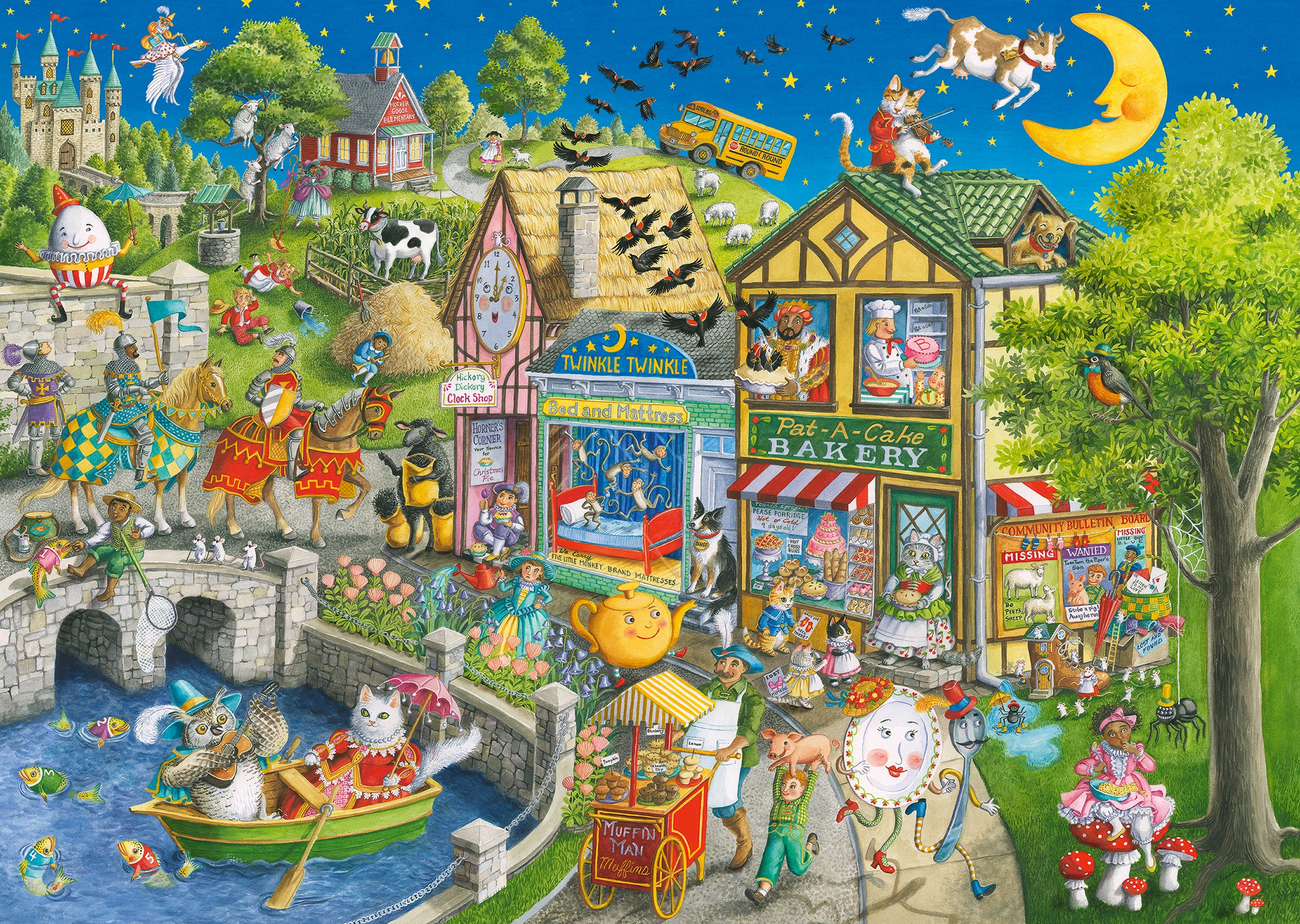
A 1000 piece jigsaw puzzle represents the quintessential balance between accessible leisure and complex cognitive stimulation. By transforming hundreds of fragmented, seemingly disparate pieces into a coherent, high-resolution image, enthusiasts engage in a meditative yet challenging activity that transcends age and background. Mastering these puzzles requires a methodical approach to sorting, pattern recognition, and spatial awareness, making them a rewarding centerpiece for individual focus or collaborative group interaction.
Understanding the 1000 Piece Format
The 1000 piece puzzle occupies a unique space in the world of tabletop gaming and pastimes. Unlike smaller 300 or 500 piece sets, which can often be completed in a single sitting, the 1000 piece variety typically necessitates a more sustained commitment—often ranging from several hours to multiple days of work.
In terms of technical specifications, a standard 1000 piece puzzle usually measures approximately 27 by 20 inches (roughly 68 by 50 centimeters). However, these dimensions vary based on the manufacturer’s die-cut pattern. The "cut" refers to the style and shape of the interlocking tabs and blanks, which can range from traditional "grid" cuts to more irregular, randomized designs that increase the difficulty level significantly. Understanding that the piece count does not strictly dictate the final physical dimensions is the first step in preparing your workspace.
Preparing Your Workspace and Prerequisites
Before you pour your pieces onto a table, you must establish an environment conducive to long-term assembly.
- Surface Area: Ensure you have a flat, stable surface that is at least 30 percent larger than the finished dimensions of the puzzle. This space is necessary not just for the puzzle itself, but for the layout of unsorted pieces.
- Lighting: Consistent, overhead lighting is essential. Glare from lamps can obscure the subtle details of the artwork and cause eye strain. If you are working in the evening, use daylight-balanced LED bulbs to maintain color accuracy.
- Storage and Sorting: Use shallow trays or divided containers to organize pieces by color, texture, or edge geometry. Professional puzzle enthusiasts often use sorting trays to keep their workspace clear of clutter, which prevents the frustration of losing pieces.
- Adhesive or Preservation: If you intend to mount your finished work, research puzzle-specific glues or clear adhesive sheets beforehand. Standard wood glue or spray adhesives can warp the cardboard backing and degrade the print quality.
Strategic Approaches to Assembly
Approach a 1000 piece puzzle not as a single task, but as a series of smaller, manageable milestones. Following a logical progression prevents the "overwhelming" feeling often associated with looking at a box of 1,000 loose pieces.
- The Border First: While standard practice, beginning with the edge pieces—those with at least one flat side—provides a physical frame of reference. This sets the boundary and gives you a psychological sense of progress.
- Color and Texture Sorting: Group pieces that share prominent colors, textures, or specific subjects (such as sky, water, or building facades). Even if these groups do not connect immediately, having them separated allows you to identify patterns more rapidly.
- The High-Contrast Zones: Identify areas of the image with high visual contrast or unique text. These pieces act as anchors within the center of the frame, allowing you to build outwards toward the more monotonous areas, such as solid-colored backgrounds.
- Geometry-Based Assembly: When working on complex sections with similar colors, ignore the image entirely and focus on the shape of the tabs and blanks. Matching the physical cut of the pieces is often the only way to solve "gradient" areas where the visual color is nearly uniform.
Comparative Analysis of Puzzle Types
Choosing the right 1000 piece puzzle can significantly impact your experience. Not all puzzles are created equal in terms of manufacturing quality and difficulty.
| Feature | Standard Grid Cut | Random Cut | Premium Quality (Die-Cut) |
|---|---|---|---|
| Piece Fit | Uniform and tight | Varies, often looser | Exceptionally precise |
| Difficulty | Moderate; predictable | High; shapes are varied | Depends on artwork |
| Durability | Good for multiple uses | Can fray if thin | Resists bending and fraying |
| Experience | Relaxing/Methodical | Challenging/Surprising | Premium tactile feel |
Manufacturers using high-grade "blue board" or thick recycled paper stock generally offer a superior experience. Cheaper puzzles may suffer from "image lift," where the printed surface layer peels away from the cardboard base, or "false fits," where two pieces appear to lock together but do not belong.
Troubleshooting Common Frustrations
Even experienced puzzle builders encounter common roadblocks. Addressing these quickly keeps the activity enjoyable.
- Missing Pieces: If you find yourself at the end of the process with a missing piece, do not immediately assume it is lost. Often, it is hiding in the folds of the box liner or has been swept under a rug. If it is truly missing, many reputable manufacturers offer a "missing piece replacement" service, provided you can identify the specific piece and production batch.
- Image Fatigue: If you hit a wall, walk away. Staring at the same 100 pieces for an hour leads to "tunnel vision." Taking a break and returning with a fresh perspective often makes the missing connections immediately obvious.
- False Fits: In higher piece counts, it is common to find two pieces that connect securely but are in the wrong place. If a section looks "off" or the connection feels forced, disassemble that entire sub-section; a forced piece is almost always the culprit for later difficulties.
The Psychological and Cognitive Benefits
The appeal of the 1000 piece puzzle extends beyond the final image. Engaging in this activity acts as a form of "active meditation." By focusing intensely on visual patterns, the brain enters a flow state, which has been shown in various psychological studies to reduce stress and improve short-term memory. It requires the coordination of both the left brain (analytical sorting) and the right brain (visual-spatial reasoning), providing a comprehensive mental workout that few other solitary activities can match.
Frequently Asked Questions
How long should it take to finish a 1000 piece puzzle? There is no fixed time limit, as completion depends on the image complexity and the individual’s experience level. Generally, a casual builder might take 10 to 20 hours to complete a standard 1000 piece puzzle. Highly detailed or monochromatic puzzles may take significantly longer.
Can children participate in 1000 piece puzzles? While the age recommendation on most boxes is 12 or 14 and up, younger children can certainly participate if they focus on specific tasks, such as finding all pieces of a certain color or assisting with the border. The main concern is small pieces, which present a choking hazard for young children.
Why do some pieces seem to fit in multiple spots? This is often a result of mass-production die-cutting, where similar shapes are created. If a piece seems to fit in two places, look closely at the image alignment. A "false fit" will almost always show a slight misalignment in the print or a subtle gap between the pieces that does not exist in correctly placed ones.
Are there ways to make 1000 piece puzzles easier for beginners? Start with puzzles featuring "busy" images, such as collage-style illustrations or scenes with many distinct objects. Avoid images with large amounts of blue sky, water, or dark, uniform shadows, as these are the most difficult to assemble and require advanced sorting techniques.
Should I use a puzzle mat or a board? If you need to store your puzzle away between sessions, a puzzle mat (which allows you to roll up the puzzle) or a portable puzzle board is essential. These tools keep your progress secure and prevent pieces from being moved or lost while the puzzle is not in use.
Next Steps for Enthusiasts
To truly elevate your hobby, consider joining local or online puzzle communities where builders exchange tips, share "completed" galleries, and trade puzzles to reduce waste. If you find you have mastered standard 1000 piece puzzles, you may choose to transition to images with higher detail complexity or seek out puzzles with unique features, such as circular cuts, 3D elements, or pieces that glow in the dark. Regardless of the specific box you choose, the primary goal remains consistent: the deliberate, satisfying process of bringing order to chaos one piece at a time.