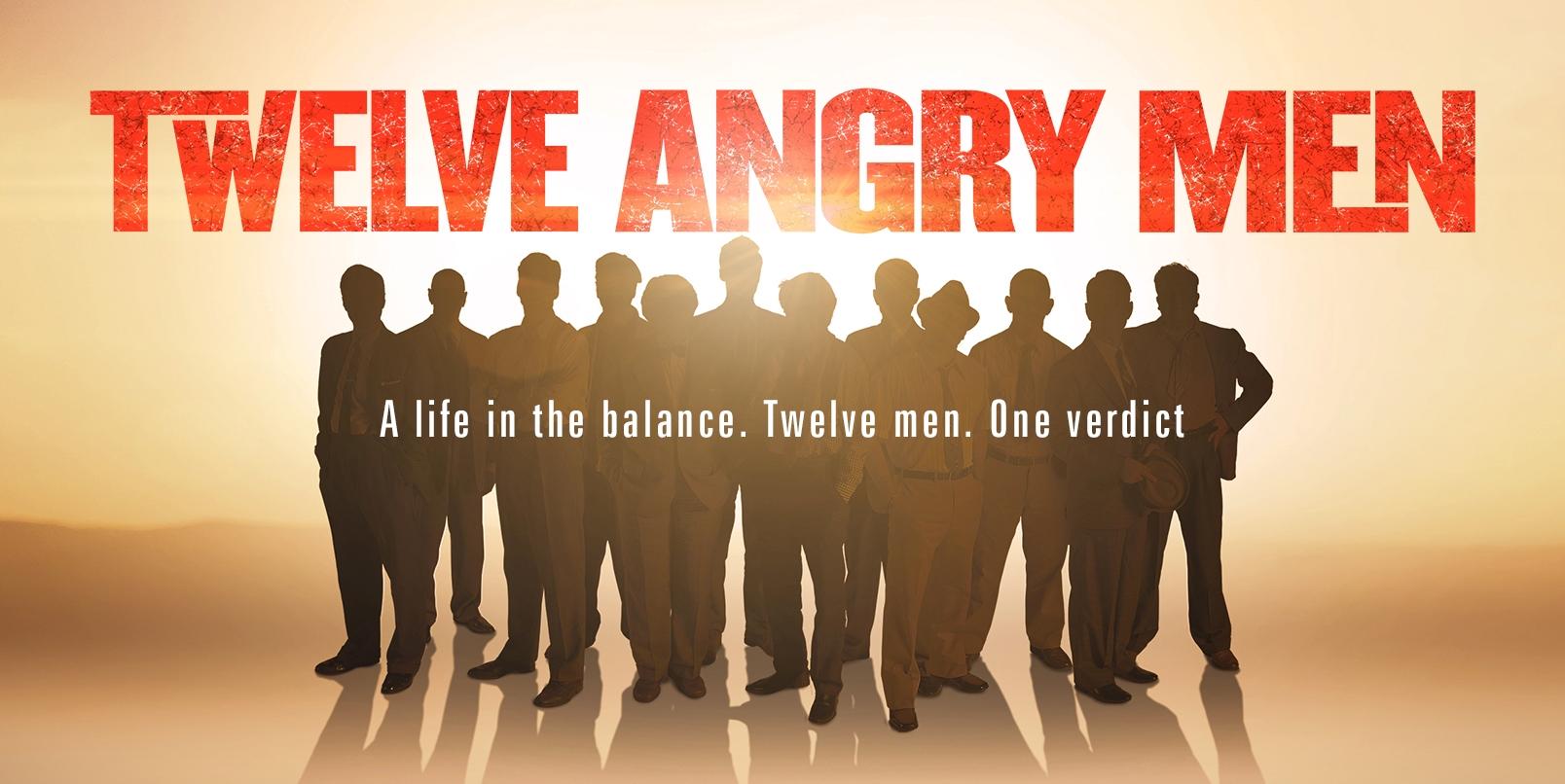
In the classic legal drama 12 Angry Men, the "shocking truth" behind the father’s murder is not a revelation of a different killer, but the systematic dismantling of what appeared to be an "open and shut" case. The film concludes that because the prosecution’s evidence—specifically the eyewitness testimony and the uniqueness of the murder weapon—was fundamentally flawed, the defendant could not be found guilty beyond a reasonable doubt.
The story of 12 Angry Men (first appearing as a 1954 teleplay and most famously as the 1957 film directed by Sidney Lumet) remains the gold standard for exploring the American jury system. As we look at this narrative in 2026, the themes of cognitive bias, the weight of circumstantial evidence, and the burden of proof are more relevant than ever. To understand the "truth" of the murder, one must look past the initial accusations and examine the specific failures of the testimony that nearly sent an innocent—or at least unproven—young man to the electric chair.
The Prosecution's Case: A Narrative of Inevitability
The trial centers on an unnamed 18-year-old boy from a "slum" background accused of stabbing his father to death. The prosecution presented what seemed like an airtight sequence of events. According to the state’s narrative, the boy had a history of violence and had been involved in a heated argument with his father earlier in the evening.
The timeline presented to the jury suggested that after the father hit the boy, the boy went out, purchased a "one-of-a-kind" switchblade, and returned to the apartment to kill his father. Two witnesses claimed to have seen or heard the murder. The case was built on three primary pillars:
- The Weapon: A unique, carved-handle switchblade.
- The Earwitness: An old man living in the apartment below.
- The Eyewitness: A woman living across the street.
Initially, eleven of the twelve jurors were convinced of the boy’s guilt. Only Juror 8, played by Henry Fonda, stood his ground—not because he believed the boy was innocent, but because he believed the evidence deserved more than a cursory glance before a life was terminated.
The Mystery of the "Unique" Switchblade
One of the most dramatic moments in the film, and a turning point for the "shocking truth" regarding the evidence, involves the murder weapon. The prosecution argued that the switchblade used in the murder was so unique that it was impossible for the boy to have lost his own (as he claimed) and for another person to have used an identical one to kill the father.
Juror 8 shattered this illusion by producing an identical knife from his pocket, which he had purchased for six dollars in the boy's own neighborhood. This action demonstrated that the "unique" weapon was actually a common item available to anyone.
The Mechanics of the Wound
Beyond the knife's origin, the jury eventually analyzed the physical act of the stabbing. The boy was experienced with switchblades, yet the father was stabbed with a "downward" stroke. Juror 5, who had seen many knife fights in his own upbringing, pointed out that anyone experienced with a switchblade would always use an underhand, upward stroke to deploy the blade quickly. The downward stab found in the victim was the hallmark of an amateur or someone in a panicked, uncoordinated state—contradicting the profile of the defendant.
Deconstructing the Eyewitness: The Woman Across the Street
The "star witness" for the prosecution was a woman who claimed to have seen the murder through the windows of a passing elevated (L) train. She testified that she looked out of her window and saw the boy plunge the knife into his father's chest.
The shocking truth regarding her testimony came to light through the observation of Juror 9, the oldest member of the panel. He noticed that the woman had two small indentations on the bridge of her nose. These marks are characteristic of someone who wears glasses. However, the woman did not wear her glasses in court, presumably out of vanity.
Through logical deduction, the jury realized that:
- The woman was lying in bed trying to sleep when the murder occurred.
- She claimed to have looked out the window and seen the crime clearly.
- No one wears glasses to sleep.
- It would be physically impossible for her to have put on her glasses in the split second she heard a scream and looked out the window to see a murder occurring 60 feet away through the windows of a moving train.
This realization effectively neutralized the most powerful piece of evidence the prosecution possessed.
The Old Man’s Testimony: 15 Seconds of Fiction
The second witness was an elderly man living in the apartment directly below the victim. He testified that he heard the boy yell "I’m gonna kill you!" followed by the sound of a body hitting the floor. He claimed he then ran to his front door in 15 seconds and saw the boy running down the stairs.
The jury’s re-evaluation of this testimony revealed two major inconsistencies:
- The Noise of the L-Train: An L-train was passing at the exact moment of the murder. As the jury demonstrated, the roar of an L-train is deafening. It would have been impossible for the old man to hear a voice in the apartment above over the sound of the train.
- The Physical Limitation: The old man had suffered a stroke and walked with a severe limp. Juror 8 performed a timed re-enactment in the jury room, mimicking the distance from the man’s bed to his front door. The re-enactment proved it would have taken at least 41 seconds—not 15—for the man to reach the door.
The "truth" was that the old man likely didn't see the boy; he simply heard someone running and, in his desire for attention and significance, convinced himself it was the boy he had heard earlier.
The Psychology of the Jurors: Why the Truth was Hidden
The murder of the father was obscured not just by bad evidence, but by the personal baggage of the men deciding the case. The film serves as a study in how personal trauma and prejudice can blind individuals to the "truth."
Juror 3: The Projection of Pain
The most vocal proponent of a "guilty" verdict was Juror 3 (Lee J. Cobb). The shocking truth of his motivation was not a quest for justice, but a projection of his own failed relationship with his son. He saw the defendant as a proxy for his own child, whom he viewed as ungrateful and disrespectful. For Juror 3, a "guilty" verdict was a way to punish his own son.
Juror 10: The Lens of Bigotry
Juror 10 viewed the case through the lens of pure prejudice. He referred to the defendant’s demographic as "them" and "those people," arguing that they were "born liars." His bias was so extreme that it eventually led the other jurors to turn their backs on him in a powerful display of silent protest. His "truth" was pre-determined by the defendant’s social class rather than the facts of the murder.
Summary of Evidence Re-evaluation
The following table compares the prosecution's initial claims with the jury's findings during deliberations.
| Evidence Point | Prosecution's Claim | Jury's Discovery |
|---|---|---|
| Murder Weapon | Rare, one-of-a-kind switchblade. | Common knife; Juror 8 bought an identical one. |
| The "Threat" | Boy yelled "I'm gonna kill you!" | People say it metaphorically; L-train was too loud to hear it. |
| Old Man's Sight | Saw the boy running out 15 seconds after the hit. | Physical limp made it take 41+ seconds; couldn't have seen him. |
| Woman's Sight | Saw the stabbing through L-train windows. | She wore glasses but wasn't wearing them in bed; vision was blurred. |
| The Wound | Downward stab wound. | Inconsistent with how an expert (the boy) uses a switchblade. |
The Legal Standard: What "Truth" Means in a Courtroom
In the context of the American legal system, "truth" is often synonymous with Reasonable Doubt. The jurors in 12 Angry Men are not tasked with finding out who actually killed the father. Their sole responsibility is to determine if the state has proven its case beyond a reasonable doubt.
By the end of the film, the "truth" of the father's murder remains technically unsolved. We never find out if the boy actually did it. However, the "legal truth" is that the evidence was too weak to support a conviction. In a system where a life is at stake, the absence of certainty is the only truth that matters.
The Role of Juror 8 as a Technical Editor of Facts
Juror 8 acts much like a senior editor, questioning every "fact" presented by the "authors" (the witnesses and prosecution). He looks for internal consistency, verifies timelines, and checks the "technical specifications" of the murder weapon and the layout of the apartment. His refusal to accept the surface-level narrative is what eventually uncovers the reality of the situation: the case was built on assumptions, not certainties.
Frequently Asked Questions
Did the boy actually kill his father in 12 Angry Men?
The film intentionally leaves this question unanswered. The goal of the story is to emphasize that the prosecution failed to prove its case beyond a reasonable doubt. Whether the boy was factually innocent or just legally "not guilty" is secondary to the exploration of the justice system's requirements.
What was the most important piece of evidence that changed the verdict?
While the switchblade was the first major blow to the prosecution, the most decisive piece of evidence was the realization that the woman who witnessed the crime wore glasses. This invalidated the only direct eyewitness account and made a "guilty" verdict impossible for the remaining jurors to justify.
Why did the old man lie in his testimony?
The film suggests the old man didn't necessarily lie with malicious intent. Juror 9 explains that the man was old, insignificant, and lonely. Having lived a life where no one ever listened to him, the trial gave him a chance to be important. He "convinced" himself he saw the boy to fulfill his need for recognition.
What does "reasonable doubt" mean in 2026?
Reasonable doubt remains the highest standard of proof in the legal system. It means that if there is any logical, fact-based reason to doubt the defendant's guilt, the jury must acquit. In 2026, with the advancement of forensic science and digital evidence, the "human" errors seen in 12 Angry Men (like poor eyesight or slow walking speeds) are often corroborated or refuted by camera footage or GPS data, but the fundamental principle of protecting the innocent remains unchanged.
Who is the real killer if the boy didn't do it?
The film does not provide an alternative suspect. This is a deliberate narrative choice to keep the focus on the jury's process. In a real-world scenario, if the boy were acquitted, the case would likely go back to "unsolved" status unless new forensic evidence or a confession from another party emerged.
Final Recommendation: Lessons for Modern Fact-Checking
The "shocking truth" of 12 Angry Men serves as a perennial reminder to question the narrative. Whether you are a juror, a student of law, or a consumer of modern media in 2026, the lesson is the same: interrogate the evidence.
If you are faced with a situation where a "truth" seems obvious, apply the Juror 8 method:
- Verify the Source: Does the witness have a physical or psychological reason to misremember?
- Test the Timeline: Do the physical movements described match the time allotted?
- Analyze the Tools: Is the "unique" evidence actually common or flawed in its application?
- Identify the Bias: Are you deciding based on facts, or based on a personal "Juror 3" or "Juror 10" style prejudice?
By looking past the "shocking" headlines and focusing on the mechanical flaws of a case, we protect the integrity of justice and ensure that the "truth" is based on reality, not just a convincing story.