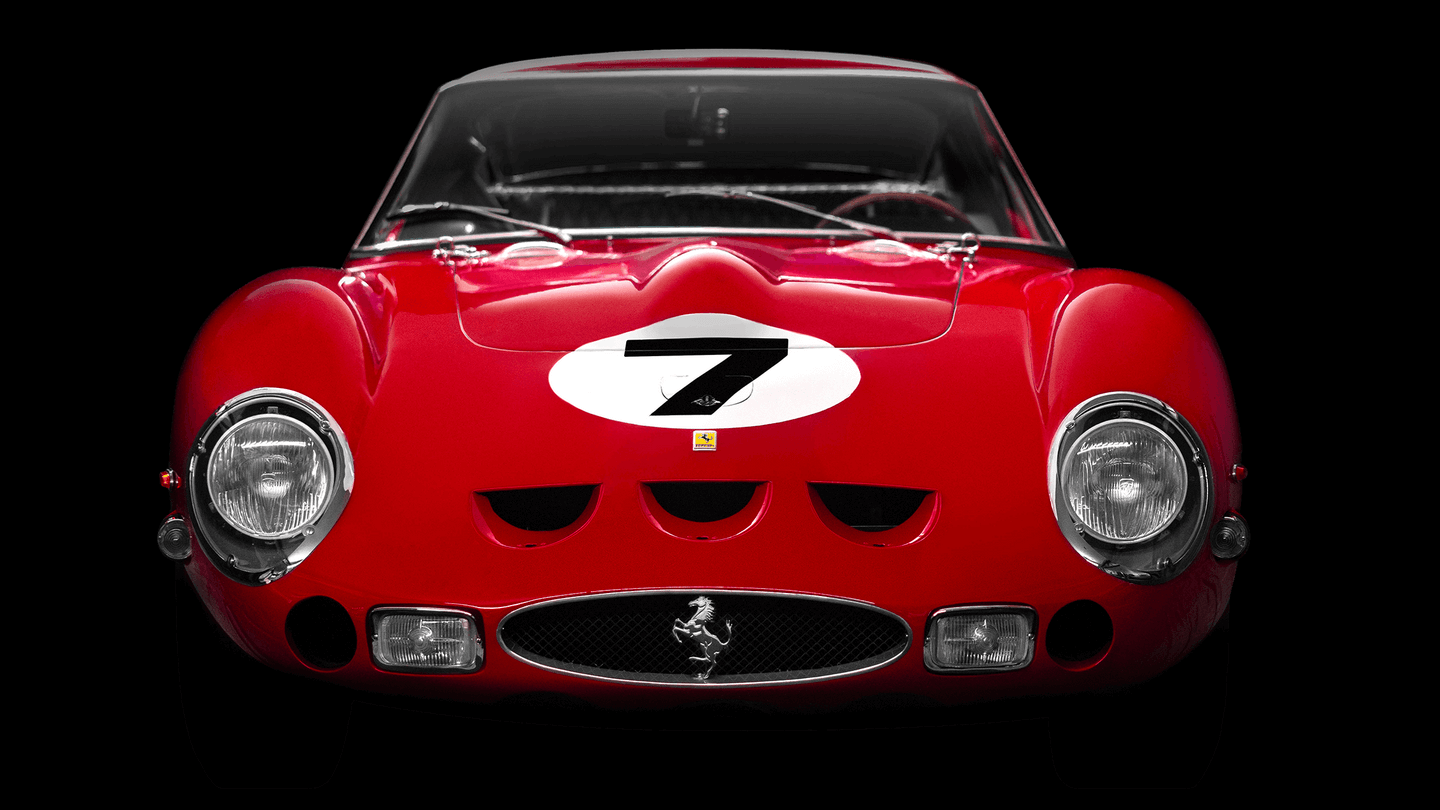
The Ferrari 250 GTO is widely considered the ultimate blue-chip collector car, holding multiple world records for public auction and private market transactions. The highest verified public auction price achieved by a 250 GTO variant stands at $51.705 million (Chassis 3765, sold by RM Sotheby's in November 2023), while reported private sales have reached approximately $70 million (Chassis 4153 GT).
Understanding the Ferrari 250 GTO Market Dynamics
To understand why the Ferrari 250 GTO commands unmatched valuations within the classic car market, one must examine the intersection of low production numbers, motorsports achievements, and automotive engineering. Produced between 1962 and 1964, the 250 GTO was built to compete in the FIA Group 3 Grand Touring Car category.
The acronym "GTO" stands for Gran Turismo Omologato (Grand Touring Homologated). Under FIA rules at the time, manufacturers were required to build at least 100 road-going examples of a vehicle to qualify for GT racing. Ferrari bypassed this requirement by building only 36 core 250 GTO chassis (33 Series I examples and 3 Series II examples), arguing to officials that the model was merely an evolutionary iteration of the pre-existing 250 GT Short Wheelbase (SWB). When including the four larger-engine 330 GTO / 330 LM variants that shared the chassis and body architectural lineage, the total production count reaches just 39 units.
Every 250 GTO features a hand-hammered aluminum body crafted by Carrozzeria Scaglietti over a design initially conceptualized by Giotto Bizzarrini and refined by Mauro Forghieri. Under the elongated hood sits the 3.0-liter Tipo 168/62 Colombo V12 engine, featuring six twin-choke Weber 38 DCN carburetors and producing roughly 300 horsepower.
- 1962-1964 FIA GT Homologation
- 33 Series I Chassis (3.0L Colombo V12)
- 3 Series II Chassis (Revised Bodywork)
- +3-4 330 GTO / LM Variants
- Total Production: ~36–39 Cars
Because every remaining example has a documented individual competition history, distinct ownership lineage, and hand-fabricated structural nuances, no two 250 GTOs trade on identical financial terms. Market valuations reflect individual chassis provenance, matching-numbers status, factory documentation, and historical racing success.
Benchmark Auction Sales and Record Transactions
Public auctions provide transparent data points regarding peak values in the ultra-luxury automotive asset class. The table below outlines the highest confirmed public auction results for Ferrari 250 GTO models and closely associated variants.
Major Public Auction Records Summary
| Chassis Number | Year Sold | Auction House / Event | Sale Price (USD) | Notes & Key Features |
|---|---|---|---|---|
| 3765 | 2023 | RM Sotheby's (New York) | $51,705,000 | 330 LM / 250 GTO structure; factory team entry at 1962 Le Mans 24 Hours. |
| 3413 GT | 2018 | RM Sotheby's (Monterey) | $48,405,000 | Series I body updated in-period by Scaglietti to Series II bodywork; 1963/1964 Targa Florio class winner. |
| 3851 GT | 2014 | Bonhams (Quail Lodge) | $38,115,000 | Retained by the same family collection for 49 years prior to sale; extensive period race history. |
| 3505 GT | 2012 | Private Sale (Publicly Reported) | ~$35,000,000 | Distinctive pale green livery built for Stirling Moss / UDT Laystall racing team. |
| 4153 GT | 2018 | Private Sale (Publicly Reported) | ~$70,000,000 | 1964 Tour de France overall winner; highly original, non-crashed condition. |
Comprehensive Analysis of Top Public Auction Sales
To appreciate how market valuation is established, it is necessary to examine the specific attributes and historical contexts of the top record-setting chassis sold at public auction.
1. Chassis 3765 – $51,705,000 (RM Sotheby's, November 2023)
In November 2023, RM Sotheby's offered Chassis 3765 at a specialized single-lot auction in New York City. This vehicle occupies a unique place within 250 GTO history:
- Engine and Development: Originally fitted with a 4.0-liter engine to meet changing competition regulations, it was effectively the only factory-owned Scuderia Ferrari works GTO example raced by the factory team itself.
- Racing Lineage: Driven by Mike Parkes and Lorenzo Bandini at the 1962 24 Hours of Le Mans, it also secured a second-place overall finish at the 1962 1000 km km of Nürburgring.
- Conversion and Certification: Following its factory campaign, it was converted by Ferrari to standard 3.0-liter 250 GTO specifications for privateer competition. It holds official Ferrari Classiche certification confirming its factory modifications and matching mechanical components.
The hammer price settled at $47 million, bringing the total transaction price to $51.705 million after buyer's premiums. This set the official record for the most expensive Ferrari ever sold at public auction.
Chassis 3765 Development Lineage:
- Factory Works 4.0L Entry
- 1962 Le Mans Campaign
- Factory 3.0L Conversion
- Classiche Certified Record Sale
2. Chassis 3413 GT – $48,405,000 (RM Sotheby's, August 2018)
Offered at the Monterey Jet Center sale in August 2018, Chassis 3413 GT held the title of the most valuable car ever sold at public auction for five years.
- Series II Transition: Built in 1962 as the third 250 GTO produced, it originally featured Series I bodywork. In 1964, it was sent back to Carrozzeria Scaglietti to receive the updated, aerodynamically efficient Series II body styling.
- Track Record: Chassis 3413 GT competed in over 20 period races without once failing to finish (DNF) or experiencing a major racing crash, securing back-to-back class wins in the 1963 and 1964 Targa Florio.
- Provenance: Prior to its 2018 sale, the car was owned for nearly two decades by former Microsoft executive Greg Whitten, who regularly drove the vehicle in vintage track events.
The sale established a new benchmark for original mechanical components, including its original engine, gearbox, and rear axle assemblies.
3. Chassis 3851 GT – $38,115,000 (Bonhams, August 2014)
Sold by Bonhams at the Quail Lodge auction in 2014, Chassis 3851 GT was the 19th 250 GTO produced.
- Ownership Period: The car was acquired in 1965 by Italian enthusiast Fabrizio Violati and remained in his Maranello Rosso Collection for 49 consecutive years.
- Condition and Pedigree: While it experienced an early racing accident during the 1962 Tour de France (which required a factory rebuild in period), its unbroken single-family ownership history and continuous preservation elevated its market standing, setting a world record price at the time of sale.
Private Market Transactions vs. Public Auctions
While public auctions offer clear, verifiable sales figures, a significant volume of 250 GTO trading takes place in private off-market transactions. Private sales are conducted through high-end brokers, private wealth managers, or directly between elite collectors.
250 GTO Transaction Types
| Public Auctions | Private Sales |
|---|---|
| • Complete price transparency | • Confidential agreements |
| • Public marketing exposure | • Higher reported peaks |
| • Subject to bidder momentum | • Direct collector matching |
| • Precise fee structures | • Extended due diligence |
The $70 Million Milestone: Chassis 4153 GT
In 2018, market reports confirmed that Chassis 4153 GT was acquired by WeatherTech founder and CEO David MacNeil for a reported $70 million.
- Race History: Chassis 4153 GT won the grueling 1964 Tour de France Automobile driven by Lucien Bianchi and Georges Berger, along with earning a fourth-place overall finish at Le Mans in 1963.
- Originality Index: Unlike many period race cars that suffered major structural damage, 4153 GT maintained an undamaged chassis, matching-numbers powertrain, and an unblemished competition history.
Why Owners Prefer Private Transactions
- Anonymity: Buyers and sellers in the $50M+ price bracket frequently utilize non-disclosure agreements (NDAs) to protect estate liquidity details and private wealth allocations.
- Negotiation Terms: Private sales allow parties to structure complex asset swaps, customized payment schedules, or multi-car collection trades that cannot be accommodated within standard auction house timeframes.
- Mitigation of Market Risk: If a ultra-high-value car fails to meet its reserve price on a public auction stage, it can suffer from "market burn," damaging its perceived value. Private sales eliminate this public risk.
Key Valuation Factors Driving 250 GTO Prices
When classic car specialists, advisors, and insurance underwriters assess a Ferrari 250 GTO, valuation hinges on several core criteria.
Ferrari 250 GTO Primary Value Drivers
- Competition History (Le Mans/TDF)
- Matching Numbers Verification (Engine/Gearbox)
- Ferrari Classiche Certification (Red Book Status)
- Body Styling & Design (Series I vs II)
1. Racing Provenance
Vehicles that competed under the official Scuderia Ferrari factory team header carry a financial premium over customer cars. Furthermore, participation in major international endurance events—specifically the 24 Hours of Le Mans, Targa Florio, 1000 km of Nürburgring, and Tour de France Automobile—significantly inflates asset value.
2. Matching Numbers and Originality
Because endurance racing frequently resulted in blown engines, swapped transaxles, or damaged body panels, finding a 250 GTO that retains its original factory-installed frame, Tipo 168/62 V12 block, gearbox casing, and rear differential is rare. A non-matching engine reduced from period damage can impact a vehicle's value by 15% to 30%.
3. Ferrari Classiche Certification
Established by Ferrari in Maranello, the Classiche program inspects vintage vehicles against original factory blueprints and production ledgers. A 250 GTO possessing the official "Red Book" certification has every casting number, frame weld, and mechanical component authenticated by the factory, resolving potential provenance disputes.
4. Body Style: Series I vs. Series II
- Series I (1962–1963): Features the classic low-slung, fastback bodywork styled by Bizzarrini/Scaglietti with three removable D-shaped nose vents. Series I models are generally considered the most aesthetically iconic by collectors.
- Series II (1964): Features a flatter, more aerodynamic roofline and wider body stance derived from the Ferrari 250 LM. Only three Series II cars were built from the ground up, while four Series I cars were rebodied in period by Scaglietti to Series II specifications.
Long-Term Appreciation and Market Data Trends
The financial historical curve of the Ferrari 250 GTO demonstrates one of the most dramatic value appreciations in capital asset history.
Estimated Market Valuation History (1962–2026)
- 1962: $18k
- 1969: $13k
- 1980: $300k
- 2000s: $13M
- 2014: $38M
- 2018: ~$70M (Private)
- 2023: $51.7M (Auction)
Historical Price Timeline
- 1962 (Factory List Price): $18,000 in the United States. Buyers required personal approval from Enzo Ferrari before purchase authorization was granted.
- Late 1960s (Depreciation Phase): As obsolete race cars superseded by newer mid-engine prototypes like the 250 LM and 330 P series, 250 GTOs traded on the used car market for $6,000 to $13,000.
- 1970s (Emergence of Collector Interest): The vintage motorsport movement took hold. Prices stabilized and rose into the $50,000 to $100,000 range.
- Late 1980s (Classic Car Bubble): Driven by global economic liquidity, prices exploded. In 1989, Chassis 3909 GT traded for approximately $10 million.
- 1990s (Market Correction and Recovery): After the collapse of the late-1980s collector car bubble, prices dropped back to the $3 million to $6 million baseline before beginning a steady upward trajectory.
- 2000–2010s (Institutional Financialization): High-net-worth individuals began treating rare automobiles as alternative asset classes. Prices climbed from $10 million in 2004 to $38 million by 2014.
- 2020s–Present Status: The market for top-tier 250 GTOs remains firm in the $50 million to $70+ million range, showing resilience against broader macroeconomic fluctuations due to absolute scarcity.
The Broader Context: 250 GTO vs. World Record Sales
While the Ferrari 250 GTO long held the title of the world's most valuable automobile across all categories, that overall title shifted in May 2022 when RM Sotheby's auctioned one of two factory-owned 1955 Mercedes-Benz 300 SLR Uhlenhaut Coupés directly from the Mercedes-Benz corporate museum archive for €135 million ($143 million).
Despite losing the overall peak price title to a institutional corporate asset sale, the Ferrari 250 GTO maintains its market status as the most valuable production-based competition car in private circulation.
Frequently Asked Questions
How many Ferrari 250 GTOs were actually made?
Ferrari produced a total of 36 standard 250 GTOs between 1962 and 1964 (33 Series I models and 3 Series II models). If you include the four larger-engine 330 GTO / 330 LM variants built on similar structural chassis, the total number reaches 39 vehicles. All built examples are accounted for today.
What is the most expensive Ferrari 250 GTO ever sold at a public auction?
The most expensive example sold at public auction is Chassis 3765 (a 1962 330 LM / 250 GTO variant), which achieved a total price of $51,705,000 at RM Sotheby's in New York on November 13, 2023.
What is the highest private sale price reported for a 250 GTO?
The highest reported private transaction occurred in 2018, when Chassis 4153 GT—winner of the 1964 Tour de France Automobile—was sold in a private deal to American businessman David MacNeil for a reported figure of approximately $70 million.
Why are Ferrari 250 GTOs so much more valuable than other 1960s Ferraris?
The valuation is driven by a combination of low production numbers (36–39 units), dominant period racing success (including FIA World Championship titles), exceptional mechanical reliability, eligibility for premier vintage motoring events, and an unbroken lineage of elite private ownership.
Are all existing Ferrari 250 GTOs accounted for?
Yes. Every single Ferrari 250 GTO chassis built by Maranello has a fully documented history, and the whereabouts of all surviving chassis are known to automotive historians, registries, and brand specialists. None are missing.
Collector and Investor Guidance
For high-net-worth individuals, family offices, and wealth managers considering entry into ultra-high-value classic automotive assets, navigating the 250 GTO market requires specialized institutional steps:
- Retain Independent Authentication Specialists: Engage recognized Ferrari historians to cross-examine chassis frame stampings, body panel hammer marks, and gearbox casing codes against historical Maranello build sheets.
- Review Ferrari Classiche Red Book Status: Prioritize vehicles that carry full certification from Maranello, verifying that structural modifications made during period racing campaigns were executed by factory-authorized technicians.
- Assess Event Eligibility: Ensure the specific chassis retains its entry eligibility for elite historic events, including the Goodwood Revival, Le Mans Classic, Pebble Beach Concours d'Elegance, and the Villa d'Este Concours.
- Evaluate Custodial Requirements: Factor in specialist climate-controlled storage, tailored high-value inland marine insurance policies, and specialized transport logistics required to maintain asset protection.