The 2016 United States presidential election resulted in a historic victory for Republican nominee Donald Trump over Democratic nominee Hillary Clinton. Held on November 8, 2016, the election saw Trump secure 304 electoral votes to Clinton's 227, despite Clinton winning the national popular vote by nearly 2.9 million ballots. This comprehensive review examines the certified election results, major and third-party candidates, institutional mechanics of the Electoral College, and key historical facts that shaped the outcome.
Overview of the 2016 United States Presidential Election
The 2016 presidential election cycle marked the 58th quadrennial American presidential election. It took place against a backdrop of deep political polarization, economic anxiety, and public fatigue with traditional establishment politics. Incumbent Democratic President Barack Obama was term-limited, leaving the executive office open for a transition of power.
The primary season for both major parties featured intense internal ideological battles. On the Democratic side, former Secretary of State and First Lady Hillary Clinton faced a surprisingly vigorous challenge from Senator Bernie Sanders of Vermont, whose populist, democratic-socialist platform galvanized the party's progressive wing. On the Republican side, businessman and television personality Donald Trump defeated a field of 16 prominent governors, senators, and executives by leveraging anti-establishment sentiment, strict trade protectionism, and hardline immigration policies.
When voters went to the polls on November 8, 2016, public opinion polls and predictive models widely favored Hillary Clinton to win the presidency. However, the final tally revealed a sharp divergence between national popular sentiment and regional distribution across the American electoral map, culminating in one of the most stunning upsets in modern political history.
Major Candidates and Platforms
The 2016 general election featured two primary major-party nominees alongside several prominent third-party contenders who collectively altered the traditional dynamic of the race.
Donald J. Trump (Republican Party)
- Running Mate: Mike Pence, Governor of Indiana
- Core Platform: Trump campaigned under the nationalist banner of "Make America Great Again." His platform emphasized renegotiating or withdrawing from major international trade agreements such as NAFTA and the Trans-Pacific Partnership, constructing a southern border wall to curb undocumented immigration, implementing protectionist tariffs, and repealing and replacing the Affordable Care Act.
- Voter Base: Trump outperformed expectations among white working-class voters without college degrees, particularly in post-industrial Midwestern states, while maintaining strong support among traditional rural and evangelical conservatives.
Hillary R. Clinton (Democratic Party)
- Running Mate: Tim Kaine, U.S. Senator from Virginia
- Core Platform: Clinton ran on a platform of continuity with the Obama administration's policy achievements, combined with progressive investments in clean energy, equal pay legislation, higher minimum wages, and expanded access to affordable healthcare and higher education.
- Voter Base: Clinton consolidated support among urban populations, minority voters, college-educated suburbanites, and professional women, winning a commanding national popular vote majority.
Third-Party and Independent Candidates
While third-party candidates rarely secure electoral votes in U.S. presidential elections, their presence in 2016 played a measurable role in swing states.
- Gary Johnson (Libertarian Party): A former Governor of New Mexico who advocated for fiscal conservatism combined with social liberalism, achieving the best third-party result since 1996 with approximately 4.5 million votes (3.3%).
- Jill Stein (Green Party): A physician and activist who ran on an ecosocialist platform featuring a "Green New Deal," student debt cancellation, and a reduction in military spending, capturing roughly 1.4 million votes (1.1%).
- Evan McMullin (Independent): A conservative former CIA operative and congressional staffer who ran primarily as a write-in and ballot-qualified alternative in select states, notably winning over 21% of the vote in Utah.
Certified Election Results and Electoral College Dynamics
The certified results of the 2016 election exposed the structural realities of the U.S. Electoral College system. To secure the presidency, a candidate must win a simple majority of 270 out of 538 total electoral votes.
| Metric | Donald J. Trump (Republican) | Hillary R. Clinton (Democrat) | Gary Johnson (Libertarian) | Jill Stein (Green) |
|---|---|---|---|---|
| Popular Vote Count | ~62,984,828 | ~65,853,514 | ~4,489,221 | ~1,457,218 |
| Popular Vote Percentage | 46.1% | 48.2% | 3.3% | 1.1% |
| Electoral Votes Won | 304 | 227 | 0 | 0 |
| States Carried | 30 (plus Maine's 2nd District) | 20 (plus D.C. and Maine's 1st District) | 0 | 0 |
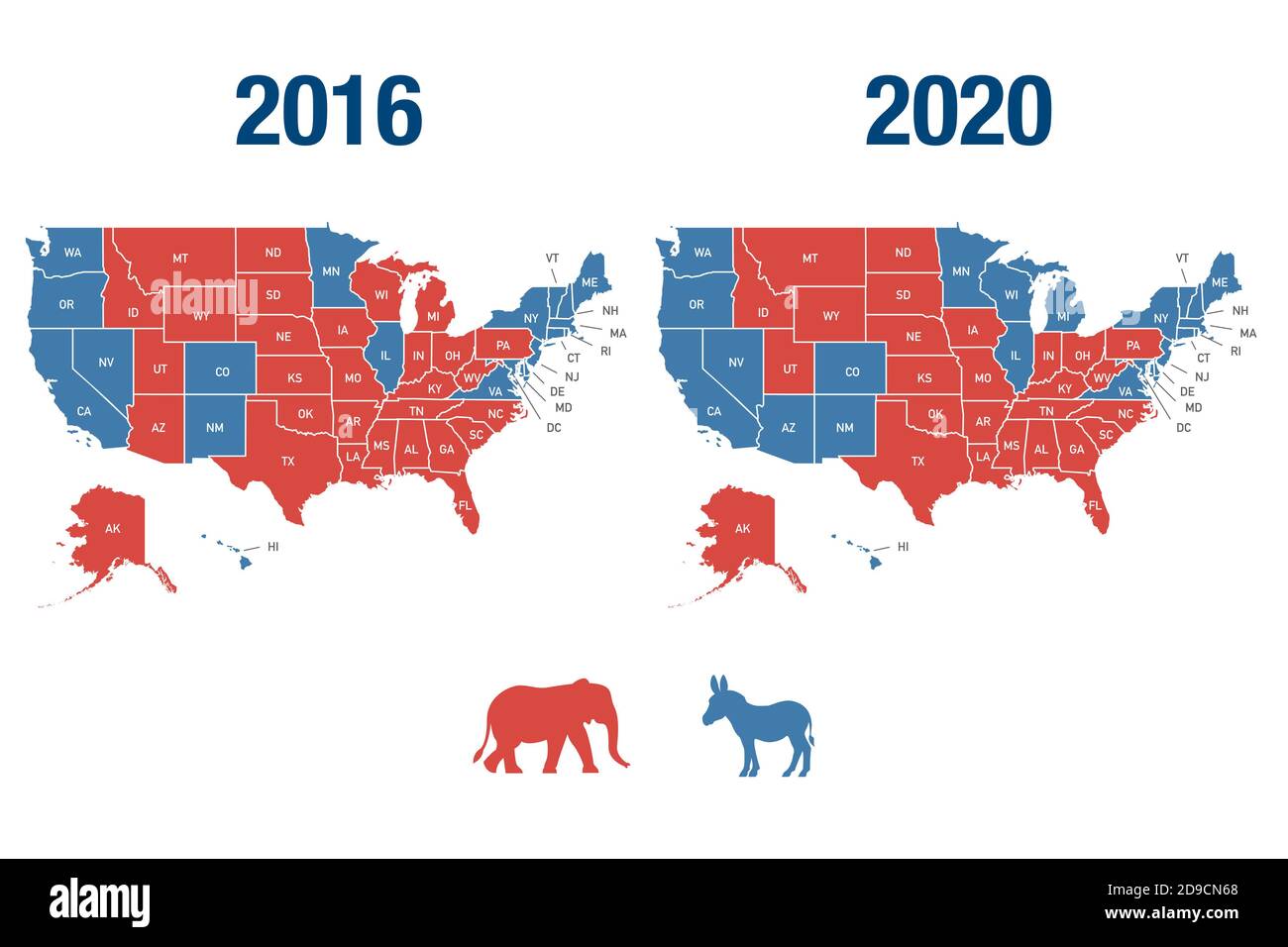
The decisive battlegrounds of the election were concentrated in the industrial Midwest and the Sun Belt. Trump successfully flipped three traditionally Democratic states—often referred to as the "Blue Wall"—that had voted reliably for Democratic nominees for decades:
- Pennsylvania: Won by Trump by a margin of less than 44,000 votes (0.7%).
- Michigan: Won by Trump by roughly 10,700 votes (0.23%).
- Wisconsin: Won by Trump by approximately 22,700 votes (0.77%).
In addition to these crucial rust-belt victories, Trump secured wins in traditional swing states such as Florida, Ohio, Iowa, and North Carolina. Clinton maintained strongholds in populous coastal states like California and New York, which drove her overall national popular vote plurality but proved insufficient to reach the 270-vote electoral threshold.
Key Facts and Historical Context
Analyzing the 2016 election requires examining the specific institutional, demographic, and cybersecurity factors that defined the campaign cycle.
The Popular Vote vs. Electoral College Discrepancy
The 2016 election marked the fifth time in U.S. history—and the second time in 16 years, following the 2000 election between George W. Bush and Al Gore—that the winner of the national popular vote lost the presidency in the Electoral College. Hillary Clinton's margin of 2,868,686 popular votes was the largest ever recorded for a losing presidential candidate.
Faithless Electors
The Electoral College vote in December 2016 saw an unprecedented number of "faithless electors"—members of the Electoral College who voted for candidates other than those they were pledged to support. Seven electors broke ranks (five Democrats and two Republicans), largely driven by anti-Trump movements and protests. This total surpassed any previous modern election, though it did not alter the final outcome.
Foreign Interference and Cybersecurity
U.S. intelligence agencies, bipartisan Senate committees, and independent cybersecurity firms conducted post-election investigations concluding that the Russian government orchestrated a sophisticated campaign of cyberattacks and influence operations. These activities included hacking the Democratic National Committee (DNC) and the personal email accounts of campaign staff, followed by the strategic release of stolen documents through platforms like WikiLeaks, alongside social media disinformation campaigns designed to sow political discord and undermine public trust in the electoral process.
Polling Discrepancies
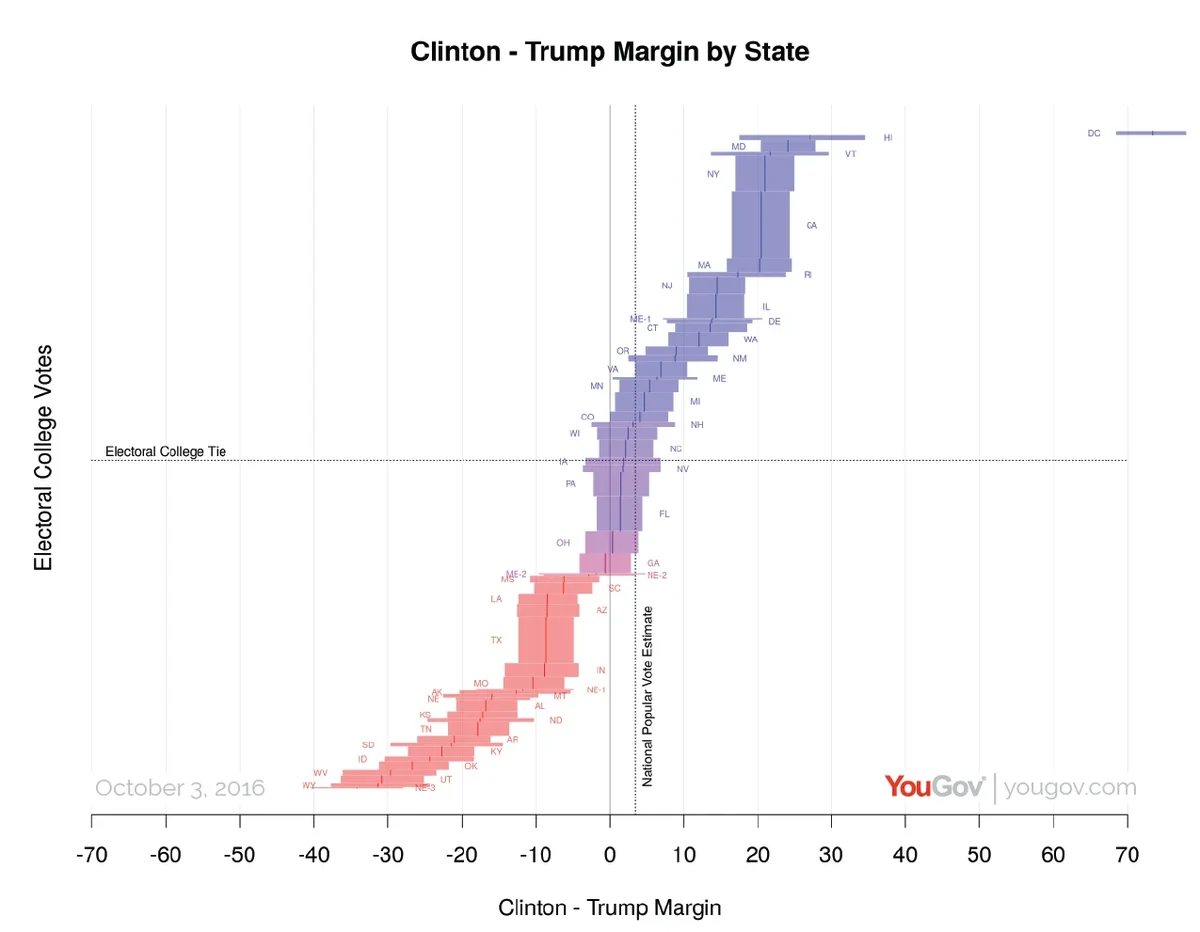
Public opinion polling ahead of the election consistently showed Clinton with a narrow national lead and advantages in several key battleground states. Post-election analysis by the American Association for Public Opinion Research (AAPOR) revealed that while national polls were generally accurate within historical margins of error, state-level polls in the Midwest systematically underestimated late-breaking support for Donald Trump among voters without college degrees.
Frequently Asked Questions
Who won the 2016 US presidential election?
Donald Trump won the 2016 United States presidential election by securing 304 electoral votes, defeating Democratic nominee Hillary Clinton, who received 227 electoral votes.
Did Hillary Clinton win the popular vote?
Yes. Hillary Clinton won the national popular vote by receiving approximately 65.8 million votes (48.2%) compared to Donald Trump's 63.0 million votes (46.1%), a margin of nearly 2.9 million ballots.
What states decided the 2016 election outcome?
The election was decided primarily by narrow margins in Midwestern industrial swing states—specifically Pennsylvania, Michigan, and Wisconsin—alongside traditional swing states like Florida, Ohio, and Iowa.
How many electoral votes are needed to win the US presidency?
A candidate must secure a minimum of 270 electoral votes out of the total 538 available electoral votes to win the U.S. presidency.
What is a faithless elector?
A faithless elector is a member of the Electoral College who casts their official vote for someone other than the candidate they were pledged to support based on their state's popular vote outcome. In 2016, a record seven electors defected.
Next Actions and Further Research
For researchers, students, or historians seeking deeper verification of the 2016 election, primary source documentation provides the most reliable data. Consult the official federal archive maintained by the Office of the Federal Register within the National Archives and Records Administration (NARA) for certified state-by-state electoral vote tallies. For academic analysis of voter turnout and demographic shifts, review reports published by the Pew Research Center and the U.S. Census Bureau's Voting and Registration Supplement.