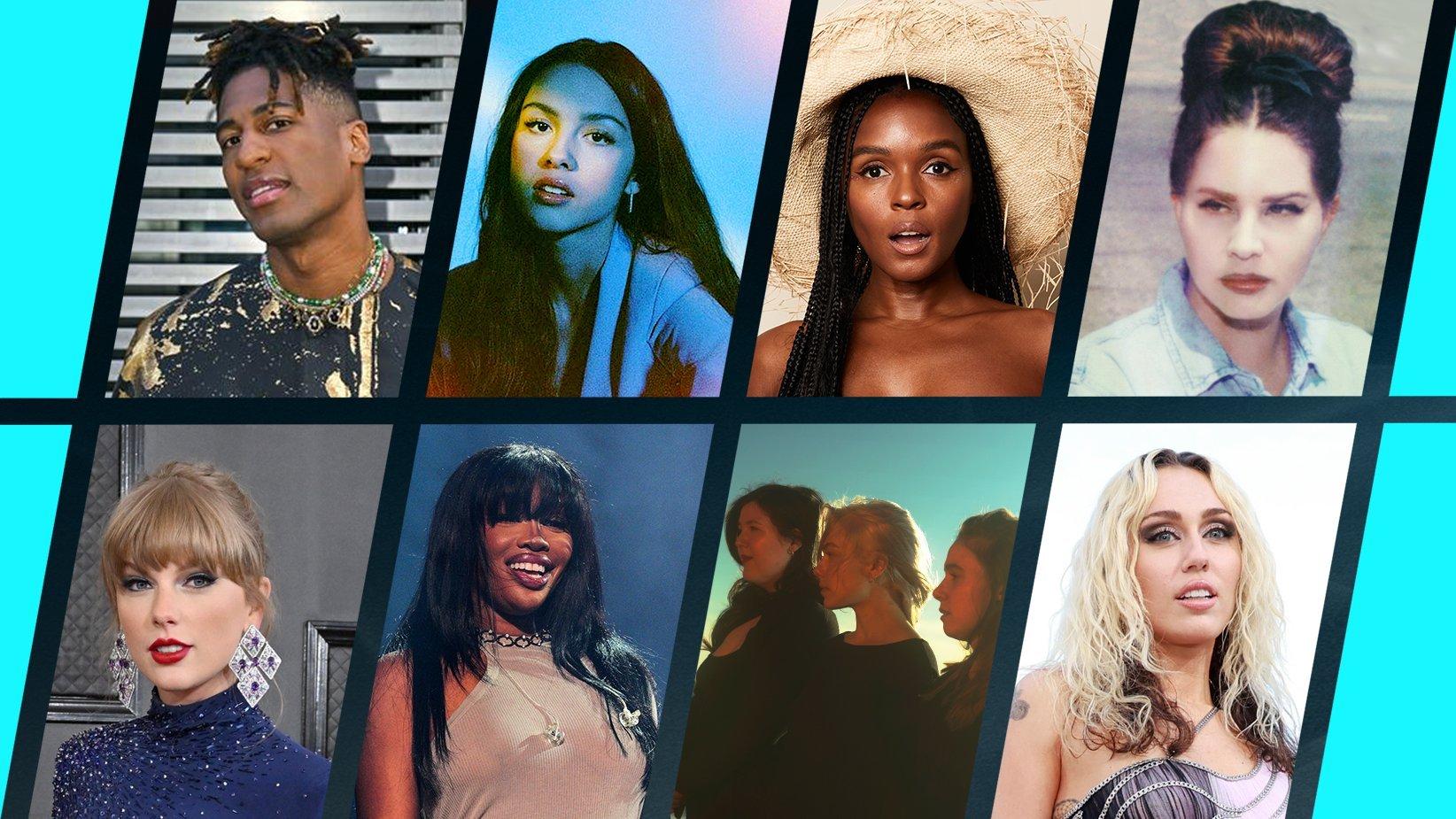
The 61st Annual Grammy Awards, which recognized the 2018 Album of the Year nominees, marked a historic turning point in the music industry. The winner was Kacey Musgraves for her genre-bending album Golden Hour, emerging victorious from a field of eight nominees—a list expanded from the traditional five to increase diversity and representation across the Recording Academy’s most prestigious category.
Looking back from 2026, the 2018 eligibility period (October 1, 2017, to September 30, 2018) remains one of the most transformative eras for modern music. It saw the solidified dominance of streaming services, the rise of "genre-less" pop, and a significant shift in how the Recording Academy approached hip-hop and R&B. The expansion to eight nominees was a direct response to criticisms regarding the lack of diversity in previous years, resulting in a slate that featured a powerful array of women and artists of color.
The Eight Nominees for the 61st Annual Grammy Awards
To understand the weight of the 2018 Album of the Year nominees, one must look at the specific cultural impact and technical achievements of each record. These eight albums represent a cross-section of the global zeitgeist at the time.
1. Kacey Musgraves – Golden Hour (Winner)
Golden Hour is often cited by critics in 2026 as the "perfect" crossover record. Released in March 2018, it successfully blended traditional country songwriting with disco, psych-rock, and electronic elements. Produced by Daniel Tashian and Ian Fitchuk alongside Musgraves, the album moved away from the "snarky" tone of her previous work toward a "trippy," optimistic atmosphere inspired by her personal life and even her experiences with LSD.
From a technical standpoint, the album's use of vocoders on tracks like "Oh, What a World" and the shimmering, clean guitar tones on "Slow Burn" set a new standard for Nashville production. It remains one of the few albums to win Album of the Year at the Grammys while also winning Album of the Year at the Country Music Association (CMA) Awards.
2. Cardi B – Invasion of Privacy
Cardi B’s debut studio album was a cultural phenomenon that silenced many skeptics who doubted her longevity after the viral success of "Bodak Yellow." The album was a masterclass in modern rap curation, featuring a mix of trap, Latin pop, and R&B. Its inclusion in the Album of the Year category was a recognition of Cardi B’s massive commercial footprint and her ability to anchor a cohesive body of work. The album would go on to win Best Rap Album, making her the first solo female artist to do so.
3. Janelle Monáe – Dirty Computer
An ambitious "emotion picture" and concept album, Dirty Computer explored themes of sexuality, Afrofuturism, and American identity. Drawing heavily from the mentorship of Prince, Monáe crafted a funk-pop odyssey that was both politically charged and deeply personal. Its nomination signaled the Academy's growing appreciation for high-concept art-pop that pushed social boundaries.
4. Kendrick Lamar and Various Artists – Black Panther: The Album
Curated and produced by Kendrick Lamar, this was more than a standard film soundtrack. It was a standalone hip-hop project that captured the themes of the Marvel film while functioning as a commentary on the African Diaspora. With heavy-hitting tracks like "All the Stars" and "King’s Dead," the album showcased Lamar’s ability to direct a diverse group of artists (including SZA, Schoolboy Q, and Vince Staples) into a unified sonic vision.
5. Drake – Scorpion
Drake’s Scorpion was the commercial juggernaut of the year. A double album split between "Rap" and "R&B" sides, it was designed to dominate the streaming era. While critics were divided on its length (25 tracks), its impact was undeniable. In 2018, Drake broke numerous Billboard records with this release, and its nomination reflected the sheer mathematical impossibility of ignoring his influence on the industry.
6. Post Malone – Beerbongs & Bentleys
If Scorpion was the streaming king, Beerbongs & Bentleys was the crown prince of "vibe" music. Post Malone’s sophomore effort blurred the lines between grunge, hip-hop, and pop. Produced largely by Louis Bell and Frank Dukes, the album featured hit after hit, including "Rockstar" and "Psycho." It solidified the "melodic rap" trend that would define much of the early 2020s.
7. Brandi Carlile – By the Way, I Forgive You
Representing the Americana and Folk sectors, Brandi Carlile’s sixth studio album was a critical darling. Produced by Dave Cobb and Shooter Jennings, the album is anchored by "The Joke," a powerful anthem for the marginalized. Carlile’s vocal performance on this record is widely considered one of the best of the decade, bringing a raw, analog warmth to a year otherwise dominated by digital production.
8. H.E.R. – H.E.R.
The self-titled compilation album from H.E.R. (Gabriella Wilson) was a breakout moment for contemporary R&B. Initially released as a series of EPs, the full-length project highlighted her prowess as a multi-instrumentalist and vocalist. Her nomination was a significant win for "quiet storm" R&B in an era of loud, aggressive trap beats.
Comparison of the 2018 Album of the Year Nominees
The following table provides a breakdown of the technical and commercial profiles of the nominees during their peak impact period.
| Artist | Album Title | Primary Genre | Lead Producer(s) | Key Single |
|---|---|---|---|---|
| Kacey Musgraves | Golden Hour | Country/Pop | Daniel Tashian, Ian Fitchuk | "Slow Burn" |
| Cardi B | Invasion of Privacy | Hip-Hop | J. White Did It, Cassius Jay | "I Like It" |
| Janelle Monáe | Dirty Computer | Funk/Pop | Chuck Lightning, Nate Wonder | "Make Me Feel" |
| Kendrick Lamar | Black Panther | Hip-Hop/R&B | Kendrick Lamar, Sounwave | "All the Stars" |
| Drake | Scorpion | Hip-Hop/R&B | Noah "40" Shebib, Boi-1da | "God's Plan" |
| Post Malone | Beerbongs & Bentleys | Pop/Rap | Louis Bell, Frank Dukes | "Rockstar" |
| Brandi Carlile | By the Way, I Forgive You | Americana | Dave Cobb, Shooter Jennings | "The Joke" |
| H.E.R. | H.E.R. | R&B | H.E.R., DJ Camper | "Focus" |
The Significance of the Expansion to Eight Nominees
In 2018, the Recording Academy made the monumental decision to increase the number of nominees in the "Big Four" categories (Album, Record, and Song of the Year, plus Best New Artist) from five to eight. This change was implemented to make the awards more inclusive and better reflect the diversity of the music landscape.
Addressing the Diversity Gap
Before the 61st Grammys, the Academy faced significant backlash—most notably the #GrammysSoMale movement—after the 2017 ceremony saw few women winning major awards. By expanding the field, the 2018 nominees included five women (Musgraves, Cardi B, Monáe, Carlile, and H.E.R.) out of the eight spots. This was a stark contrast to previous years and signaled a legitimate effort to modernize the voting outcomes.
The Rise of Streaming Metrics
The 2018 list also highlighted the tension between critical acclaim and streaming dominance. The inclusion of Drake and Post Malone acknowledged the "new math" of the music industry, where billions of streams equate to cultural relevance, even if traditional critics are less enthusiastic. Conversely, the inclusion of Brandi Carlile and Janelle Monáe served as a safeguard for "musician’s music," ensuring that artistic complexity remained a core pillar of the category.
Eligibility and Selection Process
To be a 2018 Album of the Year nominee, a project had to meet strict criteria set by the Recording Academy. These rules ensure that the awards maintain a standard of professional quality and legal compliance.
- Eligibility Period: For the 61st Grammys, albums must have been released between October 1, 2017, and September 30, 2018.
- Duration: An album must contain at least five different tracks and have a total playing time of at least 15 minutes, or have a total playing time of at least 30 minutes with any number of tracks.
- Voter Base: Nominees are determined by the voting members of the Recording Academy, which includes performers, songwriters, producers, and engineers.
- The Final Vote: After the eight nominees are announced, the entire voting membership casts their ballots for the winner. Unlike the nominations, which are often handled by specialized committees, the final winner is decided by a general popular vote within the Academy.
Why Kacey Musgraves Won: A Retrospective Analysis
From the vantage point of 2026, Kacey Musgraves’ win for Golden Hour is viewed as a "safe but sophisticated" choice. While Cardi B or Kendrick Lamar would have been historic wins for hip-hop, Golden Hour appealed to the broadest cross-section of the Academy.
The "Unity" Factor
Musgraves managed to unite two often-warring factions of the Recording Academy: the Nashville traditionalists and the Los Angeles/New York pop enthusiasts. Her album was "country enough" to satisfy the roots-music voters but "modern enough" to be played at Coachella.
Technical Excellence
The production on Golden Hour was impeccable. It avoided the "loudness wars" of the mid-2010s, opting instead for a dynamic, airy soundstage. For the engineers and producers who make up a large portion of the Grammy voting bloc, the record was a masterclass in tasteful arrangement.
Frequently Asked Questions
Which album was considered the biggest snub in 2018?
Many critics and fans felt that Ariana Grande’s Sweetener or Mitski’s Be the Cowboy were notable omissions from the 2018 Album of the Year nominees. While Grande won Best Pop Vocal Album, Sweetener was released in August 2018, making it eligible, but it failed to secure a spot in the top category. Mitski’s Be the Cowboy was a critical powerhouse but lacked the commercial visibility usually required for a general-field Grammy nomination.
Did the expansion to eight nominees change who won?
While we cannot know the exact vote counts, the expansion likely helped diversify the nominee pool more than it changed the winner. Kacey Musgraves was a critical favorite who likely would have made a five-nominee list as well. However, the expansion allowed artists like Janelle Monáe and Brandi Carlile to gain significant platform exposure they might have otherwise missed.
Was the Black Panther soundtrack eligible as an "album"?
Yes. The Recording Academy allows "Music From and Inspired By" soundtracks to compete in the Album of the Year category, provided they meet the standard requirements. Because Kendrick Lamar served as the primary curator and performer on most tracks, it was treated more like a collaborative studio album than a traditional score or various-artists compilation.
How did Drake react to his nomination?
Drake has had a complicated relationship with the Grammys. While Scorpion was nominated for Album of the Year, he famously used his acceptance speech for Best Rap Song ("God's Plan") to tell artists that they don't need an award to validate their success. This tension between the Academy and hip-hop’s biggest stars was a defining theme of the 2018 awards cycle.
Is Kacey Musgraves the only country artist to win this award?
No, but she is part of an elite group. Other country-leaning winners include Taylor Swift (for Fearless and 1989, though the latter was pop), the Dixie Chicks (Taking the Long Way), and Glen Campbell. Musgraves’ win was significant because it was the first time a country album won during an era of heavy hip-hop dominance.
Final Thoughts for Music Historians
The 2018 Album of the Year nominees represent a time of transition. It was the year the Grammys attempted to "grow up" and acknowledge the diverse reality of the modern music world. Whether you prefer the raw rap of Cardi B, the introspective Americana of Brandi Carlile, or the psychedelic country of Kacey Musgraves, the 61st Grammys offered a list that truly captured the complexity of 2018.
For those looking to explore these albums today in 2026, they serve as a perfect time capsule. They reflect a world grappling with identity, technology, and the search for "golden hours" in a rapidly changing cultural landscape. If you are researching these nominees for a project or simply for a nostalgic playlist, start with Golden Hour for its production and Dirty Computer for its visionary storytelling.