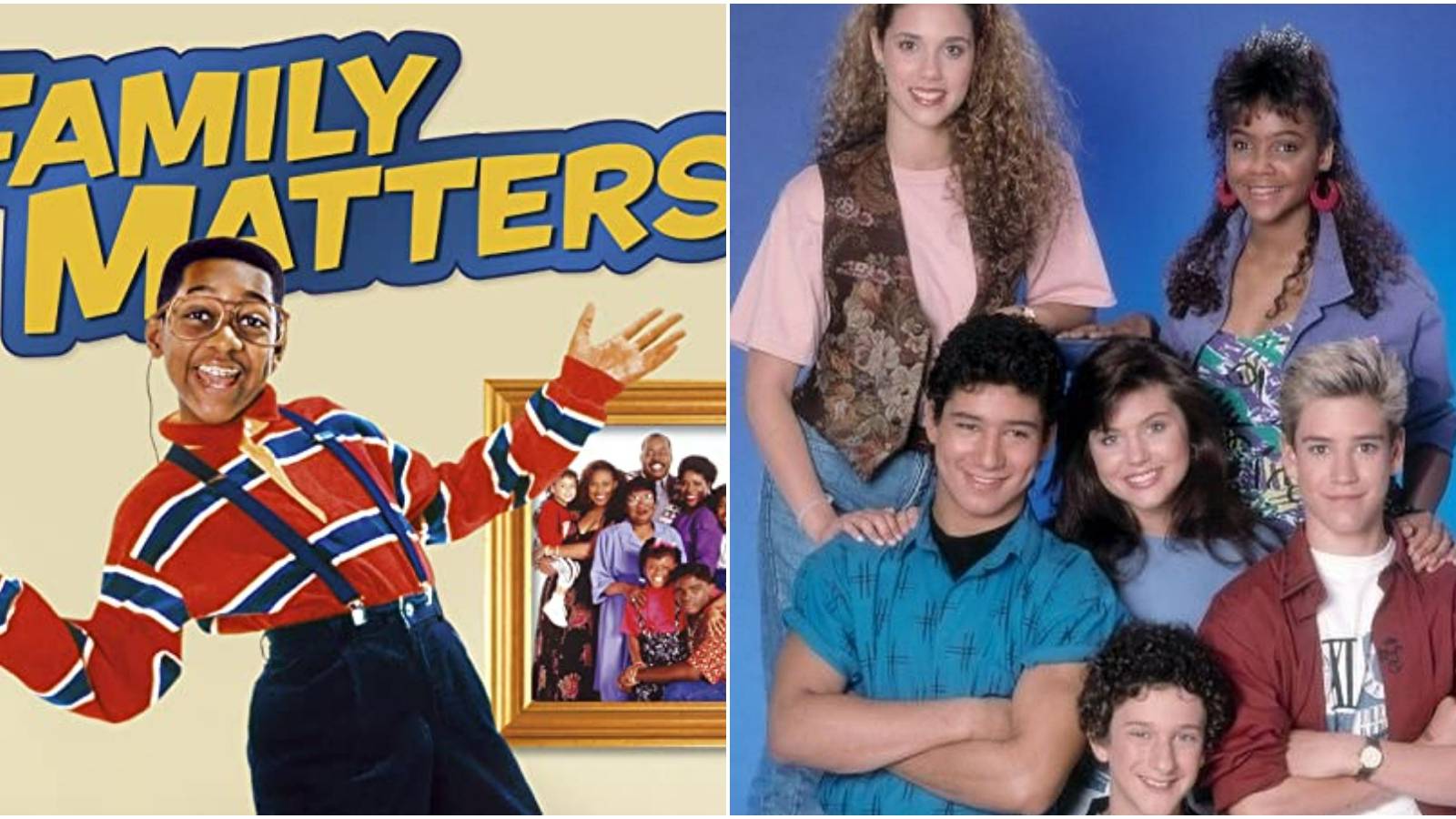
The 1990s sitcom defined a golden era of television comedy by shifting away from traditional, saccharine family dynamics toward cynical humor, ensemble casts, workplace settings, and high-concept premises that reflected rapid cultural shifts in Western society.
Defining the Era: The Shift from Family Values to Urban Cynicism
The landscape of American television comedy underwent a radical transformation at the start of the final decade of the twentieth century. Throughout the 1950s, 1960s, 1970s, and 1980s, the dominant blueprint for the situation comedy relied heavily on the nuclear family. Shows like Leave It to Beaver, The Brady Bunch, and Family Ties positioned the domestic household as the ultimate moral center, where conflicts were resolved by the end of a thirty-minute run with a reassuring life lesson. While early outliers like All in the Family introduced sharp social commentary and Cheers moved the action away from the living room into a communal public space, it was not until the 1990s that the foundational rules of the genre were entirely rewritten.
The 1990s sitcom abandoned the compulsion for moral uplift. Influenced by changing socio-economic realities, the rise of independent young adults living in major metropolitan areas, and a broader cultural cynicism toward traditional institutions, creators began crafting narratives about flawed, self-interested characters. This transition was accelerated by the fragmentation of the television market. With the launch and expansion of the Fox network in the late 1980s, followed by the UPN and The WB in the mid-1990s, networks were willing to take creative risks that established giants like CBS, NBC, and ABC might have previously rejected.
This era also marked a definitive move away from the variety-show-infused domestic comedies toward hyper-stylized formats. Single-camera setups without laugh tracks began to emerge alongside the dominant multi-camera, live-studio-audience format. Writers leaned heavily into irony, meta-humor, and character flaws, turning neuroses, dating anxieties, and mundane career struggles into prime comedic fuel. The focus shifted from how families love each other to how friends, colleagues, and eccentric acquaintances tolerate each other's company.
Anatomical Breakdown: Multi-Camera Studio Productions vs. Single-Camera Innovators
Understanding the 1990s sitcom requires examining the mechanics of its production. The decade served as a bridge between the traditional studio-audience era and the modern single-camera cinematic style that dominates streaming television today. The production model dictated the rhythm of the jokes, the pacing of the narrative, and the visual aesthetic of the final product.
The Multi-Camera Standard
The vast majority of commercial hits during this decade relied on the multi-camera setup before a live studio audience, often augmented by a laugh track to smooth out editing transitions or punch up missed beats.
- The Living Room / Central Hub: Sets were constructed like three-walled theatrical stages, allowing cameras to roll simultaneously from different angles.
- Pacing and Delivery: Actors delivered lines facing the audience, pausing deliberately for applause and laughter. This created a theatrical cadence that trained viewers to expect a punchline every ten to fifteen seconds.
- Cost Efficiency: Because sets were reusable and scenes were shot sequentially with minimal post-production camera movement, networks could turn around episodes rapidly.
The Single-Camera Innovation
Conversely, a small group of shows broke away from this formula, paving the way for future serialized comedies.
- Cinematic Aesthetic: Shows shot on location or utilizing single-camera setups lacked studio audiences and laugh tracks. They relied on cinematic lighting, single-angle framing, and subtle, dry humor.
- Narrative Freedom: Without the constraint of a live audience, writers could experiment with non-linear storytelling, surreal cutaways, and character voiceovers.
Core Subgenres of the Decade
The 1990s sitcom can be categorized into four distinct structural and thematic pillars, each serving a specific segment of the rapidly expanding television audience.
1. The "Hangout" Sitcom
Pioneered most successfully by Cheers in the 1980s, the hangout sitcom reached its cultural zenith in the 1990s. These shows centered on tight-knit groups of peers who spent the majority of their time in a shared third space—usually a coffee shop, an apartment building, or a diner. The primary conflict rarely involved grand external stakes; instead, plots revolved around dating mishaps, misunderstandings, and conversational banter.
- Seinfeld famously codified this into a show about "nothing," focusing on the trivialities of modern urban etiquette.
- Friends refined the formula into a glossy, aspirational fantasy of young-adult life in New York City, where career pressures took a backseat to romantic entanglements and coffee-house socializing.
2. The Workplace Ensemble
Moving away from domestic life, workplace comedies captured the absurdity of institutional structures. These shows brought together mismatched personalities forced into proximity by their employment.
- NewsRadio combined fast-paced, overlapping dialogue with surreal office politics.
- The Drew Carey Show blended blue-collar working-class struggles with surrealist sketch comedy elements.
- Wings explored the quirky dynamics of a small-town Nantucket airline.
3. The Transformed Domestic Family
While the traditional family sitcom did not vanish entirely, it was forced to evolve to remain relevant. These shows subverted the wholesome tropes of the past by introducing biting sarcasm, multi-generational friction, and working-class economic realities.
- Roseanne stood out as a landmark achievement, realistically depicting a working-class Midwestern family struggling to pay bills, manage health issues, and navigate marital stress without sugarcoating their circumstances.
- The Fresh Prince of Bel-Air utilized the domestic framework to explore cultural and class clashes by integrating a working-class teenager from Philadelphia into an affluent, upper-class Black family in California.
4. High-Concept and Animation Breakthroughs
The decade also fostered high-concept premises that leaned into the fantastical or satirical.
- The Simpsons, debuting at the very start of the decade, revolutionized animation by proving that cartoons could deliver sophisticated, multi-layered social satire that appealed equally to adults and children.
- Third Rock from the Sun utilized a high-concept science fiction premise—aliens studying human behavior—to satirize everyday human customs and societal norms.
Production Models and Technical Comparison
To fully grasp how these programs functioned within the television ecosystem, it is helpful to contrast the two primary production methodologies that dominated the era.
| Feature / Element | Multi-Camera Studio Sitcom (e.g., Friends, Seinfeld) | Single-Camera / Innovative Sitcom (e.g., The Simpsons, NewsRadio) |
|---|---|---|
| Visual Style | Brightly lit, three-wall stage sets, theatrical blocking. | Cinematic lighting, location shooting, single-angle framing. |
| Audience Response | Filmed before a live studio audience; utilizes a laugh track. | No live audience; relies entirely on natural viewer reaction. |
| Narrative Structure | Episodic, self-contained plots with occasional multi-episode arcs. | Faster cuts, visual gags, occasional serialized running jokes. |
| Pacing | Measured, rhythmic pauses built specifically for audience laughter. | Rapid-fire dialogue, overlapping lines, quick scene transitions. |
| Economic Model | Highly cost-effective; rapid production cycle of roughly one week per episode. | More expensive per episode; extensive post-production editing required. |
Cultural Impact and Syndication Legacy
The cultural footprint of the 1990s sitcom extends far beyond its original broadcast window. This era coincided with the golden age of television syndication, where successful shows were sold to local stations and cable networks for daily strip programming. Shows like Seinfeld and Friends generated billions of dollars in backend syndication revenue, transforming cast members into international financial powerhouses and rewriting the economics of television talent negotiation.
Furthermore, these programs served as cultural time capsules. They documented the transition from an analog world—where communication relied on landlines, answering machines, and physical meetups—to the cusp of the digital age. The absence of cell phones and instant messaging created narrative tension that would be structurally impossible in modern storytelling; miscommunications could not be resolved with a quick text message, forcing characters to rely on elaborate schemes, missed connections, and physical coincidence.
In the modern streaming era, 1990s sitcoms have experienced sustained cultural resurgences. Younger generations discovering these shows via platforms like Netflix, Peacock, and Paramount+ demonstrate that the fundamental themes—navigating loneliness, building chosen families, coping with job insecurity, and laughing through interpersonal awkwardness—remain entirely timeless.
Frequently Asked Questions
What made 1990s sitcoms different from those in the 1980s?
While 1980s sitcoms typically focused on nuclear families and ended episodes with sincere moral lessons, 1990s sitcoms shifted toward cynical, urban, and ensemble-based narratives. They embraced flawed characters, serialized dating plots, and ironic humor rather than traditional domestic wholesomeness.
Why do many 1990s sitcoms look and feel like stage plays?
Most popular comedies of this era used a multi-camera setup filmed in front of a live studio audience. The physical sets resembled three-walled theater stages, which required actors to project their performances toward the bleachers and pause deliberately for audience laughter.
How did the rise of alternative networks impact the genre?
The emergence of networks like Fox, UPN, and The WB created intense competition for traditional broadcasters. To capture younger, niche demographics, these new networks were willing to greenlight unconventional, edgy, and riskier comedic premises that major networks previously avoided.
Are 1990s sitcoms still relevant to modern audiences?
Yes. Their enduring popularity on streaming platforms proves that character-driven humor and relatable social dynamics transcend their eras. The focus on friendship, career struggles, and romantic mishaps remains universally engaging.
Did all 1990s sitcoms use a laugh track?
No. While the vast majority of live-audience multi-camera shows utilized a laugh track or sweetening to manage audio transitions, animated series like The Simpsons and select single-camera productions completely omitted canned or live laughter to establish a distinct comedic tone.
Conclusion and Next Actions
To truly appreciate the artistry and cultural resonance of the 1990s sitcom, viewers and researchers should examine how specific shows adapted across their multi-season runs. Start by exploring the pilot episodes of foundational hits like Seinfeld or The Fresh Prince of Bel-Air to observe how character dynamics were established, then compare them against their respective series finales to see how the genre evolved over a decade of rapid social change.