The 2008 United States presidential campaign was a watershed contest resulting in the election of Barack Obama as the nation’s first African American president. Driven by public fatigue over the Iraq War, grassroots digital organizing, record fundraising, and the late-stage shock of the Global Financial Crisis, the race fundamentally transformed modern political strategy.
The Landscape of the 2008 Election
The 2008 presidential race was unique in modern American history because it featured no incumbent president or vice president seeking election. President George W. Bush had reached his two-term limit, and Vice President Dick Cheney declined to run. This created an open field in both major political parties for the first time since 1952.
The political climate favored the Democratic Party. The nation faced mounting economic headwinds, widespread weariness with the prolonged war in Iraq, and historically low approval ratings for the Bush administration. Yet both parties faced competitive, high-stakes primary contests before entering a general election contest shaped by sudden financial upheaval.
Understanding the mechanics of the 2008 race requires analyzing how candidate messaging, operational infrastructure, and macro-level events converged to rewrite the playbook for national political campaigning.
The Democratic Primary: The Battle of Paradigms
The 2008 Democratic primary began as an apparent coronation but evolved into one of the longest and most strategically sophisticated primary fights in modern political history.
Democratic Primary Progression:
- Establishment Frontrunner (Clinton) vs. Grassroots Movement (Obama)
- Early Caucuses: Iowa breakthrough challenges inevitable frontrunner narrative
- Delegate Allocation: Obama exploits proportional representation across small states
- Endgame: Prolonged delegate accumulation forces late primary resolution
Hillary Clinton’s Institutional Strategy
Senator Hillary Clinton entered the race as the consensus frontrunner, backed by substantial institutional support, widespread name recognition, deep ties with party donors, and the political network built during Bill Clinton's presidency. Clinton’s strategy relied on an aura of inevitability, emphasizing executive readiness, governance experience, and commanding leads in large delegate-rich states like California, New York, Ohio, and Pennsylvania.
However, the Clinton campaign made critical strategic miscalculations regarding party rules. They focused heavily on winning large state primary popular votes while underestimating the Democratic National Committee's proportional delegate allocation rules, which awarded delegates even to the second-place finisher in every congressional district.
Barack Obama’s Grassroots and Delegate Strategy
Senator Barack Obama launched his campaign with a message centered on change, political reconciliation, and explicit opposition to the 2002 authorization of military force in Iraq—a vote Clinton had supported. Behind the rhetorical power of his speeches, campaign manager David Plouffe and chief strategist David Axelrod built an operational apparatus designed around the party's delegate math.
Instead of fighting solely in major media markets, the Obama campaign aggressively contested non-primary caucus states (such as Idaho, Kansas, and Nebraska) and rural congressional districts. Because caucuses reward high activist turnout and organizational discipline, Obama swept smaller states by wide margins, establishing an early pledged delegate lead that Clinton could not overcome, despite her victories in late major primaries.
The Republican Primary: The Comeback of John McCain
The Republican primary unfolded against a backdrop of deep ideological division regarding immigration reform, federal spending, and the conduct of the Iraq War.
The Initial Field and McCain’s Collapse
Early frontrunners included former New York City Mayor Rudy Giuliani, former Massachusetts Governor Mitt Romney, and former Tennessee Senator Fred Thompson. Arizona Senator John McCain entered the race as a prominent elder statesman, but by the summer of 2007, his campaign suffered near-fatal operational collapse:
- Severe cash-flow shortages forced massive campaign staff layoffs.
- Backing the contentious 2007 bipartisan Comprehensive Immigration Reform Act alienated conservative primary voters.
- The campaign was widely written off by national media outlets and donors.
The New Hampshire Resurgence
McCain revived his candidacy through a retail-heavy campaign in New Hampshire, staging dozens of town-hall meetings and riding his signature "Straight Talk Express" bus. Emphasizing his unwavering support for the 2007 Iraq War troop surge—which was showing tactical gains on the ground—McCain restored his standing as an experienced national security leader.
After winning the New Hampshire primary in January 2008, McCain scored decisive victories in South Carolina and Florida, forcing Romney and former Arkansas Governor Mike Huckabee out of the race and securing the Republican nomination by March 2008.
Key Campaign Metrics: 2008 General Election Comparison
The following table summarizes the structural, operational, and electoral differences between the two major campaigns during the 2008 general election cycle.
| Strategic Metric | Barack Obama (Democrat) | John McCain (Republican) |
|---|---|---|
| Running Mate | Joe Biden (U.S. Senator, DE) | Sarah Palin (Governor, AK) |
| Core Slogan | "Change We Can Believe In" / "Yes We Can" | "Country First" |
| Total Funds Raised | ~$778 million (Opted out of public financing) | ~$379 million (Accepted public financing: $84M limit) |
| Field Strategy | Expanded map (targeted traditional red states: NC, VA, IN) | Defensive map (holding Florida, Ohio, and traditional GOP territory) |
| Digital Innovation | Custom social network (my.BarackObama.com), SMS lists, small-dollar web processing | Traditional broadcast media, direct mail, targeted television purchases |
| Key Electoral Strength | Overwhelming turnout among youth, African Americans, and suburban independents | Broad appeal among older demographics, white working-class voters, and military families |
| Final Popular Vote | 69,498,516 (52.9%) | 59,948,323 (45.7%) |
| Electoral Votes Won | 365 | 173 |
The General Election Campaign Dynamics
Once the general election field was set, the race centered on which candidate could best address economic anxieties, navigate overseas conflicts, and demonstrate presidential temperament.
The Vice Presidential Selections
Both nominees used their vice presidential picks to balance their perceived vulnerabilities:
- Joe Biden: Obama selected the long-serving Delaware senator and Chairman of the Senate Foreign Relations Committee. Biden provided established national security credentials, legislative experience, and working-class appeal to counter claims that Obama lacked foreign policy background.
- Sarah Palin: McCain made an unconventional choice by selecting the first-term Governor of Alaska. Palin energized the conservative grassroots base and created immediate media interest. However, subsequent unscripted interviews—most notably with Katie Couric of CBS News—prompted public scrutiny over her readiness for executive office, alienating centrist voters.
The September Financial Crisis: The Decisive Turning Point
Until September 2008, national polling remained competitive, with McCain briefly taking a post-convention lead. The trajectory shifted permanently in mid-September when the subprime mortgage crisis triggered systemic financial collapse:
- Lehman Brothers bankruptcy: The investment bank failed on September 15, 2008, sparking an acute credit market freeze.
- McCain's campaign suspension: McCain announced he would suspend his campaign and suggested delaying the first presidential debate to return to Washington for negotiations on the Troubled Asset Relief Program (TARP). The maneuver was criticized by political observers and voters as erratic.
- Obama’s steady posture: Obama insisted that the debate proceed, arguing that a president must manage multiple crises simultaneously. His measured public appearances projected calm, shifting voter trust on handling the economy toward the Democratic ticket.
Technological and Operational Innovations of 2008
The 2008 election fundamentally overhauled how political campaigns organize, fundraise, and communicate. Rather than treating the internet as a passive digital brochure, the Obama operation turned it into an interactive command center.
Data Architecture and Digital Organizing
Under the technical leadership of Chris Hughes and Joe Rospars, the Obama campaign developed my.BarackObama.com (MyBO). The platform operated as a specialized social network that decentralized volunteer efforts:
- Volunteers organized tens of thousands of independent local events without direct campaign staff management.
- Canvassing tools used voter file data to supply targeted neighborhood walking lists directly to volunteers.
- Dynamic feedback loops allowed headquarters to monitor real-time contact rates, door-knocks, and phone calls.
Small-Dollar Grassroots Fundraising
Obama's team broke historical fundraising records by building a pipeline of recurring, low-dollar donors over the internet. When Obama decided to bypass the post-Watergate public financing system for the general election—a system that capped spending at $84 million in exchange for taxpayer funds—McCain remained bound by the limits.
This financial disparity allowed the Obama campaign to purchase unprecedented airtime, open hundreds of field offices in historically Republican strongholds, and air an unprecedented 30-minute prime-time national infomercial across major broadcast networks days before the election.
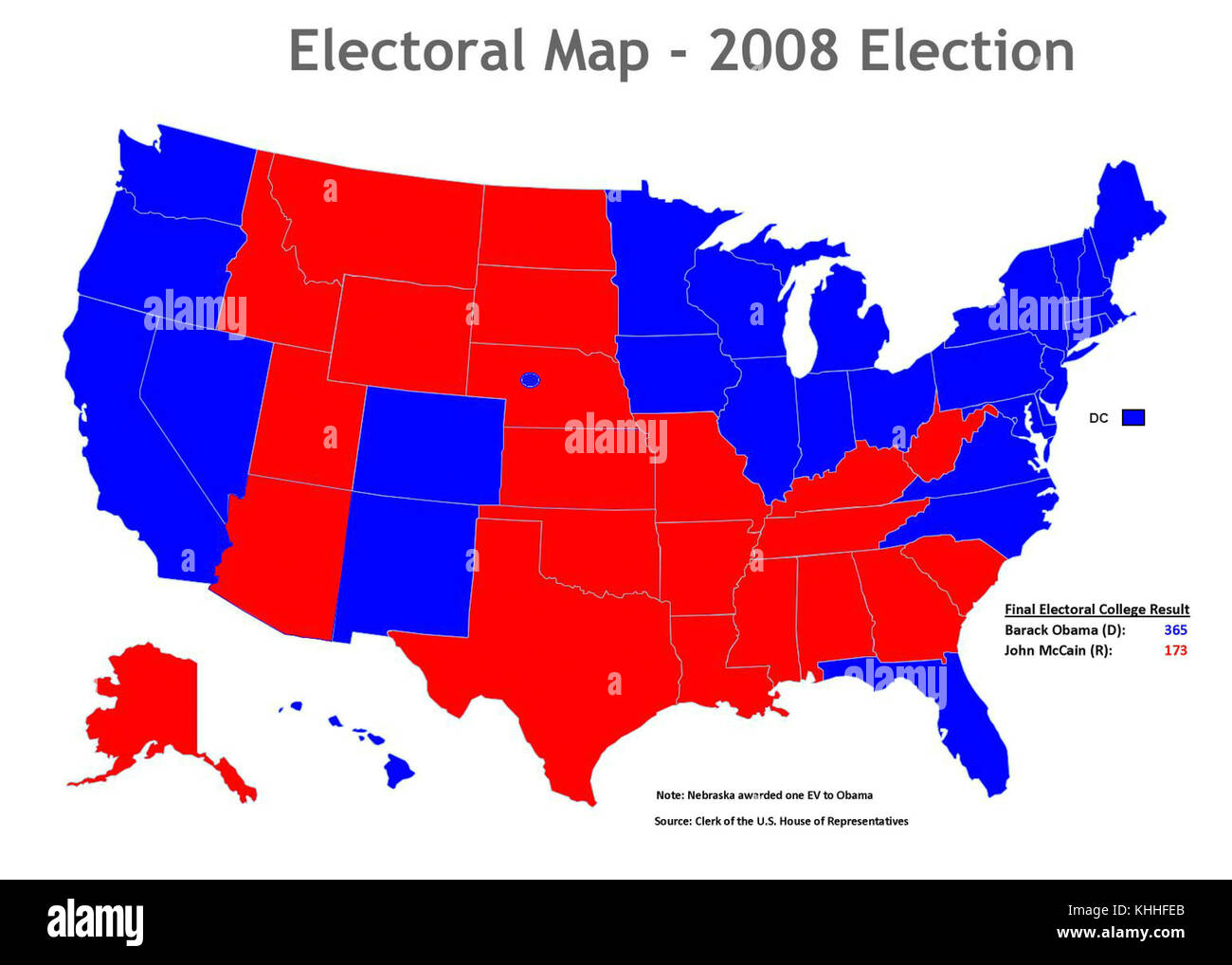
Electoral Map Realignment
The outcome on November 4, 2008, reshaped the American political map by expanding the competitive territory for Democrats.
Key State Flips (2004 Bush States Won by Obama in 2008):
| Mid-Atlantic & Southeast | Industrial Midwest | Mountain West |
|---|---|---|
| Virginia | Ohio | Colorado |
| North Carolina | Indiana | Nevada |
| Florida | Iowa | New Mexico |
Obama secured 365 Electoral College votes to McCain’s 173, winning 52.9% of the popular vote—the highest popular vote percentage for a non-incumbent Democrat since Franklin D. Roosevelt in 1932.
Crucially, Obama flipped states that had not voted Democratic in decades:
- Virginia: Had voted Republican in every presidential contest since 1964.
- Indiana: Had voted Republican in every election since 1964.
- North Carolina: Had not backed a Democrat since Jimmy Carter in 1976.
Demographic shifts in suburban counties, surging participation among young and minority voters, and deep economic dissatisfaction in manufacturing centers drove this electoral realignment.
Strategic Lessons and Legacy
The 2008 campaign established operational standards that remain central to modern politics:
- Digital Integration is Non-Negotiable: Online fundraising, community building, and social media platforms moved from ancillary experiments to core campaign priorities.
- Grassroots Delegate Math Overrules Establishment Support: The primary demonstrated that early mastery of delegate allocation formulas defeats broad, unorganized popular name recognition.
- Decentralized Execution Maximizes Output: Empowering local volunteers with digital tools, voter files, and event-planning capabilities created scale that central campaign headquarters could not replicate alone.
- Economic Shocks Override Long-Term Messaging: Unforeseen macroeconomic events expose campaign messaging agility and test voter trust in executive temperament under pressure.
Frequently Asked Questions
Why did Barack Obama opt out of the public financing system in 2008?
Barack Obama chose to decline public funds for the general election because his digital fundraising infrastructure was generating cash at a rate far exceeding the federal spending cap. While accepting federal funds would have limited his general election spending to $84 million, opting out allowed his campaign to raise and spend hundreds of millions of dollars, creating a massive advertising and ground-game advantage over John McCain.
What was the significance of the 2008 Iowa caucuses?
The Iowa caucuses proved that Barack Obama could win in a predominantly white state, effectively debunking arguments that his race would prevent him from building a broad national coalition. His victory disrupted Hillary Clinton’s status as the inevitable Democratic nominee and energized Obama's fundraising, media coverage, and volunteer mobilization nationwide.
How did the 2008 campaign change political use of the internet?
The 2008 campaign transformed the internet from a static broadcast channel into an interactive organizational tool. Through platforms like my.BarackObama.com, campaigns learned to collect small-dollar recurring donations, distribute walk-lists for door-to-door canvassing, run targeted digital advertising, and use SMS messaging to coordinate grassroots events in real time.
Why did John McCain suspend his campaign in September 2008?
John McCain suspended his campaign activities on September 24, 2008, stating that he needed to return to Washington to help broker a bipartisan agreement on the $700 billion financial rescue package (TARP) following the collapse of Lehman Brothers. The move backfired politically when negotiations stalled, leading voters to perceive the maneuver as impulsive rather than presidential.
Which swing states were most critical in the 2008 general election?
Florida, Ohio, and Pennsylvania remained traditional battlegrounds, but the 2008 race expanded into historically conservative territory. Emerging sunbelt and mountain states—specifically Virginia, North Carolina, Colorado, and Nevada—became decisive flip states that reflected suburban demographic shifts and drove Obama’s broad Electoral College victory.
Next Steps for Campaign Historians and Strategists
To gain a practical, detailed understanding of the campaign models built during the 2008 cycle, examine the operational post-mortems published by campaign managers on both sides. Reviewing David Plouffe's The Audacity to Win provides direct insights into the delegate-math strategy that defined the primary, while Steve Schmidt’s and Mark Salter’s campaign post-mortems offer critical lessons on crisis communications, debate preparation, and vice presidential vet processes.