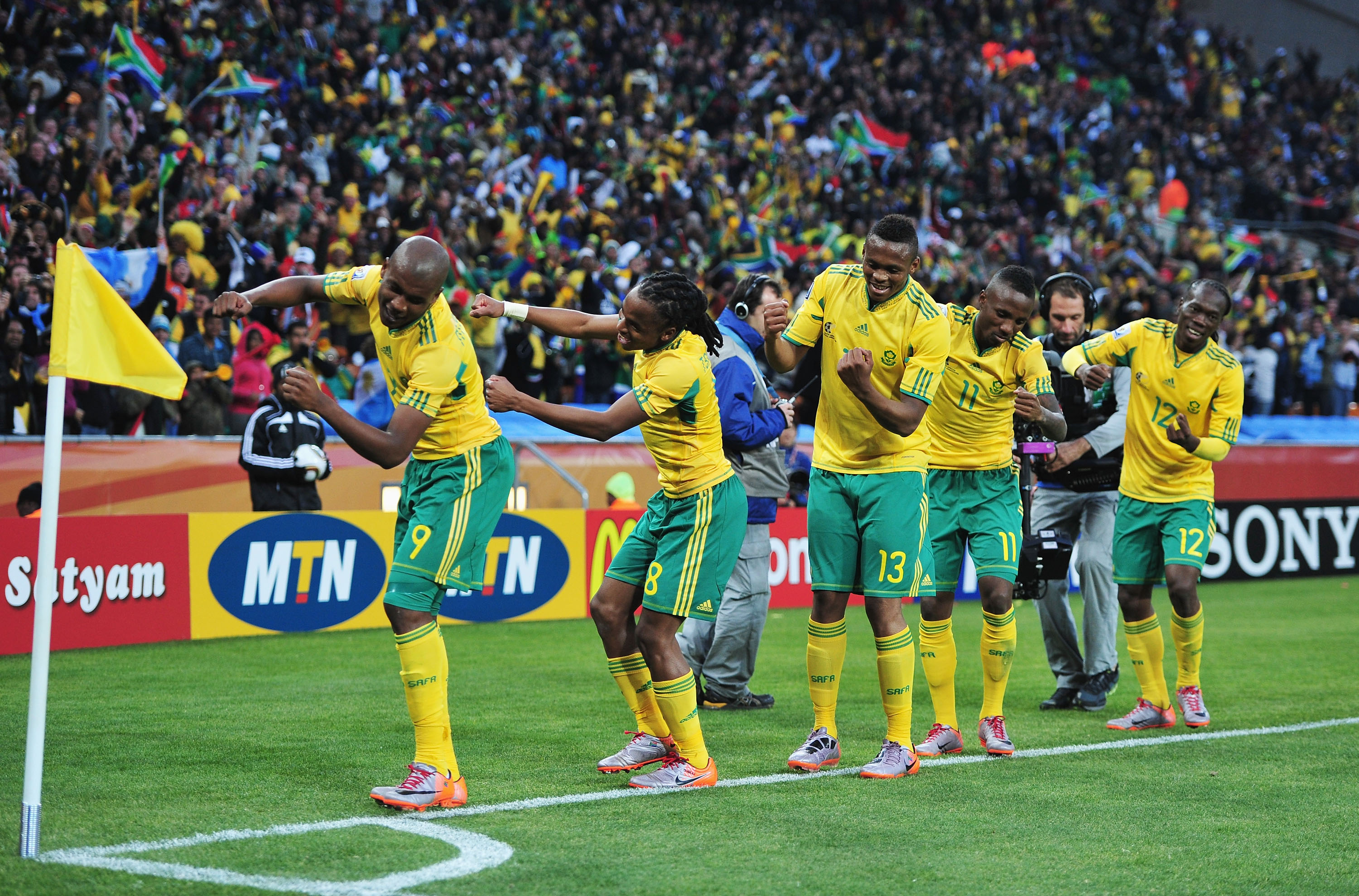
The 2010 FIFA World Cup was the 19th edition of the quadrennial international football tournament, held in South Africa from June 11 to July 11, 2010. It marked the first time the tournament was hosted on the African continent, serving as a historic milestone for global sports governance and showcasing South Africa's infrastructural capabilities to a worldwide audience of billions.
Historical Significance and the Bidding Process
The award of the 2010 FIFA World Cup to South Africa represented a deliberate strategy by FIFA to expand the geographic footprint of its flagship tournament. The bidding process for the 2010 edition was open exclusively to African nations following FIFA's policy decision to rotate the World Cup hosting duties across its confederations.
Several African nations entered the bidding contest, including Egypt, Morocco, and a joint bid from Libya and Tunisia. South Africa had narrowly lost the 2006 hosting rights to Germany by a single vote four years prior, positioning the nation as a sentimental and logistical favorite for the 2010 cycle. On May 15, 2004, in Zurich, Switzerland, FIFA President Sepp Blatter announced that South Africa had defeated Morocco and Egypt to secure the hosting rights.
The successful bid triggered a massive national and international mobilization. South Africa committed to constructing five new stadiums and upgrading five existing venues to meet strict international broadcasting, security, and seating requirements. The government also invested heavily in public transport upgrades, most notably the introduction of the Gautrain rapid rail link and Bus Rapid Transit (BRT) systems in host cities like Johannesburg, Cape Town, and Durban. Despite initial skepticism from international media regarding construction delays, crime rates, and operational readiness, all venues were completed on schedule.
Qualification Format and Qualified Nations
Qualification for the 2010 FIFA World Cup took place between August 2007 and November 2009, involving 204 national football associations from FIFA's six confederations. As the host nation, South Africa qualified automatically, leaving 31 remaining slots contested through regional qualification tournaments.
| Confederation | Slot Allocation | Notable Qualified Teams |
|---|---|---|
| CAF (Africa) | 5 + Host | South Africa, Ghana, Ivory Coast, Cameroon, Nigeria, Algeria |
| UEFA (Europe) | 13 | Spain, Netherlands, Germany, Italy, England, France, Portugal |
| CONMEBOL (South America) | 4 or 5 | Brazil, Argentina, Uruguay, Paraguay, Chile |
| CONCACAF (North/Central America) | 3 or 4 | United States, Mexico, Honduras |
| AFC (Asia) | 4 or 5 | Japan, South Korea, North Korea, Australia (AFC member) |
| OFC (Oceania) | 0 or 1 | New Zealand |
The qualification campaign produced several dramatic narratives. France secured their qualification through a controversial playoff against Republic of Ireland, marred by an unpenalized handball by French team captain Thierry Henry leading to a decisive extra-time goal. Meanwhile, New Zealand defeated Bahrain in an inter-confederation playoff to reach their first World Cup since 1982. Portugal and Uruguay similarly navigated tense two-legged playoff matches to secure the final European and South American berths.
Tournament Structure and Match Ball Controversy
The tournament structure followed the traditional format used since 1998: a 32-team group stage followed by a 16-team knockout phase. The 32 qualified teams were drawn into eight groups of four (Groups A through H). Each team played three round-robin matches within their group, earning three points for a win and one point for a draw. The top two teams from each group advanced to the Round of 16, initiating a single-elimination bracket culminating in the third-place playoff and the final match.
A defining technological talking point of the 2010 tournament was the official match ball, the Adidas Jabulani (meaning "to celebrate" in IsiZulu). Manufactured with eleven distinct polyurethane panels welded thermally rather than stitched, the ball was designed to achieve exceptional aerodynamic stability.
However, prior to and during the tournament, the Jabulani drew severe criticism from prominent goalkeepers, outfield players, and coaches. Athletes complained that the ball's extremely smooth surface and lack of traditional seams caused unpredictable, erratic swerving and dipping trajectories at high speeds. Despite the controversy, FIFA and Adidas defended the ball, maintaining that it underwent rigorous pre-tournament testing and met all official regulatory standards.
Key Matches, Notable Surprises, and Controversies
The tournament produced numerous memorable athletic achievements, tactical innovations, and officiating controversies that shaped the historical record of the sport.
Group Stage Shocks
The group stage witnessed the early elimination of several traditional powerhouses. France, the 2006 runners-up, suffered an internal player mutiny, a boycott of training sessions, and a dismal group-stage exit with only one point. Similarly, reigning world champions Italy finished bottom of Group F behind Paraguay, Slovakia, and New Zealand, failing to win a single match.
The Lampard Goal Controversy
During the Round of 16 match between Germany and England on June 27, 2010, a pivotal officiating error occurred. With Germany leading 2-1, English midfielder Frank Lampard executed a long-range shot that struck the crossbar and clearly bounced more than a yard over the goal line before spinning back out into the hands of German goalkeeper Manuel Neuer.
The on-field referee, Jorge Larrionda, and his assistant failed to award the goal. Replays confirmed the ball had crossed the line entirely. This high-profile refereeing mistake intensified international pressure on FIFA to adopt technological solutions, eventually leading to the implementation of goal-line technology and later video assistant referee (VAR) systems.
The Suarez Handball
In the quarter-final match between Uruguay and Ghana on July 2, the game reached a dramatic climax in the final minutes of extra time with the score tied at 1-1. Following a goalmouth scramble, Ghana's Dominic Adiyiah headed a shot toward the open goal. Uruguayan striker Luis Suárez deliberately batted the ball away with his hands on the goal line to prevent a certain goal.
Suárez was shown a direct red card and dismissed from the pitch, and Ghana was awarded a penalty kick. However, Asamoah Gyan missed the resulting penalty, striking the crossbar. Uruguay subsequently triumphed in the ensuing penalty shootout, advancing to the semi-finals and eliminating the last remaining African representative in heartbreaking fashion.
The Final: Spain vs. Netherlands
The final match took place on July 11, 2010, at Soccer City in Johannesburg, attracting an estimated global television audience of over 900 million viewers. The match contested two European heavyweights: the Netherlands, seeking their first World Cup title after losses in the 1974 and 1978 finals, and Spain, European champions aiming for their first-ever World Cup victory.
The match was characterized by extreme physical tension, tactical discipline, and a high volume of cautions issued by English referee Howard Webb. Webb brandished a record 14 yellow cards during the match and expelled Dutch defender John Heitinga in extra time following a second bookable offense. The aggressive approach taken by the Dutch side disrupted Spain’s customary tiki-taka passing rhythm, though both teams missed clear scoring opportunities in regulation time, notably Arjen Robben's missed one-on-one chance against Spanish goalkeeper Iker Casillas.
The deadlock was finally broken in the 116th minute of extra time. Spanish midfielder Andrés Iniesta received a pass from Cesc Fàbregas inside the penalty area, eluded the Dutch defensive coverage, and struck a half-volley past goalkeeper Maarten Stekelenburg into the right corner of the net. The goal secured a 1-0 victory for Spain, making them the eighth nation to win the FIFA World Cup and the first European team to lift the trophy outside of Europe.
Legacy, Economic Impact, and Cultural Resonance
The 2010 FIFA World Cup left a complex legacy for South Africa and the global football community. Economically, the event required an estimated public investment of over $3 billion USD, primarily directed toward stadium construction, transport networks, and telecommunications upgrades. While tourism figures fell short of initial aggressive projections—partly due to the global financial crisis of 2007–2008—the event successfully projected a modern, capable image of South Africa to the international community.
The tournament also popularized cultural elements unique to the host nation. Most notably, the vuvuzela—a loud, single-note plastic wind instrument blown incessantly by spectators throughout matches—became a ubiquitous and polarizing audio trademark of the broadcast, creating a continuous droning sound that dominated television audio feeds.
From a sporting perspective, Spain's victory cemented the dominance of their possession-based tactical framework, a style heavily influenced by club sides FC Barcelona and Real Madrid. The tournament also demonstrated Africa's operational capability to host mega-events on a global scale, paving the way for subsequent international sporting competitions across the continent.
Frequently Asked Questions
Who won the 2010 FIFA World Cup?
Spain won the 2010 FIFA World Cup by defeating the Netherlands 1-0 in the final match after extra time. Andrés Iniesta scored the winning goal in the 116th minute at Soccer City in Johannesburg, securing Spain's first-ever World Cup title.
Which country hosted the 2010 FIFA World Cup?
South Africa hosted the 2010 FIFA World Cup. It was the first time the tournament was held on the African continent, utilizing ten stadiums across nine host cities, including Johannesburg, Cape Town, Durban, and Pretoria.
What was the official match ball of the 2010 World Cup?
The official match ball was the Adidas Jabulani. It generated significant controversy among players and coaches due to its novel thermal-bonded panel construction, which many athletes claimed resulted in unpredictable aerodynamic movement and erratic flight paths.
Why was the match between England and Germany controversial?
The match featured a major officiating error when English midfielder Frank Lampard scored a goal whose shot clearly crossed the goal line after hitting the crossbar. The referee and linesman failed to award the goal, which amplified debates that eventually led to the introduction of goal-line technology.
Which player won the Golden Boot for the 2010 tournament?
Thomas Müller of Germany won the Golden Boot award as the tournament's top goalscorer, netting five goals and providing three assists. Although several players also scored five goals, Müller secured the award based on the tie-breaker of having more assists.