Whitney Houston is universally celebrated as one of the greatest vocalists in music history, renowned for her five-octave range, technical mastery, and unmatched emotional delivery. While her voice remains the undisputed centerpiece of her legendary career, questions often arise regarding her instrumental capabilities. Did Whitney Houston play any instruments, or was her musical artistry strictly confined to her vocal cords?
Whitney Houston did not play any musical instruments professionally or perform with them on stage during her concerts. Instead, her primary musical instrument was her voice, which she utilized with the precision, nuance, and structural awareness of a master instrumentalist. While she had a foundational understanding of the piano through her gospel roots and early church upbringing, she relied on world-class session musicians, arrangers, and producers to bring the instrumental components of her landmark recordings to life.
Understanding her relationship with instrumentation requires looking past the absence of physical instruments in her live performances and examining how her background, studio process, and artistic collaborations shaped her unparalleled output.
The Vocal Instrument: Whitney Houston’s Approach to Music
To understand Whitney Houston’s musicianship, one must first reframe how she interacted with music. In the classical and contemporary vocal worlds, exceptional singers are often regarded as instrumentalists whose bodies are the instrument. Houston possessed an innate, highly sophisticated understanding of music theory, harmony, timing, and arrangement, even if she did not read or write formal scores in the traditional sense.
Her musical education began in the New Hope Baptist Church in Newark, New Jersey, under the guidance of her mother, Cissy Houston, a renowned gospel and soul singer. In the black church tradition, vocalists do not merely sing melodies; they improvise harmonies, build counter-melodies, and respond dynamically to the organ and piano accompaniment in real time. This environment demands a high degree of musical ear training. Houston developed the ability to hear complex vocal arrangements in her head and execute them instantly in the studio.
Furthermore, producers who worked with her frequently noted that she thought like a producer or a horn player. When crafting a vocal line, she understood phrasing, syncopation, and breath control in a way that dictated the groove of the entire track. Her ad-libs and runs were not random improvisations; they were mathematically precise melodic variations that locked seamlessly into the rhythm section.
Early Musical Influences and Piano Familiarity
While Houston was never known as a pianist, growing up surrounded by musicians meant she had access to keyboards from an early age. The Houston household was a hub of musical activity, with cousin Dionne Warwick and godmother Aretha Franklin frequenting the family circle.
Like many singers with gospel backgrounds, Whitney Houston likely sat at a piano to work out basic vocal melodies or check her starting pitches. However, she never featured the piano in her live shows, nor did she ever record piano tracks for her commercial releases. Her interaction with keyboards was strictly utilitarian—a tool to help structure a vocal idea before handing the composition over to professional arrangers like Narada Michael Walden, David Foster, or Babyface.
The distinction between having a working familiarity with an instrument and being an instrumentalist is crucial in pop and R&B history. Many legendary vocalists, such as Marvin Gaye, Stevie Wonder, and Prince, were multi-instrumentalists who shaped every layer of their records. Others, such as Frank Sinatra, Aretha Franklin, and Whitney Houston, focused their immense creative energy entirely on vocal interpretation, trusting specialized instrumentalists to handle the instrumentation.
The Studio Process: Collaborating with Master Musicians
Whitney Houston’s albums are masterpieces of 1980s and 1990s pop, R&B, and adult contemporary production. Because she did not play instruments on her tracks, the creation of her albums relied on elite session players and visionary producers who translated her vocal vision into rich instrumental soundscapes.
When Houston entered the studio, she typically arrived with a strong concept of how she wanted a song to feel. Producers would present a demo track—often featuring pre-recorded synthesizer pads, drum machine programming, or basic piano and guitar guides. Houston would listen, internalize the arrangement, and begin developing her vocal roadmap.
The table below highlights some of the key producers and the legendary instrumentalists who contributed to her landmark albums, demonstrating the collaborative ecosystem behind her sound.
| Album / Era | Key Producers | Notable Instrumental Contributors | Instrumental Focus | | :--- | :--- | :--- | :--- | :--- | | Whitney Houston (1985) | Michael Masser, Kashif, Jermaine Jackson, Arista A&R team | Paul Jackson Jr. (Guitar), Nathan East (Bass), Randy Kerber (Keyboards) | Smooth synth-pop, lush balladry, and contemporary R&B grooves. | | Whitney (1987) | Narada Michael Walden, Michael Masser, Kashif | Corrado Rustici (Guitar), Randy Jackson (Bass), Walter Afanasieff (Keyboards) | Up-tempo dance-pop anthems mixed with sweeping cinematic ballads. | | I'm Your Baby Tonight (1990) | L.A. Reid & Babyface, Narada Michael Walden, Luther Vandross | Babyface (Keyboards/Programming), Kayo (Bass), Daryl Simmons (Drums/Programming) | New jack swing beats, heavy urban grooves, and contemporary R&B rhythms. | | The Bodyguard OST (1992) | David Foster, Babyface, Whitney Houston, Rickey Minor | David Foster (Keyboards), Dean Parks (Guitar), Neil Stubenhaus (Bass) | Grand piano-driven ballads, soaring orchestral arrangements, and adult contemporary pop. |
These professionals provided the foundation, but Houston’s vocal delivery dictated the emotional arc and ultimate success of every single composition.
Live Performances: The Role of Music Directors and Bands
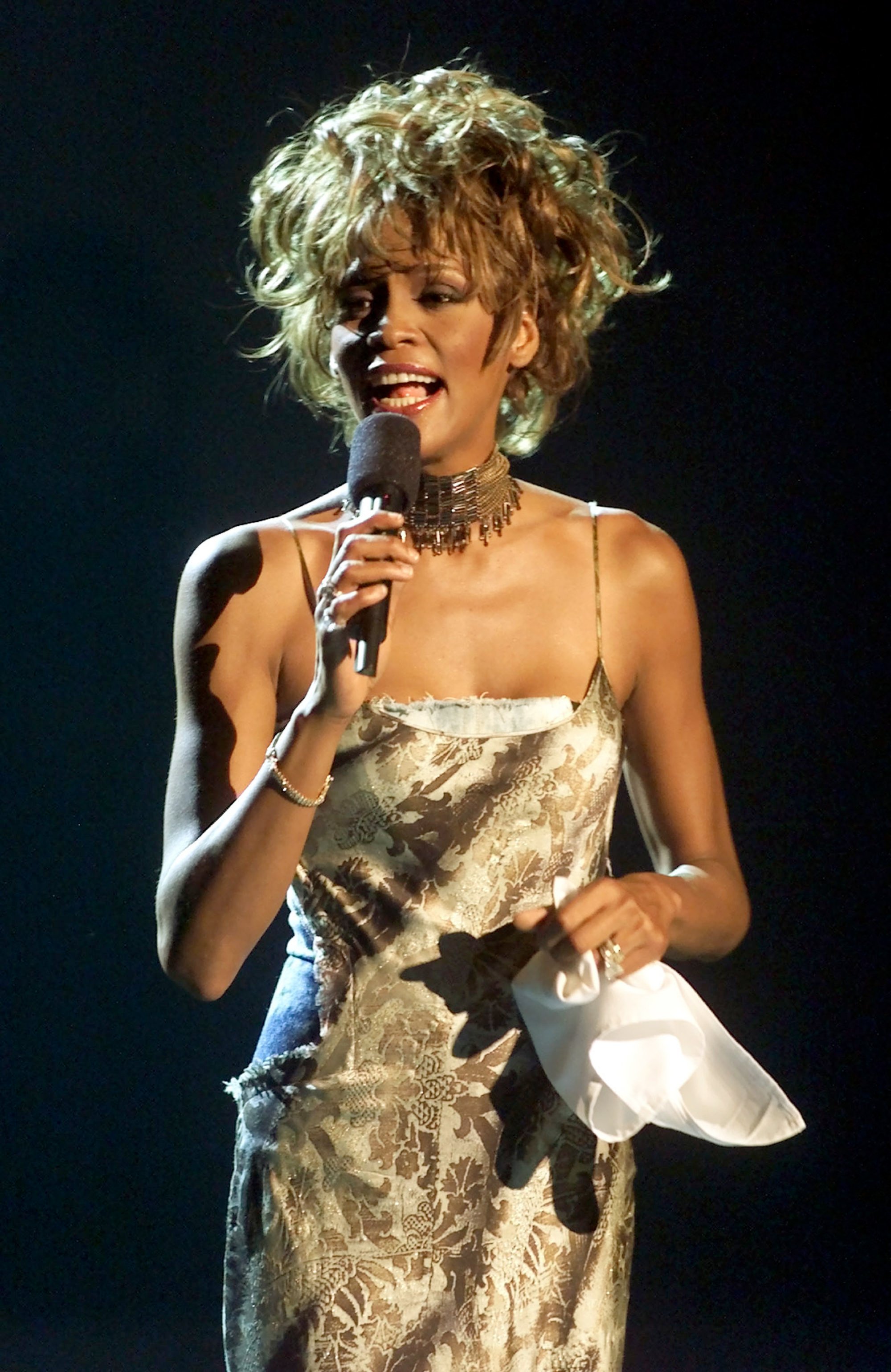
When Whitney Houston toured the world, her stage presence was commanding and entirely centered on her voice and performance. She did not strap on a guitar, sit at a grand piano, or play percussion. Instead, she commanded the stage with a wireless microphone, utilizing movement, eye contact, and sheer vocal power to engage stadium-sized audiences.
To support her vocally demanding shows, Houston relied on world-class music directors, most notably bassist and arranger Rickey Minor, who served as her longtime musical director. Minor and his band managed the complex live arrangements of her catalog, matching the pristine production of her studio albums while allowing room for her legendary vocal improvisation.
In live concert settings, artists who do not play instruments often face a false scrutiny regarding their overall musicianship. However, music historians and fellow artists recognize that directing a live band with your voice—signaling key changes, tempo shifts, and dynamic builds entirely through vocal cues and hand gestures—requires an advanced, highly specialized form of musical leadership.
| Live Performance Attribute | Whitney Houston's Approach |
|---|---|
| Stage Setup | Centered entirely around vocal delivery, backing vocalists, and a full live band. |
| Acoustic Segments | Focused on stripped-down arrangements with a piano or acoustic guitar accompaniment played by band members, while she stood at the microphone. |
| Crowd Interaction | Direct vocal and emotional connection, utilizing call-and-response gospel techniques rather than instrumental solos. |
| Band Direction | Collaborated closely with music directors like Rickey Minor to control the tempo, dynamics, and arrangement flow in real time. |
Frequently Asked Questions
Did Whitney Houston play the piano?
While she grew up in a musical household and had a foundational understanding of keyboards from her gospel background, she did not play the piano professionally or record keyboard tracks for her music. Her focus remained exclusively on vocal performance and arrangement.
Did Whitney Houston write her own songs?
Whitney Houston was primarily an interpreter of songs rather than a prolific songwriter, though she did co-write a small number of tracks and heavily influenced the arrangement and lyrical delivery of almost everything she recorded. Her genius lay in taking songs written by others and transforming them into definitive artistic statements, as seen with her iconic cover of Dolly Parton’s "I Will Always Love You."
Was Whitney Houston formally trained in music theory?
Houston did not receive formal conservatory training in music theory or reading sheet music. Her musical education was practical and immersive, rooted in the oral and aural traditions of the Black church, where listening, harmonizing, and improvising by ear are the primary modes of learning.
Did any members of Whitney Houston’s family play instruments?
Yes, musical talent ran deep in her family. Her mother, Cissy Houston, was a prominent singer. Her cousins Dionne Warwick and Dee Dee Warwick enjoyed successful singing careers, and her mother's family included various musicians and singers deeply embedded in the gospel and soul scenes of the New York and New Jersey areas.
Conclusion and Next Actions
Whitney Houston did not play any musical instruments, yet her impact on the world of music is equal to that of any virtuoso pianist or guitarist. Her voice was an instrument of rare power, flexibility, and emotional depth. For listeners and researchers exploring her legacy, the best next step is to listen closely to her isolated vocal tracks or studio outtakes available on official retrospective releases. Hearing her vocals stripped of instrumentation reveals the precise, instrumental-like control she maintained over every note, proving that true musical mastery transcends physical hardware.