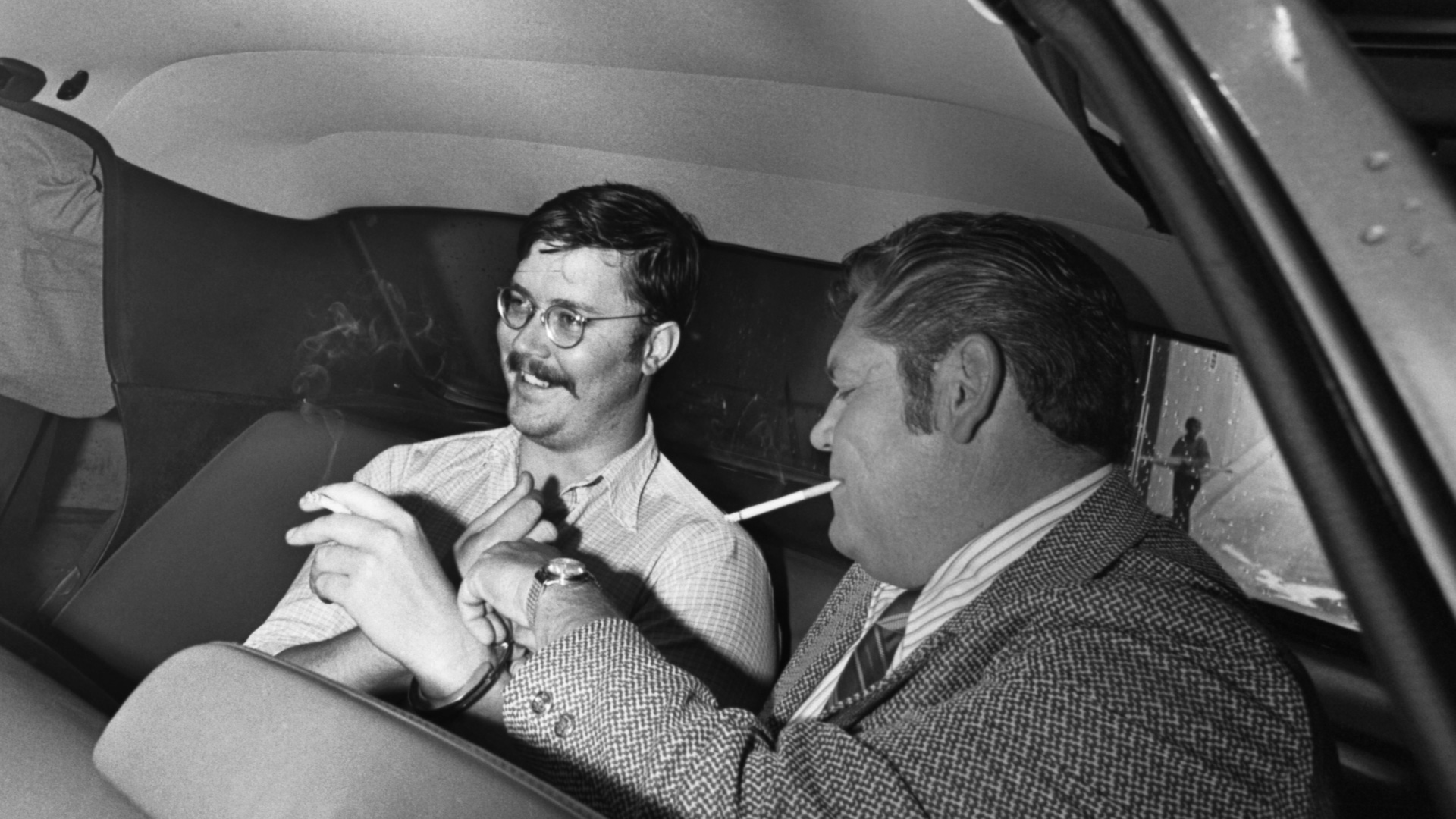
Edmund Emil Kemper III remains one of the most studied and chilling figures in the annals of American true crime. Standing at 6-foot-9 and possessing an IQ measured in the 140s, Kemper defies many of the conventional tropes associated with serial offenders. His history of calculated violence, followed by his voluntary surrender and subsequent cooperation with the FBI’s Behavioral Science Unit, has provided researchers with a unique, albeit disturbing, look into the mind of a sociopathic killer. Understanding Kemper requires a clinical examination of his psychological development, his specific patterns of victim selection, and the horrific timeline of his crimes in California during the early 1970s.
Early Life and Developmental Deviance
Born in 1948 in Burbank, California, Edmund Kemper’s childhood was defined by a volatile home environment and a complex, often abusive relationship with his mother, Clarnell Kemper. Psychological evaluations performed during his incarceration and by forensic observers suggest that his early years were marked by significant behavioral red flags.
Kemper’s early history included acts of animal cruelty and "pretend" games involving the decapitation of dolls—a grim foreshadowing of his later adult crimes. Following his parents' divorce, he moved to Montana with his mother, where he ultimately committed his first murders at the age of 15. In 1964, he shot and killed both his paternal grandparents, claiming he simply "wanted to see what it felt like to kill Grandma."
He was committed to the California Youth Authority, where he spent five years. During this period, he was subjected to various psychological tests and interventions. Despite being diagnosed with paranoid schizophrenia at various points, Kemper was eventually released in 1969, deemed "rehabilitated" by a system that failed to grasp the depth of his pathology. This failure of the psychiatric and judicial system to identify the risk Kemper posed remains a primary focus for those studying institutional oversight in criminal justice.
The Co-Ed Killer: Modus Operandi and Victimology
Between 1972 and 1973, Kemper embarked on a spree that earned him the moniker "The Co-Ed Killer." His victimology was characterized by a specific preference for young female hitchhikers, primarily students at or near the University of California, Santa Cruz.
Kemper utilized his physical size and articulate, polite demeanor to lure victims into his vehicle. He often presented himself as a helpful motorist, exploiting the culture of hitchhiking prevalent among college students in the early 1970s. Once a victim was inside the car, he would brandish a weapon, restrain them, and transport them to a secluded location.
His victimology reflects a blend of opportunistic predation and deliberate ritual. The victims were chosen based on accessibility and perceived vulnerability, but the subsequent acts of mutilation and necrophilia suggest that these murders were deeply rooted in a need for total power and control—a central theme in his psychological profile.
Summary of Known Victims
| Name | Date of Death | Age | Context of Interaction |
|---|---|---|---|
| Mary Anne Pesce | Sep 14, 1972 | 18 | Hitchhiking; UCSC student |
| Anita Luchessa | Sep 14, 1972 | 18 | Hitchhiking; UCSC student |
| Aiko Koo | Jan 8, 1973 | 15 | Hitchhiking |
| Cindy Schall | Feb 5, 1973 | 18 | Hitchhiking; UCSC student |
| Rosalind Thorpe | Feb 5, 1973 | 23 | Hitchhiking |
| Allison Liu | Mar 23, 1973 | 20 | Hitchhiking; UCSC student |
| Clarnell Kemper | Apr 20, 1973 | 52 | Personal victim; Mother |
| Sally Hallett | Apr 20, 1973 | 24 | Personal associate |
The Psychological Profile: Intelligence and Narcissism
The "Kemper Profile" is distinct because it lacks the social withdrawal or cognitive incoherence often associated with severe mental illness. Instead, clinicians have highlighted his high level of cognitive functioning and his ability to compartmentalize his violent fantasies.
1. Power and Control Dynamics
Kemper’s crimes were not driven by simple impulse; they were the execution of long-standing fantasies of dominance. His victims were often treated as objects to be collected and discarded. This behavior represents an extreme form of narcissistic objectification, where the victim’s humanity is entirely erased in favor of the killer’s psychological gratification.
2. The Relationship with His Mother
The final stage of his killing spree occurred in April 1973, when he murdered his mother, Clarnell, and her friend, Sally Hallett. This act serves as the nexus of his pathology. For years, Kemper had described his mother as overbearing, emotionally abusive, and critical. By killing her, he was effectively "ending" the primary source of his emotional turmoil, though he later claimed the act was motivated by a desire to finally stop the noise and criticism in his head.
3. Ability to Mimetically Adapt
Unlike many serial offenders who operate on the fringes of society, Kemper was noted for his ability to pass as a "normal" member of the community. He frequented bars where police officers drank, maintained a job, and even socialized with those who were actively hunting for the "Co-Ed Killer." This ability to mimic normative social cues made him exceptionally dangerous.
FBI Cooperation and Contributions to Behavioral Science
Perhaps the most paradoxical aspect of the Kemper case is his role as a consultant for the FBI's Behavioral Science Unit (BSU) in the late 1970s and early 1980s. Agents, including Robert Ressler and John Douglas, interviewed Kemper extensively.
Kemper’s willingness to discuss the "why" and "how" of his crimes provided the BSU with invaluable data regarding the mindset of organized serial killers. He offered insights into the progression of fantasy, the necessity of the "cooling-off period," and the way serial offenders rationalize their actions. While his cooperation was undoubtedly self-serving—designed to keep him in the spotlight and maintain intellectual engagement—it fundamentally altered the methodology of criminal profiling.
Frequently Asked Questions
Why was Ed Kemper considered a "high-functioning" offender?
Kemper possessed an IQ of 140 and demonstrated the ability to plan, execute, and cover up crimes while maintaining a functional social existence. He did not exhibit the disorganized, impulsive behavior often seen in lower-functioning killers; rather, he exercised extreme control over his environment.
What role did the California psychiatric system play in his release?
The California Youth Authority released Kemper in 1969, concluding that his early history of violence was behind him. This decision is frequently cited by legal scholars as a catastrophic failure in risk assessment, as the system prioritized his "articulate" and "cooperative" facade over his underlying violent potential.
Did Kemper choose his victims based on a specific "type"?
Yes. He specifically targeted young, female students. His choice was primarily tactical—hitchhiking was common, and young students were mobile—but it was also psychological; he viewed these women as representations of the feminine authority figures he felt oppressed by.
Is Kemper still incarcerated in 2026?
Yes. As of 2026, Ed Kemper remains incarcerated in the California Medical Facility in Vacaville. He has been denied parole multiple times, and given the nature and volume of his crimes, he is expected to remain in state custody for the duration of his life.
Conclusion and Current Status
Edmund Kemper remains a seminal case study in the history of forensic psychology. His crimes forced a transition in how law enforcement views the "organized" killer—someone who is not necessarily "insane" in the legal sense, but rather a predator capable of complex, goal-oriented behavior. As of 2026, his continued imprisonment serves as a grim reminder of the limitations of the rehabilitation model for high-functioning, predatory offenders. For researchers and true crime scholars, the Kemper case remains the definitive example of why understanding the nuances of an offender's psychological profile is essential for modern forensic investigation and public safety.