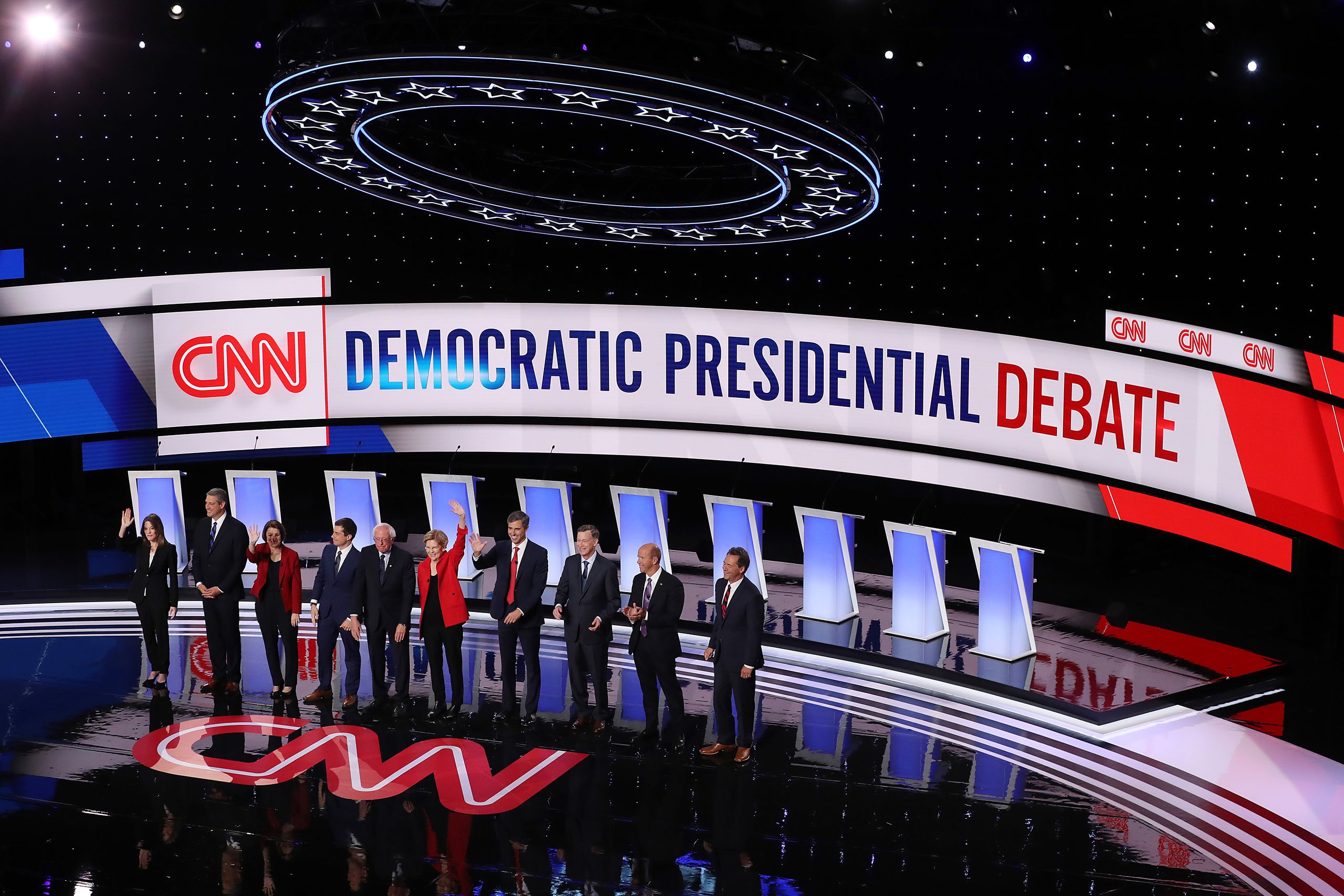
The 2020 Democratic primary was the process by which the Democratic Party selected Joe Biden as its nominee for President of the United States. This election cycle featured the most diverse and largest field of candidates in American history, ultimately centering on a choice between moderate incrementalism and progressive structural change before consolidating around Biden following his decisive victory in South Carolina.
The 2020 primary remains a landmark event in American political history, not only for the volume of participants but for the unique external challenges—most notably the COVID-19 pandemic—that fundamentally altered the mechanics of voting and campaigning. From the vantage point of 2026, the 2020 primary is viewed as the crucible that defined the Democratic Party’s modern coalition, balancing traditional labor support with an energized youth movement and a critical African American voter base.
The Political Landscape and Candidate Field
Heading into 2019, the Democratic Party was motivated by a singular goal: identifying the candidate best positioned to defeat incumbent President Donald Trump. This "electability" narrative dominated the discourse, though it was often interpreted differently by various factions of the party. To some, electability meant a moderate who could appeal to Rust Belt swing voters; to others, it meant a progressive who could mobilize a massive turnout of young and minority voters.
The field was unprecedented in its scope. At its peak, over 20 major candidates were vying for the nomination. This included established senators like Bernie Sanders and Elizabeth Warren, former Vice President Joe Biden, and newcomers like South Bend Mayor Pete Buttigieg and entrepreneur Andrew Yang. The diversity of the field was a point of pride for the party, featuring multiple women, people of color, and the first openly LGBTQ+ major candidate.
The Moderate vs. Progressive Divide
The primary was defined by a significant ideological rift. On one side, the progressive wing, led by Senator Bernie Sanders (I-VT) and Senator Elizabeth Warren (D-MA), advocated for "Medicare for All," the "Green New Deal," and significant wealth taxes. Their platform was built on the idea that the political system required "big, structural change" to address systemic inequality.
On the other side, the moderate wing, including Joe Biden, Amy Klobuchar, and Pete Buttigieg, argued for a more incremental approach. They proposed expanding the Affordable Care Act with a public option rather than replacing private insurance entirely. They emphasized stability, experience, and the ability to build a broad governing coalition. This ideological tug-of-war persisted through the first several states, with no clear consensus emerging until late February 2020.
The Early States: Momentum and Uncertainty
The 2020 primary season followed the traditional calendar, beginning with the Iowa Caucuses and the New Hampshire Primary. However, the early results provided more confusion than clarity, leading to a protracted period of uncertainty for the party establishment.
The Iowa Caucus Breakdown
The February 3, 2020, Iowa Caucuses were marred by technical failures. A new mobile application designed to report results malfunctioned, leading to a multi-day delay in declaring a winner. When the dust finally settled, Pete Buttigieg narrowly edged out Bernie Sanders in the state's "State Delegate Equivalents," though Sanders won the popular vote. The chaos in Iowa deprived Buttigieg of a traditional "victory bounce" and raised serious questions about the future of the caucus system itself.
New Hampshire and Nevada
In New Hampshire, Bernie Sanders secured a narrow victory over Buttigieg and Amy Klobuchar, while Joe Biden finished a disappointing fifth. This poor showing for Biden led many pundits to speculate that his campaign was nearing its end. Sanders then solidified his frontrunner status with a dominant win in the Nevada Caucuses, demonstrating his ability to build a "multiracial, multigenerational" coalition, particularly among Latino voters.
By late February, the Democratic establishment was increasingly concerned that a fractured moderate field would allow Sanders to secure a plurality of delegates, potentially leading to a contested convention. This set the stage for one of the most dramatic shifts in American electoral history in South Carolina.
The South Carolina Pivot and Super Tuesday
The turning point of the 2020 Democratic primary occurred on February 29, 2020. South Carolina, with its large and influential African American electorate, served as Joe Biden’s "firewall." A critical endorsement from Representative Jim Clyburn, a titan of South Carolina politics, helped propel Biden to a landslide victory.
The Great Consolidation
Biden’s victory in South Carolina triggered a rapid consolidation of the moderate wing. Within 48 hours, both Pete Buttigieg and Amy Klobuchar suspended their campaigns and endorsed Biden. This maneuver was designed to unify the moderate vote ahead of Super Tuesday (March 3, 2020), where 14 states would vote simultaneously.
Super Tuesday proved to be a decisive victory for Biden. He won 10 of the 14 states, including a surprise victory in Texas and a massive win in Virginia. Senator Elizabeth Warren dropped out shortly after, following a disappointing third-place finish in her home state of Massachusetts. Michael Bloomberg, the former Mayor of New York who had spent hundreds of millions of dollars on a late-entry campaign, also withdrew and endorsed Biden.
| Candidate | Notable State Wins | Primary Delegate Estimate (Final) | Key Platform Pillar |
|---|---|---|---|
| Joe Biden | SC, TX, VA, FL, MI, PA | 2,714 | Public Option / Restoration of Norms |
| Bernie Sanders | CA, NV, NH, CO, VT | 1,117 | Medicare for All / Green New Deal |
| Elizabeth Warren | None | 81 | Wealth Tax / Universal Childcare |
| Michael Bloomberg | American Samoa | 59 | Climate Action / Gun Control |
| Pete Buttigieg | Iowa (Delegates) | 26 | Generational Change / National Service |
| Amy Klobuchar | None | 7 | Heartfelt Pragmatism / Infrastructure |
Technical Rules and Delegate Math
The 2020 primary operated under specific rules set by the Democratic National Committee (DNC) designed to make the process more transparent and representative. A key change involved the role of "Superdelegates"—party leaders and elected officials who previously had a vote on the first ballot at the convention. In 2020, Superdelegates were prohibited from voting on the first ballot unless a candidate had already secured a majority of pledged delegates through the primary and caucus process.
The 15% Threshold
The DNC also maintained the 15% threshold rule. To win any delegates in a given state or congressional district, a candidate had to receive at least 15% of the vote. This rule was instrumental in winnowing the field. Candidates who could not reach this threshold in early states found it nearly impossible to sustain fundraising or media attention, leading to the rapid series of dropouts following Super Tuesday.
Detailed information regarding these delegate rules and the official certification of results can be found through the Federal Election Commission (FEC) and the official Democratic National Committee archives.
The Impact of COVID-19 on the Primary
By mid-March 2020, the primary was fundamentally transformed by the global COVID-19 pandemic. Large-scale rallies were cancelled, and the campaign moved into a virtual environment. Several states, including Ohio and Georgia, postponed their primary dates to mitigate the spread of the virus.
The pandemic essentially froze the race in place. While Bernie Sanders remained in the contest through the end of March, the logistics of campaigning during a national emergency favored the candidate who already held a significant lead. Biden was able to project a sense of "steady leadership" during the crisis, which contrasted with the administration's response at the time. On April 8, 2020, Bernie Sanders suspended his campaign, making Joe Biden the presumptive nominee.
The Transition to the General Election
Despite the hard-fought primary, the transition to the general election was marked by a surprising degree of party unity. Biden and Sanders established joint "Task Forces" to collaborate on policy areas such as healthcare, the economy, and the environment. This effort helped incorporate progressive priorities into the official party platform, ensuring that the Sanders wing felt represented in the Biden coalition.
Debates and Qualification Criteria
The DNC debates were a critical component of the 2020 cycle. Because the field was so large, the DNC established strict qualification criteria based on both polling numbers and the number of unique individual donors.
- Early Debates: Featured two nights of 10 candidates each.
- The Donor Threshold: This forced candidates to engage in aggressive grassroots fundraising. It was particularly successful for "outsider" candidates like Andrew Yang, who used a loyal digital following to stay on the debate stage long after more traditional politicians had dropped out.
- Controversies: The rules were modified later in the cycle to remove the donor requirement, allowing Michael Bloomberg to qualify for the debates. This was met with criticism from other candidates who had spent months building grassroots support.
The debates were often contentious, with major clashes over the feasibility of "Medicare for All" and Biden's long legislative record. However, these debates served as a vital vetting process, exposing candidates to rigorous national scrutiny before a single vote was cast.
Frequently Asked Questions
Who won the Iowa Caucus in 2020?
The 2020 Iowa Caucus resulted in a split outcome due to technical errors with a reporting app. Pete Buttigieg won the most State Delegate Equivalents (SDEs), while Bernie Sanders won the popular vote. The confusion led to a significant loss of prestige for the Iowa Caucuses as the traditional "first-in-the-nation" contest.
Why did Joe Biden win after losing the first three states?
Biden’s victory was primarily driven by his overwhelming support among African American voters in South Carolina and the subsequent consolidation of the moderate wing of the party. The withdrawal of Pete Buttigieg and Amy Klobuchar just before Super Tuesday allowed moderate voters to unify behind Biden, preventing Bernie Sanders from building an insurmountable lead.
What happened to the Superdelegates in 2020?
Following the 2016 primary, the DNC changed the rules regarding Superdelegates. In 2020, these party insiders were not allowed to vote on the first ballot of the convention unless a candidate had already secured a majority through pledged delegates. This was intended to make the process more democratic and reduce the influence of the party establishment.
How many candidates ran in the 2020 Democratic primary?
At least 29 notable candidates launched campaigns for the 2020 Democratic nomination. This was the largest field of candidates for any single party in U.S. history. The field included 16 current or former members of Congress, four governors, and several prominent business leaders.
When did Bernie Sanders drop out?
Bernie Sanders officially suspended his campaign on April 8, 2020. He cited the ongoing COVID-19 pandemic and Joe Biden's significant delegate lead as the primary reasons for his withdrawal. He subsequently endorsed Biden and worked to help unify the party ahead of the November election.
What was the "Nevada Culinary Union" controversy?
In Nevada, the powerful Culinary Workers Union declined to endorse a candidate but issued flyers criticizing Bernie Sanders’ "Medicare for All" plan, arguing it would end their hard-won private health insurance. Despite this, Sanders won Nevada in a landslide, demonstrating strong support among the union's rank-and-file members.
Reflecting on the Primary Six Years Later
Looking back from 2026, the 2020 Democratic primary serves as a case study in political consolidation and crisis management. It was a primary that began with a debate over the very soul of the party—ranging from democratic socialism to centrist pragmatism—and ended with a swift unification necessitated by a global health crisis.
The 2020 cycle also signaled the end of an era for the traditional caucus system. The failures in Iowa paved the way for the DNC to eventually reorder its primary calendar in later years, elevating more diverse states to the beginning of the process. For researchers and voters alike, understanding the 2020 primary is essential to understanding the current alignment of the Democratic Party and the electoral strategies that have shaped the 2020s.
For those looking to analyze the historical data further, the Pew Research Center provides extensive longitudinal studies on the voter shifts that occurred during this period.