The 1960s represented a seismic shift in global film history, marking the transition from the rigid studio-system era to the rise of independent, auteur-driven storytelling. This decade shattered traditional narrative structures and censorship norms, effectively bridging the gap between classical Hollywood golden-age tropes and the experimental, gritty realism of the New Hollywood movement.
The Erosion of the Studio System
At the start of the 1960s, the major Hollywood studios—MGM, 20th Century Fox, Warner Bros., Paramount, RKO, and Columbia—still exerted significant control over production. However, the foundational "Golden Age" model, characterized by long-term talent contracts and a centralized production hierarchy, was failing. The rise of television as a household medium had gutted box office receipts, forcing studios to rethink their business model.
By the mid-1960s, the industry began a desperate pivot toward "event" films—lavish, expensive musicals and historical epics like Cleopatra (1963) and The Sound of Music (1965). While these films brought massive short-term revenue, they were financially risky. When several high-budget productions failed, the major studios were forced to open the gates to a younger, more rebellious generation of filmmakers who sought to reflect the social turbulence of the era, including the Civil Rights Movement, the Vietnam War, and the counterculture shift.
International Influences: The Rise of Modernism
1960s cinema was not a phenomenon restricted to the United States. Global movements profoundly altered the grammar of film, pushing directors toward a more self-aware, stylistic approach.
- The French New Wave (Nouvelle Vague): Directors like Jean-Luc Godard and François Truffaut rejected traditional scripts and soundstages in favor of handheld cameras, natural lighting, and jump cuts. Their work, such as Breathless (1960), introduced the concept of the director as an "auteur"—an artist who uses the camera like a pen to express personal vision.
- Italian Neo-Realism and Modernism: While the immediate post-war realism had evolved, Italian cinema in the 60s turned toward the psychological. Federico Fellini’s 8½ (1963) and Michelangelo Antonioni’s L’Avventura (1960) dismantled linear time, focusing instead on internal character conflict and alienation.
- The British New Wave (Kitchen Sink Realism): In the UK, filmmakers focused on the working-class experience, grounding films like Saturday Night and Sunday Morning (1960) in the grimy, authentic locations of industrial cities rather than the polished sets of the past.
Key Genres and Structural Shifts
The 1960s saw the deconstruction and eventual subversion of the most popular genres. This trend peaked toward the end of the decade, as audiences grew tired of idealized heroes and binary moral frameworks.
The Revisionist Western
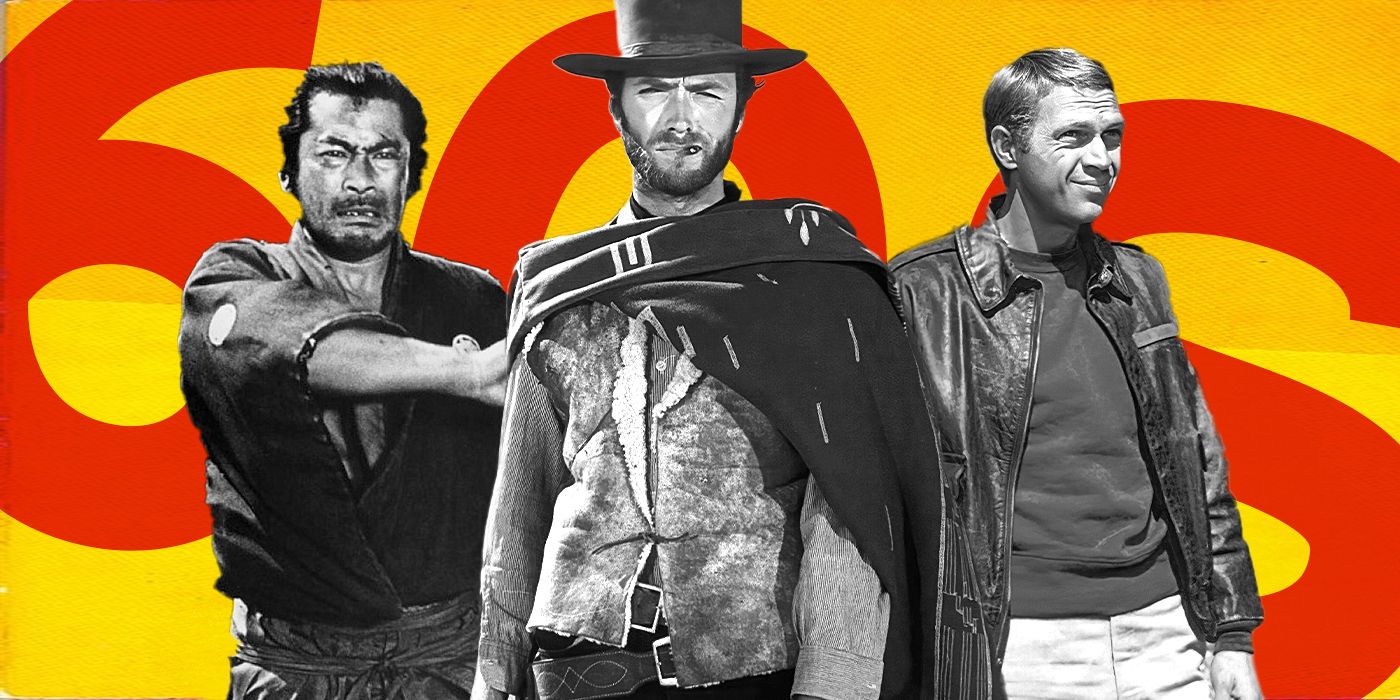
The Western, once the cornerstone of American morality plays, underwent a radical transformation. Sergio Leone’s "Spaghetti Westerns," such as The Good, the Bad and the Ugly (1966), replaced the clean-cut heroes of John Ford’s era with cynical, morally ambiguous gunslingers. This revisionist approach culminated in films like The Wild Bunch (1969), which utilized graphic violence and moral complexity to reflect the brutal realities of a changing world.
The Psychological Thriller and Horror
Alfred Hitchcock redefined the thriller genre with Psycho (1960). By killing off his main character in the first act, Hitchcock defied every established rule of classical screenwriting. Simultaneously, the rise of the psychological horror genre explored human madness as a social consequence, exemplified by films like Rosemary’s Baby (1968), which brought the occult into the setting of modern urban apartment living.
Comparison of Production Eras
Understanding the shift in 1960s cinema requires a side-by-side look at how production values and thematic focus changed between the start and end of the decade.
| Feature | Early 1960s (Studio Era) | Late 1960s (New Wave Influence) |
|---|---|---|
| Primary Goal | Studio profit and star vehicle promotion | Artistic expression and social commentary |
| Location | Primarily controlled studio lots | Authentic on-location shoots |
| Camera Work | Stable, invisible, classical framing | Handheld, innovative, kinetic energy |
| Narrative | Linear, resolution-focused | Fragmented, open-ended, ambiguous |
| Censorship | Strict adherence to the Hays Code | Rejection of the code; rise of MPAA ratings |
The End of Censorship: From Code to Ratings
A defining legal and cultural aspect of 1960s cinema was the total collapse of the Motion Picture Production Code (the Hays Code). In effect since the 1930s, this code strictly prohibited the depiction of "obscenity," "suggestive" behavior, or questioning authority.
By the late 1960s, the code had become irrelevant to a generation that demanded realism. Films like Bonnie and Clyde (1967) and The Graduate (1967) pushed boundaries in their depictions of sex, crime, and anti-authoritarian sentiment. In 1968, the Motion Picture Association of America (MPAA) replaced the Code with a rating system (G, M, R, X). This allowed filmmakers unprecedented freedom to explore adult themes, while simultaneously providing parents with guidance—a system that, with various updates, remains the basis for film classification in the United States today.
Technical Innovations
The technology of film production also underwent significant modernization during this decade. The availability of high-speed film stocks and lightweight, portable equipment—most notably the Éclair NPR camera—allowed directors to move their crews into the streets. Sound recording became more sophisticated with the development of smaller, battery-operated tape recorders, which allowed for location sound that matched the portability of the cameras. These technical advances were not just luxuries; they were prerequisites for the documentary-style aesthetic that became a staple of the New Hollywood movement.
Essential Viewing for Understanding the Decade
To grasp the progression of 1960s cinema, viewers should consider the following foundational films that defined specific shifts in style and narrative:
- Psycho (1960): The definitive break from classical structure and the birth of the modern slasher.
- 8½ (1963): A masterpiece of meta-cinema, exploring the psychological state of the filmmaker.
- The Good, the Bad and the Ugly (1966): The evolution of the revisionist Western.
- Bonnie and Clyde (1967): The film that effectively ended the Hays Code through its violent, rebellious anti-hero narrative.
- 2001: A Space Odyssey (1968): A watershed moment for visual effects and non-verbal storytelling.
- Easy Rider (1969): The quintessential counterculture film, utilizing rock music and low-budget aesthetics to capture the "road movie" spirit.
Frequently Asked Questions
Why was the 1960s considered the end of the Golden Age of Hollywood? The Golden Age relied on the studio system, where actors and directors were under long-term contracts and studios owned the distribution chains (theaters). When the Supreme Court forced studios to divest their theater chains, and the popularity of television grew, this centralized power structure collapsed, leading to the rise of independent, project-by-project production.
What was the Hays Code and why did it fail in the 1960s? The Hays Code was a self-censorship set of rules established by the movie industry to avoid government regulation. It failed in the 1960s because it could not accommodate the changing values of the audience. By 1968, it became clear that the industry needed a rating system to classify films for suitability rather than prohibiting content outright.
How did the Vietnam War affect 1960s cinema? The war introduced a sense of cynicism and distrust toward institutional power. This translated into films that featured anti-heroes or protagonists who were actively fighting against societal norms, moving away from the "upstanding patriot" archetypes prevalent in the 1940s and 1950s.
What is the difference between European New Wave and New Hollywood? While both favored artistic control, the French and other European New Waves were largely driven by stylistic experiments with camera work and narrative structure. New Hollywood, while heavily influenced by these European styles, was more focused on American social issues, the counterculture, and the integration of these "art-house" aesthetics into the commercial film industry.
What role did music play in 1960s films? The 1960s marked the first time that contemporary popular music (rock and pop) was treated as an essential component of a film's narrative identity rather than just background underscore. The Graduate (1967), with its Simon & Garfunkel soundtrack, set a standard for how music could define the mood and audience of a generation.
Practical Recommendation for Further Study
To deepen your understanding of this period, treat 1960s cinema as an interconnected web of artistic exchange. Start by watching one classic studio-produced film from 1960 and comparing it directly to an experimental film from 1969. Note the differences in pacing, the use of music, and the portrayal of the protagonist. This comparison reveals that 1960s cinema was not merely a collection of movies, but a radical transformation of the filmic language that governs the media consumed in 2026.