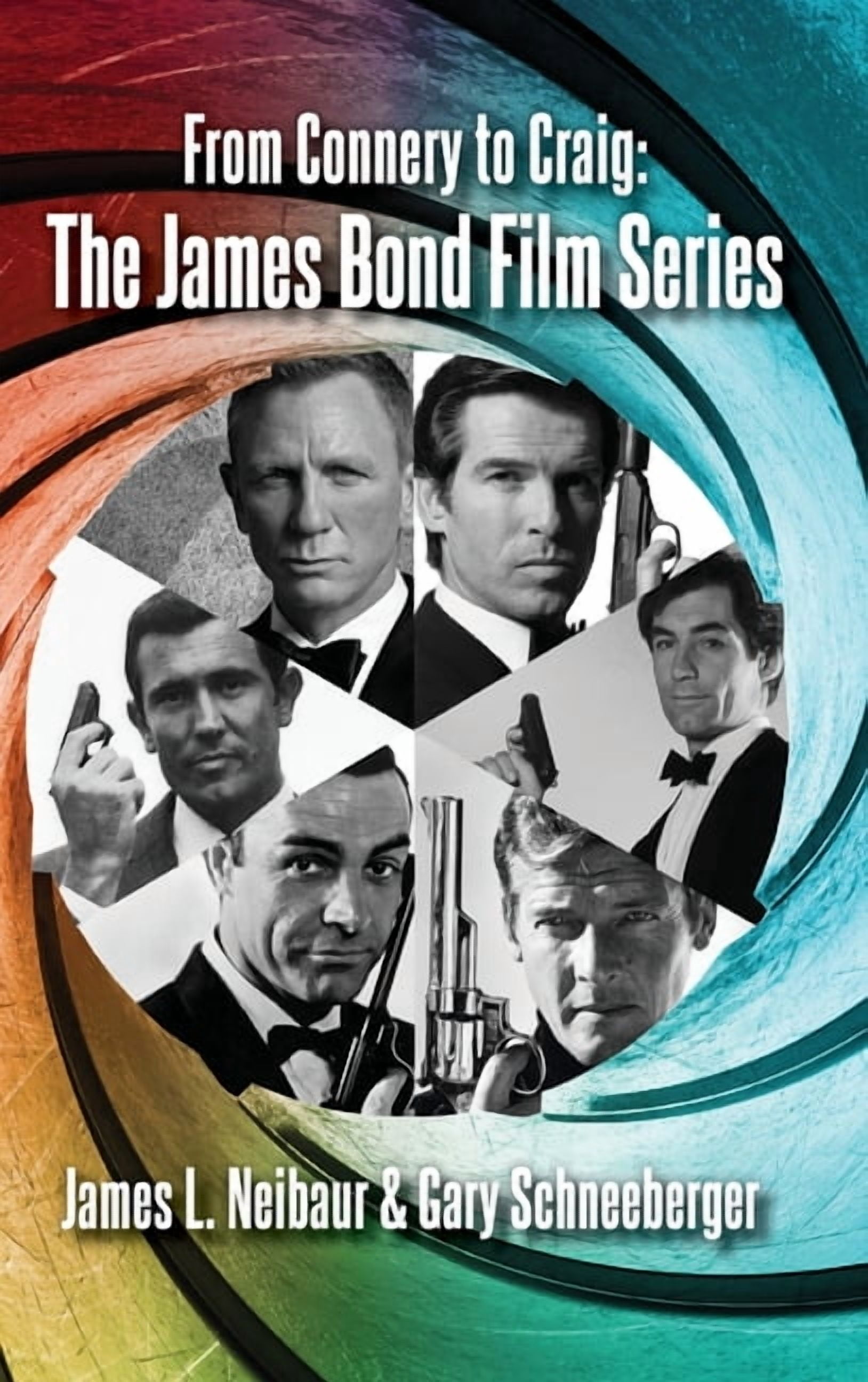
The 007 film series is one of the longest-running and most commercially successful franchises in cinematic history, following the fictional British Secret Service agent James Bond across 25 official Eon Productions films spanning more than six decades, originating from the spy novels written by Ian Fleming.
Introduction to the Cinematic Franchise
The cinematic journey of James Bond, code-named 007, began in 1962 with the release of Dr. No, starring Sean Connery and produced by Albert R. "Cubby" Broccoli and Harry Saltzman through Eon Productions. Since then, the character has transformed from a Cold War spy into a global pop-culture phenomenon, interpreted by six primary actors over more than sixty years.
Understanding the 007 film series requires looking past individual titles to examine how the franchise has adapted to changing geopolitical landscapes, evolving cinematic technologies, and shifting cultural attitudes toward gender, authority, and heroism. While other studio properties undergo reboots every decade, the Bond franchise maintains a continuous, evolving canon characterized by recurring tropes: iconic title sequences, sophisticatedgadgets, high-stakes espionage, memorable villains, and the signature Aston Martin vehicles.
The Evolution of James Bond: Actors and Eras
The longevity of the 007 film series rests heavily on its succession of lead actors. Each performer brought a distinct tone, physical presence, and psychological interpretation to the role, effectively redefining the character for successive generations of moviegoers.
The Sean Connery Era (1962–1967, 1971, 1983)
Sean Connery established the cinematic blueprint for James Bond. Combining lethal physical competence with understated charm, dry wit, and an unmistakable Scottish-accented snarl, Connery's Bond was dangerous, suave, and unapologetically confident. Films like From Russia with Love (1963) and Goldfinger (1964) cemented the formula of exotic locations, elaborate villainous lairs, and high-tension action set-pieces. Though Connery officially departed after You Only Live Twice, he returned for Diamonds Are Forever (1971) and later starred in the non-Eon production Never Say Never Again (1983).
The George Lazenby Interlude (1969)
Australian model George Lazenby stepped into the role for a single film, On Her Majesty's Secret Service. While initially overshadowed by Connery's departure, Lazenby's portrayal is now celebrated for its emotional vulnerability and exceptionally faithful adaptation of Ian Fleming's novel. The film’s tragic conclusion altered the psychological trajectory of the character, introducing stakes that subsequent lighthearted entries temporarily set aside.
The Roger Moore Era (1973–1985)
Roger Moore starred in seven films, injecting the 007 film series with self-aware humor, theatrical flair, and a lighter, more fantastic tone. Moore’s Bond leaned into the campy sensibilities of the 1970s and 1980s, trading gritty realism for outrageous stunts, space exploration (Moonraker), and tongue-in-cheek puns. Despite the stylistic pivot, Moore's tenure sustained the box-office dominance of the franchise through changing cinematic trends.
The Timothy Dalton Era (1987–1989)
Seeking a return to Ian Fleming’s literary roots, Timothy Dalton portrayed James Bond as a hard-edged, brooding, and morally conflicted professional in The Living Daylights and Licence to Kill. Dalton's performance anticipated the grittier spy thrillers of the late 20th century, presenting a colder, more focused agent who prioritized duty over charm. Though commercially successful, the darker tone polarized audiences accustomed to Moore’s levity.
The Pierce Brosnan Era (1995–2002)
Pierce Brosnan revitalized the franchise after a six-year hiatus, bridging the gap between classic spy formulas and modern post-Cold War geopolitics. Films like GoldenEye (1995) combined the traditional charm of Connery and the wit of Moore with high-octane modern action choreography and early computer-generated special effects. Brosnan’s tenure successfully carried the 007 film series into the 21st century.
The Daniel Craig Era (2006–2021)
Daniel Craig redefined James Bond through a serialized, character-driven narrative arc that began with a gritty reboot of Casino Royale (2006) and concluded with No Time to Die (2021). Craig’s interpretation stripped away the gadget-heavy escapism of earlier decades, focusing instead on physical brutality, emotional trauma, institutional corruption, and the personal cost of a life spent in espionage.
Comprehensive Chronology of Eon Productions 007 Films
| Film Title | Year | Lead Actor | Director | Key Antagonist / Organization |
|---|---|---|---|---|
| Dr. No | 1962 | Sean Connery | Terence Young | Dr. Julius No (SPECTRE) |
| From Russia with Love | 1963 | Sean Connery | Terence Young | Rosa Klebb / Red Grant (SPECTRE) |
| Goldfinger | 1964 | Sean Connery | Guy Hamilton | Auric Goldfinger |
| Thunderball | 1965 | Sean Connery | Terence Young | Emilio Largo (SPECTRE) |
| You Only Live Twice | 1967 | Sean Connery | Lewis Gilbert | Ernst Stavro Blofeld (SPECTRE) |
| On Her Majesty's Secret Service | 1969 | George Lazenby | Peter Hunt | Ernst Stavro Blofeld (SPECTRE) |
| Diamonds Are Forever | 1971 | Sean Connery | Guy Hamilton | Ernst Stavro Blofeld |
| Live and Let Die | 1973 | Roger Moore | Guy Hamilton | Dr. Kananga / Mr. Big |
| The Man with the Golden Gun | 1974 | Roger Moore | Guy Hamilton | Francisco Scaramanga |
| The Spy Who Loved Me | 1977 | Roger Moore | Lewis Gilbert | Karl Stromberg |
| Moonraker | 1979 | Roger Moore | Lewis Gilbert | Hugo Drax |
| For Your Eyes Only | 1981 | Roger Moore | John Glen | Aristotle Kristatos |
| Octopussy | 1983 | Roger Moore | John Glen | Kamal Khan / Ari Khan |
| A View to a Kill | 1985 | Roger Moore | John Glen | Max Zorin |
| The Living Daylights | 1987 | Timothy Dalton | John Glen | Georgkov Koskov / Brad Whitaker |
| Licence to Kill | 1989 | Timothy Dalton | John Glen | Franz Sanchez |
| GoldenEye | 1995 | Pierce Brosnan | Martin Campbell | Alec Trevelyan (006) |
| Tomorrow Never Dies | 1997 | Pierce Brosnan | Roger Spottiswoode | Elliot Carver |
| The World Is Not Enough | 1999 | Pierce Brosnan | Michael Apted | Renard / Elektra King |
| Die Another Day | 2002 | Pierce Brosnan | Lee Tamahori | Gustav Graves / Colonel Moon |
| Casino Royale | 2006 | Daniel Craig | Martin Campbell | Le Chiffre |
| Quantum of Solace | 2008 | Daniel Craig | Marc Forster | Dominic Greene (Quantum) |
| Skyfall | 2012 | Daniel Craig | Sam Mendes | Raoul Silva |
| Spectre | 2015 | Daniel Craig | Sam Mendes | Ernst Stavro Blofeld (SPECTRE) |
| No Time to Die | 2021 | Daniel Craig | Cary Joji Fukunaga | Safin |
Production Structure and Creative Continuity
The remarkable stability of the 007 film series is largely attributed to its production lineage. Founded by Albert R. Broccoli and Harry Saltzman, Eon Productions maintained tight creative control over the property for decades. Following Broccoli's passing, leadership transitioned to his daughter, Barbara Broccoli, and stepson, Michael G. Wilson.
This familial stewardship ensured that production values remained consistently high. Unlike many modern cinematic franchises farmed out to rotating directors with disparate visions, the Bond series relies on a stable core crew. Long-serving production designers like Sir Ken Adam created the iconic, cavernous villain lairs that defined 1960s and 1970s blockbusters, while costume designers, stunt coordinators, and title sequence designers like Maurice Binder and Daniel Kleinman established a recognizable visual language.
Furthermore, the musical identity of the franchise is central to its success. From Monty Norman’s iconic "James Bond Theme" (arranged by John Barry) to chart-topping title songs performed by artists such as Shirley Bassey, Paul McCartney, Adele, and Billie Eilish, music has consistently signaled the tone of each cinematic entry before a single line of dialogue is spoken.
Recurring Motifs, Tropes, and Evolution
While individual films range from gritty geopolitical thrillers to science-fiction-adjacent escapades, several recurring elements anchor the franchise:
- MI6 Leadership: The relationship between Bond and his superiors—specifically M, the tech wizard Q, and the administrative secretary Miss Moneypenny—provides emotional grounding and bureaucratic friction.
- The Gadgetry: Introduced heavily in the Connery and Moore eras, Q Branch gadgets transformed from simple tracking devices and trick briefcases into sophisticated weaponry and vehicle modifications. The Craig era temporarily scaled back gadgets in favor of hand-to-hand combat before reintroducing subtle nods to classic technology.
- The Bond Girl: The female characters associated with 007 have evolved significantly. Early films frequently utilized passive femme fatales or damsels in distress. Modern entries feature independent intelligence operatives, formidable antagonists, and complex emotional partners who challenge Bond intellectually and physically.
- Automotive Integration: The Aston Martin DB5, first appearing in Goldfinger, became synonymous with the character, though brands like Lotus, BMW, and various luxury vehicles have featured prominently across different eras.
Future Outlook of the Franchise
Following the conclusion of Daniel Craig's tenure in No Time to Die, the 007 film series has entered a period of strategic hiatus. Eon Productions has maintained deliberate silence regarding casting decisions for the next iteration of James Bond, ensuring that each transition is met with careful planning. As the entertainment landscape shifts toward streaming platforms and cinematic universes, the challenge for the producers remains balancing traditional theatrical spectacle with contemporary narrative expectations, ensuring that James Bond remains relevant for future generations of audiences.