NFL special teams comprise the third distinct unit of a professional football team alongside the offense and defense, responsible exclusively for kicking, punting, and return plays that dictate crucial field position shifts and score outcomes. Far from being an afterthought, this specialized unit accounts for a massive share of game-altering moments through precision execution, complex scheme designs, and high-velocity physical collisions governed by evolving safety regulations.
Introduction to NFL Special Teams
In the landscape of professional American football, the National Football League separates team operations into three distinct units: offense, defense, and special teams. While offensive and defensive units command the vast majority of media attention and tactical study, special teams units take the field during kicking situations, managing punts, field goals, extra points, kickoffs, and kickoff returns. These plays often represent the highest-variance moments in a game, where a single miscue can instantly yield a touchdown or a game-winning score, while elite execution can swing the field position battle by dozens of yards.
Coaching and roster construction for these units require a specialized approach. Every NFL franchise employs a dedicated coordinator solely focused on designing schemes, evaluating personnel, and managing the unique physical demands of kicking game athletes. Understanding how these units operate requires looking past casual observations to examine the specific personnel groups, tactical assignments, strategic mechanics, and evolving rule changes that define modern professional football.
Core Components of the Kicking Game
The special teams ecosystem is divided into several distinct phases, each carrying its own strategic objectives, personnel requirements, and scoring potential. A comprehensive breakdown encompasses four primary phases of the kicking game.
Kickoffs and Kickoff Returns
The kickoff initiates halves and follows every score, launching the ball from the kicking team's territory downfield to the receiving team. The primary objective for the kicking team is to pin the opponent deep inside their own territory while preventing a long return. Conversely, the receiving team utilizes blockers to create lanes for a dynamic return specialist to break into the open field.
Rule modifications over the years—most notably the dynamic kickoff adjustments introduced by the league to reduce high-speed, head-on collisions—have fundamentally altered how these plays are blocked and covered, emphasizing spatial awareness and angles over full-speed open-field hits.
Punts and Punt Returns
Punting typically occurs on fourth down when an offense fails to gain enough yardage to achieve a first down and chooses to relinquish possession. The punter aims to kick the ball high and deep downfield, maximizing hang time to allow the coverage unit—known as the "gunners" and "contain" players—to arrive at the returner as the ball is caught.
The punt return unit attempts to catch the ball cleanly, signal for a fair catch when pressured, or execute blocks to spring a return. Because punts travel significant distances and involve players running at maximum speed from long distances, punt coverage units demand exceptional speed, discipline, and tackling proficiency.
Field Goals and Extra Points
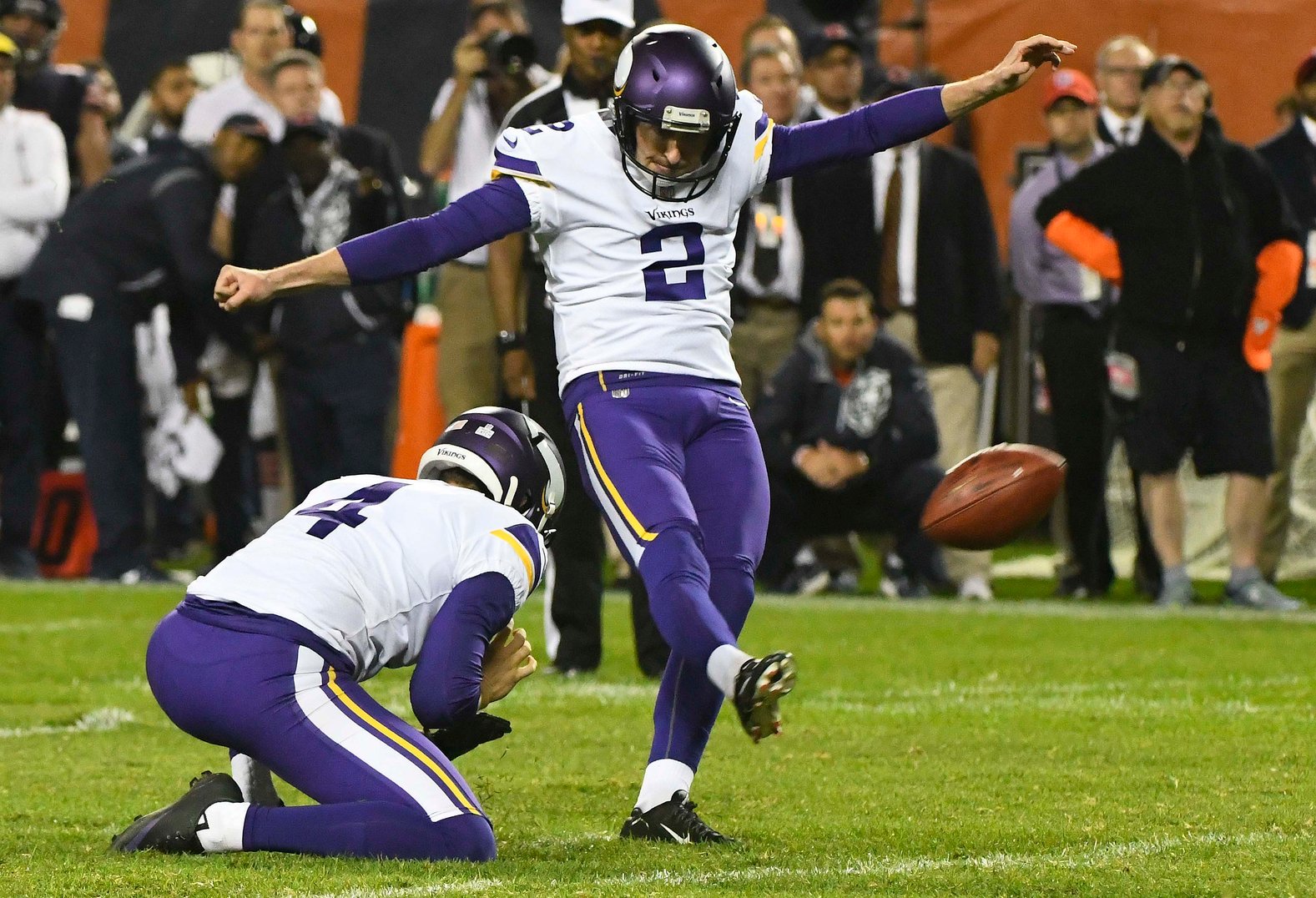
Field goal and extra point attempts are scoring plays governed by precise timing, snap execution, and kicking accuracy. The operation relies on three primary actors working in seamless synchronization:
- The Snapper: Delivers a precise, rapid, spinning snap over a designated distance (typically 7 to 8 yards) to the holder.
- The Holder: Receives the snap, places the ball on the turf, and tilts it to the exact angle required by the kicker while maintaining proper orientation against the defensive rush.
- The Kicker: Approaches the ball with a calculated step cadence and strikes it with maximum clean force and trajectory.
Simultaneously, the offensive line shifts into a protective blocking shield to prevent the defensive interior and edge rushers from blocking the kick.
Key Personnel Roles and Roster Construction
Building an NFL special teams unit requires balancing elite specialists with versatile depth players. Because NFL rosters are limited to 53 active players on game day, coaching staffs cannot afford to carry players who exclusively contribute to special teams unless they provide elite production.
Specialists
- Placekicker (K): Responsible for field goals and extra points, and frequently kickoffs. Accuracy, distance range, and mental resilience under high-pressure situations define elite kickers.
- Punter (P): Tasked with flipping the field position. Elite punters combine immense leg strength with directional control and hang-time manipulation to neutralize opposing returners.
- Long Snapper (LS): A dedicated specialist whose sole responsibility is delivering flawless snaps on punts and field goals. The position demands absolute consistency and immediate engagement as a blocker or coverage tackler post-snap.
Core Special Teams Grinders
Beyond the specialized specialists, the remaining members of the coverage and return units are drawn from backup linebackers, cornerbacks, safeties, and tight ends. These players are often referred to as "core four" special teamers. They possess exceptional speed, high-motor physical toughness, and the technical tackling skills required to operate in chaotic open-field environments. Front offices heavily value versatile depth players who excel in these roles, as they directly impact field position battles and turnover margins.
| Special Teams Unit | Primary Objective | Key Personnel Involved | Tactical Focus |
|---|---|---|---|
| Kickoff Coverage | Pin opponent deep, prevent return | Kickers, Linebackers, Safeties | Lane discipline, speed angles, leverage |
| Kickoff Return | Gain positive field position | Return Specialists, Blockers, Linemen | Wedge blocking, wall execution, vision |
| Punt Team | Maximize hang time, down ball | Punters, Gunners, Center, Protectors | Containment, release moves, tracking |
| Field Goal Protection | Secure clean snap, hold, and kick | Long Snapper, Holder, Kicker, Linemen | Low pad level, gap integrity, timing |
Strategy, Analytics, and Decision-Making
Modern NFL special teams operations are heavily influenced by advanced analytics and situational strategy. Head coaches and special teams coordinators rely on data-driven models to make high-stakes decisions regarding fourth-down conversion attempts versus punting, as well as calculated risks on side kicks and two-point conversions.
Field Position Leverage
Coordinators design coverage schemes to suffocate opposing returners by directional kicking. By forcing a returner toward the sideline or utilizing pooch punts that land inside the opponent's 20-yard line (the "red zone" of punting), the defensive unit gains an immediate structural advantage. Starting an opponent inside their own 10-yard line statistically suppresses their offensive play-calling options, limiting playbook depth and increasing the probability of a defensive stop or turnover.
Game Theory in Onside Kicks and Fakes
Onside kicks and fake punts or field goals represent high-risk, high-reward gambles. Analytics models evaluate score differentials, remaining game time, and opponent tendencies to determine the precise statistical viability of attempting an unexpected trick play. While execution must be flawless, the element of surprise often catches an unprepared opponent off guard, shifting win probability curves dramatically in favor of the aggressive team.
Evolution of Rules and Player Safety
Over the past decade, NFL special teams have undergone radical structural transformations driven primarily by player health and safety initiatives. Concussion data gathered by the league indicated that high-speed, head-on collisions on traditional kickoffs generated an unacceptable rate of traumatic brain injuries.
In response, the league instituted sweeping rule adjustments. Kickoff alignments were compressed, prohibiting the coverage team from getting a running start before the ball was kicked, and touchback rules were modified to encourage fair catches and discourage dangerous returns. These ongoing adjustments require special teams coordinators to continually innovate their blocking schemes and coverage approaches, moving away from brute-force collisions toward technical form-tackling and spatial containment strategies.
Common Misconceptions and Complexities
Fans often overlook the immense preparation required to execute special teams assignments seamlessly. A common misconception is that kicking plays are isolated events requiring minimal practice time. In reality, NFL franchises dedicate specific segments of every practice day to individual specialist drills, unit walkthroughs, and full-speed special teams installation.
Another complexity involves the penalty landscape. Holding, illegal blocks in the back, and out-of-bounds infractions frequently occur during high-speed returns, wiping out explosive plays and shifting momentum instantly. Discipline, precise footwork, and strict adherence to blocking rules separate elite units from undisciplined squads that surrender hidden yardage through avoidable mistakes.
Conclusion and Strategic Takeaways
NFL special teams represent an intricate intersection of precise mechanical execution, athletic versatility, and tactical chess. While offensive and defense units secure the spotlight, the special teams unit dictates the foundational rhythm of the game through field position management and high-impact scoring plays. Mastering this phase of football requires elite specialists, dedicated depth players, and sophisticated coaching schemes that adapt continuously to modern rules and analytical insights.