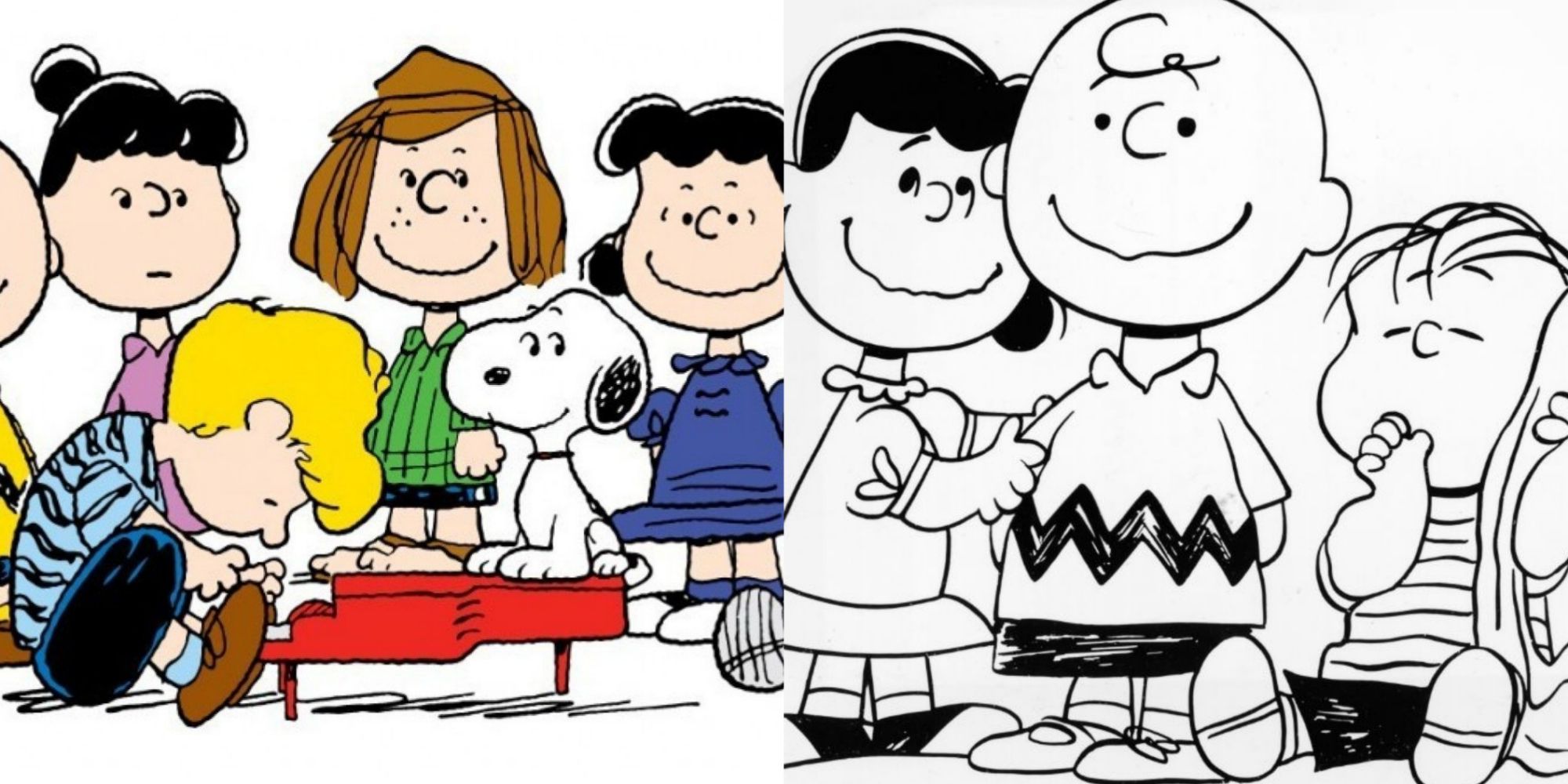
The Peanuts cartoon, created by legendary cartoonist Charles M. Schulz, stands as one of the most influential and enduring comic strips in media history. Debuting in 1950, the strip redefined newspaper comics by introducing melancholic philosophy, psychological vulnerability, and a cast of relatable children navigating an adult world without ever seeing an adult on the panel.
Origins and Evolution of Charles M. Schulz’s Masterpiece
The history of Peanuts begins long before its first official newspaper publication on October 2, 1950. Charles "Sparky" Schulz grew up in St. Paul, Minnesota, nurturing an early obsession with cartooning. After serving in World War II, Schulz honed his craft through correspondence courses and eventually sold a single-panel comic called Li'l Folks to the St. Paul Pioneer Press between 1947 and 1950.
When Schulz sought a national syndicate deal with United Feature Syndicate, the editors requested a title change to avoid confusion with existing comics like Little Folks. Although Schulz personally disliked the new title—feeling it undermined the strip's dignity—Peanuts stuck, growing into a global multi-media phenomenon. Over the next five decades, Schulz drew nearly 18,000 daily and Sunday strips entirely by hand, maintaining a rigorous creative standard without ghost artists or assistants.
The comic’s aesthetic and thematic evolution shifted steadily from its early years. In the 1950s, Charlie Brown was sharper-tongued and prone to mischievous pranks, resembling classic newspaper kids of that era. By the 1960s, the strip settled into its definitive tone: a bittersweet tragicomic reflection on modern life, sports failure, unrequited crushes, and existential dread.
Iconic Characters and Psychological Archetypes
The enduring appeal of the Peanuts cartoon rests heavily on its ensemble cast, who function less as traditional gag-strip characters and more as nuanced psychological archetypes. Schulz famously populated his strip with children who possessed adult anxieties, giving voice to complex human emotions through simple ink lines.
Charlie Brown: The Quintessential Underdog
As the central anchor of the strip, Charlie Brown represents the perseverance of the human spirit in the face of inevitable defeat. Whether he is failing to kick a football held by Lucy, managing a historically disastrous baseball team, or getting his kite eaten by a kite-eating tree, Charlie Brown never stops trying. His signature zigzag-striped shirt and round head became universal symbols of the lovable loser.
Snoopy and Woodstock: Fantasy and Realism
Snoopy revolutionized the comic strip animal sidekick by possessing a vibrant inner fantasy life. Perched atop his red doghouse, he transformed into a World War I Flying Ace fighting the Red Baron, a struggling novelist typing out "It was a dark and stormy night," or the suave Joe Cool. His silent, avian sidekick Woodstock provided a grounded, chaotic foil, communicating entirely through tiny vertical tick marks.
Lucy van Pelt: Pragmatic Cynicism
Lucy serves as the strip's pragmatic, sharp-tongued analyst. Operating her famous psychiatric booth for five cents, she diagnoses Charlie Brown’s neuroses with brutal honesty. Her character embodies the friction between childhood innocence and hard-nosed cynicism, particularly evident in her recurring trick of pulling the football away just as Charlie Brown runs up to kick it.
Linus van Pelt: Philosophy and Security
Armed with his ubiquitous blue security blanket and an encyclopedic knowledge of theology, Linus balances intellectual depth with tender vulnerability. His steadfast belief in the Great Pumpkin—who rises from the pumpkin patch every Halloween—highlights the human capacity for irrational faith despite universal skepticism.
Transition from Print to Animation: The Holiday Specials
While the newspaper strip established the foundation of the franchise, the transition of the Peanuts cartoon into television animation cemented its status in popular culture. Produced by Lee Mendelson and directed by Bill Melendez, A Charlie Brown Christmas debuted on CBS in December 1965 against network skepticism.
The special broke numerous television conventions of the era:
- It utilized actual children to voice the characters rather than adult voice actors mimicking youth.
- It bypassed a traditional laugh track, trusting the audience to respond organically.
- It featured an avant-garde jazz score composed by Vince Guaraldi, led by the iconic instrumental track "Linus and Lucy."
- It directly addressed the commercialization of Christmas through a stark aluminum Christmas tree.
Following this initial triumph, Mendelson and Melendez produced dozens of seasonal and thematic specials, including It's the Great Pumpkin, Charlie Brown (1966) and A Charlie Brown Thanksgiving (1973). These broadcasts became annual cultural traditions for generations of viewers, expanding the reach of Schulz's creation far beyond the printed page.
Key Milestones and Multimedia Expansion
| Year / Era | Milestone | Significance |
|---|---|---|
| October 2, 1950 | First Newspaper Publication | Debuted in seven American newspapers, distributed by United Feature Syndicate. |
| December 1965 | A Charlie Brown Christmas | Premiered on CBS, winning an Emmy and a Peabody Award while introducing Vince Guaraldi's jazz score. |
| April 1969 | Apollo 10 Lunar Module Naming | NASA named the command module "Charlie Brown" and the lunar module "Snoopy" due to the characters' cultural footprint. |
| February 2000 | Final Original Strip Published | Charles M. Schulz passed away hours before the final daily strip featuring his farewell message was published. |
| November 2015 | The Peanuts Movie | Blue Sky Studios released a critically acclaimed 3D computer-animated feature film honoring Schulz's visual style. |
Cultural Impact, Philosophy, and Modern Relevance
The genius of the Peanuts cartoon lies in its ability to address heavy philosophical concepts—rejection, loneliness, environmental despair, and the search for meaning—through the innocent lens of childhood. Schulz infused the strip with his own life experiences, including his struggles with shyness, depression, and unrequited love, making the work deeply authentic.
Literary and artistic figures frequently cite Schulz as a primary influence. Writers, cartoonists, and filmmakers have praised his minimalist drawing style, where a single tilt of a character's head or the expressive drop of a baseball cap conveyed volumes of internal emotion. Furthermore, the strip's secular humanism and gentle melancholy offered a comforting space for readers navigating a rapidly changing late-20th-century world.
Today, the intellectual property is managed by Peanuts Worldwide LLC, ensuring that the characters continue to resonate through modern publishing, merchandise, streaming platforms, and museum exhibitions like the Charles M. Schulz Museum and Research Center in Santa Rosa, California. Decades after the final pen stroke, the Peanuts cartoon remains a timeless testament to human resilience, proving that there is dignity in trying, even when you miss the football every single time.