The 2015 NBA Finals delivered a pivotal turning point in modern basketball history, pitting the historic Golden State Warriors against the Cleveland Cavaliers in a clash that redefined team construction, pace-and-space strategy, and superstar endurance.
The 2015 NBA Finals marked the culmination of the 2014-15 National Basketball Association season, played between June 4 and June 16, 2015. The series featured the top-seeded Western Conference champion Golden State Warriors, led by regular-season Most Valuable Player Stephen Curry, and the second-seeded Eastern Conference champion Cleveland Cavaliers, anchored by four-time MVP LeBron James in his first year back with his home franchise. The Warriors defeated the Cavaliers four games to two, capturing their first championship in 40 years and launching an era of unprecedented dominance, while etching the resilient, depleted Cavaliers squad into basketball lore.
Context and Regular Season Trajectories
To understand the magnitude of the 2015 Finals, one must examine how both franchises arrived at the sport's ultimate stage through drastically different yet equally compelling paths.
The Rise of Golden State's Warriors
Under rookie head coach Steve Kerr, the Golden State Warriors transformed from a promising playoff contender into an offensive juggernaut. Kerr replaced Mark Jackson prior to the season, installing a motion offense that emphasized ball movement, player tracking, high-volume three-point shooting, and defensive versatility.
The Warriors finished the regular season with a stellar 67-15 record, securing the top seed in the fiercely competitive Western Conference. Their offensive rating ranked second in the league, while their defensive rating ranked first, establishing them as one of the most statistically balanced teams in NBA history.
- Stephen Curry: Averaged 23.8 points and 7.7 assists per game while breaking his own single-season record for three-pointers made (286) and earning the Maurice Podoloff Trophy as the league's MVP.
- Klay Thompson: Formed the "Splash Brothers" backcourt alongside Curry, averaging 21.7 points per game and earning an All-Star selection.
- Draymond Green: Emerged as the defensive heartbeat of the team, finishing as the runner-up for the Defensive Player of the Year award and anchoring their small-ball lineup.
- Andrew Bogut: Provided elite rim protection and high-post passing from the center position.
Cleveland's Rebuilt Contender
The narrative in Cleveland was defined by transformation and redemption. In the summer of 2014, LeBron James made his celebrated return to the Cavaliers via free agency after four seasons and two championships with the Miami Heat. Shortly thereafter, the front office orchestrated a blockbuster trade acquiring All-Star forward Kevin Love from the Minnesota Timberwolves, pairing James and Love with young star guard Kyrie Irving.
Despite a sluggish start to the 2014-15 campaign—prompting intense media scrutiny and a mid-season team-building trip—first-year head coach David Blatt righted the ship. The Cavaliers finished the regular season at 53-29, securing the second seed in the Eastern Conference.
However, the roster endured devastating injuries as the postseason progressed. Kevin Love suffered a dislocated left shoulder in the first round against the Boston Celtics, sidelining him for the remainder of the playoffs. Despite this massive loss, James and Irving carried Cleveland through the Eastern Conference bracket, ultimately sweeping the Atlanta Hawks in the Conference Finals to set the stage for a dramatic showdown against Golden State.
| Team | Regular Season Record | Conference Seed | Head Coach | Key Missing Player(s) |
|---|---|---|---|---|
| Golden State Warriors | 67–15 | 1st (West) | Steve Kerr | None (Fully healthy) |
| Cleveland Cavaliers | 53–29 | 2nd (East) | David Blatt | Kevin Love, Anderson Varejão |
Series Breakdown and Game-by-Game Analysis
The 2015 Finals featured intense tactical chess matches, dramatic momentum shifts, and extreme physical exhaustion.
Game 1: Overtime Thriller and Tragedy
The series opened at Oracle Arena in Oakland on June 4, 2015. The Cavaliers, cast as heavy underdogs without Love, executed a brilliant defensive game plan designed to disrupt Curry and force Golden State's supporting cast to beat them. LeBron James put on a historic individual masterclass, scoring 44 points.
However, the game swung in the closing seconds of regulation when Iman Shumpert missed a potential game-winning jumper, sending the contest into overtime. Disaster struck Cleveland in the extra period when Kyrie Irving fractured his left kneecap while driving against Klay Thompson, ending his postseason. The Warriors capitalized on Irving's absence, outscoring the Cavaliers 9-2 in overtime to secure a 108–100 victory and take a 1–0 series lead.
Game 2: Cleveland's Grit and Dellavedova's Defense
Facing a 2–0 deficit without two of their three best players, the Cavaliers adjusted defensively by deploying backup guard Matthew Dellavedova to hound Stephen Curry. The strategy proved remarkably disruptive. Curry shot an uncharacteristic 5-for-23 from the field, including 2-for-15 from three-point range.
LeBron James shouldered a staggering offensive burden, recording a triple-double with 39 points, 16 rebounds, and 11 assists in 50 minutes of action. Cleveland's gritty, slowed-down pace frustrated the high-flying Warriors. The Cavaliers gutted out a 95–93 overtime win in Game 2, handing Golden State its first home playoff loss of the year and stealing home-court advantage.
Game 3: The LeBron and Mozgov Show
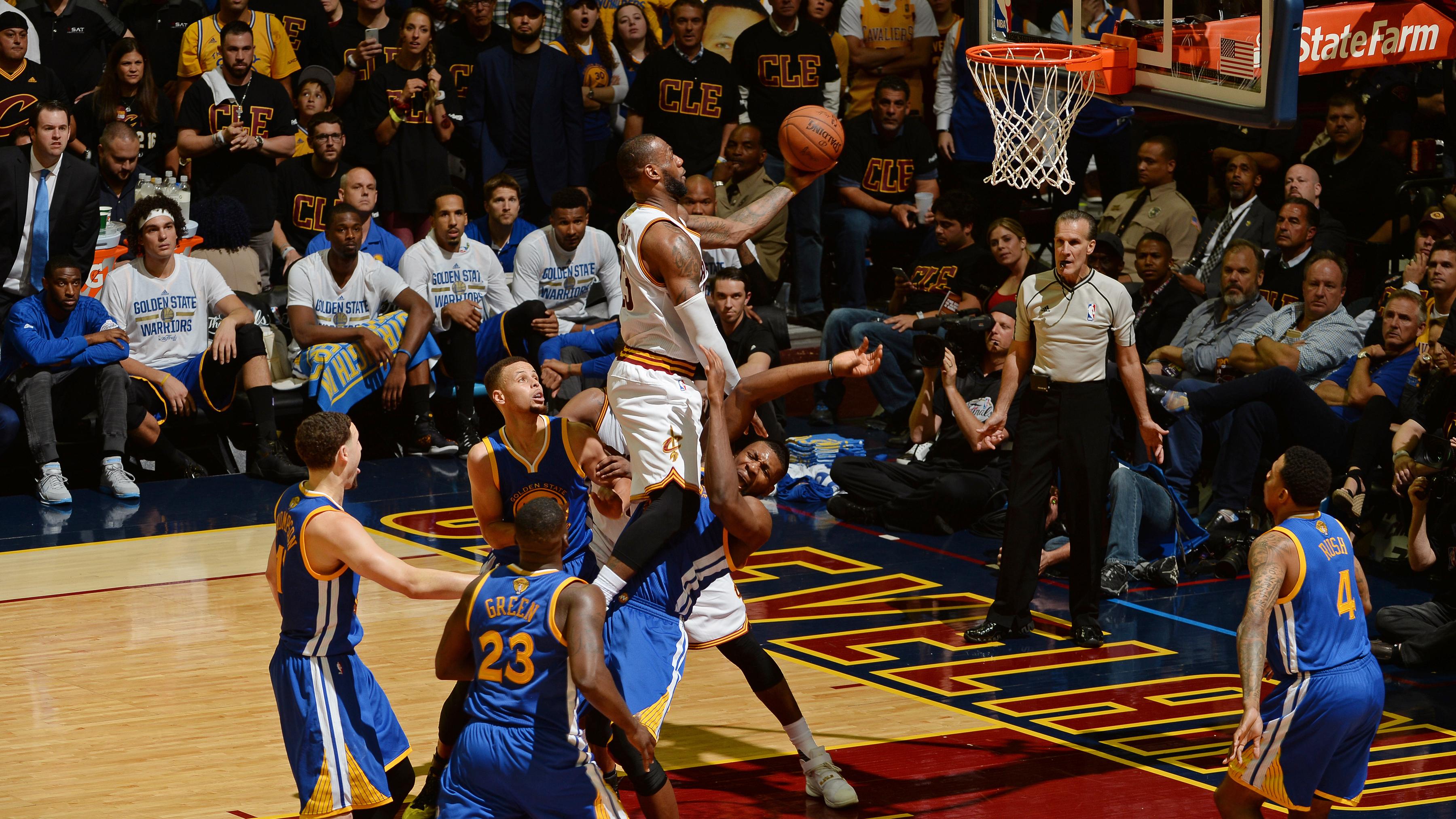
Returning to the Quicken Loans Arena in Cleveland, the Cavaliers maintained their slowed-down, physical tempo. LeBron James continued his historic scoring output, tallying 40 points, 12 rebounds, and 8 assists. Center Timofey Mozgov contributed a vital 28 points, exploiting mismatches in the paint.
Although the Warriors mounted a ferocious fourth-quarter comeback behind a late barrage of three-pointers, Cleveland held on to win 96–91. Through three games, the Cavaliers held a 2–1 series lead, and James was averaging an astonishing 41.3 points per game, generating widespread speculation that he might win the Finals MVP award even if Cleveland lost the series.
Game 4: The Birth of the "Death Lineup"
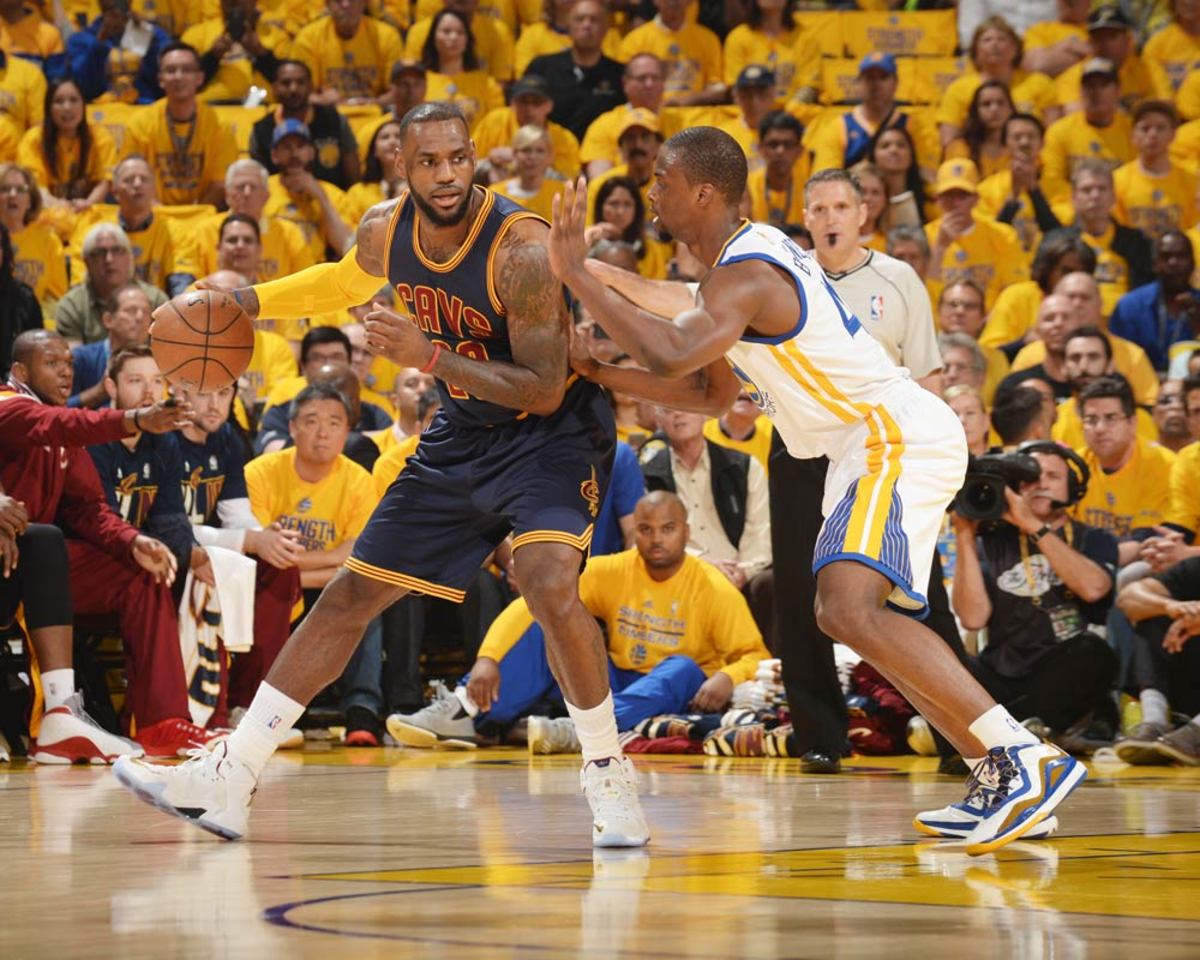
Down 2–1 and facing a potential 3–1 deficit on the road, Steve Kerr made a pivotal tactical adjustment that altered the trajectory of the series. Prior to Game 4, Kerr benched center Andrew Bogut and inserted swingman Andre Iguodala into the starting lineup, deploying small-ball center Draymond Green.
This alignment—later dubbed the "Death Lineup" in subsequent iterations—unlocked maximum spacing on offense and defensive switchability. The Warriors pushed the pace, exhausting a thin Cleveland rotation that relied heavily on James, Dellavedova, Tristan Thompson, J.R. Smith, and Iman Shumpert.
Golden State rolled to a dominant 103–82 victory, evening the series at 2–2. Iguodala scored 22 points and provided elite primary defense on James, while Curry chipped in 22 points.
Game 5: Curry's Oracle Explosion
With momentum shifted back to Oakland, Game 5 served as a crucial pivot point. Both teams traded blows in a tightly contested, high-stakes environment. Stephen Curry broke out of his shooting slump, erupting for 37 points, including 7-for-13 shooting from beyond the arc.
LeBron James recorded another Herculean triple-double with 40 points, 14 rebounds, and 11 assists, becoming the first player in Finals history to record multiple 40-point triple-doubles in a single series. However, Cleveland's lack of offensive weapons caught up with them. The Warriors' depth and relentless transition offense carried them to a 104–91 win, pushing them within one victory of the championship.
Game 6: Clinching the Title in Cleveland
On June 16, 2015, the Warriors returned to Cleveland looking to close out the series. Golden State executed their game plan efficiently, controlling the tempo and overwhelming the exhausted Cavaliers.
Andre Iguodala put on a masterclass on both ends of the floor, scoring 25 points while serving as the primary defensive stopper against James. Stephen Curry added 25 points and 8 assists, and Draymond Green recorded a triple-double (16 points, 11 rebounds, 10 assists).
Though LeBron James fought valiantly to the final buzzer—finishing the series with averages of 35.8 points, 13.3 rebounds, and 8.8 assists—the Cavaliers ultimately succumbed to fatigue and superior depth. The final score of 105–97 sealed a 4–2 series victory for Golden State, touching off joyous celebrations as the franchise claimed its first title in four decades.
Tactical Innovations and Strategic Takeaways
The 2015 NBA Finals served as a watershed moment in basketball strategy, offering lessons that influenced team-building philosophies league-wide over the subsequent decade.
The Small-Ball Revolution
Before 2015, conventional wisdom dictated that championship teams required a dominant traditional center and a bruising interior presence. Steve Kerr’s decision to bench Andrew Bogut for Andre Iguodala in Game 4 proved that speed, floor spacing, positional versatility, and perimeter shooting could outweigh traditional size.
By pulling Timofey Mozgov away from the basket and forcing Cleveland to defend in space, Golden State demonstrated the devastating mathematical advantage of the three-point shot. This series effectively accelerated the league-wide adoption of pace-and-space systems, transforming how front offices evaluated talent.
Squad Depth Versus Super-Star Heroics
The series highlighted the razor-thin margin of error for teams decimated by injuries. While LeBron James delivered one of the greatest individual statistical performances in playoff history, carrying a depleted roster to two victories against a 67-win juggernaut, basketball ultimately proved to be a team sport governed by depth and endurance.
- Golden State's Bench: Provided crucial production from players like Shaun Livingston, Leandro Barbosa, and David Lee, who injected energy when the starters rested.
- Cleveland's Rotation: Head coach David Blatt was forced to play a tight seven-man rotation due to injuries, leaving core players visibly exhausted by the fourth quarter of every game.
Award Recognition and Legacy
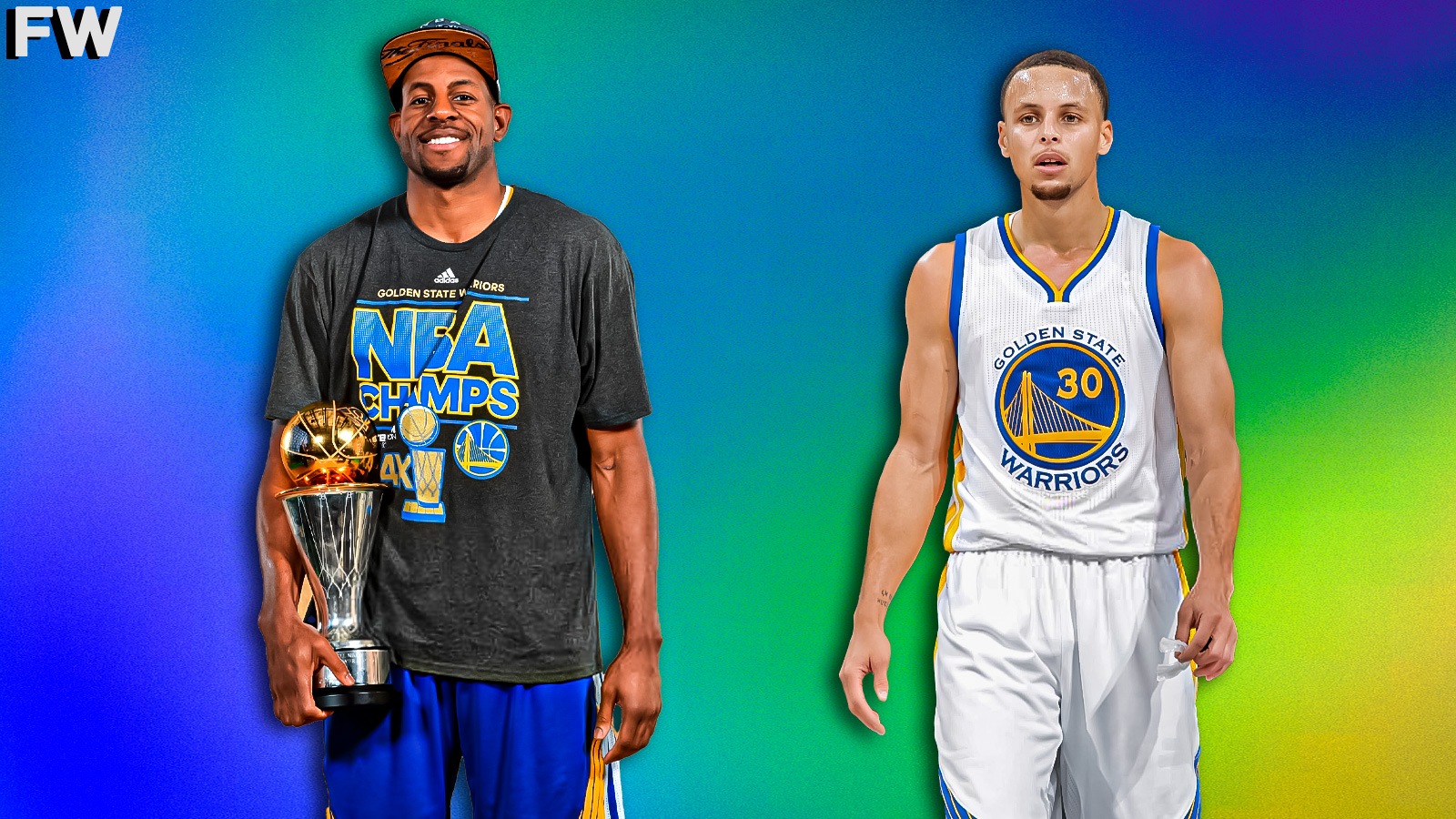
Following the conclusion of the series, the league awarded the Bill Russell NBA Finals Most Valuable Player Award to Andre Iguodala.
The selection sparked significant debate among analysts and historians. Iguodala had not started a single game during the regular season, serving exclusively as a high-impact reserve. However, his insertion into the starting lineup in Game 4 completely shifted the series. His defensive assignment against LeBron James—limiting James's efficiency through relentless ball pressure and physical contesting—combined with his 16.3 points per-game average, convinced the media voting panel to award him the honor over Stephen Curry. This marked the first time in NBA history that a Finals MVP had not started a regular-season game.
For the Golden State Warriors, the 2015 title laid the foundation for a modern dynasty. It established the core of Curry, Thompson, Green, and Iguodala, who would return to the Finals in 2016, win back-to-back titles in 2017 and 2018, and return again in 2019 and 2022.
For the Cleveland Cavaliers, the heartbreak of 2015 served as direct preparation for the following year. With a fully healthy roster featuring the return of Kyrie Irving and Kevin Love, the Cavaliers famously avenged their loss in 2016 by overcoming a 3–1 deficit against the same Warriors team to deliver Cleveland its first major sports championship in 52 years.
Frequently Asked Questions
Who won the 2015 NBA Finals?
The Golden State Warriors won the 2015 NBA Finals, defeating the Cleveland Cavaliers four games to two to capture their first championship since 1975.
Who won the 2015 NBA Finals MVP award?
Andre Iguodala of the Golden State Warriors won the Finals MVP award. He became the first player in NBA history to win the award without starting a single game during the regular season, recognized primarily for his defensive performance against LeBron James and his crucial offensive contributions after entering the starting lineup in Game 4.
Why didn't Kevin Love and Kyrie Irving play for the Cavaliers in the Finals?
Both players suffered severe injuries during the 2015 postseason. Kevin Love dislocated his left shoulder in the first-round series against the Boston Celtics and missed the rest of the playoffs. Kyrie Irving fractured his left kneecap during overtime of Game 1 of the NBA Finals and was sidelined for the remainder of the series.
What was the tactical turning point of the 2015 Finals?
The turning point occurred before Game 4 when Golden State head coach Steve Kerr replaced center Andrew Bogut with swingman Andre Iguodala in the starting lineup. This small-ball adjustment spread the floor, increased defensive switchability, and exhausted the depleted Cleveland rotation, allowing the Warriors to win three consecutive games and take the series.
What were LeBron James's statistics in the 2015 Finals?
LeBron James played an extraordinary volume of minutes and averaged 35.8 points, 13.3 rebounds, and 8.8 assists per game across the six-game series, carrying the heavily undermanned Cavaliers squad to two victories.