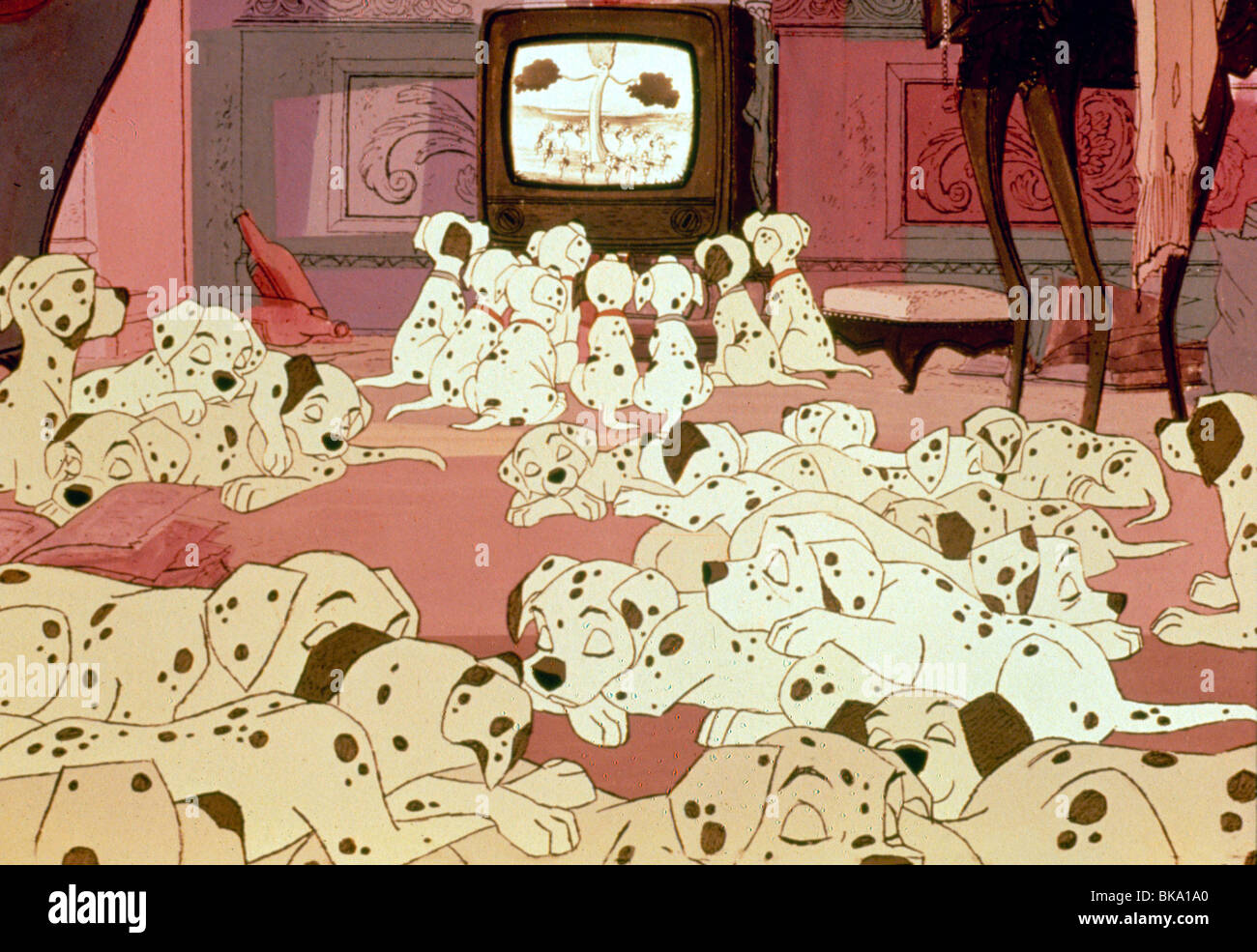
The year 1961 served as a pivotal turning point in the history of animation, marking the transition from the lavish "Golden Age" of theatrical features to the efficiency-driven era of television and experimental shorts. It introduced the revolutionary Xerox process in feature filmmaking and saw the birth of the first televised anime series in Japan.
For historians and enthusiasts looking back from 2026, 1961 remains one of the most consequential periods for the medium. It was the year that forced the industry to reconcile artistic ambition with the harsh economic realities of a television-dominated market. From the release of Disney’s One Hundred and One Dalmatians to the global recognition of Eastern European modernism, the developments of 1961 fundamentally reshaped how animation was produced, distributed, and perceived as an art form.
The Xerox Revolution: One Hundred and One Dalmatians
On January 25, 1961, Walt Disney Productions released One Hundred and One Dalmatians. While audiences were charmed by the story, the film represented a massive technological gamble for the studio. Following the massive financial losses of Sleeping Beauty (1959), which had been hand-inked with painstaking detail, the studio needed a way to drastically reduce production costs without sacrificing quality.
The solution was Xerography, a process adapted for animation by Ub Iwerks. This technology allowed the animators' original pencil drawings to be transferred directly onto the celluloid (cels) using a modified Xerox camera, bypassing the expensive and time-consuming "ink and paint" department.
Aesthetic and Economic Impact
The Xerox process gave One Hundred and One Dalmatians a distinct, "sketchy" look that differed from the smooth, polished lines of earlier Disney classics. While Walt Disney himself was reportedly cool toward this more graphic style, it allowed the film to feature thousands of black spots on the dogs—a feat that would have been financially impossible using traditional hand-inking.
The success of the film proved that audiences would accept a more stylized, modern aesthetic. This shift saved the Disney animation department from potential closure and defined the studio's visual identity for the next two decades, through films like The Sword in the Stone and The Jungle Book.
The Explosion of Television Animation
By 1961, the migration of animation from the cinema to the living room was in full swing. Hanna-Barbera, founded by William Hanna and Joseph Barbera, became the dominant force in this new landscape by perfecting the technique of limited animation.
The Rise of the TV Star
The year 1961 saw the debut of several iconic series that moved away from the slapstick of theatrical shorts toward dialogue-heavy, character-driven sitcoms:
- The Yogi Bear Show: Originally a segment on The Huckleberry Hound Show, Yogi Bear proved so popular that he was given his own half-hour program in January 1961. This marked the first time a spin-off character became a primary star in the TV animation space.
- Top Cat: Premiering in September 1961, this show was a direct homage to the live-action sitcom The Phil Silvers Show. It targeted a more adult-leaning audience with its urban setting and sophisticated banter, a precursor to the prime-time animation boom.
- The Alvin Show: Featuring Ross Bagdasarian’s musical chipmunks, this show integrated music and animation in a way that capitalized on the existing success of novelty records.
The Philosophy of Limited Animation
Limited animation was a necessity of the television format. While a theatrical short might use 12,000 drawings for six minutes of screen time, a television episode needed to fill 22 minutes with far fewer resources. Studios achieved this by animating only the moving parts of a character (such as the mouth or eyes) while keeping the rest of the body static, and by reusing background paintings across multiple scenes. 1961 was the year this methodology became the industry standard for small-screen content.
The Birth of TV Anime: Otogi Manga Calendar
While the United States was refining its television techniques, a revolution was beginning in Japan. On May 1, 1961, Otogi Manga Calendar (originally Instant History) premiered on Fuji TV. Produced by Otogi Pro and directed by Ryuichi Yokoyama, it is widely recognized by historians as the first televised animated series in Japan.
Though it was a series of historical shorts—often blending animation with live-action photographs—it laid the groundwork for what would become the global anime industry. It preceded the 1963 debut of Astro Boy, proving that there was a viable domestic market for televised animation in Japan. The technical constraints and narrative experimentation seen in Otogi Manga Calendar began the long process of developing the unique visual language associated with Japanese animation.
A Global Milestone: The 1961 Oscar for Best Animated Short
One of the most significant events of 1961 occurred at the Academy Awards, though it is often overlooked in mainstream histories. For the first time, a non-American film won the Oscar for Best Animated Short Subject.
The winner was Surogat (Ersatz), directed by Dušan Vukotić and produced by the legendary Zagreb Film in what was then Yugoslavia. The film followed a man at a beach where every object—from his car to his girlfriend—was an inflatable toy.
The Influence of the Zagreb School
The victory of Ersatz was a blow to the dominance of American studios like Disney, Warner Bros., and MGM. It signaled the arrival of the "Zagreb School" of animation, which favored:
- Geometric abstraction: Characters were often composed of basic shapes rather than realistic anatomy.
- Philosophical themes: Moving away from gag-based humor toward satire and existentialism.
- Modernist Soundscapes: Minimalist scores and avant-garde sound design.
This win validated the idea that animation could be a sophisticated medium for adult storytelling, a sentiment that would ripple through the experimental animation communities for decades to come.
The Decline of the Theatrical Short
As TV sets became standard in households, the economic model for theatrical shorts collapsed. In 1961, the major studios were rapidly closing their dedicated short-film departments.
- Warner Bros. and MGM: Both studios were scaling back their legendary units (Termite Terrace and the Tom and Jerry units). Most "new" theatrical shorts from this era were produced on shoestring budgets or outsourced to independent contractors.
- The End of the Newsreel/Short Package: The traditional theater experience—which included a newsreel, a cartoon, and a feature—was being replaced by the "double feature" or simply a single long-form film, leaving little room for characters like Bugs Bunny or Popeye in the cinema.
| Title | Production Studio | Primary Format | Key Innovation/Status |
|---|---|---|---|
| One Hundred and One Dalmatians | Walt Disney | Theatrical Feature | First major use of Xerography (Xerox) process. |
| The Yogi Bear Show | Hanna-Barbera | Television | First successful spin-off character in TV history. |
| Surogat (Ersatz) | Zagreb Film | Short Film | First non-US film to win the Best Animated Short Oscar. |
| Otogi Manga Calendar | Otogi Pro | Television | Japan's first televised animated series (Anime). |
| Mysterious Island | Columbia Pictures | Live-Action/Hybrid | Featured Ray Harryhausen's "Dynamation" stop-motion. |
| The Alvin Show | Format Films | Television | Pioneered the integration of pop music and TV animation. |
Ray Harryhausen and the Peak of Dynamation
In 1961, the boundary between animation and live-action was further blurred by the release of Mysterious Island. The film featured the special effects work of Ray Harryhausen, the master of stop-motion animation.
Using his "Dynamation" technique, Harryhausen animated giant creatures—including a massive crab and a prehistoric bird—and seamlessly integrated them with live actors. Unlike the cel animation seen in Dalmatians, Harryhausen’s work in 1961 pushed the limits of physical model animation and photorealism. His influence would eventually lead to the digital revolution in visual effects, but in 1961, it represented the pinnacle of tactile, frame-by-frame craftsmanship.
Changing Audience Demographics
The transition seen in 1961 was also one of audience perception. For decades, animation was a universal entertainment enjoyed by adults and children alike in theaters. By 1961, a "ghettoization" of the medium began:
- The "Saturday Morning" Trap: With the rise of shows like The Yogi Bear Show, advertisers began to see animation primarily as a vehicle for selling toys and cereal to children.
- The Counter-Culture Response: Simultaneously, the success of experimental shorts like Ersatz and the graphic style of UPA (United Productions of America) encouraged a separate, high-art niche for animation that catered to intellectuals and film festival audiences.
- Prime-Time Experimentation: Shows like Top Cat and The Flintstones (which entered its second year in 1961) were still trying to capture the adult sitcom audience, but the tide was beginning to turn toward the youth market.
Frequently Asked Questions
Which Disney film was released in 1961?
Disney released One Hundred and One Dalmatians in 1961. It is historically significant for being the first feature-length animated film to utilize the Xerox process, which replaced traditional hand-inking and gave the film its signature sketchy, graphic style.
What was the first anime to air on TV in 1961?
The first televised anime was Otogi Manga Calendar (also known as Instant History). It premiered on May 1, 1961, on Fuji TV. While it was a series of historical shorts, it is recognized as the starting point for Japanese television animation.
Why is the year 1961 considered a turning point for animation?
1961 marked a shift from expensive theatrical shorts to budget-conscious television programming. It saw the emergence of limited animation as an industry standard, the decline of the traditional studio system, and the first time an international film won the Oscar for Best Animated Short.
What is the "Xerox process" in 1961 animation?
The Xerox process, championed by Ub Iwerks, allowed animators' pencil sketches to be photocopied directly onto cels. This eliminated the need for an Inking department, significantly lowering production costs and preserving the original vitality of the animator's line work.
Did any famous stop-motion movies come out in 1961?
Yes, Mysterious Island was released in 1961. It featured the "Dynamation" stop-motion animation of Ray Harryhausen, who created several iconic giant creature sequences that integrated with live-action footage.
Strategic Recommendation for Researchers
To fully grasp the impact of 1961 on the animation industry, researchers should compare the visual output of Disney's One Hundred and One Dalmatians with the television work of Hanna-Barbera from the same year. By examining these two distinct paths, one can see the divergence between high-budget technological innovation (Xerography) and low-budget procedural efficiency (Limited Animation). For those interested in the global expansion of the medium, a study of the "Zagreb School" and the early Japanese TV experiments offers essential context for the modernization of animation.