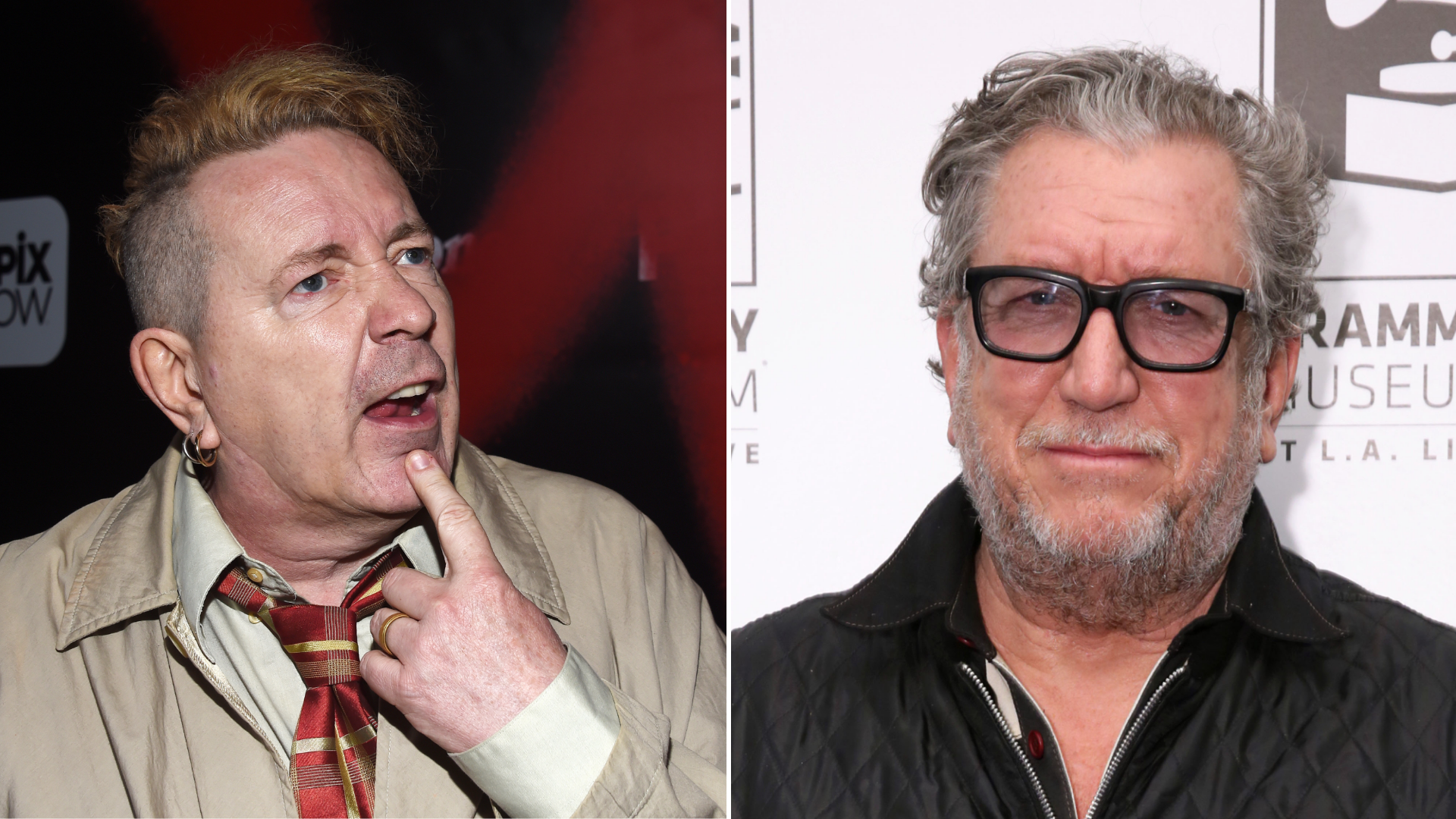
Steve Jones is the legendary English guitarist and co-founder of the Sex Pistols, the band that defined the British punk rock movement. Beyond his era-defining guitar work on Never Mind the Bollocks, Here's the Sex Pistols, he has established a long-standing career as a radio host, solo artist, and author.
While the name Steve Jones is shared by several notable figures—including the prominent Welsh television presenter of Formula 1 and The X Factor USA fame, and the distinguished British geneticist and author—the primary historical and cultural search intent centers on the Sex Pistols guitarist. This article focuses on his musical innovations, technical gear, career evolution through 2026, and his enduring influence on modern alternative culture.
The Formative Years: A Dickensian Childhood in London
Born Stephen Philip Jones on May 3, 1955, in Shepherd's Bush, London, Jones's early life was marked by the kind of social upheaval that would later fuel the punk movement. Raised primarily by his mother and stepfather, his upbringing was characterized by neglect and petty criminality. Jones has been candid in his 2016 memoir, Lonely Boy: Tales from a Sex Pistol, about the sexual abuse he suffered as a child and his subsequent descent into kleptomania.
These early experiences are essential to understanding the raw, aggressive energy he brought to the electric guitar. Before the Sex Pistols, Jones was a self-described "professional thief," stealing everything from clothing to high-end musical equipment. Famously, much of the backline used by the Sex Pistols in their early days was stolen from established artists, including a microphone stand from David Bowie’s final Ziggy Stardust show at the Hammersmith Odeon.
By the mid-1970s, Jones, along with drummer Paul Cook and bassist Glen Matlock, formed The Strand (sometimes called QT Jones and the Sex Pistols), which eventually evolved into the Sex Pistols under the management of Malcolm McLaren. McLaren’s boutique, Sex, on King’s Road became the epicenter of the subculture that Jones helped build from the ground up.
The Sex Pistols Era: Defining the Punk Aesthetic
The Sex Pistols existed in their original form for a very short period (1975–1978), yet their impact was tectonic. While Johnny Rotten (John Lydon) was the voice and provocateur, Steve Jones was the musical engine. His approach to the guitar was a rejection of the self-indulgent progressive rock of the era, focusing instead on power, speed, and a "wall of sound" production style.
The Recording of Never Mind the Bollocks
The technical depth of Jones's contribution is most evident on the band's only studio album, Never Mind the Bollocks, Here's the Sex Pistols. Despite the band's chaotic reputation, the recording process was surprisingly meticulous. Producer Chris Thomas and engineer Bill Price worked closely with Jones to create a thick, layered guitar sound.
A little-known technical fact to those outside of music production is that Steve Jones played nearly all the bass parts on the album. Glen Matlock had departed the band, and his replacement, Sid Vicious, lacked the technical proficiency to record in the studio. Jones's ability to lock in with drummer Paul Cook created a rhythmic precision that elevated the album from a mere protest record to a masterpiece of rock engineering.
Technical Analysis: The Sound and Gear of Steve Jones
The "Steve Jones sound" is one of the most imitated in rock history. It is characterized by a mid-range heavy, overdriven tone that maintains clarity even at high volumes. Achieving this requires a specific combination of instruments, amplification, and technique.
The Stolen 1974 Gibson Les Paul Custom
The centerpiece of Jones’s rig is his 1974 Gibson Les Paul Custom, finished in a cream color that has aged into a deep yellow. According to Jones, this guitar was stolen from David Bowie’s equipment truck. The guitar is notable for the pin-up girl stickers Jones added, which became a visual trademark.
Technically, the '74 Custom is a heavy instrument with a mahogany body and a maple top. This construction contributes to the "chunky" sustain heard on tracks like "Holiday in the Sun." The pickups were standard Gibson humbuckers, which provided the high output necessary to push a tube amplifier into natural distortion.
Amplification and the "Wall of Sound"
In the early days, Jones utilized a silver-face Fender Twin Reverb, often stolen or "borrowed." However, the definitive studio sound was achieved using a Marshall JMP 100-watt head. Jones’s settings typically involved high gain and a focus on the "mids" to ensure the guitar could cut through the mix without becoming shrill.
To achieve the layered effect on Never Mind the Bollocks, Jones would record multiple takes of the same rhythm part—sometimes up to six layers—using slightly different EQ settings on each. This created a massive, choral-like guitar effect that made the four-piece band sound like an army.
Performance Technique
Jones’s right-hand technique is the "secret sauce" of his playing. He utilized consistent downstrokes, a style that would later be adopted by James Hetfield of Metallica and countless others in the thrash and punk genres. This technique provides a percussive, aggressive "chug" that up-strokes simply cannot replicate.
Post-Punk Transitions: The Professionals and Hollywood
After the Sex Pistols' explosive demise in San Francisco in 1978, Jones stayed in the United States. He and Paul Cook formed The Professionals, a band that leaned more toward power-pop and hard rock. While The Professionals never reached the commercial heights of the Pistols, albums like I Didn't See It Coming showed Jones's growth as a songwriter and vocalist.
The 1980s were a period of personal struggle and professional session work. Jones became a highly sought-after session guitarist, contributing his distinctive sound to projects for artists as varied as Iggy Pop, Billy Idol, Joan Jett, and even Bob Dylan. His solo albums, Mercy (1987) and Fire and Gasoline (1989), reflected a shift toward a more polished, Los Angeles-centric hard rock sound, featuring guest appearances from members of Guns N' Roses and Mötley Crüe.
Jonesy’s Jukebox: Revolutionizing the Airwaves
By the early 2000s, Steve Jones reinvented himself as one of the most influential radio personalities in the world. Jonesy’s Jukebox, which debuted on Los Angeles’s Indie 103.1 FM, broke all the rules of commercial radio. Jones had complete "freeform" control over the playlist, often playing everything from obscure 1960s soul to heavy metal and local unsigned bands.
As of 2026, the legacy of Jonesy's Jukebox remains a blueprint for digital and terrestrial radio crossover. His interview style—rambling, irreverent, and deeply authentic—allowed him to extract stories from A-list celebrities that traditional journalists couldn't reach. The show eventually moved to KLOS and then into various podcast and digital formats, maintaining a loyal global following.
"Lonely Boy" and the "Pistol" Series
In 2016, Jones released his autobiography, Lonely Boy: Tales from a Sex Pistol. The book was a critical success, praised for its unflinching honesty regarding his addiction, his childhood trauma, and his complicated relationship with his bandmates.
This memoir served as the primary source material for the 2022 limited series Pistol, directed by Academy Award-winner Danny Boyle. The series brought Jones’s story to a new generation, focusing on the "ordinary" boy behind the extraordinary cultural revolution. By 2026, the series is viewed as a definitive piece of rock-biography media, having successfully navigated the legal disputes between John Lydon and the rest of the band regarding the use of the Sex Pistols' music.
Comparative Overview: Steve Jones’s Career Phases
| Period | Primary Focus | Key Gear/Platform | Notable Project |
|---|---|---|---|
| 1975–1978 | Punk Revolution | '74 Gibson Les Paul, Marshall JMP | Never Mind the Bollocks |
| 1979–1982 | Post-Punk/Power Pop | Fender Telecaster, Vox AC30 | The Professionals |
| 1985–1995 | Session Work & Solo | Jackson Guitars, Mesa Boogie Amps | Mercy, Fire and Gasoline |
| 2004–Present | Radio & Media | Indie 103.1, KLOS, Podcast | Jonesy's Jukebox |
| 2016–Present | Legacy & Literacy | Lonely Boy (Memoir) | Pistol (Disney+/FX Series) |
Frequently Asked Questions
Did Steve Jones really steal David Bowie's equipment?
Yes. Jones has admitted on numerous occasions, including in his autobiography, that he and his friends broke into the Hammersmith Odeon after David Bowie’s final Ziggy Stardust performance in 1973. They made off with microphones, amplifiers, and a microphone stand that still had Bowie's lipstick on it. Jones also famously "acquired" his iconic white Les Paul from Bowie's entourage.
Why did Steve Jones play bass on the Sex Pistols album?
While Glen Matlock was the original bassist and a primary songwriter, he left the band before the album was completed. His replacement, Sid Vicious, was struggling with heroin addiction and lacked the technical skill to play the complex, precise parts required for the studio recording. Producer Chris Thomas asked Jones to record the bass parts to ensure the album had a professional, tight sound.
What is Steve Jones doing in 2026?
As of 2026, Steve Jones continues to be a cultural ambassador for rock and roll. He remains active in the Los Angeles media scene, hosting various iterations of Jonesy's Jukebox and participating in documentary projects. He has focused heavily on his health following a heart attack in 2019 and remains a vocal advocate for recovery and mental health awareness within the music industry.
How did Steve Jones get his guitar tone?
The "Bollocks" tone was achieved by plugging a Gibson Les Paul Custom directly into a 100-watt Marshall JMP head. The key was the volume; the amp was pushed to its limit to create natural tube saturation. In the studio, this was enhanced by "double-tracking" (recording the same part twice) and sometimes "quad-tracking," creating a massive, dense sonic texture.
Is Steve Jones related to the TV presenter of the same name?
No. The Sex Pistols guitarist and the Welsh TV presenter Steve Jones are not related. While they share a name, they operate in different spheres of the entertainment industry, though the TV presenter has occasionally interviewed musical figures, leading to some lighthearted confusion in the UK media.
Practical Recommendation for Fans and Historians
For those looking to understand the technical and cultural impact of Steve Jones, the best starting point is not just the Sex Pistols' music, but his autobiography, Lonely Boy. It provides the necessary context for the music, explaining how a young man with no formal training and a difficult background managed to rewire the sound of the 20th century.
If you are a guitarist seeking to replicate his tone, focus on your right-hand downstrokes and mid-range EQ settings. Avoid excessive digital distortion; the Steve Jones sound is about "pushed" vacuum tubes and the natural resonance of a heavy mahogany guitar. For a modern visual and narrative overview, the Pistol miniseries (available on Disney+ and FX) offers a stylized but historically grounded look at his rise from a Shepherd's Bush thief to a global icon.