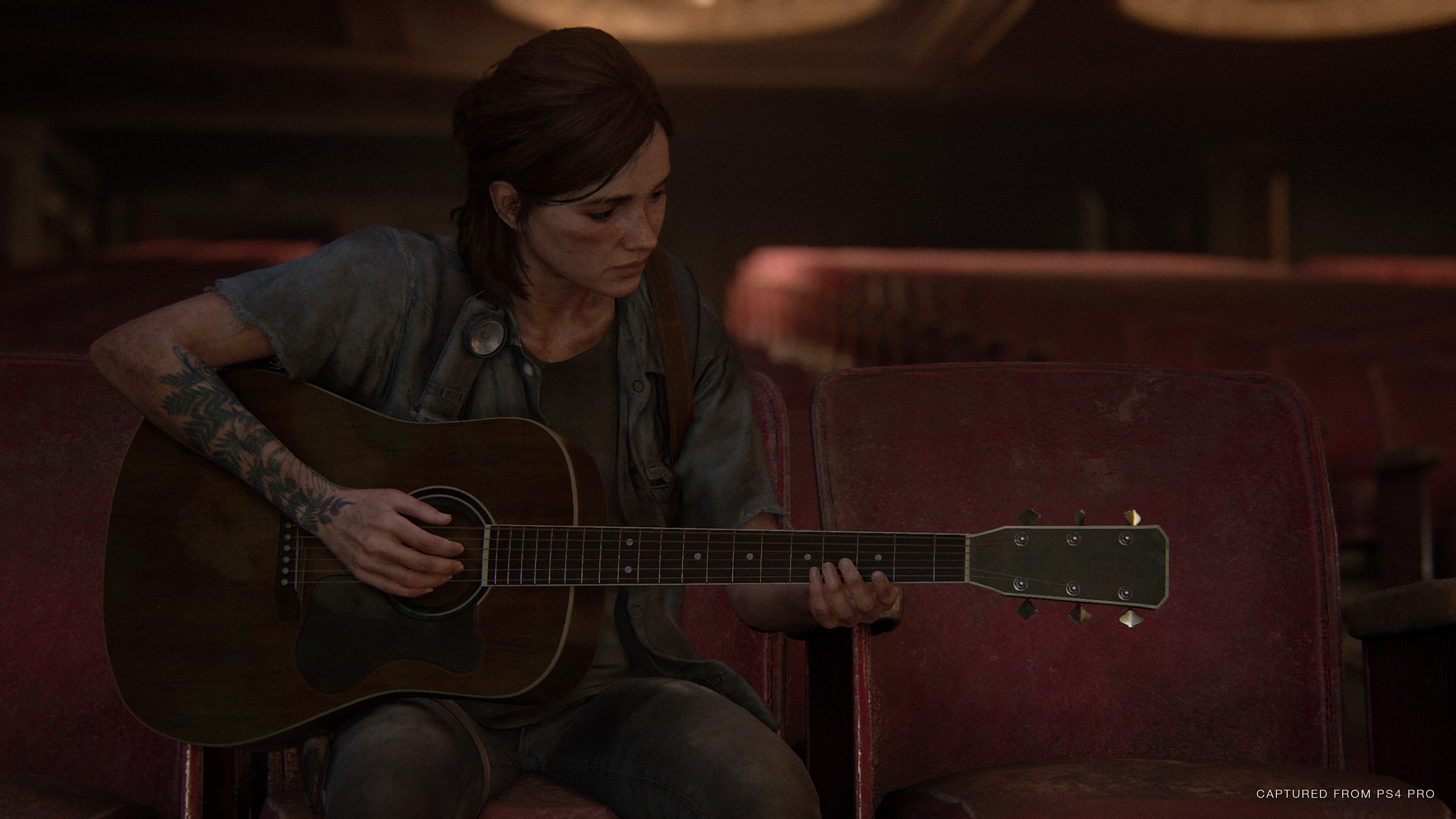
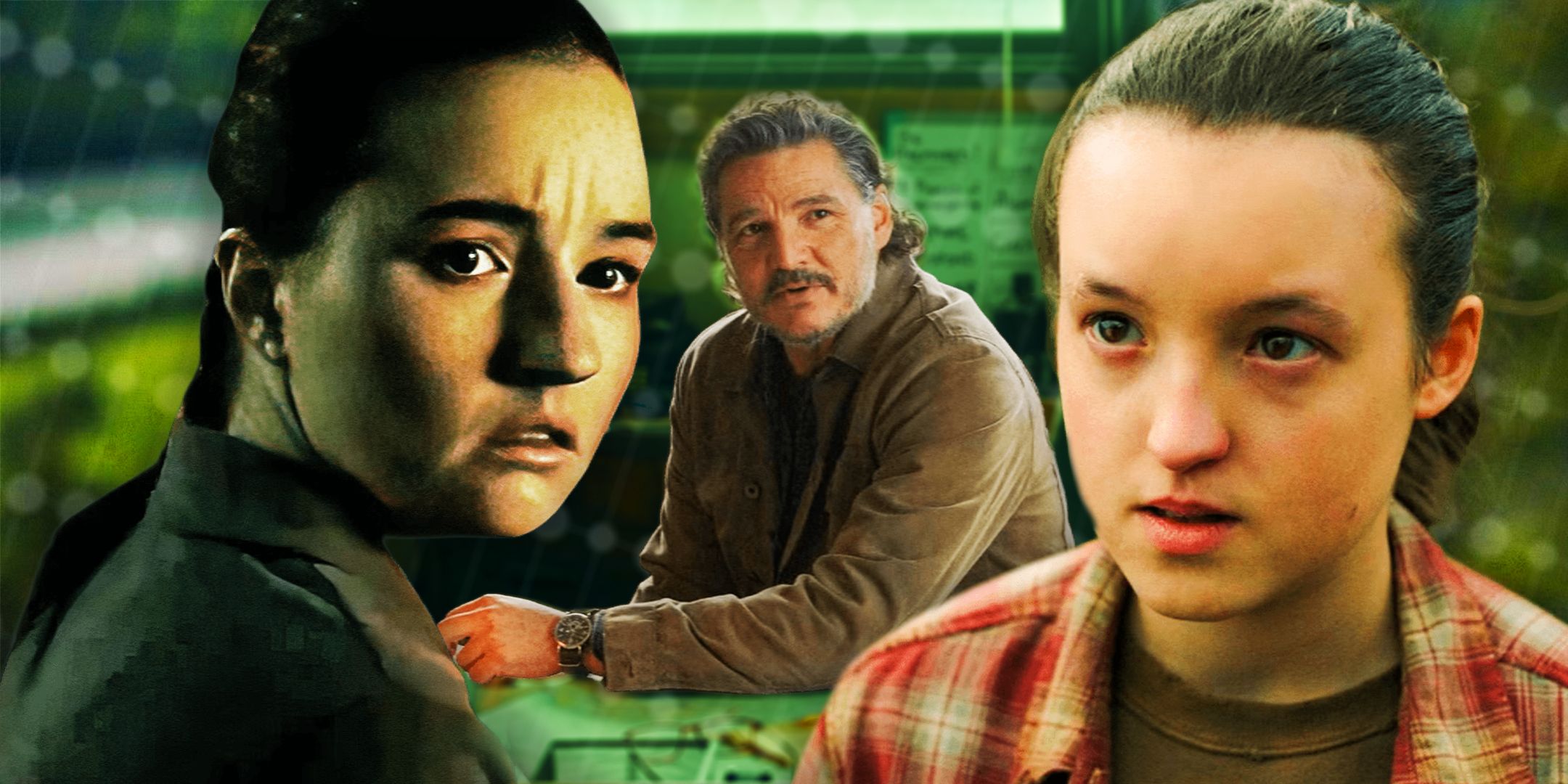
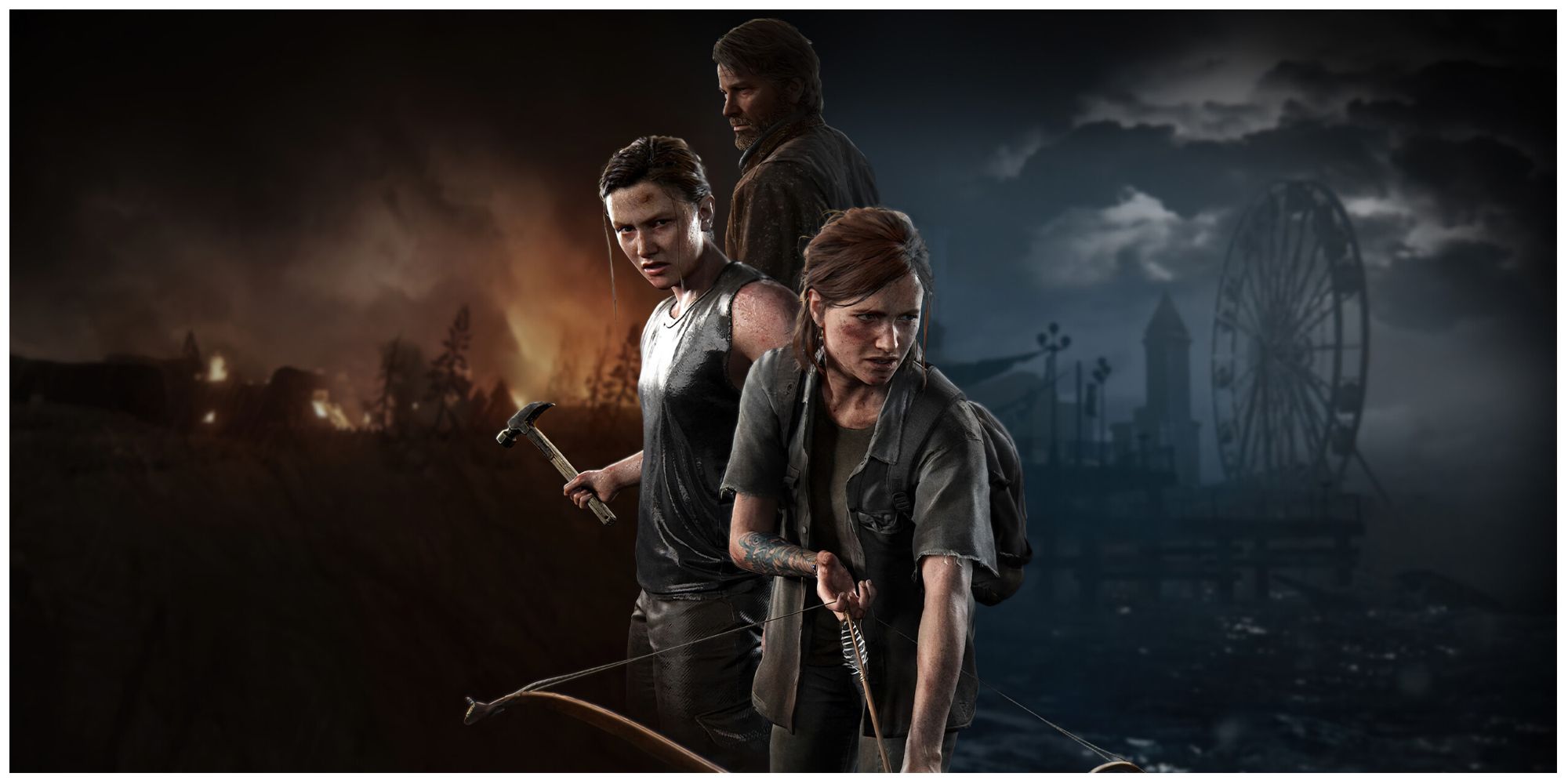
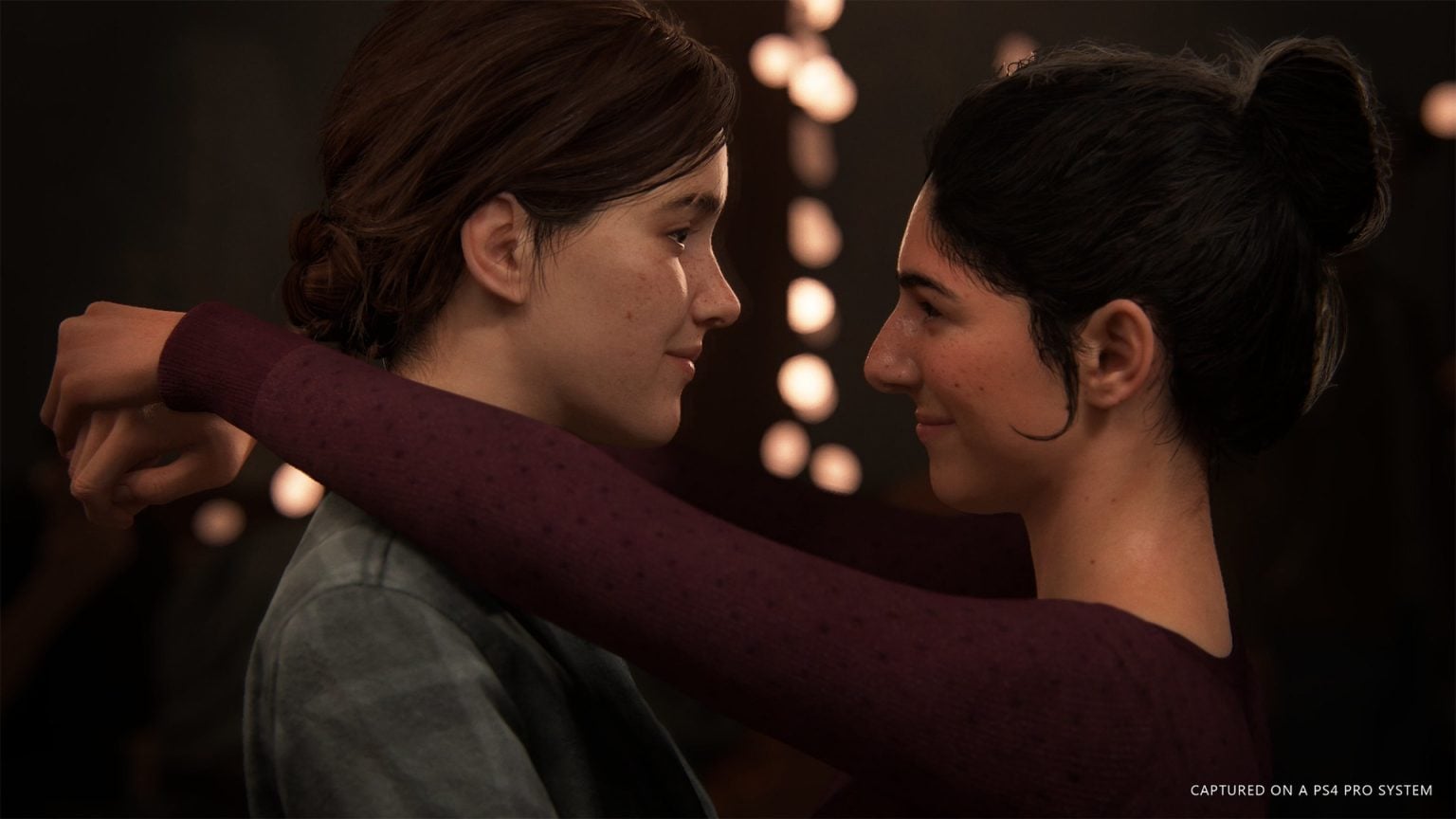
The ending of The Last of Us Part II concludes with Ellie sparing Abby on the beach in Santa Barbara, choosing to break the cycle of violence. Returning to her farmhouse, Ellie finds it empty; unable to play Joel’s guitar due to her missing fingers, she leaves the instrument behind, finally beginning her healing process and letting go of her debilitating grief.
The Final Confrontation in Santa Barbara
The final act of the game takes place in Santa Barbara, months after the bloody confrontation at the Seattle theater. While Ellie has attempted to build a life with Dina and baby JJ, her Post-Traumatic Stress Disorder (PTSD) prevents her from finding peace. When Tommy arrives with a lead on Abby’s location, Ellie abandons her domestic life to finish her quest for vengeance.
Upon arriving in California, Ellie encounters the Rattlers, a sadistic group of slavers. She eventually discovers Abby and Lev, who have been captured and subjected to months of torture and starvation. The physical transformation of Abby is a crucial narrative tool; she is no longer the formidable soldier Ellie fought in Seattle, but a broken, emaciated shell of her former self.
When Ellie cuts Abby down from the pillars, Abby’s first priority is not fighting, but saving Lev. She even leads Ellie to boats to help them escape. However, Ellie’s trauma manifests in a final surge of desperation. She forces a duel, not because she still sees Abby as a monster, but because she believes killing her is the only way to "fix" the pain in her head.
Why Ellie Spared Abby: The Significance of the Flashback
The climax of the beach fight is one of the most debated moments in modern gaming. As Ellie holds Abby’s head underwater, she is seconds away from completing her goal. At this precise moment, she sees a brief, flickering image of Joel sitting on his porch with his guitar.
This is not a memory of Joel’s death—the image that has haunted Ellie throughout the game—but a memory of him alive and at peace. This realization is the turning point. Ellie understands that killing Abby will not bring Joel back, nor will it provide the catharsis she seeks. Abby has become to Lev what Joel was to Ellie: a protector. By killing Abby, Ellie would simply be starting the cycle of trauma over again for a new child. By letting go, Ellie finally reclaims her own humanity, which she had been systematically discarding since leaving Jackson.
The Cost of Vengeance: What Ellie Lost
The ending of The Last of Us Part II is a tragedy of "pyrrhic victory." While Ellie survives, the cost of her journey is total. When she returns to the farm in the epilogue, she finds that Dina and the baby have moved out. The house is stripped bare, except for Ellie’s room, which contains her drawings and the guitar Joel gave her.
The most poignant physical consequence is the loss of two fingers on her left hand (the ring and middle fingers), bitten off by Abby during the struggle. This injury is symbolic and devastating. Throughout the game, the guitar has been Ellie’s primary connection to Joel. In the final scene, she attempts to play "Main Title" or "Future Days," but because she lacks the fingers to hold down the frets, the notes are discordant and hollow.
The loss of her ability to play music signifies the end of her old relationship with Joel. She can no longer communicate with him through the medium he taught her. However, leaving the guitar behind as she walks away from the farm suggests that she is no longer defined by his death. She is finally "leaving the ghost behind."
Key Character Outcomes and Comparative States
The following table summarizes the status and narrative resolution for the primary characters at the conclusion of the story.
| Character | Final Location | Physical/Mental Status | Narrative Resolution |
|---|---|---|---|
| Ellie | Unknown (Leaving the Farm) | Missing two fingers; suffering from PTSD. | Has broken the cycle of violence and relinquished her obsession with revenge. |
| Abby | Catalina Island | Emaciated and weakened; recovering from enslavement. | Successfully reached the Firefly remnants with Lev to start a new life. |
| Lev | Catalina Island | Recovering from physical trauma. | Survives as Abby's new moral compass and companion. |
| Dina | Likely Jackson | Healthy; raising JJ. | Chose her own mental health and child over a relationship defined by Ellie’s trauma. |
| Tommy | Jackson | Partially paralyzed; blind in one eye. | Consumed by bitterness and the inability to let go of Joel's murder. |
The Porch Scene: Forgiveness and Meaning
The final flashback revealed in the closing minutes of the game takes us back to the night before Joel’s death. This scene recontextualizes the entire story. In this conversation, Ellie confronts Joel about his decision to save her from the Firefly hospital at the end of the first game.
Ellie tells him, "I was supposed to die in that hospital. My life would've fucking mattered." Joel, with unwavering conviction, responds that if God gave him a second chance, he would "do it all over again."
Ellie’s response—"I don't think I can ever forgive you for that. But I would like to try"—is the emotional core of the sequel. The game is not actually about Ellie’s hatred for Abby; it is about Ellie’s struggle to forgive Joel and her guilt over the fact that their relationship was severed just as they were beginning to heal. When she spares Abby, she is finally choosing the "trying to forgive" path over the path of destruction.
Impact on the Fireflies and the World State
The ending also provides a significant update on the state of the world. Through Abby’s journey, we learn that the Fireflies are indeed regrouping. The radio transmission Abby makes in Santa Barbara was legitimate; the Fireflies have established a new base of operations on Catalina Island at the 22-room Avalon hotel.
As of 2026, the long-term impact of this remains a subject of speculation for a potential Part III. The existence of a reorganized Firefly faction suggests that the quest for a vaccine or a new form of societal order is not dead. However, for Abby and Lev, the Fireflies represent a return to purpose and community after the total collapse of the Washington Liberation Front (WLF) in Seattle.
Narrative Themes and Story Impact
The impact of The Last of Us Part II’s ending lies in its subversion of traditional "revenge" tropes. Most stories in the genre culminate in the protagonist achieving their goal and realizing it was empty. Naughty Dog took this further by denying the protagonist the goal entirely, suggesting that the act of not killing is where the true character growth occurs.
The story also forces a radical shift in perspective. By the end of the game, the player's "loyalty" is tested. Having spent half the game as Abby, many players found themselves not wanting Ellie to succeed in her mission. This duality creates a unique form of narrative tension where the player is often at odds with the character they are controlling, highlighting the senselessness of the conflict.
The Cycle of Violence
The game serves as a critique of tribalism. Whether it is the WLF vs. the Seraphites or Ellie vs. Abby, the story demonstrates how dehumanizing "the other" leads to total societal and personal ruin. The ending suggests that the only way to win such a conflict is to stop participating in it.
Grief and PTSD
Ellie’s journey is a literalization of the "stages of grief." Her move to Santa Barbara represents a pathological form of anger and bargaining. Her return to the farm and the act of leaving the guitar represents the final stage: acceptance.
FAQ: Clarifying the Ending’s Details
Did Abby and Lev actually find the Fireflies? Yes. The title screen after completing the game changes from a dark boat in a fog to a boat beached on a sunny shore in front of the Catalina Island Casino Ballroom. This confirms that Abby and Lev successfully reached their destination and found the regrouped Fireflies.
Why did Dina leave the farm? Dina left because she could not sit and wait for a woman who might never come back, especially while raising a child in a world filled with infected and raiders. She gave Ellie an ultimatum in the kitchen: "We have a family... She [Abby] doesn't get to be more important than that." When Ellie left anyway, Dina followed through on her need to prioritize JJ’s safety and her own emotional well-being.
Is Ellie going back to Jackson at the end? The game leaves her exact destination ambiguous, but there are several clues. She is wearing the bracelet Dina gave her, which she was not wearing during the Santa Barbara section. This suggests a desire to reconnect with her family. While she may not be "with" Dina immediately, the act of leaving the farm indicates she is heading toward a new chapter, likely starting with an attempt at reconciliation in Jackson.
What happened to the WLF and the Seraphites? During the final hours of the Seattle arc, the WLF launched a full-scale invasion of the Seraphite island. The conflict resulted in the near-total destruction of both groups. The island was set ablaze, and the WLF leadership (Isaac) was killed. The "victory" for either side was non-existent, leaving Seattle a fractured war zone with no dominant faction.
Practical Takeaways for Players
Understanding the ending of The Last of Us Part II requires looking past the surface-level violence to the psychological motivations of the characters. To fully appreciate the story’s impact, players should:
- Re-examine the Seattle Day 1-3 Arcs: Look for the parallels between Abby’s quest to find Owen/Lev and Ellie’s quest to find Abby. Both characters are mirror images of one another.
- Analyze the Journals: Ellie’s journal throughout the game provides context for her mental state that isn't always spoken in dialogue. The entries in Santa Barbara are particularly revealing regarding her exhaustion.
- Observe the Environment: In the final scene at the farm, notice what Ellie takes and what she leaves. She leaves the symbols of her past (the guitar, the drawings of Joel) but takes her backpack, signifying a transition from dwelling on the past to moving toward a future.
The conclusion of the game is not designed to be "satisfying" in a traditional sense. It is designed to be honest to the characters' traumas and the reality of a world where actions have permanent, often devastating, consequences. By 2026, the game remains a benchmark for narrative complexity in interactive media, challenging players to find empathy for those they were taught to hate.