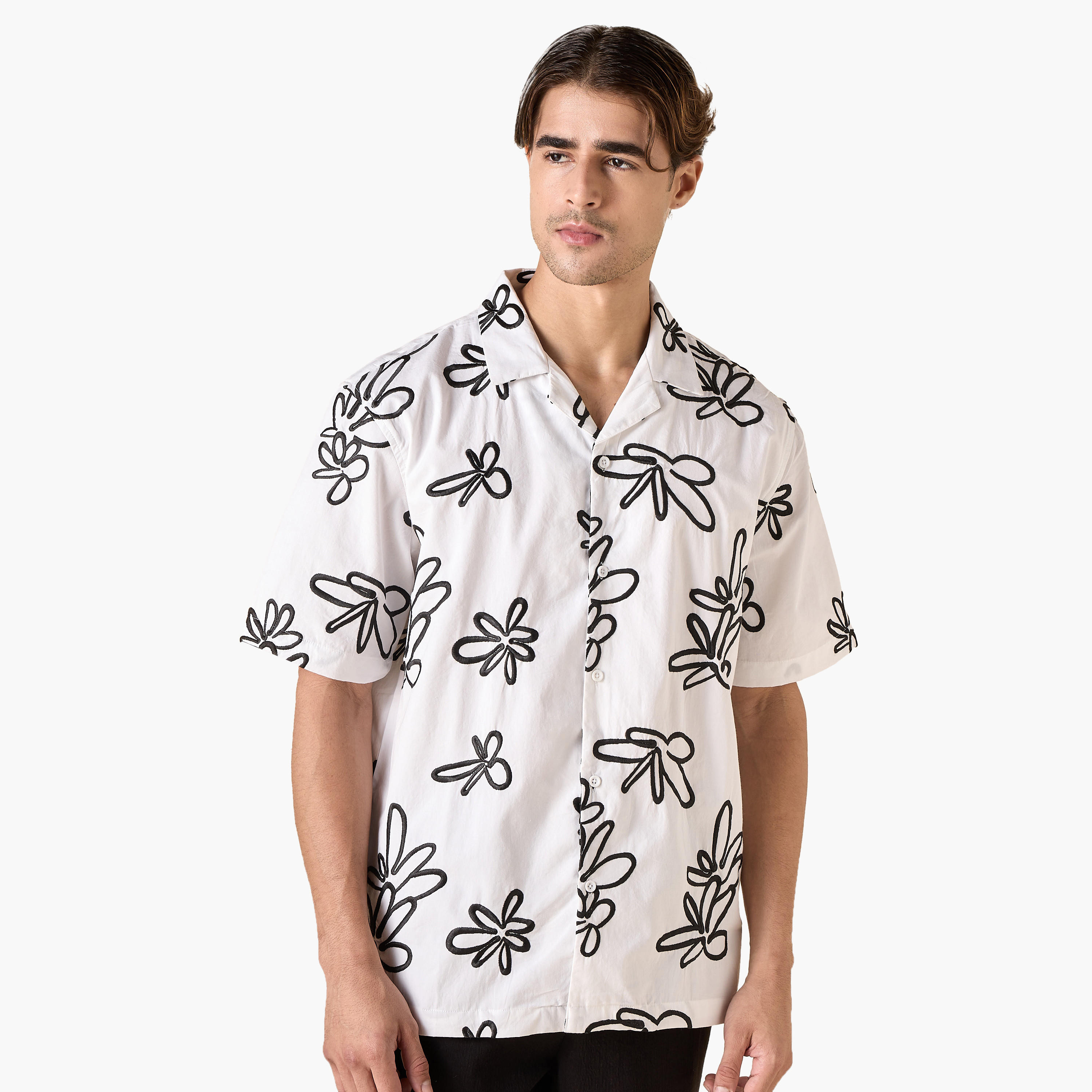
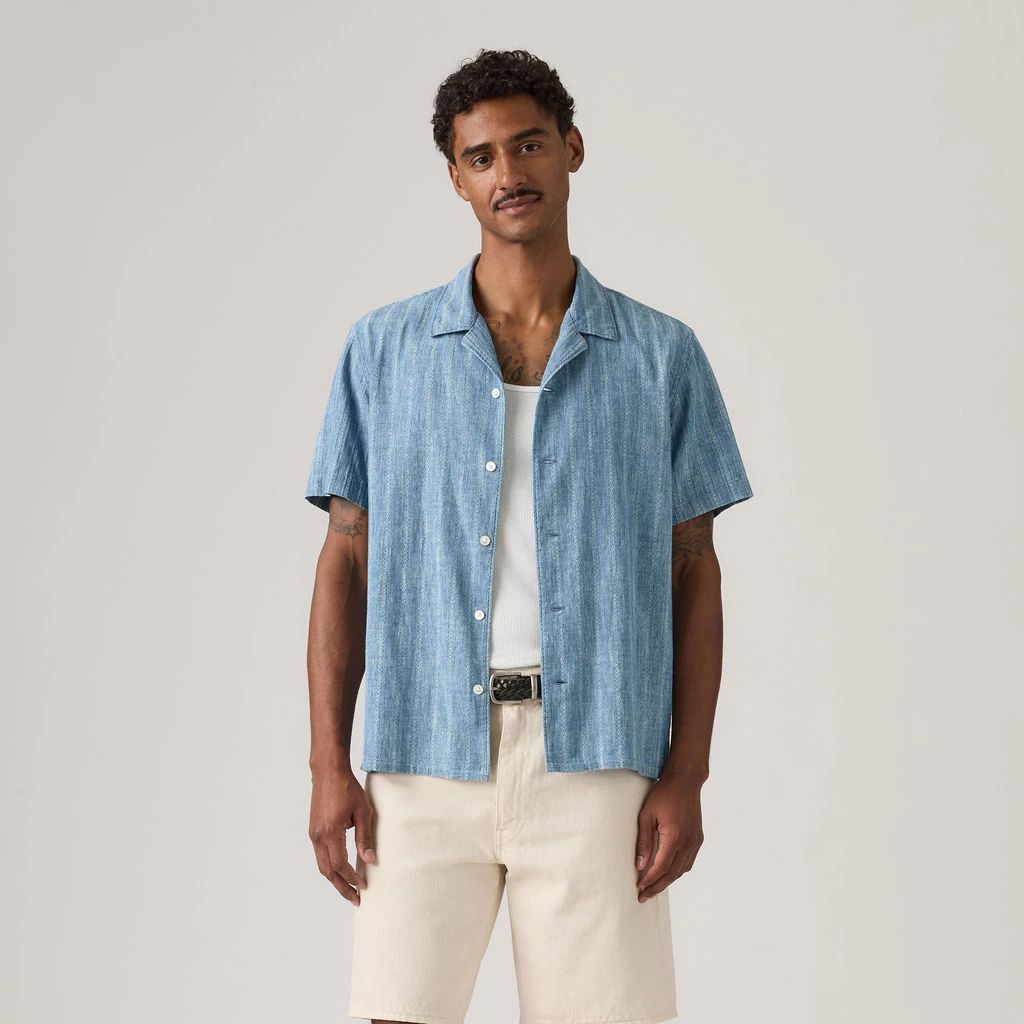
The modern camp shirt has evolved from its mid-century leisurewear roots into a versatile staple of contemporary wardrobes. Understanding its essential characteristics requires looking closely at how specific silhouettes, tactile fabric weights, and relaxed tailoring choices intersect to define contemporary warm-weather dressing.
Evolution and Identity of the Camp Shirt
The camp shirt—frequently associated with terms like bowling shirt, cabana shirt, or cuban collar shirt—has a rich history rooted in utility and tropical comfort. Characterized by its flat, open cuban collar (sometimes called a camp collar or bowling collar), straight hemline, and short sleeves, the garment was originally designed to allow maximum airflow in hot, humid climates. Unlike traditional button-downs meant to be tucked in and secured with a necktie, camp shirts are engineered to be worn untucked, hanging loosely over the waistband.
Over the decades, the cultural footprint of the camp shirt has expanded dramatically. Once relegated to vacation attire, mid-century resort wear, or retro subcultures, the style now occupies a prominent space in both high-end luxury collections and contemporary streetwear. This longevity stems from an innate balance between laid-back ease and polished structure. The absence of a tight neckband provides an effortless look, while the clean lines of the placket and collar keep the garment sharp enough for urban environments.
Evaluating a camp shirt requires examining three pillars: style architecture, textile composition, and physical grading. When these elements align, the result is a garment that drapes gracefully, breathes effectively, and maintains a balanced silhouette without appearing sloppy or overly restrictive.
Fabric Innovation and Textile Selection
The performance, drape, and aesthetic of a camp shirt are dictated almost entirely by its textile construction. Because these garments are typically worn in warmer seasons, fabric selection prioritizes breathability, moisture management, and tactile hand-feel. Textile mills and garment makers utilize a diverse range of fibers to achieve specific stylistic outcomes.
Natural Fibers: Linen, Cotton, and Silk
Natural fibers remain the gold standard for luxury and comfort in camp shirts.
- Linen: Celebrated for its exceptional breathability and hollow fibers that facilitate rapid heat dissipation, linen offers an unmistakable organic texture. While pure linen introduces a characteristic wrinkle pattern that defines relaxed summer style, linen-cotton blends offer a compromise by reducing excessive creasing while retaining structural crispness.
- Cotton: Ranging from lightweight cambric and poplin to textured seersucker and slub cotton, cotton camp shirts provide everyday durability and straightforward maintenance. Slub cotton, characterized by uneven yarn thickness, introduces subtle visual interest and a softer, broken-in hand-feel right off the rack.
- Silk and Silk Blends: For an elevated evening aesthetic, silk or silk-cotton blends deliver a fluid, liquid drape that catches the light and moves with the wearer. Silk naturally regulates temperature, though it requires more delicate laundering care compared to its plant-based counterparts.
Synthetic and Regenerated Cellulose Fibers
Modern textile engineering has also introduced high-performance synthetic blends and regenerated cellulose fibers that mimic or exceed the qualities of natural textiles.
- Viscose and Rayon: Prized for their cool touch and heavy drape, rayon and viscose allow the camp shirt to hug the torso softly and sway with movement. They are frequently used as the base for printed tropical or geometric patterns.
- Tencel (Lyocell): Sourced from sustainable wood pulp, Tencel offers superior moisture-wicking properties, increased durability compared to standard rayon, and a remarkably smooth texture against the skin.
| Fabric Type | Primary Advantage | Ideal Climate / Setting | Care Requirement |
|---|---|---|---|
| Pure Linen | Maximum breathability & cool touch | Hot, humid environments / Resort | Gentle wash, line dry |
| Rayon / Viscose | Fluid drape & vibrant print retention | Warm evenings / Casual urban wear | Hand wash or dry clean |
| Cotton Slub | Textured surface & durable structure | Everyday casual / Transitional weather | Machine wash cold, tumble dry low |
| Silk Blend | Luxurious sheen & lightweight feel | Evening events / Upscale dining | Professional dry clean recommended |
Fit Dynamics and Silhouette Grading
The silhouette of a camp shirt diverges significantly from the tailored, slim-fit dress shirts popular in corporate environments. Understanding how a camp shirt should fit requires balancing ease of movement with structural integrity, ensuring the garment looks intentional rather than oversized by accident.
Shoulder Seams and Chest Volume
The foundation of a proper camp shirt fit begins at the shoulder. Unlike a structured blazer or formal shirt designed to hug the acromion closely, a camp shirt often features a slightly dropped shoulder seam. This drop should be modest—typically ranging from a half-inch to an inch past the natural shoulder bone—to enhance the relaxed, unforced aesthetic without sliding down the arm.
Chest grading follows a similar philosophy of ease. A generous chest allowance ensures the fabric does not pull across the pectoral muscles or create unwanted gaping at the button placket. Box pleats or side pleats integrated into the back yoke are common tailoring details that provide extra mobility across the upper back without sacrificing the clean lines of the front profile.
Hem Length and Body Proportion
The defining architectural feature of the camp shirt is its straight, uncurved hemline. Designed explicitly to be worn untucked, the hem should generally terminate around the mid-hip point—landing roughly midway down the zipper fly of standard trousers.
- Too Short: A hem that sits above the belt line disrupts body proportions and causes the shirt to ride up awkwardly during movement.
- Too Long: A hem extending past the crotch transforms the garment into a tunic style, overwhelming the wearer's frame and creating a heavy, unproportioned look.
Sleeve length is equally crucial. Sleeves typically extend to the mid-bicep, featuring a slightly wider opening than a traditional dress shirt to maximize ventilation and allow air to circulate freely around the arms.
Styling Strategies and Wardrobe Integration
Integrating camp shirts into a versatile wardrobe requires careful consideration of proportions, layering, and texture matching. Because the shirt carries inherent visual weight due to its open collar and boxy cut, surrounding garments should be chosen to complement its relaxed geometry.
Monochromatic vs. Patterned Expression
Solid-color camp shirts in neutral tones (such as olive, navy, ecru, and slate gray) act as sophisticated alternatives to traditional polo shirts. They pair seamlessly with pleated tailored trousers, leather loafers, and minimal accessories for a smart-casual evening look. Conversely, patterned variations—incorporating botanical prints, abstract graphics, or geometric stripes—function as statement pieces. When wearing a bold pattern, anchor the rest of the outfit with understated solids to let the shirt remain the focal point.
Layering Techniques
The open neck and straight hem of the camp shirt make it an ideal layering vehicle.
- Open Over a Tee: Wearing an unbuttoned camp shirt over a clean, high-grade white t-shirt (crewneck or ribbed tank) creates depth and texture. This technique works exceptionally well with lightweight cotton or linen shirts that can double as overshirts.
- Under Structured Outerwear: Pairing a structured camp shirt beneath an unconstructed blazer or lightweight Harrington jacket introduces interesting collar interplay, contrasting the sharp lapels of the jacket with the flat, soft lines of the cuban collar.
Common Sizing and Purchasing Pitfalls
Navigating purchases within this category often involves specific recurring challenges. Avoiding these missteps ensures long-term satisfaction with garment performance and longevity.
- Over-Sizing by Default: While camp shirts are inherently relaxed, buying two sizes up in an attempt to achieve an oversized look often ruins the garment's shoulder grading and collar placement, causing the neckline to drift backward uncomfortably. Look for garments explicitly cut with a relaxed block rather than sizing up standard fits.
- Neglecting Fabric Shrinkage: Natural fibers like untreated cotton and linen are prone to dimensional change during initial laundering. Always review care labels and manufacturer specifications regarding pre-shrunk treatments before committing to a precise size.
- Ignoring Pocket Placement: Many camp shirts feature single or dual chest pockets. Ensure that pocket patterns align seamlessly with the body fabric on patterned shirts, as misaligned pockets disrupt the visual flow of the garment.
Frequently Asked Questions
Should a camp shirt always be worn untucked?
Yes, the straight hemline and side vents of a camp shirt are engineered specifically for untucked wear. Tucking a camp shirt in creates excess fabric bunching around the waist due to its boxy cut and lack of tail shaping.
How do I care for rayon camp shirts to prevent shrinkage?
Rayon and viscose fibers weaken significantly when wet. Hand-washing in cold water or utilizing a delicate machine cycle inside a mesh laundry bag is essential. Never wring or twist wet rayon; instead, gently press out excess water and lay flat or hang to dry.
What is the difference between a camp collar and a bowling collar?
In modern fashion terminology, "camp collar," "cuban collar," and "bowling collar" are frequently used interchangeably to describe a flat, one-piece convertible collar that lies open against the chest. Minor historical distinctions existed regarding collar point lengths and interfacing stiffness, but contemporary retail standards treat them as synonymous.
Can a camp shirt be worn in professional or formal environments?
While traditionally classified as casual or resort wear, a solid-neutral camp shirt crafted from a refined fabric like silk-cotton or fine-gauge linen can be styled for creative or warm-weather smart-casual workplaces when paired with tailored trousers and clean footwear. However, it remains entirely unsuited for traditional formal or black-tie dress codes.
How do I prevent my linen camp shirt from wrinkling excessively?
Linen inherently develops character creases through normal wear. To minimize extreme wrinkling, choose linen-cotton blends, hang the garment immediately after washing while still slightly damp, or use a steamer rather than a high-heat dry iron to smooth out severe creases.
Strategic Recommendations for Selection
When building or updating a warm-weather wardrobe, prioritize versatility by acquiring at least one neutral, high-grade linen or cotton camp shirt for daily smart-casual rotation, alongside one textured or patterned variant for elevated leisure settings. Always verify textile composition tags to match your maintenance preferences against the laundering requirements of natural or regenerated fibers. Focus on proper shoulder fit and mid-hip hem length to ensure the silhouette flatters your natural proportions.