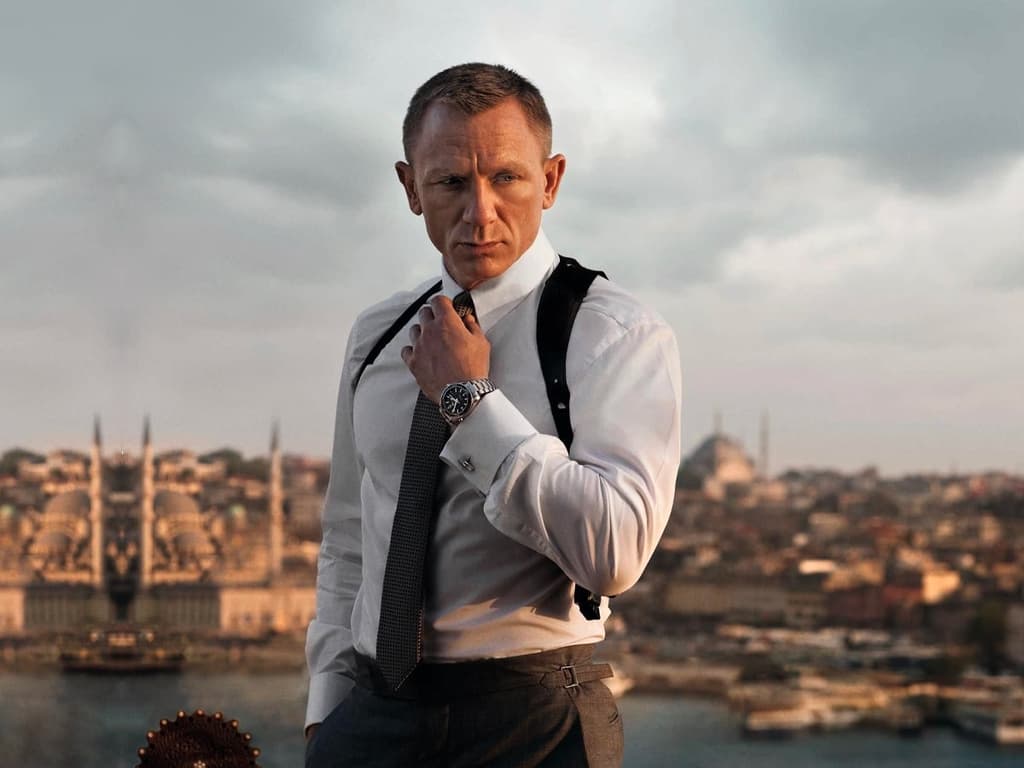
To watch the Daniel Craig James Bond films in chronological and narrative order, you must follow their theatrical release sequence: Casino Royale (2006), Quantum of Solace (2008), Skyfall (2012), Spectre (2015), and No Time to Die (2021). Unlike previous Bond eras, Craig’s five-film tenure constitutes a single, continuous story arc beginning with his origin and ending with his final mission.
The Evolution of the 007 Narrative Under Daniel Craig
When Daniel Craig was announced as the sixth actor to play James Bond in October 2005, the reaction from the public and media was famously polarized. Labeled "the blonde Bond," Craig faced intense scrutiny before a single frame of footage was released. However, by the time his tenure concluded with the release of No Time to Die, he had redefined the character for the 21st century, moving away from the campier, episodic nature of the Pierce Brosnan and Roger Moore eras toward a gritty, emotionally resonant, and serialized format.
As of 2026, looking back at the complete body of work, the Craig era is distinguished by its commitment to character development. For the first time in the franchise’s history, actions in one film had lasting, irreversible consequences in the next. This "prequel" approach allowed audiences to witness Bond earning his 00-status and dealing with the psychological toll of his profession. This guide provides a detailed breakdown of each film, its historical context, and its role in the overarching Spectre/Vesper Lynd narrative.
1. Casino Royale (2006)
Casino Royale served as a total reboot for the franchise. Based on Ian Fleming's first novel, the film stripped away the invisible cars and outlandish gadgets of the late 90s, replacing them with visceral action and a vulnerable protagonist. Directed by Martin Campbell—who also helmed Brosnan’s debut, GoldenEye—the film follows Bond as he earns his license to kill after two successful assassinations.
The plot centers on a high-stakes poker game at the Casino Royale in Montenegro. Bond’s target is Le Chiffre (Mads Mikkelsen), a private banker to the world’s terrorists who has lost his clients' money and must win it back to survive. Bond is accompanied by Vesper Lynd (Eva Green), a Treasury agent assigned to monitor the funds.
The significance of Casino Royale cannot be overstated. It established the "Vesper Lynd" shadow that would haunt Bond for the next four films. The film also introduced a more complex relationship with M (Judi Dench), portraying a maternal yet professional tension that became a cornerstone of the era.
2. Quantum of Solace (2008)
Taking place literally minutes after the conclusion of Casino Royale, Quantum of Solace is the first direct sequel in the Bond franchise. Directed by Marc Forster, the film is notable for its shorter runtime and frantic editing style, heavily influenced by the Bourne series of the time.
In this installment, Bond seeks revenge for Vesper’s death, leading him to Dominic Greene (Mathieu Amalric), a member of the shadowy organization "Quantum." Greene intends to stage a coup in Bolivia to seize control of the country’s water supply. While the film was produced during the 2007–2008 Writers Guild of America strike—which famously forced Craig and Forster to rewrite scenes on set—it remains a crucial bridge. It explores Bond’s inability to find "solace" and his eventual realization that Vesper’s betrayal was more complicated than it appeared.
3. Skyfall (2012)
Released during the 50th anniversary of the film franchise, Skyfall is often cited as the pinnacle of the Craig era. Directed by Sam Mendes and featuring Academy Award-winning cinematography by Roger Deakins, the film moved away from the Quantum storyline to tell a more standalone, personal tale about Bond’s past and M’s legacy.
The story involves a cyber-terrorist attack on MI6 orchestrated by Raoul Silva (Javier Bardem), a former agent with a personal vendetta against M. For the first time, audiences are taken to Bond’s childhood home in Scotland, "Skyfall," providing a glimpse into the trauma that shaped him. The film also reintroduced classic elements of the series, including a new Q (Ben Whishaw) and Moneypenny (Naomie Harris), while concluding Judi Dench’s legendary run as M.
4. Spectre (2015)
With Spectre, the franchise regained the rights to the eponymous criminal organization and the character of Ernst Stavro Blofeld. Sam Mendes returned to direct, attempting to weave the threads of the previous three films into a singular conspiracy.
Bond follows a cryptic message from the late M, leading him to discover the existence of Spectre. He encounters Madeleine Swann (Léa Seydoux), the daughter of his former nemesis Mr. White. The film reveals that Franz Oberhauser (Christoph Waltz), now calling himself Blofeld, has been the "author of all [Bond's] pain," claiming responsibility for the events of the previous films. Spectre was a pivot back toward more traditional Bond tropes, including exotic locales and a more formidable, recurring villain, while setting the stage for Bond’s ultimate retirement.
5. No Time to Die (2021)
The final chapter of the Daniel Craig saga, No Time to Die, was directed by Cary Joji Fukunaga. After several delays due to the global pandemic, the film provided a definitive conclusion to the character arc started in 2006.
The story finds Bond retired in Jamaica, five years after the events of Spectre. His peace is short-lived when CIA friend Felix Leiter (Jeffrey Wright) asks for help rescuing a kidnapped scientist. This leads Bond into a confrontation with Lyutsifer Safin (Rami Malek), a villain armed with a lethal nanobot technology. The film explores themes of legacy, fatherhood, and sacrifice. It broke franchise records by offering a permanent resolution for this iteration of James Bond, ensuring that the Craig era stands as a self-contained "Elseworlds" story within the broader 007 canon.
Technical Specifications and Personnel Comparison
The production of these five films involved a rotating cast of directors and technical experts who shifted the visual language of the series from gritty realism to high-art cinematography.
| Film | Release Year | Director | Primary Villain | Theme Song Artist | Runtime |
|---|---|---|---|---|---|
| Casino Royale | 2006 | Martin Campbell | Le Chiffre | Chris Cornell | 144 mins |
| Quantum of Solace | 2008 | Marc Forster | Dominic Greene | Jack White & Alicia Keys | 106 mins |
| Skyfall | 2012 | Sam Mendes | Raoul Silva | Adele | 143 mins |
| Spectre | 2015 | Sam Mendes | Ernst Stavro Blofeld | Sam Smith | 148 mins |
| No Time to Die | 2021 | Cary Joji Fukunaga | Lyutsifer Safin | Billie Eilish | 163 mins |
The Overarching Narrative Arc: The "Vesper" Thread
To truly understand the Craig movies, one must recognize that they are not five separate adventures, but one long story about Bond’s emotional hardening and eventual redemption.
The Trauma of Vesper Lynd
In Casino Royale, Bond falls in love with Vesper Lynd and is prepared to quit the service for her. Her death and perceived betrayal in the film's climax create the "cold" Bond seen in Quantum of Solace. He spends that second film hunting for her killers, only to find that she was being blackmailed. It isn't until No Time to Die, nearly 15 years later, that Bond finally visits her grave and finds closure.
The Evolution of MI6
Throughout the five films, the "family" at MI6 evolves. We see Bond’s relationship with M move from mutual suspicion to a deep, mother-son bond that ends in her death in Skyfall. The introduction of the new M (Ralph Fiennes), Q, and Moneypenny creates a modern support system for Bond, mirroring the classic era but with more grounded, professional stakes.
The Spectre Retcon
Spectre attempted a significant narrative "retcon" (retroactive continuity) by suggesting that the villains of the first three films—Le Chiffre, Dominic Greene, and even Silva—were all connected to Blofeld’s organization. While this was met with mixed reviews from critics who felt it was unnecessary, it solidified the idea that Bond’s entire career was a targeted assault by a ghost from his past.
Viewing Recommendations and Requirements
For the best experience in 2026, viewers should ensure they have access to the 4K Ultra HD versions of these films. The cinematography, particularly in Skyfall and No Time to Die, is designed for high-dynamic-range (HDR) displays.
Prerequisites for a Marathon:
- Narrative Continuity: Do not skip Quantum of Solace. While it is the least popular of the five, its plot is essential for understanding Bond’s transition from the "blunt instrument" of Casino Royale to the seasoned agent of Skyfall.
- Historical Context: Remember that Skyfall was released during the 2012 London Olympics, a peak for British cultural pride, which heavily influenced the film's "Old Dog, New Tricks" theme.
- Accessibility: Most streaming services carry the Craig collection as a bundle. In 2026, these are typically housed on platforms with MGM/Amazon distribution rights.
Common Pitfalls for New Viewers
The most common mistake for newcomers is treating the Daniel Craig era like the Sean Connery or Roger Moore eras. In those earlier decades, you could watch Goldfinger and The Spy Who Loved Me in any order without losing much context. If you watch Spectre before Casino Royale, the emotional weight of Madeleine Swann’s secrets and Blofeld’s motivations will be lost.
Another point of confusion is the role of Felix Leiter. In the Craig era, Jeffrey Wright plays Leiter in three films (Casino Royale, Quantum, and No Time to Die). He is the first actor to play the role across such a wide span of time with the same Bond, making his appearance in the final film far more impactful.
Frequently Asked Questions
Can I watch the Daniel Craig Bond movies out of order?
While you can enjoy the action sequences independently, it is strongly discouraged. The plot of Quantum of Solace depends entirely on the ending of Casino Royale, and No Time to Die serves as a direct conclusion to the relationship drama established in Spectre. To understand Bond’s motivations and character growth, release order is mandatory.
Is Daniel Craig’s James Bond the same person as Sean Connery’s?
Within the logic of the Craig era, no. These five films are a "hard reboot." They establish a new timeline where Bond earns his 007 designation in 2006. While there are nods to previous films (like the Aston Martin DB5), they are treated as homages rather than evidence that he is the same man from the 1960s films.
Why did Daniel Craig leave the role after No Time to Die?
Craig’s departure was a planned conclusion. He had expressed a desire to move on as early as 2015, but was convinced to return for one final story that could provide a definitive end to his version of the character. By 2021, he had become the longest-serving actor in the role (15 years), though Roger Moore still holds the record for the most individual films (seven).
Does the Craig era include the organization Spectre from the start?
Not explicitly. In Casino Royale and Quantum of Solace, the antagonist group is called "Quantum." It wasn't until Spectre (2015) that the writers merged Quantum into the larger Spectre hierarchy, essentially explaining that Quantum was a subsidiary of the global syndicate led by Blofeld.
Where does Skyfall fit in the timeline?
Skyfall takes place several years after Quantum of Solace. It portrays Bond as an aging agent who has been in the field for a significant amount of time. It acts as a bridge between the "origin" story of the first two films and the "legacy" focus of the final two.
Final Recommendation for 2026 Viewers
If you are planning to revisit this era or watch it for the first time in 2026, the best approach is to treat it as a limited series. Block out a weekend to watch the films in their release sequence. Pay close attention to the recurring musical motifs by David Arnold and Hans Zimmer, and watch how the cinematography shifts from the raw, handheld style of Quantum to the majestic, operatic frames of No Time to Die. This quintet remains the most cohesive and emotionally grounded chapter in the history of cinematic espionage.