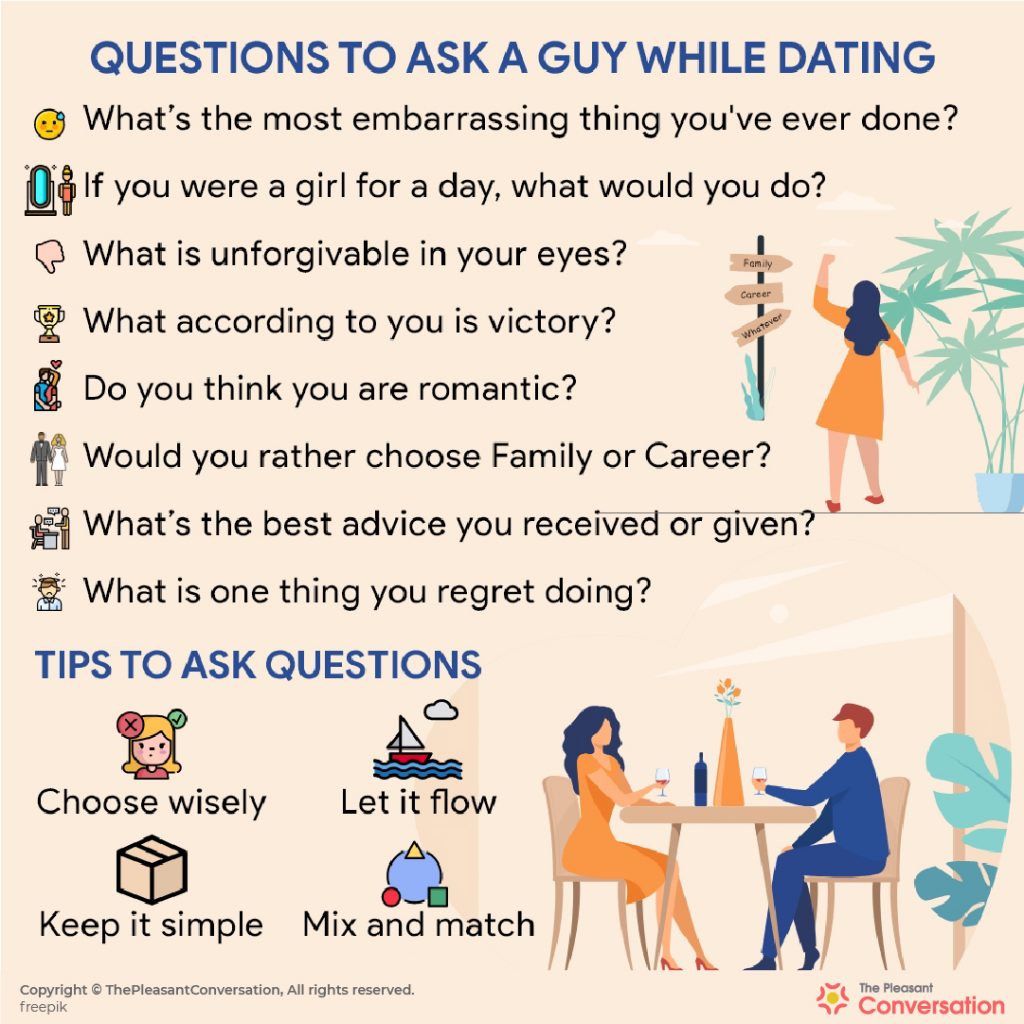
Meaningful connections are built through intentional dialogue, and asking the right questions is the most effective way to transition from superficial small talk to deep, engaging conversation. By utilizing a diverse range of prompts, you can explore your friends' values, memories, and perspectives, creating an environment of mutual understanding, humor, and intellectual growth.
The Art of Conversational Inquiry
Conversation is an exchange that relies as much on curiosity as it does on charisma. When you ask someone a question, you are offering them an invitation to share their internal world. However, not all questions yield the same results. The "best" conversations occur when participants move beyond binary questions—those that can be answered with a simple "yes" or "no"—and instead focus on open-ended inquiries that require explanation, storytelling, or opinion-sharing.
The quality of a conversation often depends on the psychological safety present between speakers. If you are asking deep, personal questions, ensure the environment is appropriate. Random questions serve as a versatile tool: they can break the ice in awkward social settings, bridge the gap during long journeys, or reignite the spark in long-term friendships that have fallen into repetitive patterns.
Categorized Questions for Every Occasion
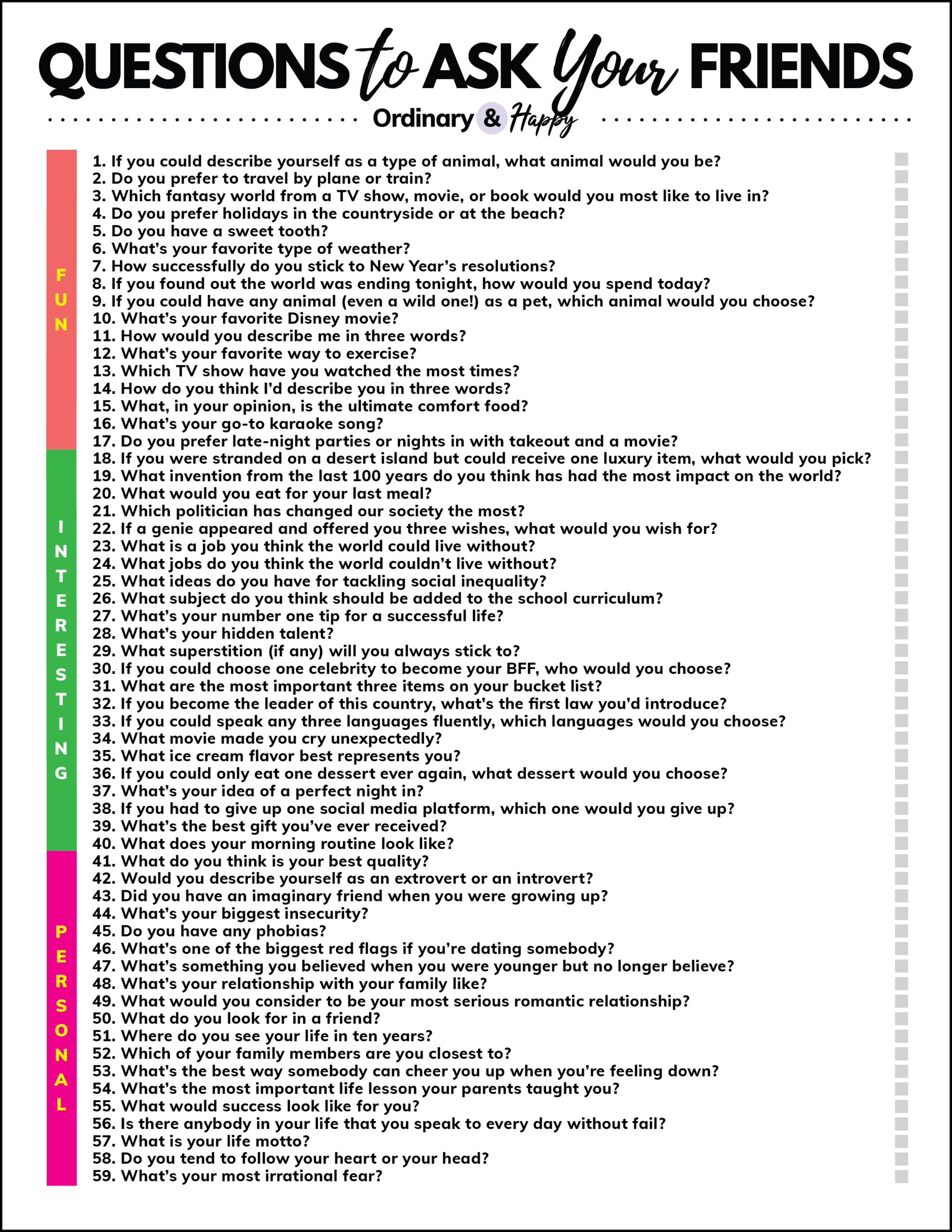
To navigate the 101 questions effectively, it helps to categorize them based on the desired tone. Whether you want to laugh, debate, or reflect, the following lists provide structure to your interactions.
Philosophical and Value-Based Inquiries
These questions probe the fundamental beliefs that drive your friends' decisions and behaviors.
- What is a core value you hold that most people disagree with?
- If you could witness any event in history, which would you choose?
- Is it better to be respected or liked?
- What does "success" look like to you in five years?
- Do you believe in destiny, or do we create our own paths?
- What is a truth about the world that took you a long time to learn?
- If you could solve one global problem overnight, what would it be?
- What constitutes a "good life"?
- Would you rather know the date of your death or the cause?
- What is a secret to a long-lasting, healthy relationship?
- Are people fundamentally good or inherently selfish?
- If you could change one thing about your upbringing, what would it be?
- What is the most important lesson you have learned from failure?
- If you had to teach a class on one subject, what would it be?
- How do you define courage?
Hypothetical Scenarios for Creative Thinking
Hypotheticals are excellent for revealing how a person approaches problem-solving and moral dilemmas without the pressure of reality.
- If you could have any superpower, but it could only be used for minor inconveniences, what would it be?
- If you were forced to move to a different country, where would you go?
- If you won the lottery tomorrow, what is the first thing you would buy?
- If you could swap lives with any historical figure for 24 hours, who would it be?
- If you were stranded on a desert island, what three luxury items would you bring?
- If you could talk to animals, which species would you pick?
- If you had to delete every app on your phone except for three, which would remain?
- If you could live in any fictional universe, which would you choose?
- If you could invent a new holiday, what would it celebrate?
- If you could be an expert in any field, what would you choose?
- If you could only eat one cuisine for the rest of your life, what would it be?
- If you were a ghost, who is the first person you would haunt?
- If you were president for a day, what law would you pass?
- If you had to live in a house made of one material (besides wood/brick), what would it be?
- If you could start a business tomorrow, what would you sell?
Lighthearted and Fun Prompts
These questions are designed to elicit humor and shared laughter, perfect for loosening up a social gathering.
- What is the most useless talent you possess?
- What is your go-to "guilty pleasure" song?
- Have you ever walked into a room and forgotten why you were there?
- What is the weirdest food combination you secretly enjoy?
- If your life were a movie, which actor would play you?
- What is the most embarrassing thing you have done in public?
- What is a fashion trend you hope never returns?
- If you were a vegetable, which one would you be and why?
- What is the worst advice you have ever received?
- If you could have an unlimited supply of one thing, what would it be?
- What is your most irrational fear?
- If you had a theme song that played whenever you walked into a room, what would it be?
- What is the funniest nickname you have ever had?
- If you could host a dinner party for any three people, who would be there?
- What is the weirdest dream you remember vividly?
Comparing Approaches to Conversations
The effectiveness of these questions often hinges on the method of delivery. Consider the following table to help decide which type of question is appropriate for your specific social context.
| Question Type | Best Context | Primary Goal | Risk Factor |
|---|---|---|---|
| Philosophical | Quiet, late-night chats | Understanding values | High (may lead to conflict) |
| Hypothetical | Road trips, casual hangs | Sparking creativity | Low |
| Lighthearted | Parties, group dinners | Entertainment | Minimal |
| Reflective | One-on-one deep talks | Building intimacy | Medium (requires trust) |
The Mechanics of Follow-Up
The most common mistake people make when using a list of questions is treating the interaction like an interview. A conversation should be circular rather than linear. When a friend answers a question, your goal is to extract the meaning behind the answer rather than just moving to the next question on the list.
If you ask, "What is your biggest fear?" and they answer, "Spiders," do not simply jump to the next item. Follow up with, "Why do you think that is?" or "Has there ever been a time where that fear actually stopped you from doing something you wanted to do?" This transition transforms a simple Q&A session into a genuine dialogue.
Overcoming Conversational Lulls
Even with a list of 101 questions, you may encounter moments of silence. These gaps are not necessarily failures; they are often natural pauses. However, if the silence becomes uncomfortable, do not scramble for the most complex question you have. Use these strategies:
- The "Tag-Along" Technique: Share your own answer to the question you just asked. It builds vulnerability and shows that you are willing to participate in the exercise as much as they are.
- Active Listening: If you run out of questions, reflect on what the person just said. If they mentioned a trip they took in 2024, ask, "How did that specific trip change your perspective on travel?"
- The Bridge Method: Connect their answer to another topic. If they speak about their favorite movie, ask what other forms of art (books, music) evoke a similar feeling.
Avoiding Common Pitfalls
While random questions are a powerful social tool, there are boundaries to maintain to ensure the conversation remains healthy.
- Avoid Over-Interrogating: Do not make the other person feel like they are being cross-examined. If a question seems to make them uncomfortable, pivot quickly.
- Context Matters: A philosophical discussion about death or existential dread is rarely suitable for a loud, high-energy party. Match the intensity of the question to the environment.
- Check Your Intent: Are you asking these questions to show off your own knowledge, or are you truly curious about your friend? The latter always produces a better result.
- Respect Private Information: Some questions may touch on trauma or private family matters. Be prepared to back down if the conversation drifts into territory that is clearly off-limits.
Building Lasting Habits
Using random questions periodically is a great habit for strengthening bonds, but do not force it to the point where it becomes a chore. The goal is to cultivate a mindset of curiosity. By occasionally pulling from this list, you train your brain to stop viewing conversations as small talk and start viewing them as opportunities for discovery.
If you find that your group of friends enjoys this, try making it a regular ritual, such as "Question Night" once a month. This sets an expectation for deeper engagement and creates a safe space where everyone knows they will be listened to with intention.
Frequently Asked Questions
How do I make these questions sound more natural during a conversation? The best way is to frame them with context. Instead of just stating a random question, say, "I was thinking about something the other day and wanted to get your opinion on it." This makes the transition feel organic and thoughtful.
Is there a specific order I should follow when asking these questions? There is no set rule, but it is best to start with "warm-up" questions that are lighthearted. Once the conversation is flowing and the social energy is high, you can move toward more personal or philosophical prompts.
What should I do if my friend gives a very short answer? Short answers usually mean the person is either uncomfortable with the topic or not in a conversational mood. Give them an "out" by saying, "No worries if you don't want to dig into that, we can switch gears. What have you been up to lately?"
Can these questions be used in a group setting? Absolutely. In fact, group settings often benefit the most from these prompts, as they can prevent the conversation from splitting into smaller, exclusive cliques. A well-placed random question can bring everyone back into the same dialogue.
How do I handle a disagreement arising from these questions? Approach disagreements with curiosity, not confrontation. Ask, "That’s a fascinating take; what influenced you to see it that way?" The point of these conversations is to understand the other person, not to "win" the debate.
Taking the Next Step
To truly benefit from these 101 questions, choose three that interest you most and test them out the next time you see a friend. Do not worry about being perfectly articulate; the goal is to show your friend that you value their perspective. Start by listening more than you speak, and you will find that the quality of your conversations improves naturally.