A security incident is an event that indicates an organization's systems or data have been compromised or that measures put in place to protect them have failed. Effective management requires a disciplined, structured approach—often formalized as an Incident Response Plan (IRP)—to detect, contain, eradicate, and recover from threats while minimizing operational disruption and regulatory liability.
Defining the Scope of a Security Incident
In the context of modern cybersecurity, a security incident is distinct from a security event. A security event is any observable occurrence in a system or network, such as a user logging in or a firewall blocking a connection. A security incident, however, represents a violation or imminent threat of violation of computer security policies, acceptable use policies, or standard security practices.
Examples of security incidents include, but are not limited to, the unauthorized access of sensitive personal data (a data breach), a ransomware attack that encrypts critical business files, a Distributed Denial of Service (DDoS) attack that renders a public-facing website unavailable, or the successful installation of malicious software (malware) on an internal server. Understanding the difference is vital because an organization cannot—and should not—attempt to respond to every trivial event with the same urgency as a confirmed security incident.
The Incident Response Lifecycle
The most widely accepted framework for managing security incidents is the cycle defined by the National Institute of Standards and Technology (NIST) Special Publication 800-61 Rev. 2. This lifecycle ensures that teams do not act impulsively, which can often worsen the impact of an attack.
1. Preparation
Preparation is the most critical phase. It involves establishing the tools, technologies, and human expertise required to handle an incident before it occurs. This includes training an Incident Response Team (IRT), defining communication channels, and ensuring that logs and backups are maintained in a secure, immutable environment. Without proper preparation, an organization is forced to make high-stakes decisions under immense pressure during a crisis.
2. Detection and Analysis
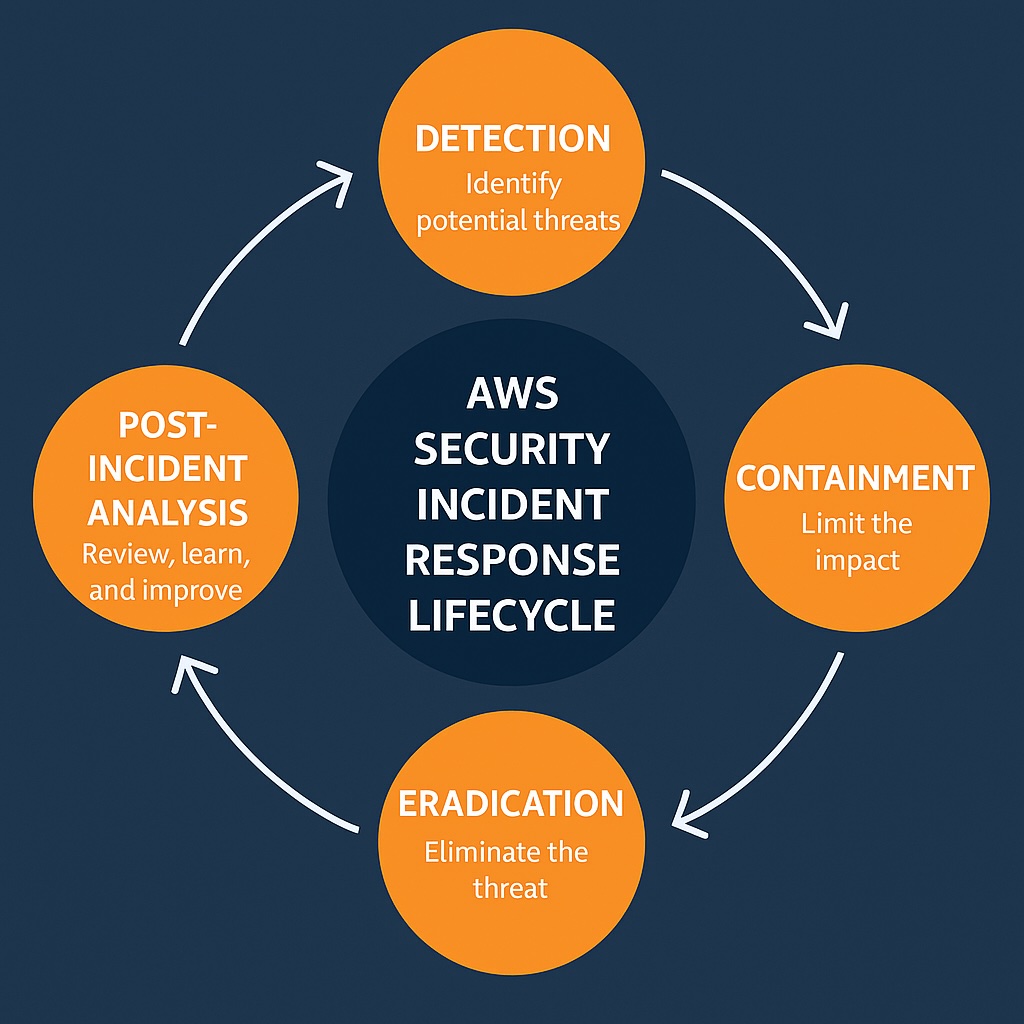
Detection involves the identification of a security incident through monitoring tools such as Security Information and Event Management (SIEM) systems, Intrusion Detection Systems (IDS), or reports from end-users. Once an anomaly is detected, the IRT must analyze it to determine its scope and severity. This analysis involves answering fundamental questions: What is the nature of the threat? Is it actively spreading? What systems are currently impacted?
3. Containment, Eradication, and Recovery
Containment is the process of stopping the "bleeding." This might involve isolating a compromised server from the network or disabling a specific user account. Eradication involves removing the root cause, such as deleting malware or closing a vulnerable port. Recovery brings systems back into operation, often utilizing clean backups, while carefully monitoring to ensure the threat does not return.
4. Post-Incident Activity
Often ignored, the post-incident phase is crucial for organizational maturity. It involves a "lessons learned" session where the team evaluates what went well and what failed. This data is used to update the IRP and improve defenses for the future.
Comparative Framework for Incident Severity
Classifying the severity of an incident allows organizations to allocate resources efficiently. Responding to a minor policy violation with the same intensity as a global ransomware attack is inefficient and unsustainable.
| Severity Level | Description | Typical Response Action |
|---|---|---|
| Low | Minimal impact; localized issue; no sensitive data exposed. | Managed via standard IT support desk; resolved in 24-48 hours. |
| Medium | Notable disruption to a specific department; potential for data exposure. | Escalated to security analysts; containment required within 8 hours. |
| High | Critical service outage; confirmed data breach; legal/regulatory implications. | Immediate activation of full IRT; executive management notification. |
| Critical | Full system compromise; catastrophic data loss; existential business threat. | Crisis mode; 24/7 response; third-party forensics firms engaged. |
Technical Challenges and Common Pitfalls
Many organizations falter during security incidents due to predictable technical and procedural gaps. One common mistake is the failure to maintain immutable backups. If an organization’s primary servers are compromised by ransomware, and their backups are also mapped to the same network, the attacker will often encrypt the backups as well, rendering recovery impossible without paying a ransom.
Another significant challenge is fragmented visibility. If a company uses disjointed security tools that do not communicate, the security team may lose track of an attacker as they move laterally across the network. Centralized logging and endpoint detection and response (EDR) agents are essential for maintaining a continuous thread of analysis.
Furthermore, communication silos represent a major risk. During a high-severity incident, IT and security teams must have a pre-defined communication protocol. If information about a breach is not shared accurately with legal counsel or public relations departments, the organization may inadvertently violate data breach notification laws, such as those established by the GDPR in Europe or various state-level privacy acts in the United States.
Legal and Regulatory Considerations
In 2026, the regulatory landscape regarding security incidents is more stringent than ever. Most jurisdictions require organizations to report data breaches involving Personally Identifiable Information (PII) within a specific timeframe—sometimes as short as 72 hours.
Failure to follow notification protocols can result in heavy administrative fines and private litigation. It is therefore essential that legal counsel is involved in the incident response process from the early stages, particularly when assessing whether an event meets the legal definition of a "breach" that requires public disclosure. Organizations should document every step of their response process. This documentation serves as evidence that the company acted with "due diligence" in the event of a regulatory audit or class-action lawsuit.
Managing Internal vs. External Communication
A major security incident is not just a technical failure; it is a corporate reputation event. Managing the narrative is as important as patching the vulnerability.
Internal communication must remain professional and limited to authorized personnel. Speculation among employees can lead to leaks that undermine the IRT’s efforts. Conversely, external communication—such as notifying customers or the media—must be handled by a designated spokesperson. Providing too much information too early can be damaging if the facts change, but staying silent for too long can erode customer trust. A balanced, transparent approach that focuses on the steps being taken to protect users is generally the industry standard for crisis communication.
Frequently Asked Questions
What should I do first if I suspect a security incident? Do not panic and do not attempt to "hack back" or investigate by logging into compromised machines directly. First, document the time of discovery, notify your designated internal security lead, and ensure that all current system logs are preserved and backed up to a secure location.
Does a security incident always require a public announcement? No. A public announcement is typically required only when there is a risk of harm to individuals (such as the loss of private data) or if a regulatory body mandates it. Many minor, contained incidents do not require public disclosure.
How do I distinguish between a false positive and a real incident? Use correlation tools. A single "alert" might be a false positive, but multiple alerts across different layers of the stack—such as a firewall, an EDR agent, and a server log—all pointing toward the same destination, usually signify a genuine incident.
Should we pay the ransom in a ransomware attack? Most cybersecurity experts and law enforcement agencies advise against paying ransoms. Payment provides no guarantee that data will be returned, it identifies the organization as a "willing payer," and it directly funds criminal enterprises. Prioritize restoring from clean, verified backups.
Can I manage a security incident without an outside firm? Yes, if your internal team has the requisite skills and tools. However, for large-scale breaches, external Incident Response firms often bring specialized tools, threat intelligence, and legal experience that significantly shorten the recovery time.
Recommendation for Next Steps
If your organization lacks a formal, tested Incident Response Plan, prioritize its creation immediately. Conduct a "tabletop exercise"—a simulated attack scenario involving key stakeholders—to identify gaps in your current communication, technical procedures, and decision-making authority. Review your offline, immutable backup strategy to ensure that at least one copy of your data remains inaccessible from your production network. Security is a continuous process of hardening; by formalizing your approach to incident management today, you protect the viability of your business for tomorrow.