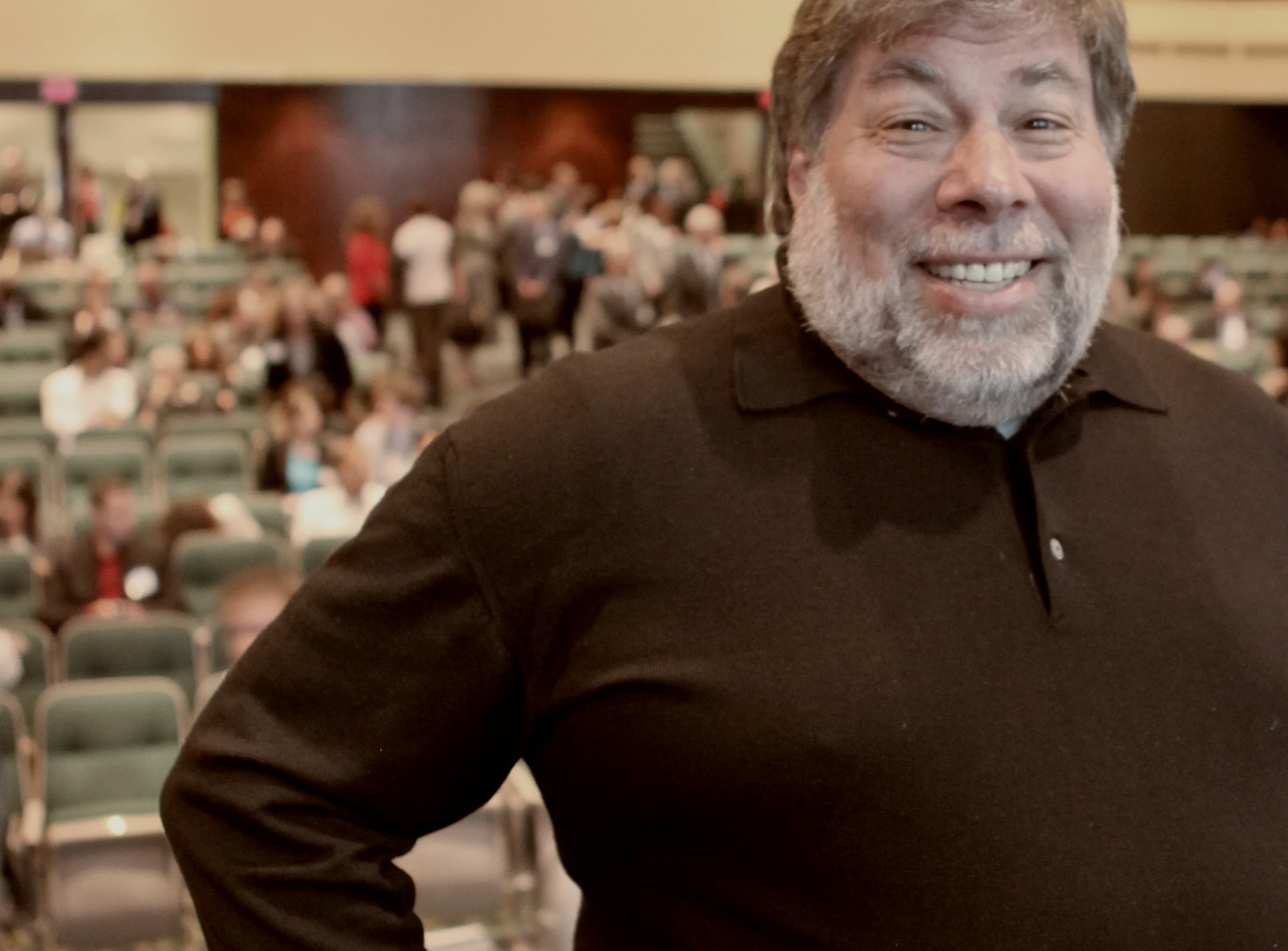
Steve Wozniak is the pioneering computer engineer who co-founded Apple Inc. and single-handedly designed the Apple I and Apple II, the machines that launched the personal computing revolution. Known as "The Woz," he remains a global icon for ethical engineering, open-source advocacy, and the democratization of technology through hardware accessibility.
The Architect of the Personal Computer Revolution
To understand the impact of Steve Wozniak, one must look beyond the corporate behemoth that Apple has become in 2026 and return to the mid-1970s. While Steve Jobs is often credited with the vision and marketing prowess that built the brand, Wozniak was the technical engine. He did not merely build a computer; he reimagined what a computer could be for an individual user.
The design of the Apple I was a radical departure from the contemporary Altair 8800. While the Altair required users to toggle switches and read blinking lights, Wozniak’s design integrated a keyboard and a television screen as the interface. This shift—moving from abstract machine code to a visual, interactive experience—is the foundation of every modern computing device we use today.
Wozniak’s engineering philosophy was rooted in "elegance through simplicity." At a time when computer components were prohibitively expensive, he specialized in reducing chip counts. He would spend nights finding ways to make a circuit perform the same task with five chips instead of twenty. This wasn't just about cost-cutting; it was an artistic pursuit of engineering perfection.
The Technical Brilliance of the Apple II
The Apple II, released in 1977, is arguably Wozniak’s greatest masterpiece. It was one of the first highly successful mass-produced microcomputer products. Unlike the Apple I, which was sold as a bare motherboard, the Apple II was a complete, "ready-to-use" consumer device.
NTSC Color and High-Resolution Graphics
Wozniak’s most stunning technical feat in the Apple II was his implementation of color. In the late 1970s, color graphics typically required thousands of dollars in dedicated hardware. Wozniak discovered a way to manipulate the NTSC video signal directly through software and a few inexpensive chips. By "tricking" the signal, he enabled the Apple II to display colors on a standard home television.
The Disk II Controller
Another breakthrough was the Disk II floppy disk drive controller. Most controllers at the time were complex, multi-board systems. Wozniak realized that he could move the complexity from the hardware into the software (firmware). By writing a sophisticated state machine in code, he reduced the hardware controller to a tiny card with just a few chips. This made the Apple II the most affordable and reliable computer for data storage, which in turn allowed for the creation of VisiCalc, the first spreadsheet program.
| Feature | Apple I (1976) | Apple II (1977) |
|---|---|---|
| Processor | MOS 6502 @ 1 MHz | MOS 6502 @ 1.023 MHz |
| Standard RAM | 4 KB (expandable to 8 KB) | 4 KB (expandable to 48 KB) |
| Display Type | Text only (40x24) | Color Graphics & Text |
| I/O Support | Keyboard, Television | Keyboard, TV, Game Paddles, Cassette |
| Expansion | Single Slot | 8 Internal Slots |
| Innovation | Single-board design | Integrated BASIC in ROM |
Life After Apple: Philanthropy and Innovation
Steve Wozniak left his full-time active role at Apple in 1985, though he famously remains an official employee on the payroll to this day, representing the company’s "soul." His post-Apple career has been defined by a desire to return to his roots: teaching and inventing for the sake of human connection.
CL 9 and the Universal Remote
After Apple, Wozniak founded CL 9, where he developed the first programmable universal remote control, the CORE, in 1987. While the product was ahead of its time and faced stiff competition, it showcased his obsession with simplifying the user experience across multiple devices.
Educational Philanthropy
Wozniak spent much of the 1990s and 2000s focused on education. He personally taught computer classes to fifth-through-ninth-grade students and teachers in the Los Gatos School District. He donated hundreds of laptops and established the Electronic Frontier Foundation (EFF) as a founding sponsor, advocating for civil liberties in the digital world. His belief has always been that technology should empower the individual, not just the corporation.
Privateer Space and the 2026 Perspective
In recent years, leading into 2026, Wozniak has shifted his focus toward the "final frontier" but with a characteristically ethical twist. He co-founded Privateer Space, a company dedicated to tracking and cleaning up orbital debris.
As low-Earth orbit becomes increasingly crowded with satellite constellations, the risk of "Kessler Syndrome"—a chain reaction of collisions—grows. Privateer Space utilizes a data-centric approach to map space junk with unprecedented precision. For Wozniak, this venture isn't about colonizing Mars or space tourism; it is about the sustainability of the orbital environment. He views space as a shared resource that must be managed responsibly, mirroring his lifelong support for open systems and environmental stewardship.
The Right to Repair Advocate
A significant part of Wozniak’s modern legacy is his vocal support for the Right to Repair movement. This is a direct extension of his experience at the Homebrew Computer Club. When Wozniak designed the Apple I and II, he included full schematics and encouraged users to open the cases, add expansion cards, and modify the hardware.
In 2026, as consumer electronics become increasingly "locked down" with proprietary screws and non-replaceable batteries, Wozniak remains a high-profile critic of these practices. He argues that:
- Ownership means repairability: If you can't fix it, you don't truly own it.
- Innovation comes from tinkering: Future engineers are born by taking things apart.
- Environmental Impact: Repairable devices stay out of landfills longer.
His stance often puts him at philosophical odds with the modern iteration of the company he founded, yet his influence ensures that the debate remains at the forefront of tech policy.
Engineering Philosophy: Why "The Woz" Matters
The enduring relevance of Steve Wozniak lies in his "Engineer-First" mindset. Unlike many tech moguls who focus on market share and quarterly earnings, Wozniak’s motivations have always been intrinsic.
He frequently speaks about the "Happiness Equation," which he defines as H = S - F (Happiness = Smiles minus Frowns). For Wozniak, engineering was the source of those "smiles"—the joy of solving a puzzle or creating something that worked perfectly. This purity of intent is why he is revered by developers and hardware hackers worldwide. He represents a time when the goal of computing was to "power to the people," a mission he continues to champion through his various foundations and public speaking engagements.
Common Misconceptions About Steve Wozniak
Despite his fame, several myths persist regarding his role at Apple and his relationship with Steve Jobs.
Myth 1: Wozniak was a "failed" businessman
Wozniak never intended to be a businessman. He was a Hewlett-Packard engineer who wanted to give his computer designs away for free. Steve Jobs was the one who insisted they sell them. Wozniak’s "exit" from the executive side of Apple was a conscious choice to remain an engineer rather than a manager.
Myth 2: He and Steve Jobs were enemies
While they had significant differences in personality and business ethics, Wozniak has consistently maintained that they remained friends until Jobs’ death. He often notes that they simply had different goals: Jobs wanted to change the world through a brand, while Wozniak wanted to change the world through a circuit board.
Myth 3: He is no longer involved in tech
While he doesn't code at Apple, Wozniak is an active participant in the tech community. Whether it is mentoring startups or providing technical oversight at Privateer Space, he remains deeply embedded in the "how" of technology.
Frequently Asked Questions
What is Steve Wozniak's estimated net worth in 2026?
While exact figures fluctuate based on private investments and the performance of his various ventures, Steve Wozniak's net worth is estimated to be around $100 million to $150 million. This is significantly lower than many other tech founders because Wozniak famously gave away large portions of his early Apple stock to employees (the "Woz Plan") and has never been driven by extreme wealth accumulation.
Why is he called "The Woz"?
"The Woz" is a shortened version of his surname, but it also became a brand of its own, signifying his approachable, "hacker-friendly" persona. It distinguishes him from the corporate image of Apple, positioning him as a person of the people.
Did Steve Wozniak actually build the Apple I by hand?
Yes. Wozniak manually soldered the components onto the first batch of Apple I motherboards. He designed the circuit diagrams on paper and then translated them into the physical boards. The first 200 units were essentially hand-crafted by him and a small group of friends/associates in the famous Jobs family garage.
What does Steve Wozniak think of Artificial Intelligence?
As of 2026, Wozniak has expressed a cautious but fascinated view of AI. He often warns about the "human element" being lost and the potential for AI to be used for sophisticated misinformation. He advocates for "Human-Centric AI" that serves as a tool for creativity rather than a replacement for human thought.
Does Steve Wozniak still use Apple products?
Yes, Wozniak is a known fan of the iPhone and Mac, often waiting in line at Apple stores on launch day like a regular customer to experience the excitement of the community. However, he is also known to carry Android devices and other gadgets, as he enjoys experimenting with all forms of technology.
Practical Recommendations for Aspiring Engineers
If you are inspired by Steve Wozniak’s journey, there are several practical steps you can take to adopt his "Woz-style" engineering approach:
- Prioritize Fundamentals: Wozniak’s success came from a deep understanding of hardware logic and machine code. Before relying on high-level frameworks, learn how the "silicon" actually works.
- Optimize for Elegance: Challenge yourself to build projects with the minimum necessary resources. Efficiency in code and hardware design is a hallmark of great engineering.
- Support Open Systems: Advocate for and contribute to open-source projects. Maintain the tradition of sharing knowledge that Wozniak championed at the Homebrew Computer Club.
- Stay Curious: Never stop being a "hobbyist." Wozniak’s best ideas came from personal projects he built for fun, not because a boss told him to.
The legacy of Steve Wozniak is a reminder that while marketing and vision are necessary to scale a company, it is the underlying engineering—the "magic in the box"—that truly changes the world.