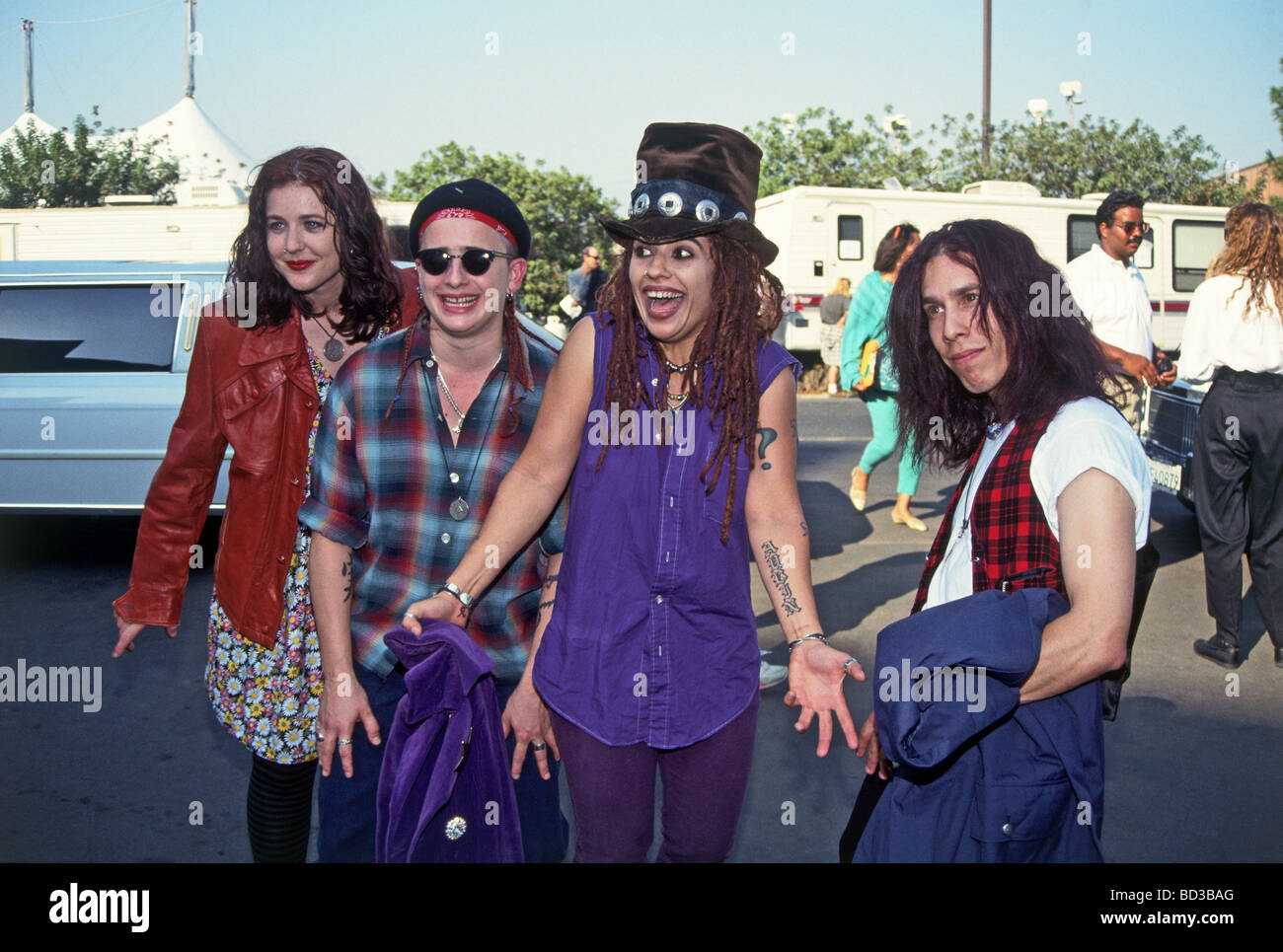
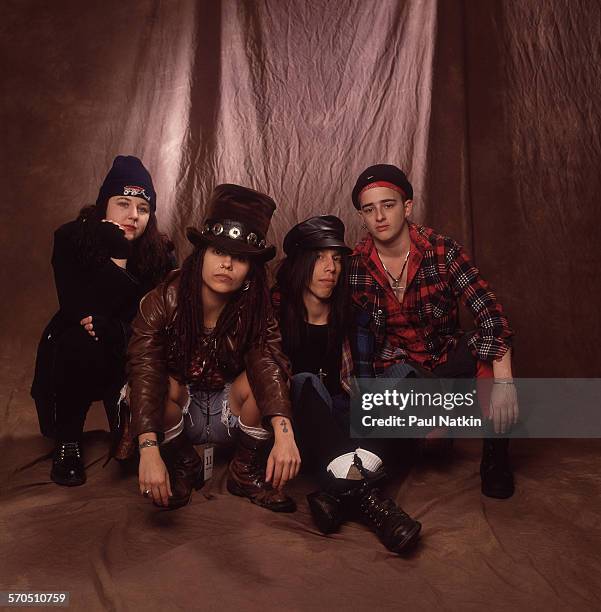
4 Non Blondes remains one of the most distinctive alternative rock bands of the early 1990s, anchored by the powerhouse vocals of Linda Perry and their global chart-topping anthem "What's Up?". Formed in San Francisco in 1989, the group blended elements of alternative rock, blues rock, and pop hooks, achieving massive mainstream success with their debut album Bigger, Better, Faster, More! before disbanding at the height of their initial fame.
Origins and Formation in San Francisco
The genesis of 4 Non Blondes dates back to 1989 in the vibrant and eclectic music scene of San Francisco, California. Bassist Christa Hillhouse and guitarist Shauna Hall initially joined forces, soon recruiting drummer Wanda Day to form the rhythmic backbone of the ensemble. However, the lineup lacked a defining vocal presence until Hillhouse and Hall discovered Linda Perry working at a local San Francisco café and music venue. Perry possessed a raw, gritty, and deeply emotional vocal range that instantly set her apart from contemporary vocalists. Upon joining as lead singer and primary songwriter, Perry transformed the band's sonic trajectory, shifting their creative output toward a more direct, emotionally charged brand of alternative rock.
During their early years, the group cut their teeth playing local Bay Area clubs, underground venues, and outdoor festivals. They quickly built a dedicated regional following through relentless touring and energetic live performances. Their distinctive moniker—4 Non Blondes—originated as an ironic commentary on the homogeneous look of the prevailing music scene and their own diverse appearances. In 1991, fueled by strong local buzz and a dynamic showcase performance, the band signed a major-label recording contract with Interscope Records, setting the stage for a rapid ascent into the mainstream consciousness during the height of the alternative rock boom.
Bigger, Better, Faster, More!: The Breakthrough Album
Released in October 1992, Bigger, Better, Faster, More! served as the sole studio album issued by 4 Non Blondes during their active recording years. Produced by David Tickle, the album captured the gritty production aesthetic of the early 1990s while leaning heavily into melodic song structures that appealed to both alternative rock fans and mainstream pop radio listeners. The record showcased a diverse array of musical styles, ranging from hard-driving blues-infused rock tracks to acoustic ballads, all tied together by Linda Perry’s impassioned vocal delivery.
While the album featured several strong compositions, its commercial viability was overwhelmingly driven by its second single, "What's Up?". Written entirely by Linda Perry, the track became an inescapable global phenomenon throughout 1993. The song's anthemic chorus, emotional vulnerability, and soaring vocal crescendos resonated deeply with a generation of listeners. It achieved multi-platinum status internationally, topping music charts across numerous countries including Germany, Sweden, Ireland, and Australia, while peaking at number 14 on the US Billboard Hot 100.
| Album Detail | Fact / Specification |
|---|---|
| Release Date | October 13, 1992 |
| Label | Interscope Records |
| Primary Producer | David Tickle |
| Global Chart Peak | #1 in multiple European markets; Top 20 on the US Billboard 200 |
| Certifications | Multi-Platinum (RIAA and international territories) |
Beyond "What's Up?", the album featured other notable tracks such as "Dear Mr. President," a socially conscious acoustic track highlighting Perry's songwriting range, and "Spaceman," which received moderate alternative radio airplay. Despite the massive success of their debut, internal tensions within the band began to mount during the recording and promotional cycles. Creative differences regarding the group's musical direction, coupled with the immense pressure of sudden global fame, created friction among the members. Shauna Hall departed the band during the recording sessions and was replaced by guitarist Roger Rocha, highlighting a period of instability that would ultimately culminate in the group's premature dissolution.
Departure of Linda Perry and Band Dissolution
By the mid-1990s, the internal friction within 4 Non Blondes reached a critical juncture. Linda Perry, who had shouldered much of the creative burden and public spotlight, grew increasingly uncomfortable with the commercial pressures exerted by the record label and the stylistic constraints of being in a traditional band framework. Perry envisioned a more eclectic, soul-inflected musical future that diverged from the straight-ahead alternative rock sound captured on their debut album.
In late 1994, while the band was in the process of recording material for a planned second studio album, Linda Perry officially announced her departure from 4 Non Blondes to pursue a solo career. With Perry exiting as the primary songwriter, lead vocalist, and focal point of the group, the remaining members recognized that continuing under the same name was untenable. Consequently, 4 Non Blondes officially disbanded in 1994, having released only one full-length studio album.
Following the breakup, Linda Perry launched a successful solo career with her 1996 debut album In Flight, which showcased a more introspective and experimental R&B and soul sound. Although her solo work did not match the commercial heights of "What's Up?", Perry subsequently established herself as one of the most successful and prolific songwriters and record producers in the modern music industry. She went on to write and produce global hits for iconic artists such as Christina Aguilera ("Beautiful"), Pink ("Get the Party Started"), and Gwen Stefani, cementing her legacy far beyond her years fronting 4 Non Blondes. Meanwhile, other members of the band transitioned into behind-the-scenes production, session work, and independent musical ventures.
Cultural Impact and Continuing Legacy
Though short-lived, 4 Non Blondes left an indelible mark on the alternative rock landscape of the 1990s. "What's Up?" transcended its era to become an enduring pop culture touchstone, frequently referenced, covered, and streamed across digital platforms decades after its initial release. The song's universal themes of existential questioning, frustration, and the ongoing search for personal liberation ensure its continued relevance across generations.
Furthermore, Linda Perry's status as an openly gay frontwoman during the early 1990s contributed important representation within mainstream rock music, paving the way for future generations of diverse artists. The band's refusal to conform to traditional industry expectations of femininity and image further solidified their reputation as authentic non-conformists. While they are frequently categorized as a quintessential one-hit wonder in commercial pop history, their single album remains a definitive artifact of the pre-grunge and alternative explosion era.
Frequently Asked Questions
When was 4 Non Blondes formed?
4 Non Blondes was formed in San Francisco, California, in 1989 by bassist Christa Hillhouse, guitarist Shauna Hall, and drummer Wanda Day, with Linda Perry joining shortly after as the lead vocalist.
What is 4 Non Blondes' most famous song?
The band's most famous song is "What's Up?", released in 1992. It reached number one in several countries and became a defining alternative rock anthem of the decade.
Why did 4 Non Blondes break up?
The band broke up in 1994 primarily due to creative differences among the members and lead singer Linda Perry's decision to leave the group to pursue a solo career and songwriting opportunities.
Did 4 Non Blondes release more than one album?
No, Bigger, Better, Faster, More! (1992) is the only official studio album released by the band during their active career.
What happened to Linda Perry after the band split?
Linda Perry pursued a solo career before establishing herself as a highly successful, Grammy-nominated songwriter and producer, creating major hits for artists like Christina Aguilera, Pink, and Adele.
Practical Next Steps for Fans and Researchers
For those interested in exploring the broader context of 1990s alternative rock, reviewing the comprehensive liner notes of Bigger, Better, Faster, More! provides insight into the era's production styles. Additionally, studying Linda Perry's later production discography offers a clear trajectory of how a 90s rock icon transitioned into a powerhouse behind-the-scenes hitmaker.