The 4th of July, or Independence Day, is a federal holiday in the United States commemorating the adoption of the Declaration of Independence on July 4, 1776, marking the birth of the United States of America as an independent nation through historical traditions, community gatherings, and federal observances.
Historical Origins and the Road to Independence
The celebration of the 4th of July is rooted in the complex political and social upheavals of the late 18th century. Understanding the modern holiday requires examining the sequence of events that led the Second Continental Congress to break ties with the Kingdom of Great Britain.
The Continental Congress and the Declaration
By the spring of 1776, the American Revolutionary War was already underway, having begun in April 1775. On June 7, 1776, Richard Henry Lee of Virginia introduced a resolution to the Continental Congress declaring that the united colonies ought to be free and independent states. Congress appointed a "Committee of Five"—comprising Thomas Jefferson, Benjamin Franklin, John Adams, Roger Sherman, and Robert R. Livingston—to draft a formal statement justifying this separation.
Thomas Jefferson was tasked with writing the primary draft. Drawing upon Enlightenment principles, particularly the philosophies of John Locke regarding natural rights and the social contract, Jefferson articulated the self-evident truths that all individuals possess rights to life, liberty, and the pursuit of happiness. On July 2, 1776, the Congress voted in favor of Lee's resolution for independence. Two days later, on July 4, the delegates formally adopted the final text of the Declaration of Independence.
Evolution from Regional Celebration to National Holiday
Initial celebrations of independence were spontaneous and varied widely across the newly formed states. In Philadelphia, on July 8, 1776, the Declaration was read publicly for the first time, accompanied by the ringing of bells and bonfires. Early commemorations often included mock funerals for the tyranny of King George III, public readings of the foundational text, and military parades.
The tradition grew organically over the decades. The Massachusetts General Court became the first state legislature to recognize the day officially in 1781. Throughout the 19th century, the holiday became deeply entrenched in American cultural identity, serving as a focal point for political speeches, abolitionist rallies, and community bonding. It was not until 1870, nearly a century after the founding documents were signed, that Congress made Independence Day an unpaid federal holiday. In 1938, Congress expanded the statute to make it a paid federal holiday for federal employees, cementing its status nationwide.
Core Traditions and Cultural Practices
The contemporary observance of Independence Day blends 18th-century pageantry with modern recreational practices. While the forms of celebration have evolved, several core elements remain central to the American experience of the holiday.
Parades, Concerts, and Historical Reenactments
Public ceremonies are a staple of July 4th celebrations in cities and towns across the country. Morning parades featuring marching bands, local civic organizations, vintage military vehicles, and floats are common. Major metropolitan areas, such as Boston, Philadelphia, and Washington, D.C., host large-scale concerts and historical reenactments. In Washington, D.C., the annual "A Capitol Fourth" concert broadcasts nationally, featuring performances by symphony orchestras and popular artists against the backdrop of the National Mall.
Backyard Barbecues and Culinary Customs
Privately, families and friends gather for outdoor dining, most notably backyard barbecues and picnics. Foods associated with the holiday often reflect American comfort cuisine, including hot dogs, hamburgers, potato salad, corn on the cob, and baked beans. Regional variations abound, from Carolina-style pulled pork to Texas brisket and New England clambakes. These gatherings serve a social function, bringing neighborhoods together during the peak of the summer season.
Fireworks Displays and Public Spectacles
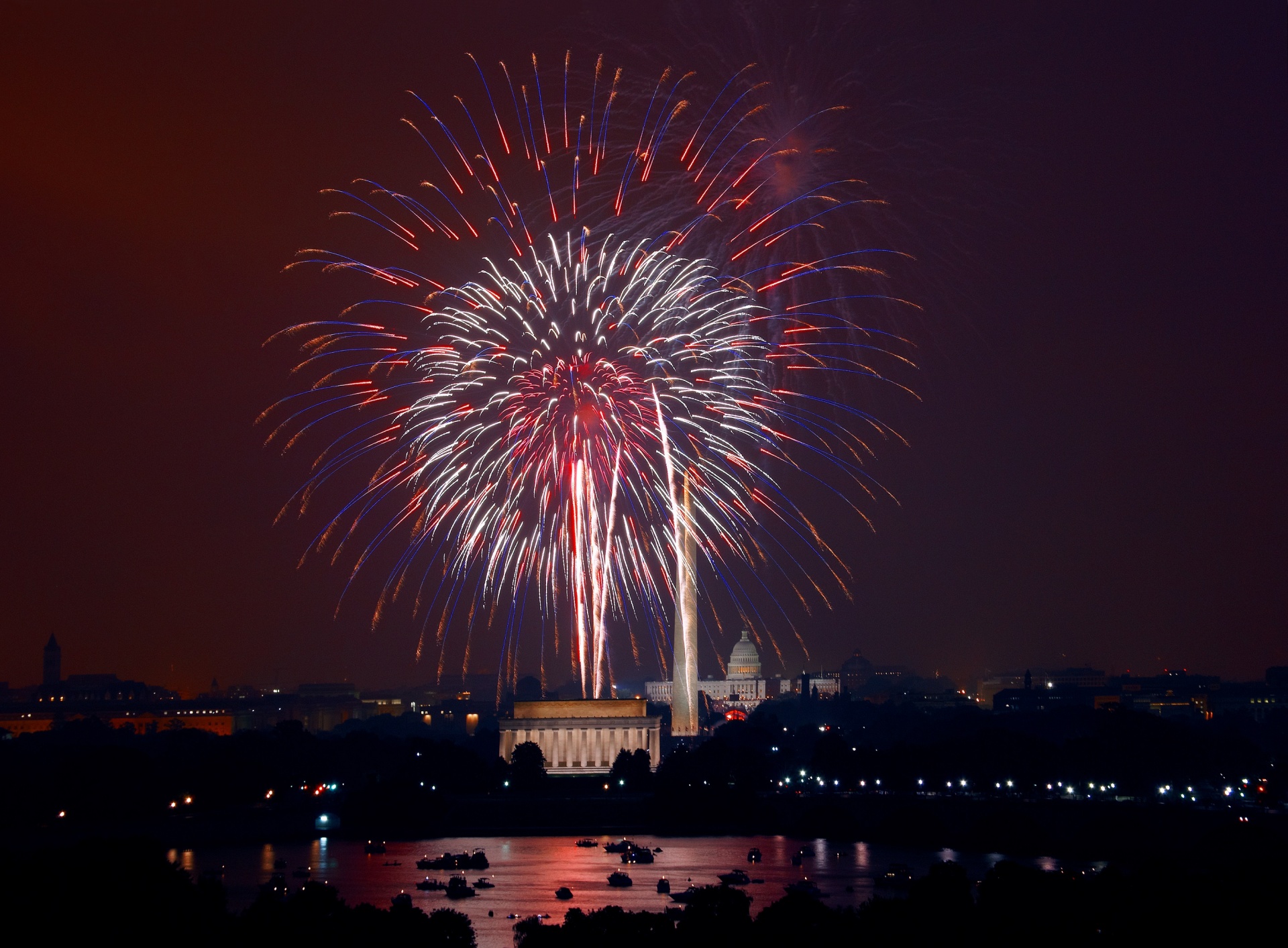
The tradition of pyrotechnic displays dates back to the very first anniversary of independence in 1777, when Philadelphia discharged a thirteen-gun salute and set off fireworks. Today, municipalities and private organizations stage elaborate fireworks shows over waterfronts, public parks, and monuments. The Macy's 4th of July Fireworks in New York City and the display over the National Mall in Washington, D.C., are among the largest, drawing millions of spectators in person and millions more via television broadcasts.
Safety Regulations and Environmental Considerations
While fireworks are synonymous with the holiday, their use involves significant safety, legal, and environmental considerations. Federal, state, and local jurisdictions maintain distinct regulatory frameworks regarding consumer pyrotechnics.
Legal Status and Consumer Pyrotechnics
The legality of consumer fireworks varies widely by state and municipality. According to the U.S. Consumer Product Safety Commission (CPSC), states regulate whether sparklers, firecrackers, roman candles, and aerial shells may be purchased and discharged by the general public.
| Jurisdiction Type | Typical Regulations | Common Permitted Items |
|---|---|---|
| Permissive States | Broad consumer access; local ordinances may still apply. | Sparklers, fountains, aerial devices, firecrackers. |
| Restricted States | Ban aerial and explosive devices; allow non-aerial novelties. | Sparklers, cone fountains, snake sparks. |
| Prohibitory States | Complete ban on all consumer-grade fireworks for individuals. | None; professional displays only. |
Note: Individuals must consult state fire marshal offices and local municipal codes prior to purchasing or discharging pyrotechnics to ensure compliance with local ordinances.
Safety Statistics and Injury Prevention
According to CPSC annual reports, thousands of individuals visit emergency departments with fireworks-related injuries in the weeks surrounding July 4th. Burns, lacerations, and trauma to the hands, eyes, and head are among the most frequently reported injuries.
To mitigate risks, safety organizations recommend several precautions:
- Never allow young children to play with or ignite fireworks, including sparklers, which burn at temperatures exceeding 1,000 degrees Fahrenheit.
- Keep a bucket of water or a garden hose handy in case of fire or misfire.
- Never try to relight or handle malfunctioning fireworks; soak them in water and throw them away.
- Wear protective eyewear when setting off permitted consumer devices.
Environmental and Community Impacts
Large-scale fireworks displays and widespread consumer use also present environmental and public health challenges. Pyrotechnics release particulate matter (PM2.5 and PM10), sulfur dioxide, and heavy metal compounds into the atmosphere, causing temporary spikes in air pollution. Furthermore, the loud concussive sounds of fireworks can cause severe distress to domestic pets, livestock, and combat veterans experiencing post-traumatic stress disorder (PTSD). Many communities have begun exploring alternative celebrations, such as drone light shows, to reduce noise pollution, wildfire risks, and chemical emissions.
Frequently Asked Questions
Why is Independence Day celebrated on July 4th instead of July 2nd?
While the Second Continental Congress voted to approve the resolution for independence on July 2, 1776, it spent the next two days refining the language of the formal Declaration of Independence. Congress officially adopted the final text on July 4, which is the date inscribed on the engrossed document and celebrated historically as the nation's birthday.
Was the Declaration of Independence signed on July 4, 1776?
No. The Continental Congress adopted the text on July 4, but it was initially only authenticated by the signatures of President John Hancock and Secretary Charles Thomson. The actual signing ceremony by the delegates did not take place until August 2, 1776, when the official parchment was ready.
Are federal offices and banks closed on the 4th of July?
Yes. Independence Day is a designated federal public holiday. All non-essential federal government offices, financial institutions, and the United States Postal Service are closed, and mail delivery is suspended for the day.
Can anyone legally shoot off fireworks on the 4th of July?
Legality depends entirely on state and local laws. Some states permit all types of consumer fireworks, others restrict sales to non-aerial novelties like sparklers, and some ban consumer fireworks entirely, permitting only professional public displays managed by licensed operators.
What is the history behind the song "Yankee Doodle"?
"Yankee Doodle" originated as a pre-Revolutionary War song sung by British military officers to mock the colonial soldiers, whom they viewed as unrefined. During the Revolutionary War, the colonists adopted the tune themselves, turning it into a defiant anthem of American pride and resilience.
Next Actions for Observers
For individuals planning to observe the holiday, preparation ensures both enjoyment and compliance with local laws. Begin by reviewing the specific fireworks regulations enforced by your local municipality or state fire marshal. If you plan to attend a public event or municipal fireworks display, check local transit schedules, road closure announcements, and parking availability well in advance, as major metropolitan celebrations often implement strict crowd-control measures and security perimeters.