The year 1990 marked a crucial turning point for Walt Disney Feature Animation, bridging the end of the studio's transitional "Bronze Age" and setting the stage for the legendary Disney Renaissance. While Disney did not release a brand-new, traditionally animated feature-length princess or fairy-tale film strictly within the calendar year of 1990, the period was defined by the monumental success and cultural footprint of The Little Mermaid (released late November 1989), alongside the production milestones of The Rescuers Down Under (released in November 1990) and the foundational development of Beauty and the Beast (1991). Understanding the cinematic landscape of Disney animation around 1990 requires examining how these specific releases transformed the studio's technical processes, storytelling ethos, and commercial viability, rescuing it from decades of fluctuating box-office returns.
The Historical Context of Disney Animation Around 1990
To understand the weight of the 1990 era in Disney history, one must look back at the decade preceding it. Throughout the 1970s and early 1980s, the animation studio experienced a creative and financial drought following the deaths of Walt Disney and Roy O. Disney. Films like The Aristocats (1970), Robin Hood (1973), and The Fox and the Hound (1981) maintained baseline audience interest, but they lacked the cultural dominance and technical innovation of the Golden and Silver Ages. The dark, experimental fantasy The Black Cauldron (1985) proved to be a critical and financial disaster, nearly resulting in corporate executives shutting down the traditional animation department entirely.
The pivot point arrived with the leadership restructuring under Michael Eisner, Jeffrey Katzenberg, and Roy E. Disney. They championed a return to the classic fairy-tale musical formula, infused with Broadway-style storytelling, sophisticated character animation, and emerging computer-generated imagery (CGI). The Little Mermaid acted as the explosive catalyst in late 1989, proving that audiences still deeply craved hand-drawn musical animation. Consequently, 1990 functioned as a year of validation, intense production, and structural expansion for the studio as it raced to capitalize on this renewed momentum.
The Rescuers Down Under: A Technological Milestone of 1990
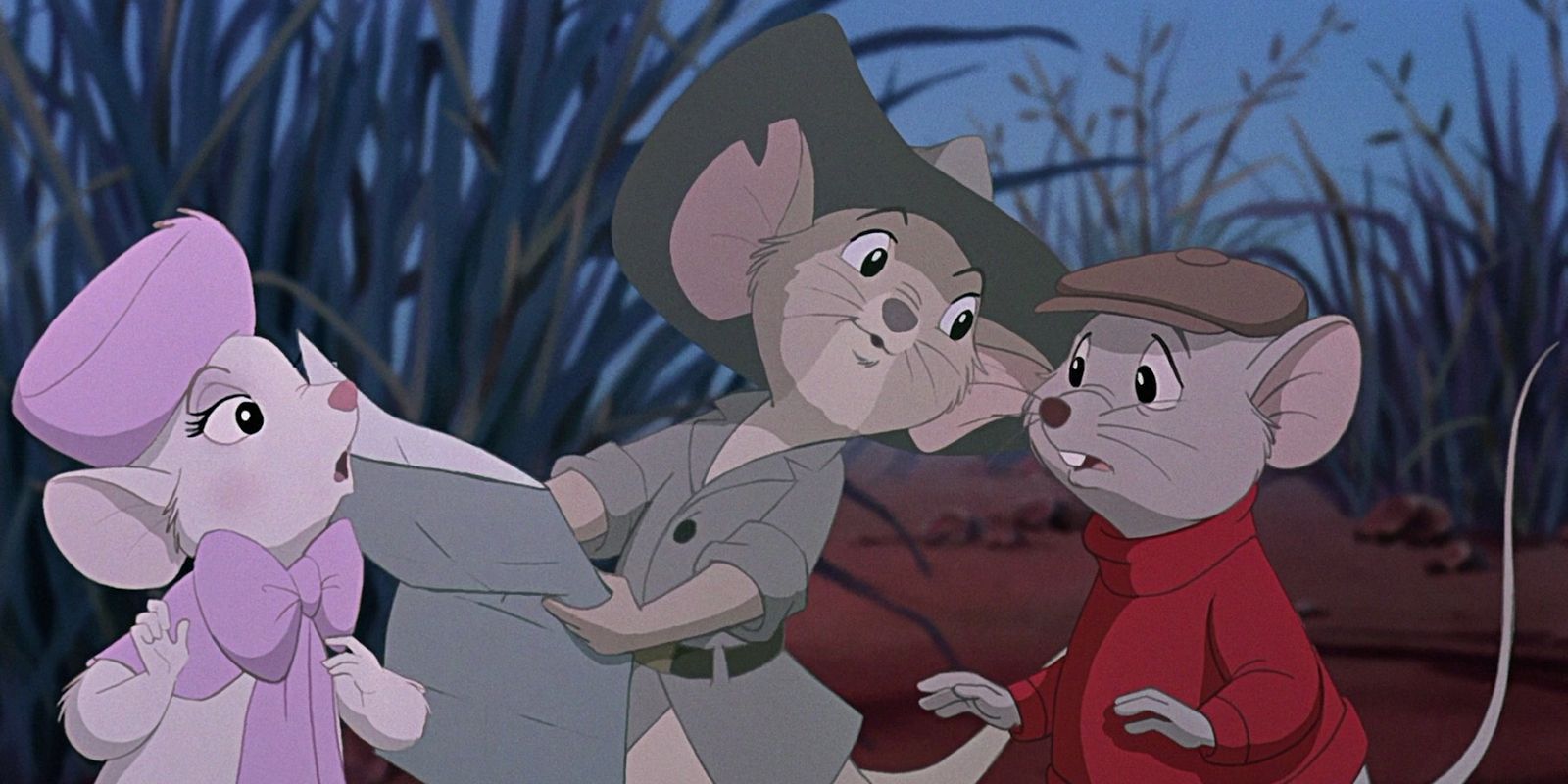
Released on November 16, 1990, The Rescuers Down Under holds a unique place in cinematic history as the first-ever theatrical animated sequel produced by Walt Disney Feature Animation. Following the adventures of mice Bernard and Miss Bianca as they travel to the Australian Outback to rescue a kidnapped boy named Cody and a golden eagle, the film demonstrated a significant leap forward in animation technology, even if its box office performance was initially overshadowed by live-action blockbusters of the holiday season.
The Innovation of CAPS (Computer Animation Production System)
The most critical historical achievement of The Rescuers Down Under is that it was the first feature-length animated film to be entirely produced using the Computer Animation Production System (CAPS). Developed in collaboration with Pixar, CAPS revolutionized how traditional hand-drawn animation was colored, composited, and brought to the screen:
- Elimination of Traditional Cel Painting: Animators no longer needed to ink and paint cels by hand using traditional gouache paints. Instead, drawings were scanned into computers as digital lines.
- Seamless Multiplane Effects: CAPS allowed artists to replicate and enhance the multiplane camera effect digitally, creating breathtaking, swooping aerial shots across the Australian landscape with authentic depth and lighting.
- Color Palette Expansion: The system unlocked millions of colors and subtle gradients, moving away from the flat, limited color palettes imposed by traditional paint technologies.
Despite these breakthroughs, The Rescuers Down Under faced unique marketing challenges. Released directly on the heels of The Little Mermaid, it did not feature the traditional Broadway-style musical numbers that audiences had suddenly come to expect from the brand. Nevertheless, its technical legacy paved the way for the flawless integration of hand-drawn and computer-generated elements in subsequent masterpieces.
Production Milestones and the Prelude to the Renaissance
While The Rescuers Down Under represented the cutting edge of studio technology in 1990, behind the scenes, artists and writers were deep into the production of Beauty and the Beast. By 1990, the creative team—including directors Kirk Wise and Gary Trousdale, producer Don Hahn, and songwriters Howard Ashman and Alan Menken—had relocated a portion of the animation staff to a facility in Glendale, California, affectionately nicknamed the "warehouse."
During 1990, Beauty and the Beast underwent a dramatic restructuring. Originally conceived as a non-musical film adhering strictly to the darker, traditional fairy-tale elements, the creative team decided in early 1990 to completely scrap the existing story reels and start over as an animated musical. This high-stakes gamble relied entirely on the blueprint established by The Little Mermaid. The success of that creative pivot in 1990 directly resulted in Beauty and the Beast becoming the first animated film in history to be nominated for the Academy Award for Best Picture in 1992.
Comparative Overview of Disney’s Late-80s to Early-90s Animated Features
To contextualize the 1990 film landscape within the studio's broader history, the following table outlines key releases, technological milestones, and artistic directions from this pivotal era.
| Film Title | Release Year | Primary Innovation / Milestone | Musical Style | Critical & Commercial Reception |
|---|---|---|---|---|
| The Little Mermaid | 1989 | Revival of fairy-tale musical formula; modern Broadway integration. | Broadway-style (Alan Menken & Howard Ashman) | Massive critical acclaim; massive box office hit that saved the division. |
| The Rescuers Down Under | 1990 | First Disney animated sequel; 100% digital production via CAPS. | Orchestral / Non-musical score (Bruce Broughton) | Moderate box office; praised for technical wizardry and breathtaking flight sequences. |
| Beauty and the Beast | 1991 | First animated film nominated for Best Picture; early CGI integration (Ballroom). | Comprehensive Broadway operetta style | Universal acclaim; cultural phenomenon that cemented the Disney Renaissance. |
| Aladdin | 1992 | Celebrity voice casting revolution; sophisticated digital/hand-drawn hybrid work. | Pop-infused Broadway score | Enormous commercial success; highest-grossing film worldwide in 1992. |
The Cultural Shift in Animation Personnel and Directorial Voice
The period surrounding 1990 also witnessed a massive generational shift within the Disney studio. Veteran animators from the "Nine Old Men" era had long since retired, leaving a younger, ambitious generation of artists—many of whom trained at the California Institute of the Arts (CalArts)—to take the reins. Directors, layout artists, and character animators who joined the studio in the late 1970s and 1980s came into positions of creative authority by 1990.
This new guard brought cinematic framing, dynamic camera movements inspired by live-action cinema, and emotionally complex character motivations. Furthermore, the collaboration with external musical theater talents like Howard Ashman and Alan Menken brought a narrative discipline where songs were treated as scenes that advanced the plot rather than mere interludes. This structural discipline was solidified during the 1990 production cycles, ensuring that every subsequent film in the Renaissance had a airtight narrative spine.
Legacy and Impact on Modern Animation
The historical importance of the animation developments occurring around 1990 extends far beyond the borders of Walt Disney Feature Animation. By proving that traditionally animated films could command high box-office numbers and critical respect through advanced technology and superior storytelling, Disney triggered a universal animation boom throughout the 1990s. Competing studios rushed to establish their own animation divisions, leading to the creation of works like The Prince of Egypt at DreamWorks and inspiring the eventual establishment of Pixar's computer-animated dominance with Toy Story in 1995.
For modern film historians, 1990 is viewed not as a quiet year between giants, but as the critical bridge where Disney transitioned from an aging studio struggling for relevance into an unstoppable cultural juggernaut. The digital foundations laid by CAPS during the production of The Rescuers Down Under and the narrative risks taken during the restructuring of Beauty and the Beast in 1990 permanently altered the trajectory of global cinema.
Frequently Asked Questions
What was the official Disney animated film released in 1990?
The only theatrical animated feature film released by Walt Disney Feature Animation in the calendar year 1990 was The Rescuers Down Under, which premiered in theaters on November 16, 1990. It serves as the sequel to the 1977 film The Rescuers.
Did The Little Mermaid come out in 1990?
No. The Little Mermaid was released in theaters on November 17, 1989. However, its massive commercial success carried heavily into 1990, defining the cultural perception of Disney animation during that entire year and cementing the transition into the Disney Renaissance.
What made The Rescuers Down Under technologically unique?
The Rescuers Down Under was the very first feature-length animated film to be entirely produced using CAPS (Computer Animation Production System). This digital ink-and-paint system eliminated traditional cels, allowed for complex camera movements, and vastly expanded the color palette available to animators.
How did the events of 1990 shape Beauty and the Beast?
During 1990, the production team of Beauty and the Beast made the major creative decision to scrap their initial script and storyboards to rebuild the film as a full-scale Broadway-style musical, mirroring the structural success of The Little Mermaid. This pivot directly contributed to the film's historic Best Picture nomination at the Academy Awards.
Why is the 1990 period considered important for Disney animation?
The era around 1990 marked the rescue of Disney’s feature animation department from potential closure. Through technical innovation, a return to musical storytelling, and a shift in leadership, the studio established a creative formula that dominated global box offices for the rest of the decade.
Next Actions and Further Exploration
To deepen your understanding of this cinematic era, consider exploring the documentary Waking Sleeping Beauty (2009), directed by Don Hahn, which provides an insider account of the tumultuous yet triumphant corporate and creative climate at Disney from 1984 to 1994. Additionally, examining production art books from this period reveals the intricate blend of traditional drafting and early digital compositing that defined the dawn of modern animation.