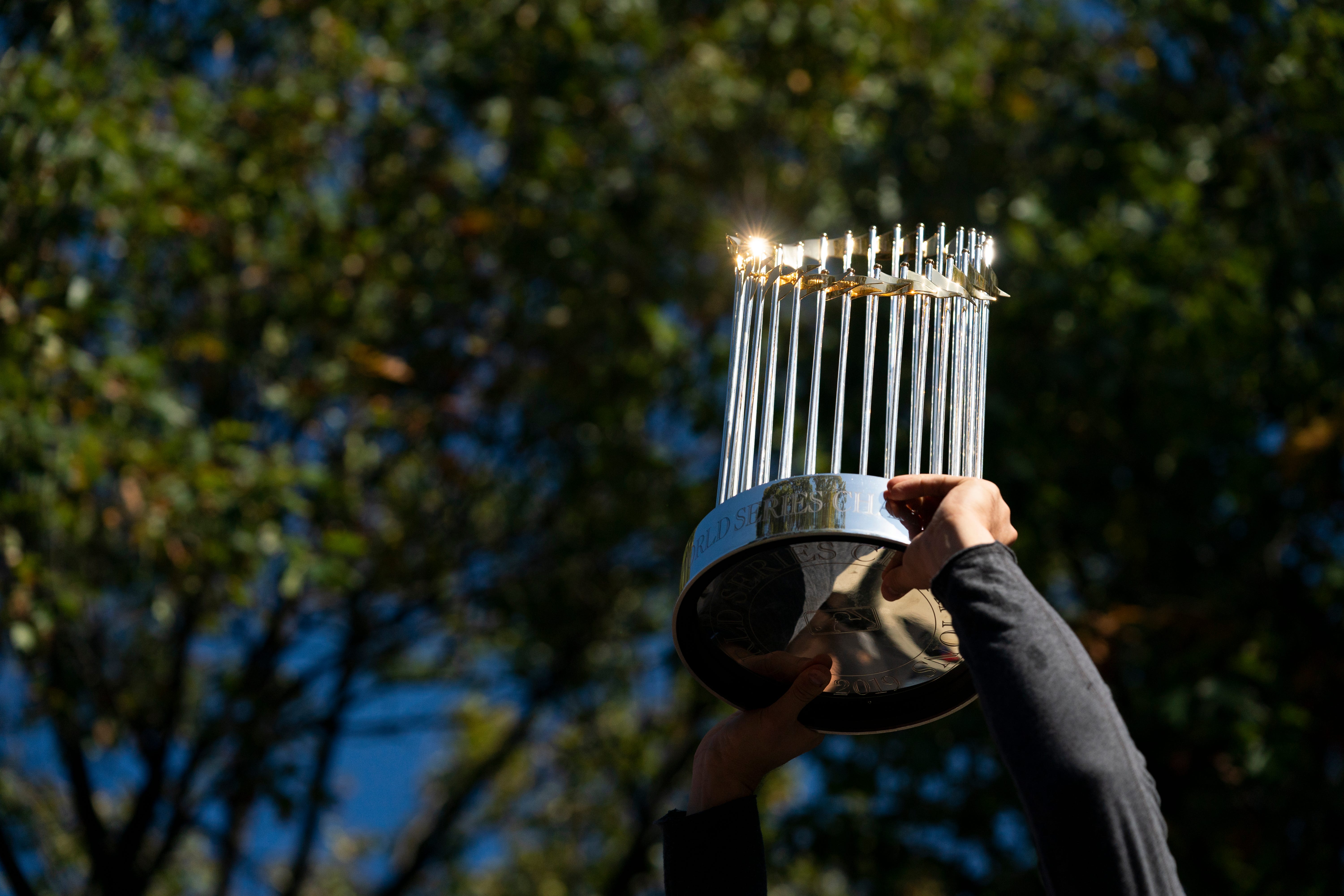
The 1903 World Series was the inaugural modern championship of Major League Baseball, contested between the Boston Americans of the American League and the Pittsburgh Pirates of the National League. This best-of-nine series, which Boston won five games to three, effectively signaled the end of the "baseball wars" between the rival leagues and established the enduring tradition of the postseason.
The Origins of the 1903 World Series
At the turn of the 20th century, professional baseball in the United States was marked by intense organizational friction. The National League (NL), established in 1876, had held a monopoly on "major" status for decades. However, in 1901, the American League (AL), led by league president Ban Johnson, declared itself a major league and began actively recruiting top talent from National League rosters, often through higher salary offers. This period of intense competition, known as the "baseball wars," saw teams poaching players and territories, causing significant instability.
By 1903, the financial strain of the competition led to a fragile peace agreement known as the National Agreement. A key component of this new harmony was the proposal for a championship series between the two pennant winners. While exhibition series had existed in the late 19th century, the 1903 World Series was the first contest sanctioned by the two major leagues themselves, serving as the official verification of the best team in professional baseball.
The Teams: Boston Americans vs. Pittsburgh Pirates
The 1903 series featured two powerhouse franchises, each representing the pinnacle of their respective leagues.
The Boston Americans
Managed by Jimmy Collins, who also played third base, the Boston Americans were a formidable unit. Their pitching staff was anchored by two legendary hurlers: Cy Young and Bill Dineen. Young was already considered the greatest pitcher of his era, and his ability to command the strike zone was crucial to Boston's success. Offensively, the team relied on a disciplined approach, supported by solid defensive play in the infield and outfield.
The Pittsburgh Pirates
The Pirates, led by player-manager Fred Clarke, were the heavy favorites entering the series. They had won three consecutive National League pennants (1901–1903). Their star player was shortstop Honus Wagner, widely regarded as one of the most complete players in the history of the sport. The Pirates boasted a potent offense and a strong pitching staff, though they were hampered by injuries to their primary rotation as the series progressed.
The Format and Operational Logistics
Unlike the modern best-of-seven format, the 1903 World Series was structured as a best-of-nine affair. The series rules mandated that the first team to win five games would be crowned champions.
The logistics were decentralized compared to modern standards. There was no governing body like the Commissioner of Baseball (a role not established until 1920) to oversee the event. Instead, the two clubs agreed to a revenue-sharing model where the proceeds from ticket sales would be distributed among the players, with the winning team receiving a larger share. This financial incentive was a significant innovation, as players were not previously accustomed to postseason bonuses.
The Venue Rotation
The series alternated between Boston’s Huntington Avenue Grounds and Pittsburgh’s Exposition Park. The travel requirements of the early 1900s meant that players and fans relied on rail transportation, and the series was stretched over a period from October 1 to October 13, 1903, including a rest day due to travel logistics.
Series Breakdown and Game Results
The competition proved that the upstart American League could not only survive but excel against the established National League.
| Game | Date | Location | Winner | Score |
|---|---|---|---|---|
| 1 | Oct 1 | Boston | Pittsburgh | 7–3 |
| 2 | Oct 2 | Boston | Boston | 3–0 |
| 3 | Oct 3 | Boston | Boston | 4–2 |
| 4 | Oct 6 | Pittsburgh | Pittsburgh | 5–4 |
| 5 | Oct 7 | Pittsburgh | Pittsburgh | 4–2 |
| 6 | Oct 8 | Pittsburgh | Boston | 6–3 |
| 7 | Oct 10 | Pittsburgh | Boston | 7–3 |
| 8 | Oct 13 | Boston | Boston | 3–0 |
Analysis of the Outcome
The Pirates opened the series with a decisive victory in Game 1, seemingly justifying their status as favorites. However, Boston’s pitching proved more resilient. Cy Young and Bill Dineen combined for a masterful performance as the series moved to Pittsburgh. While the Pirates held a 3–1 lead after Game 5, the Boston Americans demonstrated remarkable resolve. They won three consecutive games in Pittsburgh to take a 4–3 lead in the series, ultimately clinching the title back in Boston during the eighth game.
Key Factors in Boston’s Victory
Several technical and operational factors contributed to the Boston Americans' success:
- Pitching Depth: While Pittsburgh struggled with a depleted rotation due to injury, Boston’s primary starters, Young and Dineen, were able to handle the heavy workload of a best-of-nine series.
- Defensive Discipline: Jimmy Collins’ defense made fewer errors in critical moments. In the 1903 era, where field conditions were often uneven and gloves were less technologically advanced, defensive stability was a primary determinant of winning.
- Home-Field Momentum: Despite the Pirates having the better regular-season record, the Boston crowds provided significant psychological support, particularly during the final clinching game at the Huntington Avenue Grounds.
The Cultural Impact of the 1903 Series
The success of the 1903 World Series had a profound effect on the business of baseball. Before the series, there was significant skepticism that the public would care about a matchup between the two leagues. However, the high attendance figures—totaling over 100,000 spectators across the eight games—demonstrated a massive commercial appetite for a "World Series."
This event solidified the structure of professional baseball as an annual battle for supremacy. It effectively ended the possibility of the two leagues returning to open conflict, as the financial rewards of the postseason were far too lucrative for owners to ignore. The 1903 World Series transformed baseball from a series of disparate regional competitions into a unified, national entertainment product.
Frequently Asked Questions
Why was the 1903 World Series a best-of-nine instead of seven?
At the time, there was no standard for postseason play. The owners of the two teams negotiated the rules independently. A best-of-nine was chosen to ensure maximum ticket revenue, as both clubs were confident in their ability to draw large crowds and desired to extend the series duration for financial gain.
Who was the standout player of the 1903 World Series?
While Honus Wagner was the most talented player on the field, Bill Dineen was the most impactful. Dineen won three of the four games he pitched, demonstrating incredible endurance and command. His performance was the primary reason Boston was able to overcome their early series deficit.
Did the players receive rings for winning the 1903 World Series?
No. The tradition of awarding World Series rings did not begin until decades later. In 1903, the winning players received a portion of the gate receipts as their "bonus." This was the primary motivation for the players to participate and win the series.
Where was the 1903 World Series played?
The series was played at the Huntington Avenue Grounds in Boston and Exposition Park in Pittsburgh. Both stadiums are long gone, though the site of the Huntington Avenue Grounds is now part of the Northeastern University campus in Boston, where a statue of Cy Young stands to commemorate the event.
Why is the 1903 series considered the "first" if other championships occurred earlier?
Previous postseason games in the 1880s were either unorganized exhibition series or contests between leagues that did not have the formal, recognized status of the American and National Leagues in 1903. The 1903 series is considered the first "modern" series because it was the first to be sanctioned under the official National Agreement between the two surviving major leagues.
Recommendations for Further Historical Study
For those interested in the technical aspects of early baseball, the best way to understand the 1903 series is to review the contemporary box scores preserved by the Society for American Baseball Research (SABR). These records provide insight into the playing conditions, the rules of the time—such as the rules regarding foul balls and the dead-ball era—and the statistical anomalies of 19th-century pitching.
If you are researching the statistical evolution of the game, focus on the transition from the "dead-ball" era, which lasted until approximately 1920, and how the strategies used in the 1903 World Series—such as the "inside game" of bunting and base-stealing—differed from modern power-hitting strategies. Understanding these tactical shifts is essential for any serious study of baseball history.