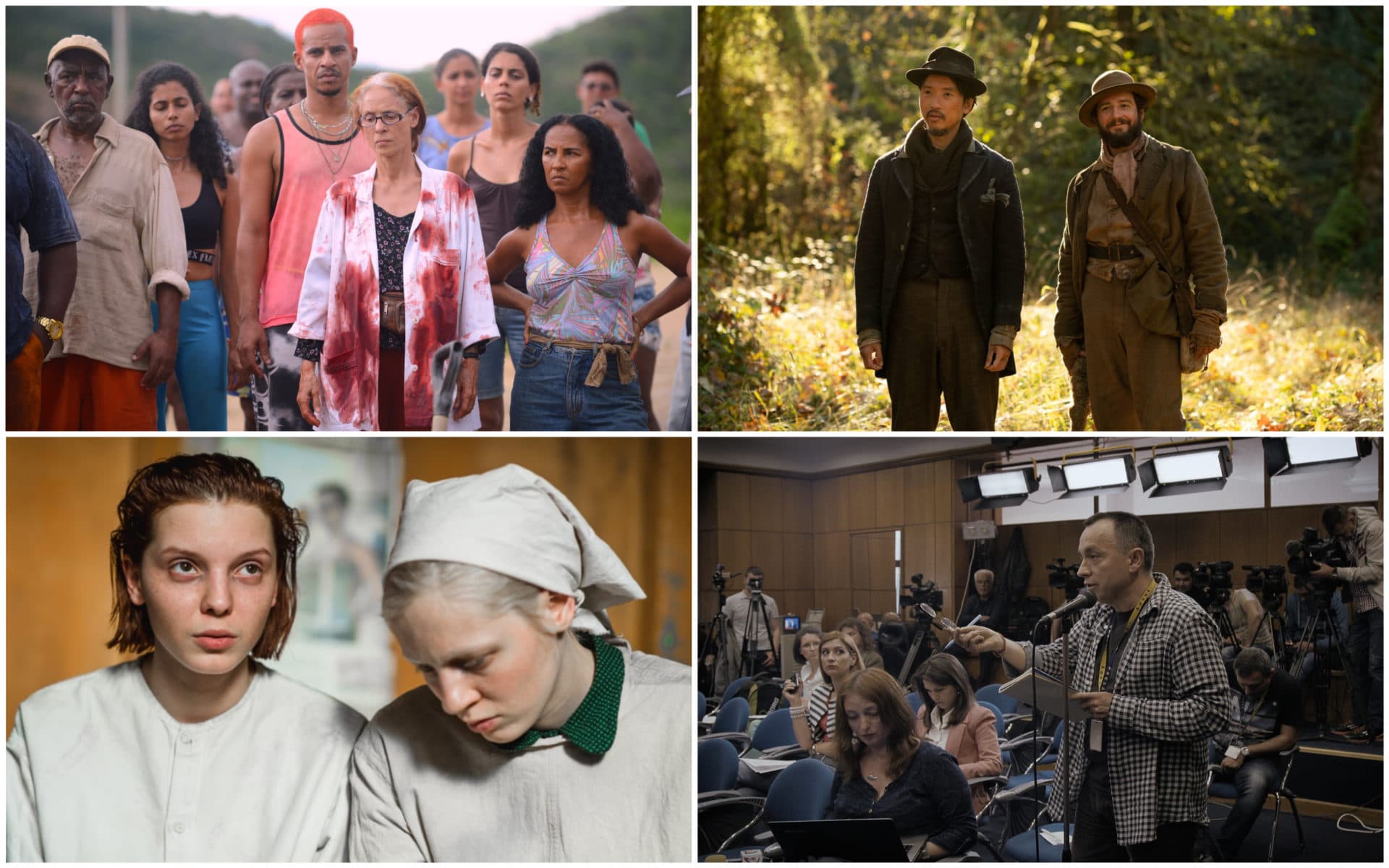
The 2020 film year was defined by the unprecedented disruption of the global COVID-19 pandemic, which shuttered theaters and forced a fundamental restructuring of the industry. Despite major blockbusters moving to later years, 2020 produced a wealth of critically acclaimed independent cinema and accelerated the "streaming wars," changing how audiences consume movies in the long term.
Cinema in 2020 is often remembered through two distinct lenses: the brief period of normalcy in January and February and the subsequent "digital pivot" that lasted the remainder of the year. While the global box office saw a staggering decline of over 70% compared to 2019, the vacuum left by delayed blockbusters allowed smaller, more intimate stories to find massive audiences on streaming platforms. From the perspective of 2026, we can see that the operational shifts born of necessity in 2020—such as shortened theatrical windows and day-and-date digital releases—have become foundational elements of the modern entertainment landscape.
The Great Theatrical Disruption of 2020
The primary narrative of the 2020 film year was the near-total cessation of traditional theatrical exhibition. By mid-March 2020, major theater chains including AMC, Cinemark, and Regal were forced to close their doors globally. This led to a "domino effect" of release date postponements. High-profile tentpoles like No Time to Die, Black Widow, F9, and Top Gun: Maverick were repeatedly pushed back, eventually landing in 2021 or 2022.
This disruption created a unique statistical anomaly in box office history. Bad Boys for Life, released in January 2020, ended the year as the highest-grossing film in the United States, a feat rarely achieved by an early-year R-rated action sequel. On a global scale, the Chinese war epic The Eight Hundred became the highest-grossing film of the year, marking the first time in history that a non-Hollywood production topped the annual worldwide charts. This signaled a significant shift in the geopolitical weight of film markets, a trend that has continued to evolve through 2026.
The Acceleration of Streaming and PVOD
With theaters closed, studios had to find alternative ways to monetize their content. This led to the rise of Premium Video on Demand (PVOD) and the aggressive expansion of subscription services. Universal Pictures took a massive gamble with Trolls World Tour in April 2020, bypassing a wide theatrical release for a $19.99 digital rental model. The success of this move sparked a temporary but fierce conflict between studios and theater owners.
The "Streaming Wars" intensified as Disney+, which had launched in late 2019, became a central pillar of the Walt Disney Company’s strategy. When it became clear that Mulan could not have a traditional premiere, Disney introduced "Premier Access," charging subscribers an additional fee to view the film. Meanwhile, Netflix continued its dominance by releasing a steady stream of original content that would have likely been lost in a crowded theatrical year, such as The Trial of the Chicago 7 (purchased from Paramount) and Da 5 Bloods.
The HBO Max "Day-and-Date" Shockwave
Late in 2020, Warner Bros. made the seismic announcement that its entire 2021 slate would debut on HBO Max and in theaters simultaneously. While this affected 2021 films, the decision was forged in the fires of 2020's economic reality. The first major test of this model occurred on Christmas Day 2020 with the release of Wonder Woman 1984. This decision permanently altered the "theatrical window"—the period during which a film is exclusive to theaters—which had traditionally been 90 days but was effectively reduced to 17–45 days for many studios by 2026.
Critical Acclaim and the Independent Renaissance
If big-budget spectacles were the losers of 2020, independent and mid-budget films were the unexpected beneficiaries. With the "noise" of superhero movies removed, critics and audiences turned their attention to diverse, challenging narratives.
- Nomadland: Directed by Chloé Zhao, this film became the definitive critical darling of the year. Its exploration of modern-day nomadism in the American West resonated deeply with an audience experiencing their own form of isolation. It eventually won Best Picture and Best Director at the 93rd Academy Awards.
- Minari: Lee Isaac Chung’s semi-autobiographical tale of a Korean-American family moving to Arkansas highlighted the "American Dream" through a fresh, poignant lens.
- Sound of Metal: This film gained massive traction on Amazon Prime Video, praised for its innovative sound design and Riz Ahmed’s visceral performance as a drummer losing his hearing.
- Promising Young Woman: Emerald Fennell’s provocative thriller sparked intense cultural conversations about the "Me Too" era, proving that provocative, mid-budget films could still dominate the zeitgeist via digital platforms.
Box Office vs. Critical Success: 2020 Comparative Data
The following table illustrates the disparity between the films that succeeded commercially before the lockdowns and the films that defined the year artistically during the digital-dominant months.
| Film Title | Primary Release Platform | Global Box Office (Approx.) | Major Awards/Recognition |
|---|---|---|---|
| The Eight Hundred | Theatrical (China) | $461 Million | Highest Global Grosser of 2020 |
| Bad Boys for Life | Theatrical (Global) | $426 Million | #1 Domestic (US) Box Office |
| Tenet | Theatrical (Hybrid) | $363 Million | Best Visual Effects (Academy Award) |
| Sonic the Hedgehog | Theatrical (Global) | $320 Million | Successful Video Game Adaptation |
| Nomadland | Searchlight/Hulu | $39 Million | Best Picture, Best Director, Best Actress |
| Soul | Disney+ | $121 Million* | Best Animated Feature |
| The Trial of the Chicago 7 | Netflix | N/A (Streaming) | 6 Academy Award Nominations |
| Minari | A24 / VOD | $15 Million | Best Supporting Actress (Yuh-Jung Youn) |
*Note: Box office for Soul primarily came from international markets where Disney+ was not yet available.
Technical Adaptation and COVID-19 Protocols
The film industry did not just change how it distributed movies in 2020; it changed how it made them. Production on nearly every major film and television show was halted in March 2020. When filming resumed in the summer and fall, it was under strict "Zone" systems and safety protocols.
- Epidemiological Supervision: Productions began hiring COVID-19 compliance officers to manage testing and social distancing on sets.
- Virtual Production Expansion: Technologies like Industrial Light & Magic’s "The Volume" (used in The Mandalorian) became highly sought after because they allowed for exotic locations to be filmed in a controlled, indoor environment, reducing the need for travel.
- Remote Post-Production: Editors, sound designers, and visual effects artists transitioned to cloud-based workflows. By 2026, remote collaboration in post-production has become a standard industry practice, significantly lowering overhead costs for independent studios.
The Delayed Blockbuster Phenomenon
One of the most frustrating aspects of 2020 for film fans was the "Release Date Dance." Christopher Nolan’s Tenet became a symbol of the struggle to keep cinema alive. Nolan and Warner Bros. insisted on a theatrical release in August 2020, hoping to jumpstart the industry. While the film performed well internationally, the lack of open theaters in major US markets (New York and Los Angeles) limited its domestic success.
This led to a backlog of content that made the subsequent years, 2021 and 2022, incredibly crowded. For instance, the James Bond entry No Time to Die was originally slated for April 2020 but didn't hit screens until late 2021. This backlog eventually created a "feast or famine" cycle for theaters that persisted until the industry stabilized in the mid-2020s.
Documentary and International Growth
With scripted production halted, the 2020 film landscape saw a surge in documentary consumption. Netflix’s Tiger King became a cultural phenomenon in the early weeks of the pandemic, while films like Time, Crip Camp, and My Octopus Teacher gained prestigious awards and high viewership.
Additionally, 2020 was a year where "International" cinema (often previously categorized as "Foreign Language") continued its push into the mainstream, following the historic 2019 success of Parasite. Films like Another Round (Denmark) and Collective (Romania) found broader American audiences through streaming services like Hulu and Magnolia Selects than they likely would have in a standard theatrical year.
FAQs: Understanding the 2020 Film Landscape
Why did so many movies skip theaters in 2020?
The primary reason was the global closure of movie theaters due to the COVID-19 pandemic. Large chains were closed for the majority of the year starting in March. Studios faced a choice: delay the films indefinitely and lose money on marketing, or release them via Streaming or PVOD to recoup costs immediately. For family films like Trolls World Tour and Soul, the digital route proved highly profitable.
What was the highest-grossing movie of 2020?
Globally, the highest-grossing film of 2020 was the Chinese historical war drama The Eight Hundred, which earned approximately $461 million. In the United States, the top-grossing film was Bad Boys for Life, which earned $206 million domestically before the lockdowns began.
Did any 2020 movies win Oscars?
Yes, but the ceremony was delayed. The 93rd Academy Awards, held in April 2021, honored films released in 2020 and early 2021. Nomadland won the top prize for Best Picture. Other winners included The Father (Best Actor for Anthony Hopkins), Promising Young Woman (Best Original Screenplay), and Soul (Best Animated Feature).
How did 2020 change the way we watch movies today in 2026?
The year 2020 broke the "90-day theatrical window." Today, in 2026, it is standard for films to appear on digital platforms 17 to 45 days after their theatrical debut. It also normalized "day-and-date" releases for certain genres and solidified streaming services as prestigious venues for A-list directors and actors, rather than just repositories for second-tier content.
Was Tenet considered a failure in 2020?
The success of Tenet is debated. While its $363 million global gross was impressive given that most theaters were closed or at limited capacity, it did not reach the break-even point required for its massive $200 million budget. However, it is often credited with providing a necessary case study for how to release films safely during a global crisis.
Strategic Recommendations for Film Historians and Collectors
For those analyzing the 2020 film era from the vantage point of 2026, it is essential to look beyond the box office numbers. The true value of 2020 lies in the democratization of distribution.
If you are a collector or a student of film, focus on the "Physical Media" releases from this year. Because many 2020 films were digital-first, 4K Blu-ray and Boutique label releases (like Criterion Collection's treatments of 2020 titles) often contain vital "making-of" documentaries that detail the struggle of producing art during a pandemic. These artifacts provide a technical and emotional roadmap of how the industry survived its most significant crisis since the Great Depression.
The legacy of 2020 is not one of loss, but of forced evolution. It pushed the industry into a digital future that was perhaps inevitable, but would have otherwise taken another decade to arrive.