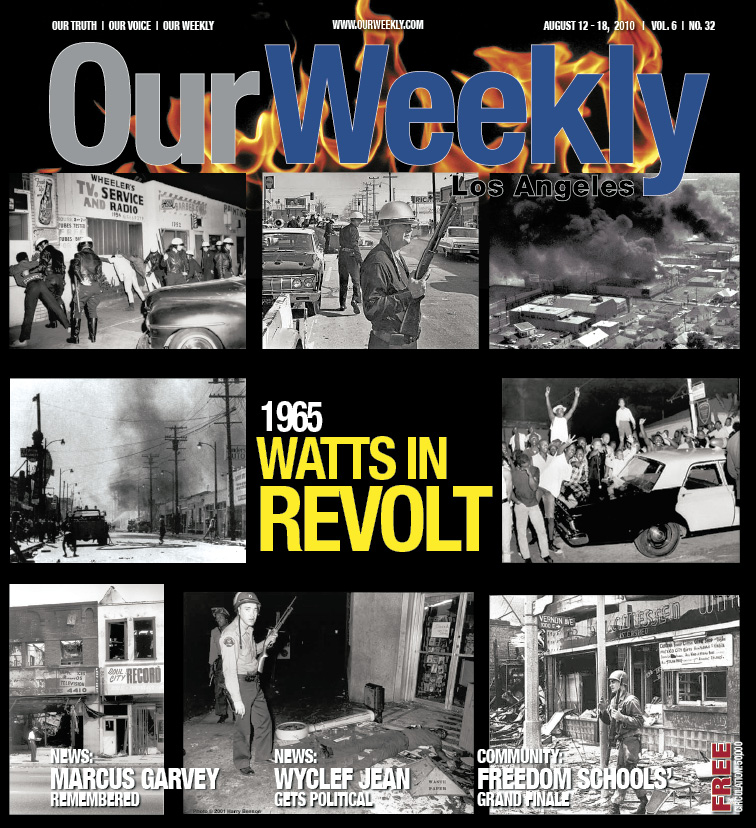
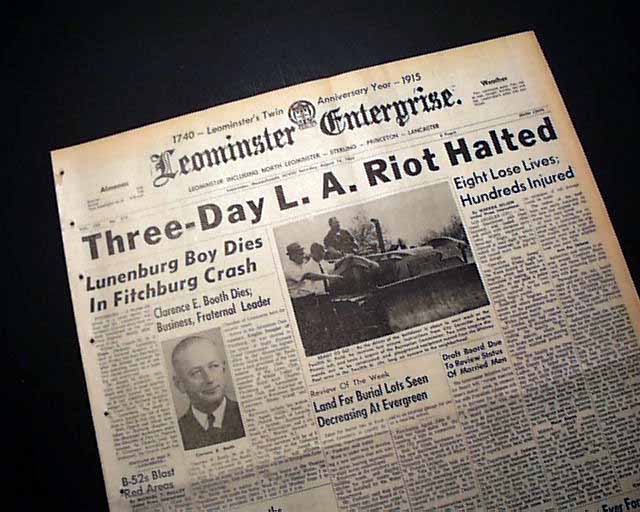
The 1965 Watts Uprising was a pivotal six-day period of civil unrest in Los Angeles, triggered by a racially charged traffic stop on August 11, 1965. Resulting in 34 deaths and massive property damage, it exposed deep-seated systemic issues of police brutality, housing discrimination, and economic inequality, fundamentally transforming the American civil rights movement.
The Catalyst: The Arrest of Marquette Frye
On the evening of August 11, 1965, the intersection of 116th Street and Avalon Boulevard became the flashpoint for one of the most significant urban rebellions in United States history. Lee Minikus, a California Highway Patrol officer, pulled over 21-year-old Marquette Frye on suspicion of driving while intoxicated. While the initial interaction was relatively routine, the environment quickly transformed as a crowd of neighborhood residents began to gather.
The situation escalated when Frye’s mother, Rena Price, arrived on the scene and scolded her son, which led to a physical altercation between the Frye family and the police. As backup arrived, the use of force by officers—including the use of batons—incensed the growing crowd. In the high-temperature atmosphere of a Los Angeles summer, rumors quickly spread that the police had hurt a pregnant woman. This misinformation, fueled by years of resentment toward the Los Angeles Police Department (LAPD), acted as the match that lit the powder keg of Watts.
By the time the police cleared the immediate area, the crowd had grown into a mobile force. What began as a localized protest against a specific arrest rapidly expanded into a generalized rebellion against the symbols of authority and the economic structures that many residents felt were designed to keep them impoverished and marginalized.
Structural Causes: Beyond the Traffic Stop
To understand the 1965 Watts Uprising, one must look far beyond the arrest of Marquette Frye. The rebellion was the result of decades of systemic exclusion and state-sanctioned discrimination. In 2026, historians continue to point to three primary pillars of discontent that made Watts an inevitable site of conflict.
Housing Discrimination and Proposition 14
One of the most direct precursors to the uprising was the legal battle over fair housing in California. In 1963, the California legislature passed the Rumford Fair Housing Act, which aimed to end racial discrimination in the sale or rental of housing. However, in 1964, California voters passed Proposition 14, a constitutional amendment that effectively repealed the Rumford Act and restored the "right" of property owners to discriminate.
This legal setback deeply embittered the Black community in Los Angeles. By 1965, Watts was a segregated enclave where residents were trapped by "redlining" practices. The repeal of fair housing protections meant that even those with the financial means to leave the overcrowded and underserved neighborhood were legally barred from doing so. This created a sense of being "bottled up" in a ghetto where services were substandard and opportunities were scarce.
Police Brutality and the Leadership of William Parker
The relationship between the LAPD and the Black community in the early 1960s was one of mutual hostility. LAPD Chief William H. Parker operated the department with a militaristic philosophy, viewing the police as an "occupying force" in minority neighborhoods. Parker was known for making overtly racist public statements, famously comparing the rioters to "monkeys in a zoo" during the height of the unrest.
Under Parker’s leadership, the LAPD utilized aggressive patrol tactics, frequent stops without probable cause, and physical intimidation. For the residents of Watts, the police were not protectors but an antagonistic presence that enforced a racial hierarchy. The 1965 uprising was, in many ways, a direct defensive reaction to what the community perceived as a long history of unpunished police violence.
Economic Marginalization and the "Watts Wall"
While the post-World War II era brought prosperity to many parts of Los Angeles, Watts was left behind. Unemployment in the district was nearly three times the national average. Furthermore, the lack of adequate public transportation—often referred to as the "Watts Wall"—made it nearly impossible for residents to reach the industrial jobs located in other parts of the city.
The schools in Watts were chronically underfunded, and the neighborhood lacked basic amenities like high-quality grocery stores and hospitals. When the uprising began, the initial targets were often white-owned businesses within the neighborhood that residents believed engaged in predatory lending and overcharged for inferior goods. The cry of "Burn, Baby, Burn" was directed specifically at the physical infrastructure of an economic system that extracted wealth from the community without providing any path for advancement.
Six Days in August: A Chronological Analysis of the Unrest
The uprising lasted from August 11 to August 17, 1965. It was characterized by cycles of intense activity at night followed by tense standoffs during the day.
- Wednesday, August 11: The initial arrest of Marquette Frye occurs. Skirmishes break out between police and residents near 116th and Avalon.
- Thursday, August 12: Community leaders hold a meeting at Athens Park to de-escalate the situation, but the meeting ends in frustration. As night falls, the unrest expands. Looting begins, and the first fires are set.
- Friday, August 13: The violence reaches its peak. The "charcoal alley" area sees dozens of buildings set ablaze. Chief Parker calls for the assistance of the National Guard, claiming that the police can no longer contain the "insurrection."
- Saturday, August 14: Over 13,000 National Guard troops are deployed to the streets of Los Angeles. A 46-square-mile "curfew zone" is established. The city takes on the appearance of a war zone, with machine-gun nests and roadblocks.
- Sunday, August 15: The heavy military presence begins to suppress the large-scale movements, though sporadic sniping and arson continue.
- Monday & Tuesday, August 16-17: The curfew is gradually lifted as order is restored. The physical destruction is surveyed, revealing a landscape of charred remains and shattered glass.
The Aftermath and the McCone Commission Report
In the wake of the uprising, Governor Edmund G. "Pat" Brown appointed a commission to investigate the causes of the unrest. Led by John A. McCone, the former director of the CIA, the commission released its report, "Violence in the City—An End or a Beginning?" in December 1965.
The McCone Commission identified "seething deprivations" as the root cause, citing lack of jobs, poor schooling, and the housing crisis. However, the report was heavily criticized by civil rights leaders for its "law and order" bias. It largely exonerated the LAPD of systemic racism and failed to recommend any significant structural changes to police oversight. Instead, it focused on the "criminality" of the participants, missing the opportunity to address the fundamental breakdown in the social contract between the city and its Black citizens.
Statistical Summary of the 1965 Watts Uprising
The following table provides a breakdown of the human and economic costs associated with the six days of unrest. These figures are based on official reports from the Los Angeles County Coroner and the McCone Commission.
| Metric | Confirmed Value | Notes |
|---|---|---|
| Deaths | 34 | 28 were Black civilians; 1 fireman, 1 deputy, 1 policeman included. |
| Injuries | 1,032 | Includes 773 civilians and 90 LAPD officers. |
| Arrests | 3,952 | Majority were for burglary, grand theft, and arson. |
| Property Damage | $40 Million+ | Equivalent to over $350 million in 2026 currency. |
| Buildings Destroyed | 600+ | Includes businesses, residential units, and public facilities. |
| Troops Deployed | 13,900 | Combination of National Guard and local law enforcement. |
| Geographic Scope | 46.5 sq miles | The area designated as the curfew zone by the National Guard. |
Long-Term Sociopolitical Consequences
The 1965 Watts Uprising marked a turning point in the American civil rights movement. Prior to 1965, the movement, led by figures like Dr. Martin Luther King Jr., had focused primarily on legal segregation in the South through non-violent civil disobedience. Watts shifted the focus to the de facto segregation and economic despair of Northern and Western cities.
The Rise of Black Power
The perceived failure of non-violence to address the conditions in Watts led to an ideological shift. For many younger activists, the uprising was a form of political expression—a "rebellion" rather than a "riot." This sentiment gave rise to the Black Power movement, emphasizing self-defense, economic self-sufficiency, and racial pride. Organizations like the Black Panther Party for Self-Defense, founded just a year later in 1966, drew heavy inspiration from the events in Watts.
Urban Policy and "The Great Society"
In Washington D.C., President Lyndon B. Johnson saw Watts as a sign that his "Great Society" programs needed to be accelerated. The uprising spurred the creation of the Model Cities Program and increased federal funding for urban renewal. However, these programs often struggled with bureaucratic inefficiencies and failed to reach the most marginalized residents, leading to a cycle of disinvestment that plagued Watts for decades to follow.
The 1992 and 2020 Comparisons
As we reflect on the history in 2026, the 1965 uprising serves as a foundational text for understanding subsequent unrest. The 1992 Los Angeles Riots (following the Rodney King verdict) and the 2020 protests (following the death of George Floyd) both echoed the themes of Watts: police accountability, the failure of the justice system, and the persistence of the racial wealth gap.
Frequently Asked Questions
Who was Marquette Frye and what happened to him?
Marquette Frye became the face of the uprising’s start, though he was not a leader of the unrest itself. Following his arrest, he struggled with the weight of his unintended historical significance. He was arrested multiple times in later years for various offenses and died of pneumonia in 1986 at the age of 41. His family maintained that the trauma of the 1965 event followed him for the rest of his life.
Why is it called an "uprising" instead of a "riot"?
While contemporary media in 1965 almost exclusively used the term "riot," modern historians and sociologists often prefer "uprising" or "rebellion." The term "riot" implies senseless, disorganized violence, whereas "uprising" acknowledges that the events were a response to specific political, social, and economic grievances. Using "uprising" frames the event as a form of social protest against systemic oppression.
What was the "Rumford Act" and why was it significant to Watts?
The Rumford Fair Housing Act of 1963 was a landmark California law intended to stop racial discrimination in housing. Its effective repeal by Proposition 14 in 1964 signaled to Black Californians that the democratic process could be used to strip them of their rights. This legal betrayal created the atmosphere of hopelessness and anger that allowed a traffic stop to escalate into a city-wide rebellion.
Did Martin Luther King Jr. visit Watts during the unrest?
Yes, Dr. Martin Luther King Jr. visited Watts on August 17, 1965, as the unrest was subsiding. He was met with a mixed reception; while many respected him, some younger residents felt his message of non-violence was out of touch with the "police state" conditions of Los Angeles. The visit was eye-opening for King, leading him to expand his focus toward economic justice and the "Poor People's Campaign."
How much of Watts was rebuilt after 1965?
The rebuilding process was notoriously slow. For many years, empty lots remained where businesses had once stood. It wasn't until the 1980s and 90s that significant commercial developments, like the Kenneth Hahn Plaza, were completed. Even today, the scars of 1965 are visible in the neighborhood's lack of parity with more affluent areas of Los Angeles, though community-led initiatives continue to drive revitalization.
Recommendations for Further Research
To fully grasp the complexities of the 1965 Watts Uprising, it is recommended to engage with primary source materials and academic analyses that provide diverse perspectives on the event.
- Read the McCone Commission Report: While biased, the official report provides the state's perspective and the statistical data used to justify subsequent urban policies.
- Explore the Stanford University Archives: The King Institute offers an excellent overview of the relationship between the civil rights leadership and the residents of Watts.
- Consult Local Archives: The Los Angeles Public Library maintains extensive photographic collections and contemporary newspaper clippings that offer a visceral look at the six days of unrest.
- Oral Histories: Seek out documented interviews with Watts residents who lived through the event. These narratives often provide the "Why" that official reports omit, focusing on the daily indignities that led to the massive explosion of 1965.
By studying Watts, we gain a clearer understanding of the ongoing struggle for urban equity and the necessity of addressing structural inequalities before they reach a breaking point.