The 1995 bombing site refers to the location of the Alfred P. Murrah Federal Building in downtown Oklahoma City, where a domestic terrorist attack occurred on April 19, 1995. Today, this hallowed ground is preserved as the Oklahoma City National Memorial & Museum, serving as a solemn place for remembrance, education, and reflection for millions of visitors.
Historical Context of the 1995 Bombing Site
Understanding the significance of the 1995 bombing site requires examining the events that shaped the location and transformed a bustling downtown intersection into a landscape of profound historical gravity. On the morning of April 19, 1995, a Ryder rental truck containing a fertilizer-based explosive was detonated outside the nine-story Alfred P. Murrah Federal Building at 5th Street and Robinson Avenue in Oklahoma City.
The blast claimed the lives of 168 people—including 19 children—injured hundreds of others, and destroyed or damaged more than 300 surrounding buildings. The scale of the destruction made it the deadliest act of domestic terrorism in United States history up to that time. In the immediate aftermath, the site transitioned from a rescue and recovery zone into a focal point for national mourning, legal proceedings, and architectural discussions regarding the future of federal building security and urban memorialization.
The federal building itself was completely demolished in the weeks following the attack due to structural instability. In its place, civic leaders, survivors, family members of the victims, and design professionals collaborated to create a permanent tribute that honors the dead, preserves the history, and educates the public about the impact of violence.
Evolution and Design of the Memorial and Museum
The transformation of the 1995 bombing site into a dedicated memorial complex involved an international design competition that drew hundreds of submissions. The winning concept, developed by the Oklahoma City-based architectural firm Butzer Design Partnership, focused on creating a contemplative space that captures the exact moment of the blast while offering a message of healing and hope.
The memorial grounds are divided into several distinct, symbolic areas that guide visitors through a carefully paced emotional and educational journey:
- The Gates of Time: Two monumental bronze gates frame the memorial axis, bearing the inscriptions "9:01" and "9:03" respectively. The transition through these gates represents the exact minute of the blast (9:02 a.m.), moving visitors from a state of innocence to a state of tragedy, and subsequently into a space of reflection.
- The Reflecting Pool: Situated where the former NW 5th Street once ran, a shallow pool of water flows gently between the twin gates. Granite walls line the pool, featuring the names of the victims arranged by floor within the building, reflecting the exact vertical footprint of the catastrophe.
- The Field of Empty Chairs: Lined up in rows representing the building's nine floors, 168 handmade chairs of bronze, stone, and glass mark the individual lives lost. Smaller chairs designate the children who died, creating a poignant, human-scale visualization of the tragedy.
- The Survivor Tree: An American elm that stood through the blast survived against all odds, its trunk still bearing the scars of the explosion. It has become a living symbol of resilience and strength, surrounded by tiered terraces that overlook the memorial.
Complementing the outdoor memorial is the Oklahoma City National Memorial Museum, housed in the former Journal Record Building across the street. The museum utilizes interactive exhibits, archival artifacts, audio recordings from the moments before the blast, and comprehensive timelines to detail the investigation, the trial of the perpetrators, and the global response to the tragedy.
Visitor Information and Site Accessibility
Planning a visit to the 1995 bombing site requires an understanding of operational hours, ticketing structures, and site etiquette. Because the location functions simultaneously as a national memorial and an educational institution, specific guidelines help maintain a respectful environment.
The outdoor memorial grounds are open to the public 24 hours a day, 365 days a year, allowing visitors to experience the space—particularly the illuminated Gates of Time and reflecting pool—at any hour. The indoor museum operates on standard daytime hours, typically requiring ticket purchases for entry, with discounted rates available for seniors, military personnel, and students.
| Area of the Site | Access Type | Recommended Duration | Key Features |
|---|---|---|---|
| Outdoor Memorial | Free / Open 24/7 | 45–60 minutes | Reflecting Pool, Field of Empty Chairs, Survivor Tree |
| National Memorial Museum | Ticketed / Daytime Hours | 2–3 hours | Interactive exhibits, trial archives, rescue artifacts |
| The Outdoor Symbolic Building Footprint | Free / Open 24/7 | 15–30 minutes | Structural remains, granite markers, perimeter views |
Visitors are strongly encouraged to check the official website before arrival to confirm holiday hours, temporary exhibition schedules, or maintenance closures. Guided tours and self-guided audio tours are available to provide deeper historical context into the emergency response and the subsequent federal investigations led by the FBI under the operation name OKBOMB.
Educational Resources and Research Facilities
Beyond its role as a physical landmark, the 1995 bombing site functions as a vital educational resource for researchers, students, law enforcement personnel, and security professionals. The Dale K. Graham Visitor Center and the specialized archives housed within the complex maintain extensive documentation of the event.
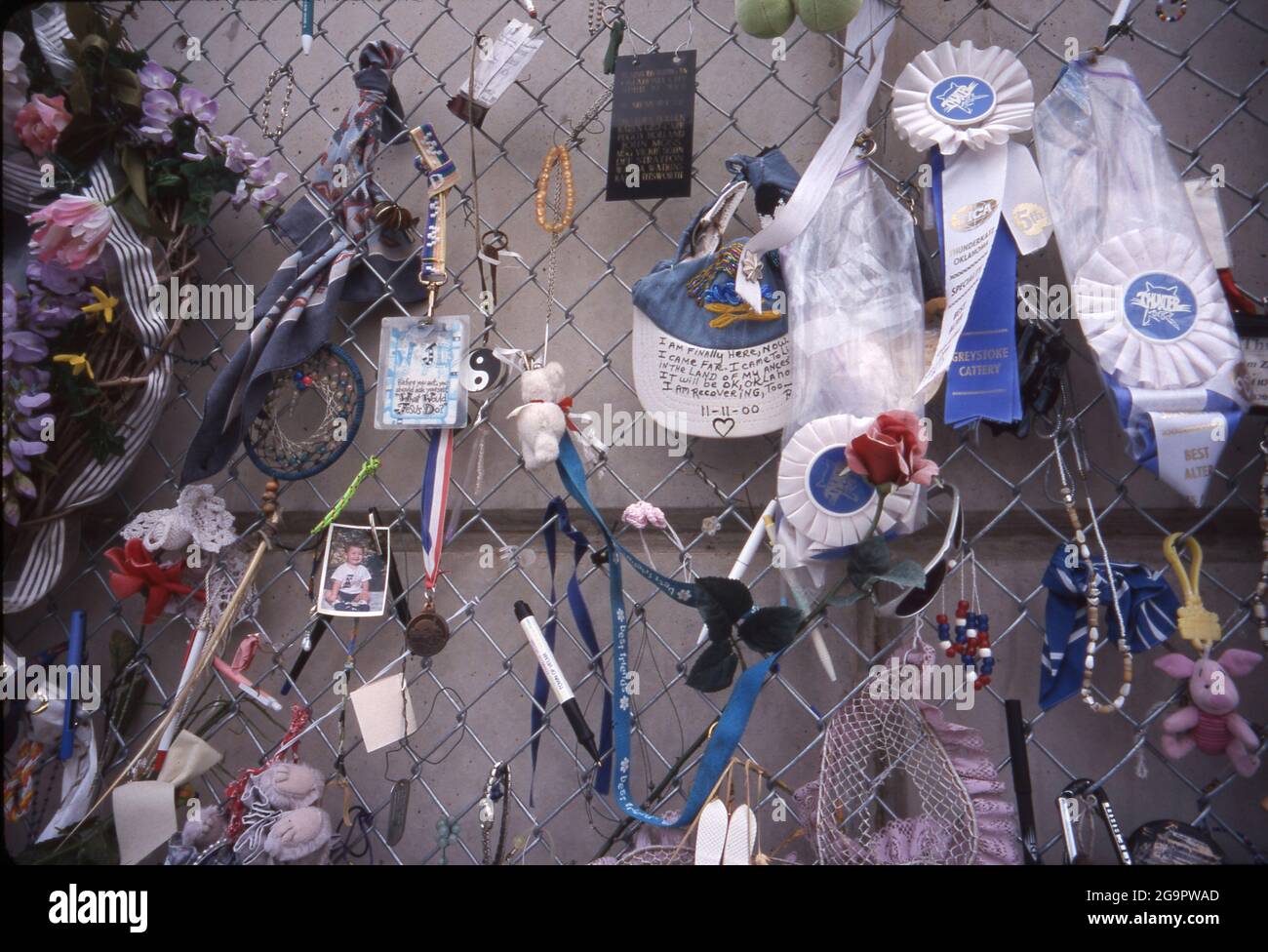
Researchers can access oral histories, legal documents from United States v. Timothy McVeigh and Terry Nichols, photographs of the rescue efforts, and thousands of items left behind by the public at the fence in the months following the bombing. These materials support ongoing academic research into disaster sociology, emergency management, courtroom procedure, and the history of domestic extremism in America.
Educational programming provided on-site and digitally equips educators with curricula designed to teach students about citizenship, community resilience, the consequences of violence, and the constitutional principles governing legal trials and public safety.
Frequently Asked Questions
What is the exact address of the 1995 bombing site?
The memorial and museum are located at 620 N. Harvey Avenue, Oklahoma City, OK 73102. The site encompasses the former block bounded by NW 5th Street, NW 6th Street, N. Robinson Avenue, and N. Harvey Avenue.
Are there admission fees to visit the outdoor memorial?
No, the outdoor memorial grounds are free to the public and accessible at all times of the day and night. Admission fees apply only to the indoor National Memorial Museum and certain guided tour programs.
Is photography allowed at the memorial site?
Yes, photography is permitted on the outdoor memorial grounds for personal, non-commercial use. However, visitors are expected to maintain a respectful and solemn demeanor, and commercial or professional video production requires prior authorization from memorial management.
How long does it take to tour the indoor museum?
Most visitors spend between two and three hours exploring the self-guided exhibits inside the museum. Adding a walk through the outdoor memorial typically brings the total visit duration to roughly three to four hours.
What happened to the perpetrators of the bombing?
Timothy McVeigh was convicted on federal murder and conspiracy charges and executed by lethal injection in 2001. Terry Nichols was convicted in both federal and state courts, receiving multiple life sentences without the possibility of parole. A third co-conspirator, Michael Fortier, testified against McVeigh and Nichols and served a prison sentence before being released into witness protection.
Conclusion and Recommended Next Actions
Visiting or studying the 1995 bombing site offers profound insights into the capacity for human endurance in the wake of senseless tragedy. For those planning a physical visit, reviewing the visitor guidelines and purchasing museum tickets in advance through the official Oklahoma City National Memorial & Museum portal ensures a seamless experience. For remote researchers and students, utilizing the digital archives and educational toolsets provides immediate access to primary source materials regarding the disaster and its historical legacy.