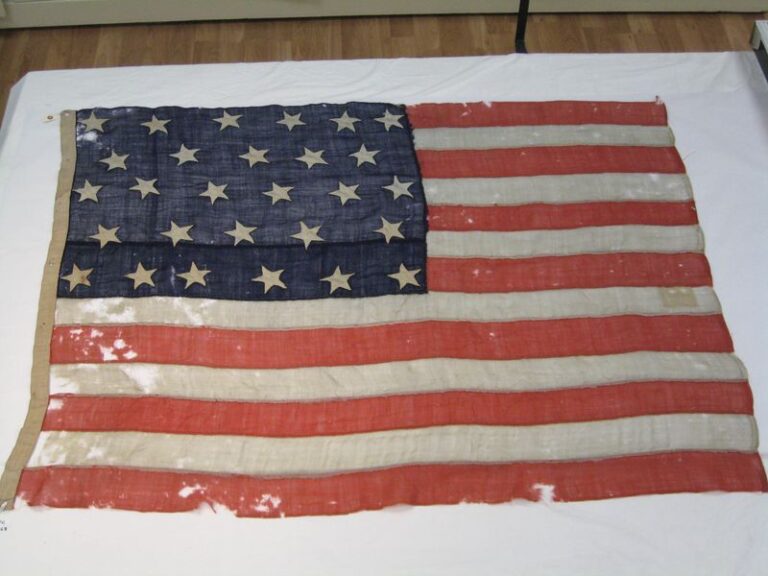
The 28-star flag is a rare American ensign that officially represented the United States for only one year, from July 4, 1846, to July 4, 1847. It was created to recognize the admission of Texas into the Union as the 28th state on December 29, 1845. Due to its brief official lifespan and the rapid admission of Iowa shortly thereafter, it remains one of the most sought-after flags for historians and vexillologists.
The Admission of Texas and the Birth of the 28-Star Flag
To understand the significance of the 28-star flag, one must look at the complex geopolitical landscape of the mid-1840s. Before becoming the 28th state, Texas was an independent nation known as the Republic of Texas. Its journey toward statehood was fraught with political tension, primarily centered on the balance of power between free and slave states in the U.S. Congress, as well as the looming threat of war with Mexico, which did not recognize Texan independence.
On December 29, 1845, President James K. Polk signed the Joint Resolution for the admission of the state of Texas into the Union. According to the Flag Act of 1818, any change to the number of stars on the national flag would take effect on the following July 4th. Therefore, even though Texas joined in late 1845, the 28-star flag did not become the "official" version of the Stars and Stripes until Independence Day in 1846.
This flag arrived at a pivotal moment in American history. As the 28-star flag was being unfurled across the country, the United States was entering the early stages of the Mexican-American War. Consequently, this specific iteration of the flag is deeply associated with the military campaigns of 1846, flying over forts and carried by regiments as they moved into disputed territories.
The Shortest Tenure: Why the 28-Star Flag is Rare
In the lineage of American flags, the 28-star version is an anomaly because of its exceptionally short period of official use. While some flag versions, like the 48-star flag, remained official for nearly half a century (1912–1959), the 28-star flag was destined for a quick replacement.
Just one day before the first anniversary of Texas statehood, on December 28, 1846, Iowa was admitted as the 29th state. Following the same rules established by the Flag Act of 1818, the 28-star flag was superseded by the 29-star flag on July 4, 1847. This gave the 28-star flag exactly one year of official status.
For flag makers of the era, this rapid succession created a logistical challenge. By the time many manufacturers had shifted their production lines to accommodate the 28th star, the 29th state had already been confirmed. Many flags from this period were quickly altered by sewing an additional star onto existing 28-star cantonments, or manufacturers simply skipped the 28-star design in favor of the upcoming 29-star version. This scarcity makes authentic 1846-era 28-star flags incredibly rare in the modern antique market of 2026.
Design and Aesthetic Variations
One of the most fascinating aspects of flags from the mid-19th century is the lack of a standardized star pattern. While the Flag Act of 1818 specified that there must be thirteen stripes and one star for each state, it did not mandate how those stars should be arranged within the canton (the blue field). This led to a period of great creativity among flag makers.
The Great Star Pattern
Perhaps the most iconic design found on 28-star flags is the "Great Star" pattern. In this arrangement, the individual stars are positioned to form the shape of one large five-pointed star. This design was popular because it was visually striking and symbolized the concept of E Pluribus Unum—out of many, one.
Rows and Medallions
Other 28-star flags featured stars in linear rows (such as four rows of seven stars) or in a medallion pattern, where stars were arranged in concentric circles around a central star. Because these flags were often hand-sewn by individuals or small businesses, no two are exactly alike. The dimensions of the stars, the shade of the indigo dye in the canton, and the specific proportions of the stripes could vary significantly from one maker to the next.
Material and Construction
In 1846, the primary material for high-quality flags was wool bunting. This fabric was lightweight yet durable enough to catch the wind. The stars were typically made of cotton or linen and were "appliquéd" or sewn onto both sides of the canton. On smaller, cheaper flags, stars might have been hand-painted or block-printed. In 2026, finding a flag from this era with its original wool and hand-stitching intact is a major discovery for any museum or private collector.
Technical Specifications of 19th Century Flags
When evaluating a 28-star flag, historians look for specific technical markers that verify its age and authenticity. During the mid-1800s, flag manufacturing was transitioning from a purely domestic craft to an industrial one, but many traditional methods remained.
| Feature | Description | Historical Context |
|---|---|---|
| Star Count | 28 Stars | Represents Texas; official 1846–1847. |
| Material | Wool Bunting | Imported mostly from England until the mid-1860s. |
| Stitching | Hand-sewn / Treadle | Early sewing machines existed but many flags remained hand-stitched. |
| Thread | Cotton or Linen | Synthetic threads did not exist in the 1840s. |
| Grommets | Hand-worked / Metal | Early flags used hand-sewn "eyelets"; metal grommets became common later. |
| Dimensions | Variable | Standard sizes (like 3x5) were not yet codified. |
The Role of the Flag in the Mexican-American War
The 28-star flag is often referred to as a "war flag." Because its official year coincided with the opening campaigns of the Mexican-American War, it was the flag carried by General Zachary Taylor’s troops.
When the United States declared war on Mexico in May 1846, the official flag was still the 27-star version (representing Florida). However, as July 4th passed, the 28-star flag became the standard. It flew over newly established military outposts in the West and was used by naval vessels blockading Mexican ports.
The association with Texas is particularly poignant here. Since the war was sparked by disputes over the southern border of Texas (the Nueces River vs. the Rio Grande), the 28-star flag served as a literal symbol of the territory the U.S. was fighting to secure. For soldiers from Texas who had just joined the Union, this flag represented their new identity as Americans while acknowledging their unique status as the newest star on the blue field.
Collecting and Authenticating 28-Star Flags in 2026
For collectors in 2026, the 28-star flag represents a "holy grail" of vexillology. Due to its one-year lifespan, authentic specimens are far less common than 13-star flags (which were produced for decades as commemorative items) or 48-star flags.
Identifying Authenticity
Authenticating an antique flag requires a deep understanding of textile science.
- Fiber Analysis: A "burn test" or microscopic examination can determine if the fibers are natural (wool, cotton, silk) or synthetic. If a flag contains nylon or polyester, it is a modern replica.
- Stitch Patterns: In the 1840s, the "lockstitch" from a sewing machine was just beginning to appear. Most flags of this era feature hand-sewn seams using a whipstitch or a running stitch.
- The Canton: On genuine 19th-century flags, the canton usually rests on a "blood stripe" (a red stripe), though this was not an absolute rule. The stars are rarely perfectly symmetrical, as they were hand-cut.
Market Value
As of 2026, the market value for a well-preserved 28-star flag can range from several thousand to tens of thousands of dollars, depending on its provenance and condition. Flags that can be traced back to specific historical figures or military units command the highest prices. Because the 28-star flag is so closely tied to the history of Texas, it is especially prized by collectors in the Southwest.
Preservation and Care
If you are fortunate enough to own a 28-star flag, preservation is critical. Textiles from the 1840s are extremely susceptible to light damage, humidity, and pests.
- UV Protection: Never hang an antique flag in direct sunlight. UV rays will break down the natural fibers and cause the indigo and madder dyes to fade.
- Climate Control: Maintain a stable environment with roughly 50% relative humidity. Excessive dryness makes the wool brittle, while too much moisture can lead to mold and mildew.
- Framing: Use only acid-free materials for mounting. The flag should be "pressure mounted" or hand-stitched to an archival backing rather than glued or taped. In 2026, museum-grade acrylic is preferred over glass for framing, as it offers better UV filtration and is shatter-resistant.
Summary of Statehood Context
The 28-star flag sits in a tight chronological window between the admission of Florida and Iowa. Understanding the surrounding states helps clarify the era:
- 27 Stars: Florida (Admitted March 3, 1845; Flag official July 4, 1845).
- 28 Stars: Texas (Admitted December 29, 1845; Flag official July 4, 1846).
- 29 Stars: Iowa (Admitted December 28, 1846; Flag official July 4, 1847).
Because Iowa joined the Union less than a year after Texas, the 28-star flag never had the chance to become a long-term fixture in American civic life. It was a transitional symbol for a nation that was expanding at a breakneck pace.
Common Misconceptions About the 28-Star Flag
Despite its historical clarity, several myths persist regarding this flag. One common misconception is that the 28-star flag was the first to use the "Great Star" design. In reality, the Great Star pattern appeared as early as the 20-star flag and remained popular for several decades.
Another misconception is that all 28-star flags are military-issued. While many were used by the Army and Navy, the majority of flags from this period were produced for civilian use—flown over merchant ships, businesses, and private homes. Civilian flags often had more varied and artistic star arrangements than their military counterparts, which tended to favor simpler row patterns for ease of production.
Frequently Asked Questions
How many 28-star flags are still in existence today?
While there is no exact census, it is estimated that only a few hundred authentic 28-star flags remain in private collections and museums. Their survival rate is low because they were often modified into 29-star flags once Iowa joined the Union, or they were simply worn out through use during the Mexican-American War.
Was the 28-star flag ever used in battle?
Yes, the 28-star flag was the official flag during the mid-point of the Mexican-American War (1846–1848). It would have been present at major engagements such as the Battle of Monterrey and the Siege of Veracruz. However, many units continued to carry older 26 or 27-star flags until they were physically replaced.
Why does my 28-star flag have stars in a circle?
During the mid-19th century, there was no official regulation for the star pattern. A circular or "medallion" pattern was a common stylistic choice by flag makers. It does not mean the flag is unofficial; it simply reflects the individual craftsmanship of the time.
How can I tell if a 28-star flag is a reproduction?
Check the materials and the stitching. A reproduction made for the Bicentennial (1976) or later will likely be made of nylon or a polyester-cotton blend and will feature perfect, machine-sewn zig-zag stitching on the stars. An authentic 1846 flag will be wool or silk with hand-sewn stars.
Did the 28-star flag have 13 stripes?
Yes. Since the Flag Act of 1818, the number of stripes on the American flag has been permanently fixed at 13 to represent the original colonies. The only time the flag had more than 13 stripes was between 1795 and 1818, when it had 15 stripes (the Star-Spangled Banner era).
What is the most famous 28-star flag?
One of the most famous examples is the flag associated with the occupation of Mexico City, though many of the flags flown during that campaign were updated to 29 or 30 stars by the time the city fell in September 1847. Texas state museums also hold significant examples that were used during the early days of Texas's transition from a republic to a state.
Practical Recommendation for Historians and Collectors
If you are researching or looking to acquire a 28-star flag in 2026, your first step should be to consult with a certified textile conservator or a member of the North American Vexillological Association (NAVA). Due to the high value and rarity of this specific star count, the market occasionally sees high-quality "aged" fakes. Always request a detailed provenance and, if possible, a forensic fiber analysis. For those visiting historical sites, the Smithsonian National Museum of American History and the Texas State Library and Archives Commission remain the premier locations to view authentic 19th-century American ensigns in person.