The year 1992 stands as a monumental turning point in the history of animation, characterized by the debut of culturally transformative television series, groundbreaking theatrical releases, and the early integration of digital technologies that forever changed how moving images were produced and consumed.
The year 1992 marked a golden age for narrative ambition in animation, bridging the gap between traditional Saturday morning children's entertainment and mature, critically acclaimed cinematic art. It was a twelve-month period that yielded some of the most enduring franchises in media history, redefined aesthetic standards for both hand-drawn and computer-generated imagery, and proved that animated storytelling could resonate deeply with adult audiences while capturing the imaginations of younger viewers.
The Cultural and Technological Landscape of 1992
To understand why 1992 was such a watershed year for animation, one must examine the broader media and technological ecosystem of the early 1990s. The traditional television animation landscape was shifting away from the toy-driven afternoon syndication model that had dominated the 1980s. Networks and studios began investing in creator-driven properties with cinematic production values, complex serialized storytelling, and sophisticated orchestral scores.
Simultaneously, the digital revolution was beginning to creep into traditional animation studios. While fully computer-animated feature films were still a few years away—Toy Story would not premiere until 1995—the use of Computer-Generated Imagery (CGI) as an optical printer replacement and a tool for blending three-dimensional environments with two-dimensional characters reached a critical maturation point in 1992. Studios began establishing dedicated digital ink-and-paint departments, replacing thousands of physical cels and ink lines with digital equivalents that allowed for unprecedented camera movements, dynamic lighting effects, and multi-plane depth without traditional mechanical limitations.
Furthermore, demographic assumptions about animation consumers were shattered. Broadcasters and film executives realized that older teenagers and adults constituted a massive, underserved market for high-concept animated programming. This realization unlocked budgets and creative freedoms that allowed directors, writers, and artists to take unprecedented risks.
Television Milestones: The Birth of Modern Noir and Superhero Epics
The small screen played a massive role in cementing 1992’s legacy. Most notably, September 1992 saw the premiere of a television series that would fundamentally alter the superhero genre across all media: Batman: The Animated Series.
Batman: The Animated Series and the DC Animated Universe
Developed by Bruce Timm, Eric Radomski, and Paul Dini, Batman: The Animated Series revolutionized television animation through its distinctive visual style, atmospheric storytelling, and mature tone.
- Dark Deco Aesthetic: The production team utilized a unique design philosophy known as "Dark Noir" or "Dark Deco," drawing on the architectural styling of 1940s Gotham City, complete with retro-futuristic technology, perpetual twilight, and deep, menacing shadows.
- Reverse-Painted Cels: To achieve the moody, cinematic aesthetic, artists painted on black animation cels rather than the traditional white or light-blue backgrounds—a technique that required meticulous lighting and color correction.
- Orchestral Scoring: Eschewing cheap synthesizers, the series employed a full, lush orchestral score heavily inspired by Danny Elfman’s feature film compositions and classic Hollywood noir cinema, with Shirley Walker and various composers crafting unique, character-specific themes.
- Writing and Characterization: The series treated its audience with intelligence, exploring complex themes of trauma, redemption, mental illness, and systemic corruption. It also introduced Harley Quinn, voiced by Arleen Sorkin, who proved so popular that she transitioned from a one-off henchwoman into one of DC Comics' most lucrative and iconic properties.
The Expansion of Syndicated and Cable Animation
While Batman dominated critical acclaim, other television projects launched or continued in 1992 helped define the decade's animation boom. The success of morning and afternoon blocks on broadcast networks and emerging cable networks like Nickelodeon created fierce competition for viewer attention.
Serialized storytelling began to take root in children's television. Shows were no longer required to be strictly episodic; instead, character arcs, overarching mysteries, and emotional continuity became standard expectations. This shift allowed writers to build richer fictional worlds that rewarded dedicated viewing, paving the way for the complex narrative structures seen in modern streaming animation.
Feature Animation: Disney’s Renaissance Peak and Theatrical Experiments
In the realm of feature films, 1992 was defined by the continuation of the Disney Renaissance and notable experiments in international and independent animation.
Aladdin and the Height of the Disney Renaissance
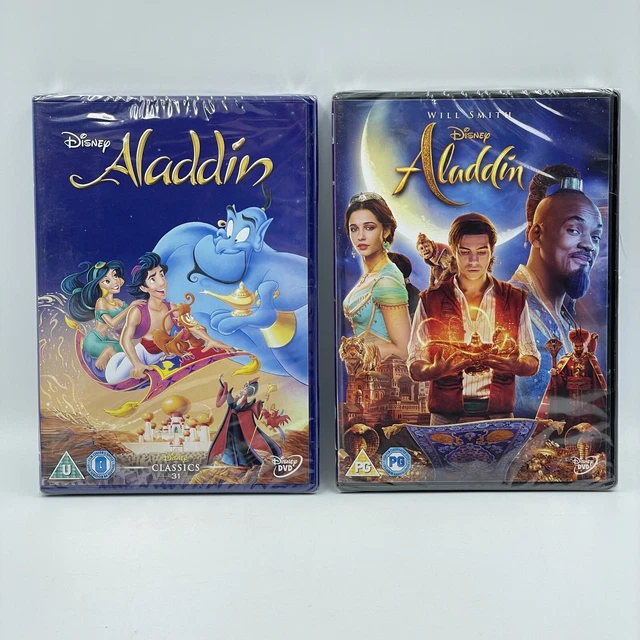
Following the unprecedented commercial and critical success of The Little Mermaid (1989) and Beauty and the Beast (1991), Walt Disney Feature Animation released Aladdin in November 1992. Directed by Ron Clements and John Musker, the film grossed over $504 million worldwide, making it the highest-grossing film of 1992 globally.
- Integration of CGI and Traditional Animation: Aladdin pushed technological boundaries by extensively utilizing Computer-Generated Imagery for complex background elements, such as the swirling architectural wonders of the Cave of Wonders, the Sultan's intricate toy collection, and the geometry of the magic carpet.
- Celebrity Voice Casting: The casting of Robin Williams as the Genie fundamentally changed how Hollywood approached animated feature films. Williams improvised hours of dialogue, blending pop-culture impersonations with rapid-fire vaudevillian comedy, which forced animators to build the character’s physical transformations around his vocal performance rather than the other way around.
- Musical Synergy: With a score by Alan Menken and lyrics by Howard Ashman and Tim Rice, Aladdin continued the Broadway-style musical tradition that defined the Disney Renaissance, winning Academy Awards for Best Original Score and Best Original Song ("A Whole New World").
Non-Disney Theatrical Releases of 1992
While Disney commanded the box office, 1992 also saw notable releases from other studios and international creators that expanded the boundaries of the medium:
- Animation Masterpieces from Abroad: International markets continued to export visually stunning works that influenced Western creators. Japanese anime, in particular, was slowly building a dedicated crossover audience in North America, setting the stage for the mainstream explosion of the medium later in the decade.
- Stop-Motion and Special Effects: Outside of traditional hand-drawn cels, stop-motion animation and practical visual effects continued to hold a vital place in cinema. While live-action films heavily utilized stop-motion, the techniques and artistry shared deep crossovers with traditional animation studios, relying on frame-by-frame manipulation and keen timing.
Comparative Analysis of 1992 Animation Mediums
To fully appreciate the diversity of the era, it is helpful to compare the primary animation formats that dominated 1992 across television and film. Each medium faced distinct technical constraints, economic models, and artistic goals.
| Medium / Format | Primary Technological Approach | Notable 1992 Example | Target Audience | Production Constraints & Characteristics |
|---|---|---|---|---|
| Network Television | Traditional hand-drawn cels, experimental dark-cel painting | Batman: The Animated Series | Children, Teenagers, Adults | Strict television censors, tight weekly production schedules, limited budgets compared to features. |
| Theatrical Feature | Hand-drawn cels enhanced with early digital ink-and-paint and CGI integration | Aladdin | Family, General Audiences | Massive multi-million dollar budgets, years-long production cycles, theatrical release expectations. |
| Syndicated / Cable Series | Cel animation optimized for high-volume broadcast syndication | Various afternoon action and comedy blocks | Children | High episode counts (often 65+ episodes per order), reliance on overseas subcontracting studios. |
| International / Independent | Varied artistic styles, cel or stop-motion experimentation | Global arthouse and foreign releases | Varied (often niche or mature) | Variable funding, artistic freedom, unique cultural storytelling traditions. |
Technical Evolution: The Transition to Digital Production
The year 1992 is widely recognized by industry historians as a vital bridge between the analog era of physical cel animation and the fully digital workflows of the 21st century. Before 1992, the vast majority of animated films and television shows relied on physical ink-and-paint processes where lines were hand-inked or xeroxed onto cellulose acetate sheets, painted by hand on the reverse side, and then shot sequentially under a multiplane camera over painted backgrounds.
By 1992, computer systems such as Disney’s Computer Animation Production System (CAPS) were moving out of the experimental phase and into active, large-scale production. CAPS allowed animators to scan pencil drawings directly into computer systems, where artists could apply digital ink lines and paint fills. This yielded several distinct advantages:
- Elimination of Cel Dust and Flaking: Physical cels were prone to dust accumulation, scratches, and paint chipping during multiplane camera moves. Digital files eliminated these physical artifacts entirely.
- Seamless Multiplane Camera Moves: Simulated depth of field, complex lighting effects, and shadows could be calculated digitally, allowing the virtual camera to move through three-dimensional space with characters layered accurately on top.
- Color Consistency: Digital color palettes ensured absolute uniformity across thousands of frames, preventing color flickering or unwanted shade shifts between scenes produced by different ink-and-paint artists.
Common Misconceptions About 1992 Animation
When examining historical eras in media, several persistent myths often obscure the reality of how content was produced and received.
- Myth: Computer-generated animation dominated the box office in 1992.
- Reality: Fully CGI feature films did not exist in wide release in 1992. While computers were heavily used for digital composition, special effects, and background rendering (such as in Aladdin and Beauty and the Beast), the characters themselves were still drawn by hand on paper.
- Myth: Animation in 1992 was exclusively marketed toward young children.
- Reality: Shows like Batman: The Animated Series and prime-time animated experiments proved that networks actively targeted older demographics. The early 1990s laid the essential groundwork for adult-oriented animation blocks that would flourish later in the decade.
- Myth: Traditional cel animation was entirely abandoned after digital tools were introduced.
- Reality: The transition was gradual. Studios maintained hybrid workflows for many years, utilizing physical cels alongside digital composites well into the late 1990s before transitioning to paperless digital drawing tablets.
Practical Insights and Preservation for Modern Researchers
For film historians, archivists, and modern animation students studying the works of 1992, understanding the production pipeline of the era offers valuable context for preservation and analysis.
- Source Material Verification: Original production cels, model sheets, and storyboard sketches from 1992 productions are highly sought-after collector's items. When examining physical cels, researchers should verify studio authentication seals, as many unpainted production copies or unauthorized reproductions circulate in secondary markets.
- Aspect Ratio and Remastering: Many television shows from 1992 were originally produced in the standard 4:3 television aspect ratio. When these series are remastered for high-definition streaming platforms, viewers should verify whether the image has been unnaturally cropped to fit 16:9 widescreen monitors, which often results in the loss of crucial top-and-bottom visual composition intended by the directors.
- Music and Audio Restoration: Early 1992 television broadcasts often suffered from audio compression tailored for standard cathode-ray tube (CRT) television speakers. Modern physical media releases (such as Blu-ray box sets) frequently benefit from newly remixed 5.1 or lossless stereo tracks sourced from original master magnetic tapes.
Frequently Asked Questions
What made 1992 such a significant year for animation?
The year 1992 was a milestone because it combined the peak commercial success of traditional hand-drawn features like Disney's Aladdin with the cultural reset of television animation via Batman: The Animated Series. Furthermore, it marked the practical integration of digital production tools that bridged analog cel painting with modern computer graphics.
Was Batman: The Animated Series considered a children's show?
While broadcast during children's programming blocks, Batman: The Animated Series was deliberately written and directed to appeal to all ages. Its dark tone, mature thematic elements, complex villain motivations, and sophisticated cinematic direction earned it a massive adult following that persists to this day.
How were colors applied to animated characters in 1992?
While traditional hand-painted cellulose acetate cels were still widely used, 1992 marked a major turning point where digital ink-and-paint software systems began replacing physical paint. Artists scanned pencil drawings into computers, where digital colorists applied palettes digitally to maintain absolute color consistency.
Did any fully computer-animated films come out in 1992?
No. While computer-generated imagery (CGI) was used for specific background elements, special effects, and camera movements in major 1992 feature films, the first fully computer-animated feature film, Toy Story, was not released until 1995.
Where can I watch classic 1992 animation today?
Many television series and feature films from 1992 are available across various subscription streaming services, digital storefronts, and physical media releases (such as Blu-ray and 4K Ultra HD restorations). Availability varies depending on regional licensing agreements and current streaming platform catalogs.
Next Actions for Enthusiasts and Researchers
To dive deeper into the legacy of 1992 animation, consider exploring original production art books, official making-of documentaries included in special-edition home media releases, and archival interviews with key creators such as Bruce Timm, Alan Menken, and the directors of the era's landmark projects. Examining the original storyboards alongside finished broadcast episodes offers an illuminating masterclass in visual pacing, framing, and narrative economy.