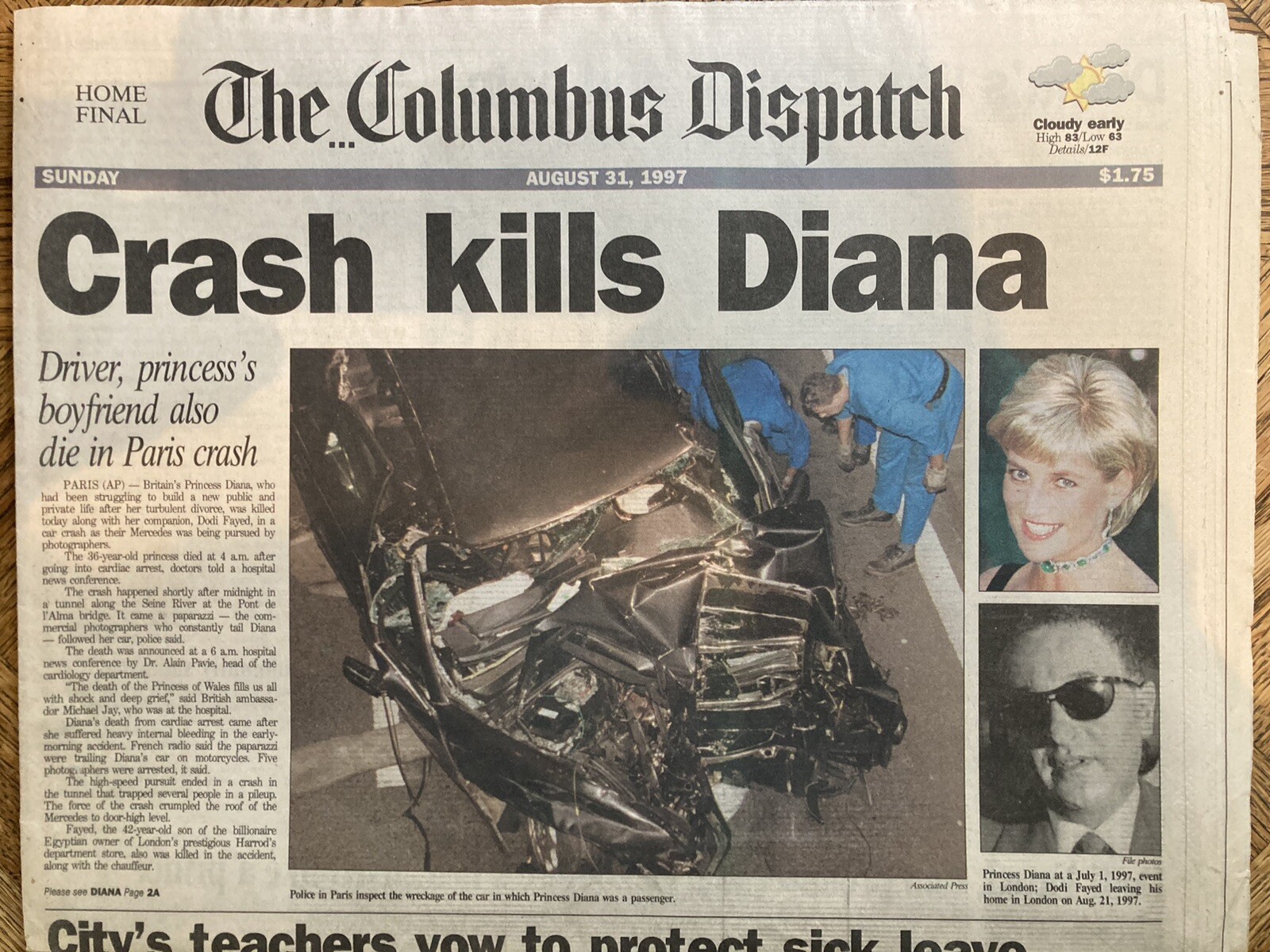
The fatal car crash in Paris on August 31, 1997, that resulted in the deaths of Diana, Princess of Wales, Dodi Fayed, and driver Henri Paul remains one of the most heavily scrutinized traffic incidents in modern history. The collision inside the Pont de l'Alma tunnel triggered unprecedented global mourning, extensive judicial investigations, and far-reaching changes in media ethics, paparazzi regulation, and automotive safety standards.
Historical Context and the Events of August 30–31, 1997
To understand the circumstances leading up to the 1997 accident, it is necessary to examine the events in Paris during the final weekend of August 1997. Diana, Princess of Wales, had arrived in Paris earlier in the week with Dodi Fayed, son of Egyptian billionaire Mohamed Al-Fayed, following a holiday in the Mediterranean aboard the yacht Jonikal.
The couple had been staying at the Hôtel Ritz Paris, which was owned by the Fayed family. Throughout their stay, they were pursued aggressively by photographers and journalists who tracked their every movement. This intense media scrutiny was a continuation of the relentless public attention Diana had experienced since her separation and subsequent divorce from Charles, Prince of Wales.
On the evening of August 30, the couple dined at the Ritz's private restaurant before attempting to leave for Dodi Fayed's private apartment near the Champs-Élysées. To evade the crowd of photographers gathered at the main entrance of the hotel on Place Vendôme, a security plan was devised.
A decoy vehicle was deployed from the front entrance to draw the press corps away, while Diana and Dodi Fayed departed from a rear service exit on Rue Cambon shortly after midnight. They boarded a black Mercedes-Benz S280, driven by Henri Paul, the acting head of security at the Hôtel Ritz. Trevor Rees-Jones, a member of the protection team assigned to the Fayed family, sat in the front passenger seat.
The Crash Inside the Pont de l'Alma Tunnel
The Mercedes-Benz traveled along the right bank of the Seine, entering the Cours la Reine and approaching the Pont de l'Alma underpass just after 12:20 AM on August 31, 1997. The vehicle was traveling at a high rate of speed—subsequent forensic reconstruction established it was moving between 96 and 118 kilometers per hour (60 to 73 miles per hour) in a 50 km/h zone—pursued by several motorcyclists and photographers attempting to secure images.
As the car entered the western entrance of the two-lane Pont de l'Alma underpass, it collided with the 13th pillar supporting the roof of the tunnel. The impact catastrophic, causing severe structural damage to the front and right side of the vehicle, which then spun and came to rest facing the opposite direction.
Immediate Emergency Response
First responders arrived at the scene within minutes of the collision. Dr. Frédéric Mailliez, an off-duty physician driving through the tunnel, was among the first on the scene and provided initial medical assistance to Diana, who was trapped in the back seat.
Emergency medical services, including the Service d'Aide Médicale Urgente (SAMU), arrived shortly thereafter. Henri Paul and Dodi Fayed were pronounced dead at the scene. Trevor Rees-Jones sustained massive facial and cranial trauma but survived, though he suffered long-term amnesia regarding the moments leading up to the crash.
Diana was extricated from the wreckage at approximately 1:00 AM. Due to her dropping blood pressure and the severity of her internal injuries, medical personnel provided treatment on-site before transporting her to the Pitié-Salpêtrière Hospital. Despite extensive surgical interventions and cardiac massage, she was pronounced dead at 4:00 AM local time.
Official Investigations and Findings
The French judicial system immediately launched a formal inquiry into the causes of the collision, leading to Operation Paget by London's Metropolitan Police and subsequent inquests in the United Kingdom.
| Investigation Body | Jurisdiction | Primary Conclusion |
|---|---|---|
| French Judicial Inquiry | France | Driver intoxication, excessive speed, and the presence of pursuing paparazzi caused the crash. |
| Operation Paget | United Kingdom | Found no evidence of a conspiracy; confirmed driver impairment and high speed as primary factors. |
| The 2007–2008 Inquest | United Kingdom | Jury returned verdicts of unlawful killing, driven by the gross negligence of Henri Paul and the pursuing vehicles. |
The French Investigation (1999)
Led by Judge Hervé Stephan, the initial French investigation concluded in 1999. The report placed primary blame on Henri Paul, toxicological tests revealed high concentrations of alcohol (approximately three times the legal limit in France) and prescription antidepressant medications in his bloodstream. The investigation also noted the excessive speed of the vehicle and the reckless behavior of the paparazzi who followed the car into the tunnel. Eight photographers and one press motorcyclist were initially charged with manslaughter and failure to assist a person in danger, though many charges were later dismissed or reduced on appeal.
Operation Paget (2004–2006)
In response to persistent public claims of a conspiracy—promoted primarily by Mohamed Al-Fayed—the British Metropolitan Police established Operation Paget, headed by Sir John Stevens. The comprehensive 832-page report, published in December 2006, examined every major conspiracy theory. It definitively rejected claims that the crash was orchestrated by British intelligence agencies, the Royal Family, or security services. The report confirmed that Henri Paul was driving under the influence of alcohol and prescription drugs at excessive speeds.
The British Inquest (2007–2008)
A formal inquest presided over by Lord Justice Scott Baker examined the evidence over six months. In April 2008, the jury returned a verdict of unlawful killing, attributing the deaths to the gross negligence of driver Henri Paul and the pursuing paparazzi vehicles. The jury also noted that neither Diana nor Dodi Fayed was wearing a seatbelt at the time of the impact, which contributed to the severity of their injuries.
Structural and Societal Impact
The 1997 accident had an immediate and lasting impact on public policy, journalism, media ethics, and automotive standards.
Media Ethics and Paparazzi Regulation
The relentless pursuit of the Mercedes by photographers brought intense public scrutiny to the practices of tabloid journalism and freelance celebrity photography. Several European nations, particularly France and the United Kingdom, faced renewed calls to tighten privacy laws. In the UK, the Press Complaints Commission (PCC) updated its editors' code of practice to include stricter rules regarding harassment, long-range photography, and the pursuit of individuals in private spaces.
Automotive Safety Awareness
The crash highlighted the critical importance of passive safety features in modern automobiles. While the Mercedes-Benz S280 performed structurally as designed during a high-speed frontal impact, the lack of seatbelt usage by the rear-seat passengers underscored the life-saving necessity of restraints. Public health campaigns across Europe intensified their focus on seatbelt compliance, leading to increased rates of usage in both front and rear seating positions.
Cultural and Institutional Shifts
The outpouring of public grief following Diana's death shifted the cultural relationship between the British monarchy and the public. The traditional reticence of the Royal Family was challenged by the public demand for open mourning, prompting a modernization of royal communication and public engagement strategies in the years that followed.
Frequently Asked Questions
Was anyone else involved in the 1997 accident?
Yes. The vehicle was occupied by four people: driver Henri Paul and Dodi Fayed, who both died at the scene; Diana, Princess of Wales, who died at the hospital; and Trevor Rees-Jones, a bodyguard who survived the crash with severe injuries. Several freelance photographers on motorcycles were pursuing the vehicle when the collision occurred.
What caused the car to crash?
Official investigations by French and British authorities concluded that the primary cause of the crash was driver impairment. Henri Paul was operating the vehicle at excessive speed while under the influence of alcohol and prescription medication. The presence of pursuing photographers contributed to the high-speed conditions.
Were Diana and Dodi Fayed wearing seatbelts?
Forensic examinations and official inquest findings confirmed that neither Diana nor Dodi Fayed was wearing a seatbelt at the time of the impact. Investigators noted that wearing seatbelts likely would have significantly reduced the severity of their injuries.
Did the paparazzi face criminal charges?
Several photographers were detained at the scene and subsequently faced charges related to manslaughter and failure to assist persons in danger under French law. Over the course of the judicial proceedings, many of these charges were dismissed or resulted in acquittals, though the legal fallout redefined the regulatory framework for celebrity photography in Europe.
Next Steps and Further Research
For readers seeking verified, primary documentation regarding the incident, reference can be made to the official Operation Paget Report published by the Metropolitan Police Service, as well as the transcripts and verdicts from the 2007–2008 Royal Courts of Justice inquests. These documents provide exhaustive forensic breakdowns, witness testimonies, and legal determinations regarding the 1997 accident.