The year 1989 stands as one of the most transformative epochs in modern history, marked by a cascade of geopolitical shifts, technological breakthroughs, and cultural turning points that dismantled the post-World War II order and laid the groundwork for the contemporary world. From the fall of the Berlin Wall to the birth of the World Wide Web, these developments reshaped international relations, global economies, and everyday life with enduring consequences.
The Geopolitical Landscape and the End of the Cold War
The defining narrative of 1989 centered on the rapid dismantling of the Eastern Bloc and the peaceful unraveling of communist hegemony across Central and Eastern Europe. This transformation did not occur in a vacuum; it was the culmination of mounting economic distress within the Soviet Union, the exhaustion of state-socialist models, and the reformist policies of Soviet leader Mikhail Gorbachev. Gorbachev’s introduction of glasnost (openness) and perestroika (restructuring) inadvertently unleashed forces that Moscow could no longer contain.
As the Soviet Union signaled that it would no longer use military force to prop up allied communist regimes—a departure from the Brezhnev Doctrine—opposition movements across Eastern Europe found the opening they needed. The year witnessed a domino effect of transitions, moving from negotiated settlements to mass street protests that forced entrenched leaderships to step down.
The Fall of the Berlin Wall
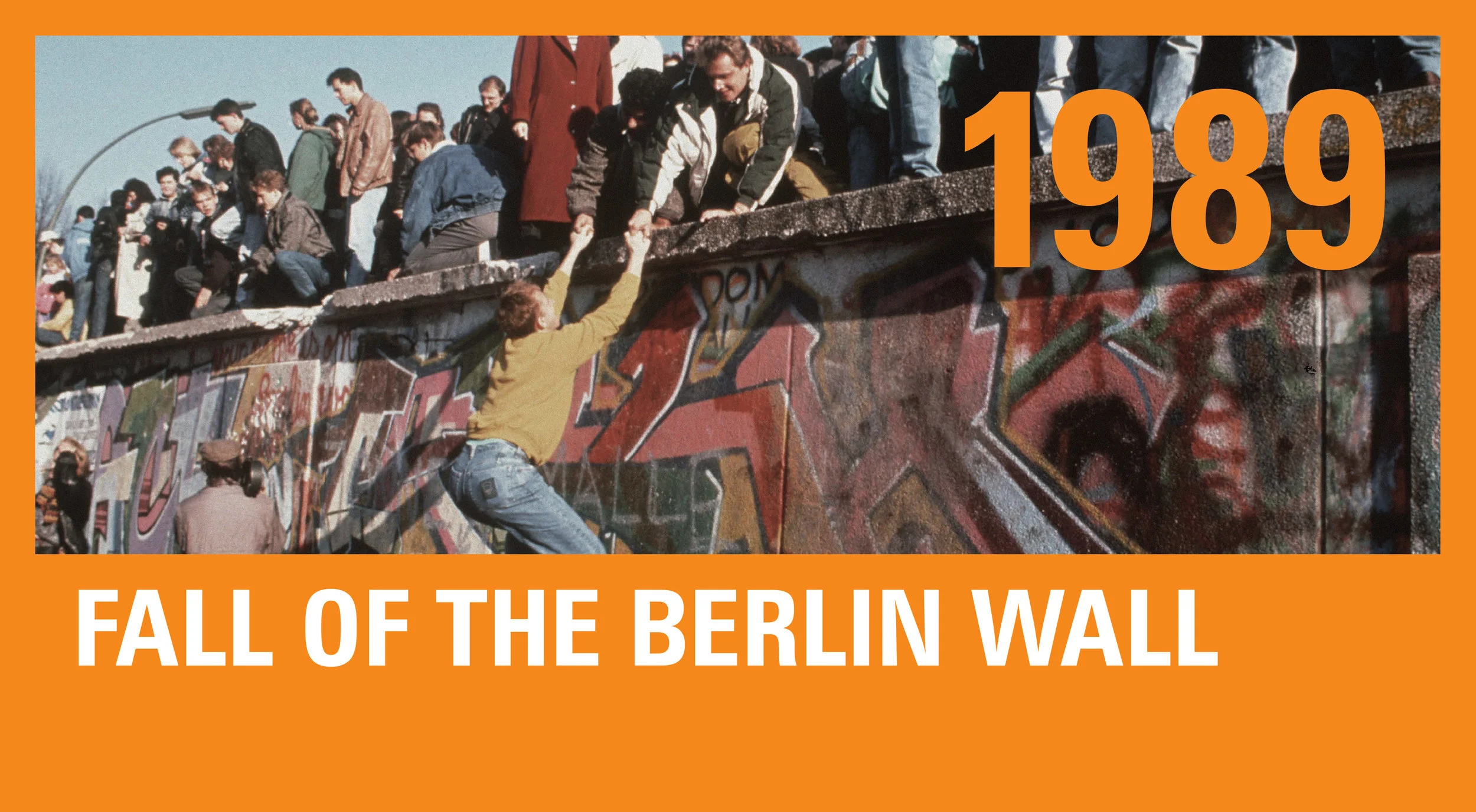
On the evening of November 9, 1989, the Berlin Wall—the ultimate symbol of the Cold War division between Western democracies and the Soviet bloc—was breached. Following a confused press conference by East German official Günter Schabowski, in which he incorrectly announced that travel restrictions to the West were lifted immediately, thousands of East Berliners flooded checkpoints along the wall.
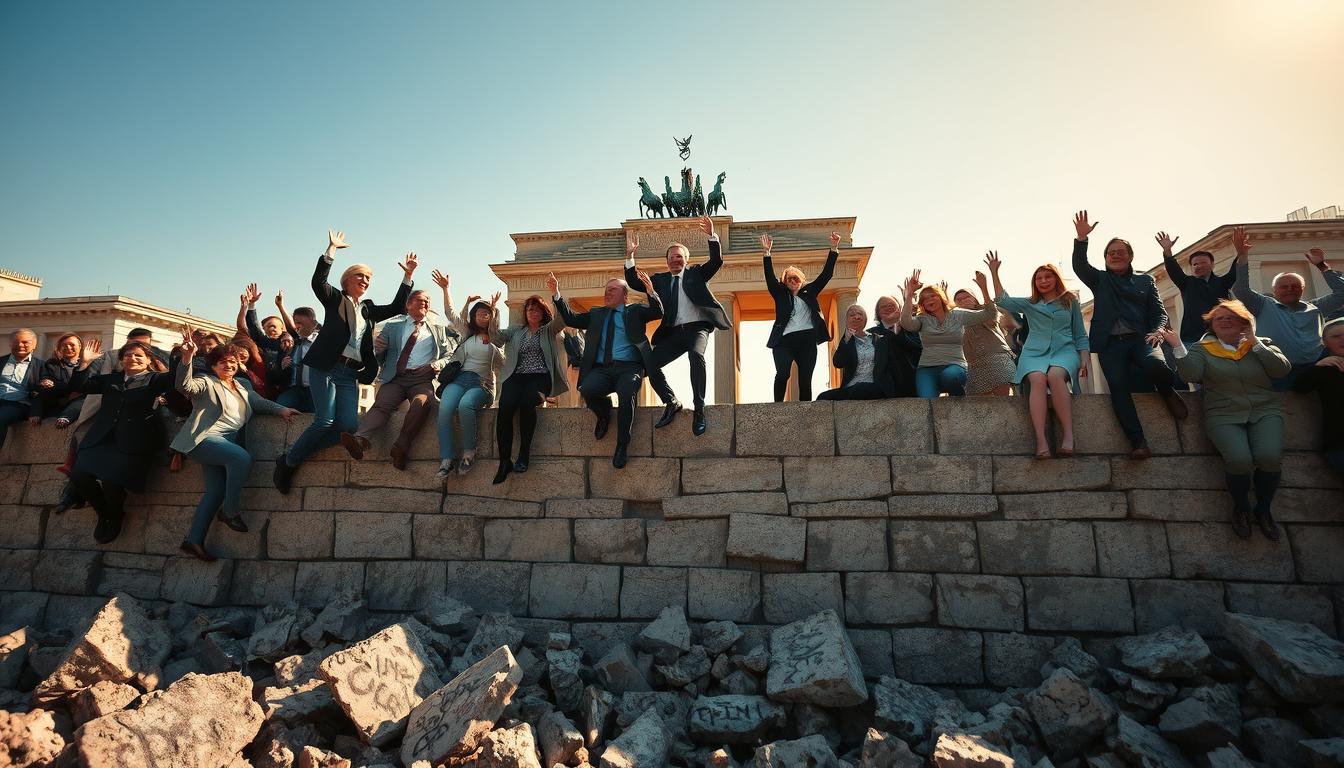
Border guards, overwhelmed by the surging crowds and lacking orders to use lethal force, opened the gates. Citizens from both sides climbed atop the concrete barrier, hammering away pieces of the structure with chisels and hammers. The fall of the Berlin Wall signaled the imminent reunification of Germany and effectively closed the curtain on the division of Europe, transforming the psychological and physical landscape of the continent.
The Velvet Revolution in Czechoslovakia
In November and December 1989, Czechoslovakia experienced the "Velvet Revolution," a non-violent transition of power that ousted the Communist Party. Triggered by a brutal police crackdown on student demonstrators in Prague on November 17, mass protests swelled to include hundreds of thousands of citizens.
Led by civic initiatives like the Civic Forum, the movement paralyzed the regime through general strikes and mass rallies. By December 29, the playwright and dissident Václav Havel was elected president of the country, marking a definitive return to parliamentary democracy and the rule of law after more than four decades of single-party rule.
Poland’s Round Table Talks and Solidarity's Rise
Poland provided the blueprint for peaceful regime change earlier in the year through the historic Round Table Talks. Held from February to April 1989, these negotiations between the communist government and the outlawed independent trade union Solidarność (Solidarity) resulted in an agreement to legalize the union and hold semi-free parliamentary elections.
In the June 1989 elections, candidates backed by Solidarity won virtually every contested seat. This sweeping victory created a hybrid government that paved the way for Tadeusz Mazowiecki to become Poland’s first non-communist prime minister since World War II, shattering the monopoly of communist power in the Eastern Bloc.
Cultural and Political Upheavals Outside Europe
While Europe captured global headlines, significant events in other parts of the world reshaped regional balances and international law.
The Tiananmen Square Protests and Crackdown
In the spring of 1989, China witnessed massive, student-led pro-democracy demonstrations centered in Beijing's Tiananmen Square. Callers for political reform, freedom of speech, and government accountability drew over a million supporters into the streets, inspiring sympathetic protests in dozens of other Chinese cities.
The movement met a tragic end on the night of June 3–4, 1989, when the Chinese government deployed the People's Liberation Army to clear the square. Troops using tanks and assault rifles killed hundreds, possibly thousands, of civilian demonstrators and bystanders. The crackdown resulted in widespread international condemnation, economic sanctions against Beijing, and a long-term chilling effect on political dissent within mainland China.
The Revolutions of 1989 Across the Eastern Bloc
Beyond Germany, Poland, and Czechoslovakia, the wave of change swept through other nations:
- Hungary: The regime dismantled its physical border fence with Austria in May, opened its borders in August, and officially declared the Hungarian Republic in October, transitioning to a multi-party system.
- Bulgaria: Long-time leader Todor Zhivkov was ousted in a palace coup on November 10, just one day after the fall of the Berlin Wall, leading to the initiation of democratic reforms.
- Romania: Unlike its neighbors, Romania’s transition turned violent. The regime of dictator Nicolae Ceaușescu was overthrown in a bloody uprising in December, culminating in the summary trial and execution of Ceaușescu and his wife Elena on Christmas Day.
Technological Foundations of the Modern Era
While political systems crumbled and reformed, 1989 also laid the technical infrastructure for the digital age, introducing innovations that continue to dictate global connectivity.
The Birth of the World Wide Web
At CERN (the European Organization for Nuclear Research) in March 1989, British scientist Tim Berners-Lee submitted a proposal titled "Information Management: A Proposal." This document outlined a decentralized hypertext system designed to help researchers share documents across different computers.
Berners-Lee developed the foundational technologies—HTML, HTTP, and the first web browser and server—by the end of the year and into 1990. By conceptualizing the World Wide Web, 1989 initiated a communications revolution that democratized information access and transformed global commerce, media, and social interaction.
Consumer Technology and Computing Milestones
The computing landscape in 1989 also saw the maturation of portable computing and graphical user interfaces:
- The Macintosh Portable: Apple released its first battery-powered portable Macintosh in September 1989. Weighing nearly 16 pounds and carrying a hefty price tag, it established the market for transportable personal computers.
- Nintendo Game Boy: Released in Japan in April 1989 (and globally thereafter), the Game Boy popularized handheld gaming and became one of the best-selling entertainment devices in history, dominating the market through the 1990s.
- Intel 486 Processor: Introduced in 1989, the i486 microprocessor integrated over a million transistors and a built-in math coprocessor, accelerating the computational power available to desktop operating systems.
Summary of Major 1989 Milestones
| Event / Milestone | Date / Period | Primary Region | Significance |
|---|---|---|---|
| The Polish Round Table Talks | Feb–Apr 1989 | Poland | Negotiated transition of power; led to the first non-communist government in the Eastern Bloc. |
| Tiananmen Square Crackdown | June 3–4, 1989 | China | Military suppression of pro-democracy protests; reshaped China's domestic policy and Western relations. |
| Invention of the World Wide Web | March 1989 | Switzerland (CERN) | Tim Berners-Lee proposed the system that became the modern web, transforming global communications. |
| Fall of the Berlin Wall | November 9, 1989 | East/West Germany | Physical and symbolic collapse of the Iron Curtain, leading directly to German reunification. |
| The Velvet Revolution | Nov–Dec 1989 | Czechoslovakia | Non-violent overthrow of the communist regime and election of Václav Havel as president. |
| Execution of Nicolae Ceaușescu | December 25, 1989 | Romania | Violent conclusion to the only bloody anti-communist revolution in Eastern Europe that year. |
Frequently Asked Questions
Why is 1989 considered the year that changed everything?
1989 witnessed the collapse of communist rule across Central and Eastern Europe, the end of the Cold War bipolar global order, and the inception of the World Wide Web. These intersecting political, social, and technological shifts reconfigured global power dynamics and created the interconnected digital world of the twenty-first century.
How did the fall of the Berlin Wall happen so quickly?
The wall fell due to a combination of long-term economic decay in the Eastern Bloc, the Soviet Union's refusal to intervene militarily, mass civic protests in East Germany, and a bureaucratic error during an East German press conference. When official Günter Schabowski misstated travel regulations, citizens rushed the border crossings, overwhelming guards who chose not to use lethal force.
What was Tim Berners-Lee's contribution in 1989?
While working at CERN in March 1989, Tim Berners-Lee submitted a proposal for a hypertext-based information management system. This proposal laid the architectural blueprint for the World Wide Web, combining hypertext with the Internet to make remote files easily accessible via browsers.
Did all transitions of power in 1989 happen peacefully?
Most transitions in Central and Eastern Europe—such as in Poland, Hungary, East Germany, and Czechoslovakia—were remarkably peaceful, earning monikers like the Velvet Revolution. However, the crackdown on protesters at Tiananmen Square in China was violent, and Romania experienced a bloody uprising that resulted in the execution of its dictator.
What were the economic impacts of the events of 1989?
The end of the Cold War integrated former centrally planned economies into the global capitalist market, opening new labor pools, consumer markets, and investment opportunities. Simultaneously, the defense industries of major superpowers underwent massive downsizing as military expenditures plummeted in the post-Cold War "peace dividend" era.
Conclusion and Historical Legacy
The events of 1989 demonstrated the fragility of entrenched authoritarian structures and the unstoppable momentum of technological innovation. By dismantling the geopolitical architecture that had dominated the twentieth century since the end of World War II, 1989 redefined national borders, governance models, and interpersonal communications. Reviewing these developments provides essential context for understanding the geopolitical tensions, economic interdependencies, and digital ecosystems that define the modern era.