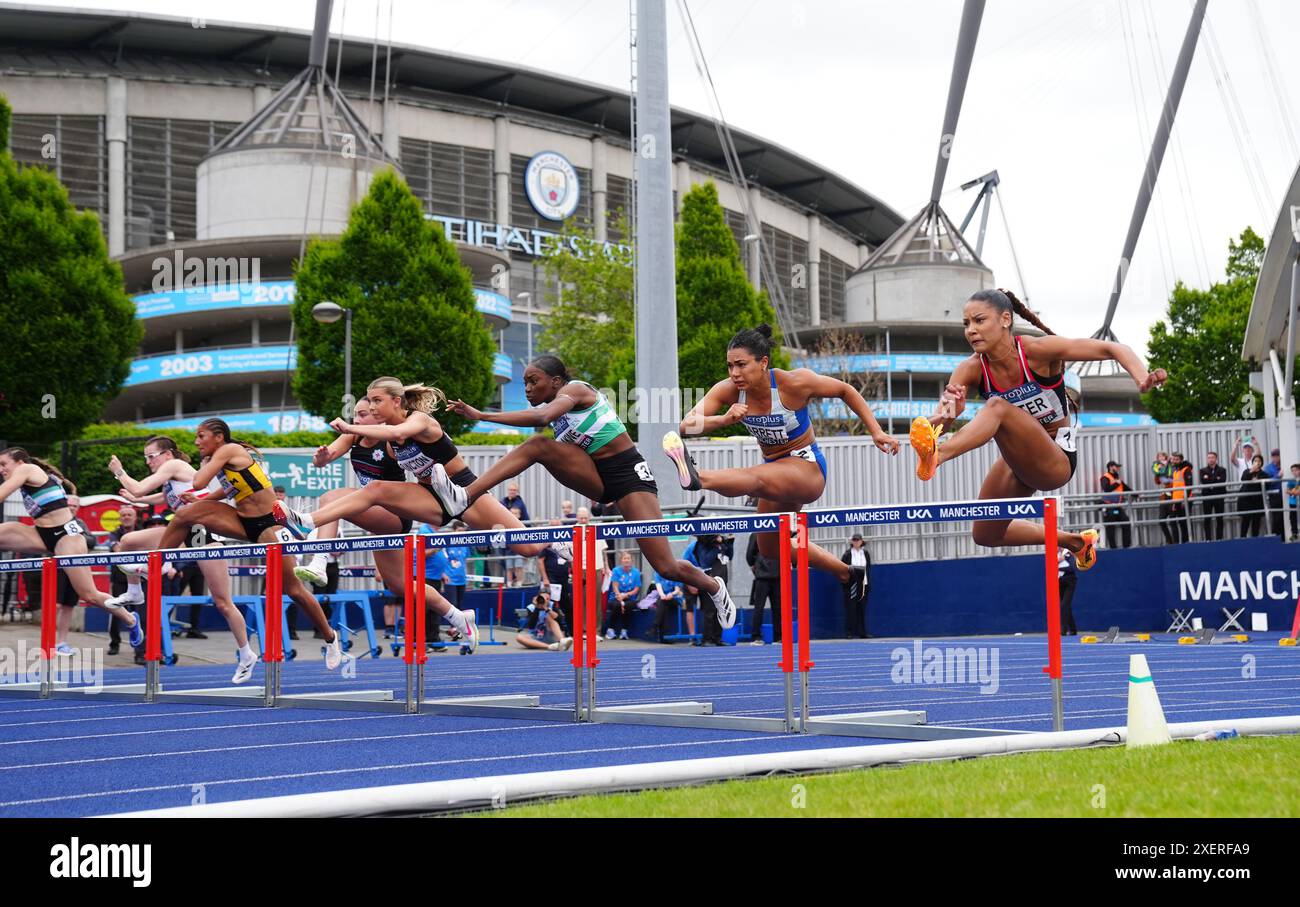
The 110m hurdles is a premier men’s track and field sprint event that requires a unique blend of explosive speed, rhythmic precision, and high-level technical skill. Competitors must sprint 110 meters while clearing ten hurdles, each standing 1.067 meters high, positioned at specific intervals that demand a strict three-step stride pattern between barriers.
The 110m hurdles is often described as a "sprint with obstacles," but this definition undersells the complexity of the discipline. At the elite level, the event is a violent display of controlled aggression. Unlike the 100m sprint, where an athlete can focus purely on raw velocity, the 110m hurdler must modulate their stride length and frequency to navigate ten rigid barriers without losing forward momentum. As we move through 2026, the evolution of track surfaces and spike technology continues to push the boundaries of what is possible, yet the fundamental geometry of the race remains one of the most punishing standards in all of athletics.
Technical Specifications and Race Geometry
The 110m hurdles is governed by strict spatial requirements defined by World Athletics. Understanding these measurements is the first step for any coach or athlete looking to master the event. The race is conducted on a straightaway, and the placement of the hurdles is standardized to ensure that the rhythm remains consistent across all lanes and venues.
Dimensions and Spacing
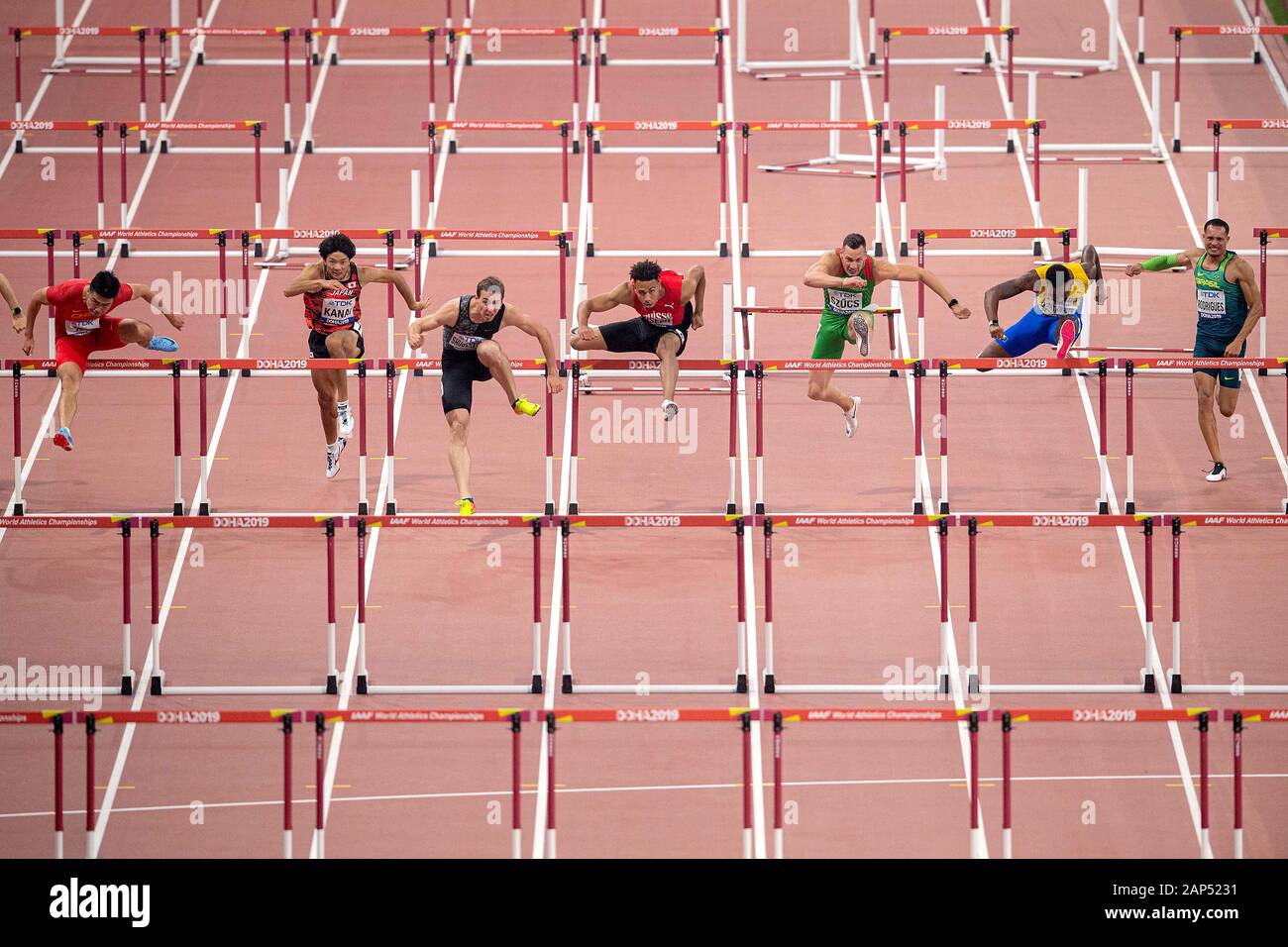
The 110m hurdles features ten barriers. The height for the senior men's event is fixed at 1.067 meters (42 inches). The spacing is as follows:
- Starting Line to First Hurdle: 13.72 meters. This distance allows the athlete to build sufficient horizontal velocity and establish their "take-off" point.
- Distance Between Hurdles: 9.14 meters. This is the "inter-hurdle" phase, which necessitates the famous three-step rhythm.
- Last Hurdle to Finish Line: 14.02 meters. This final "run-in" is where many races are won or lost as fatigue sets in and the athlete transitions back into a pure sprint.
Hurdle Construction
Modern hurdles are designed with a "L-shaped" base. This design ensures that if an athlete strikes the hurdle with sufficient force, the barrier will tip forward rather than remain upright and cause a catastrophic fall. The "break-over" force—the amount of weight required to tip the hurdle—is standardized to ensure fairness and safety. While knocking over a hurdle is not a disqualification in itself, it creates significant air resistance and physical friction, which inevitably slows the runner down.
The Biomechanics of the Hurdle Clearance
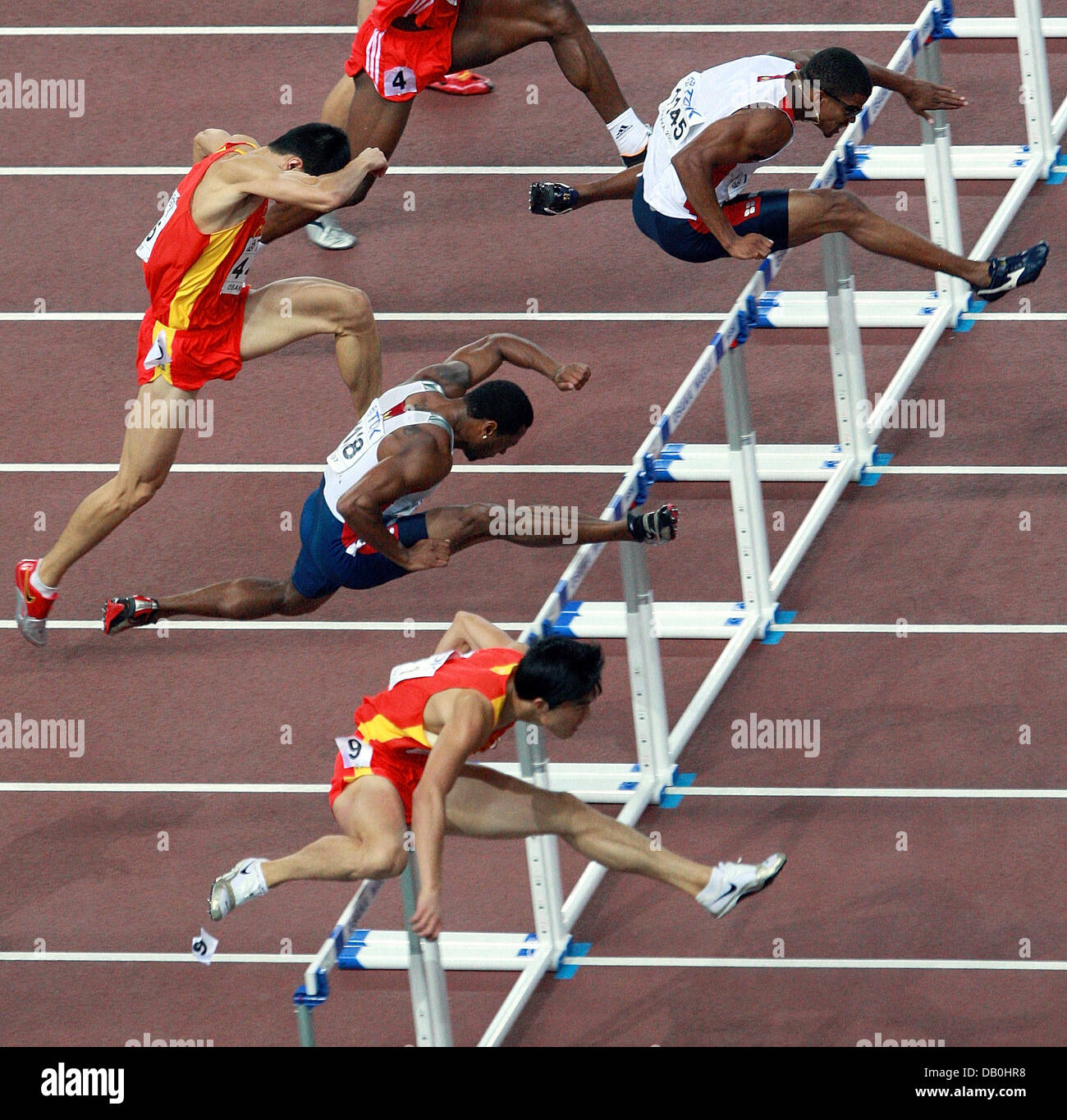
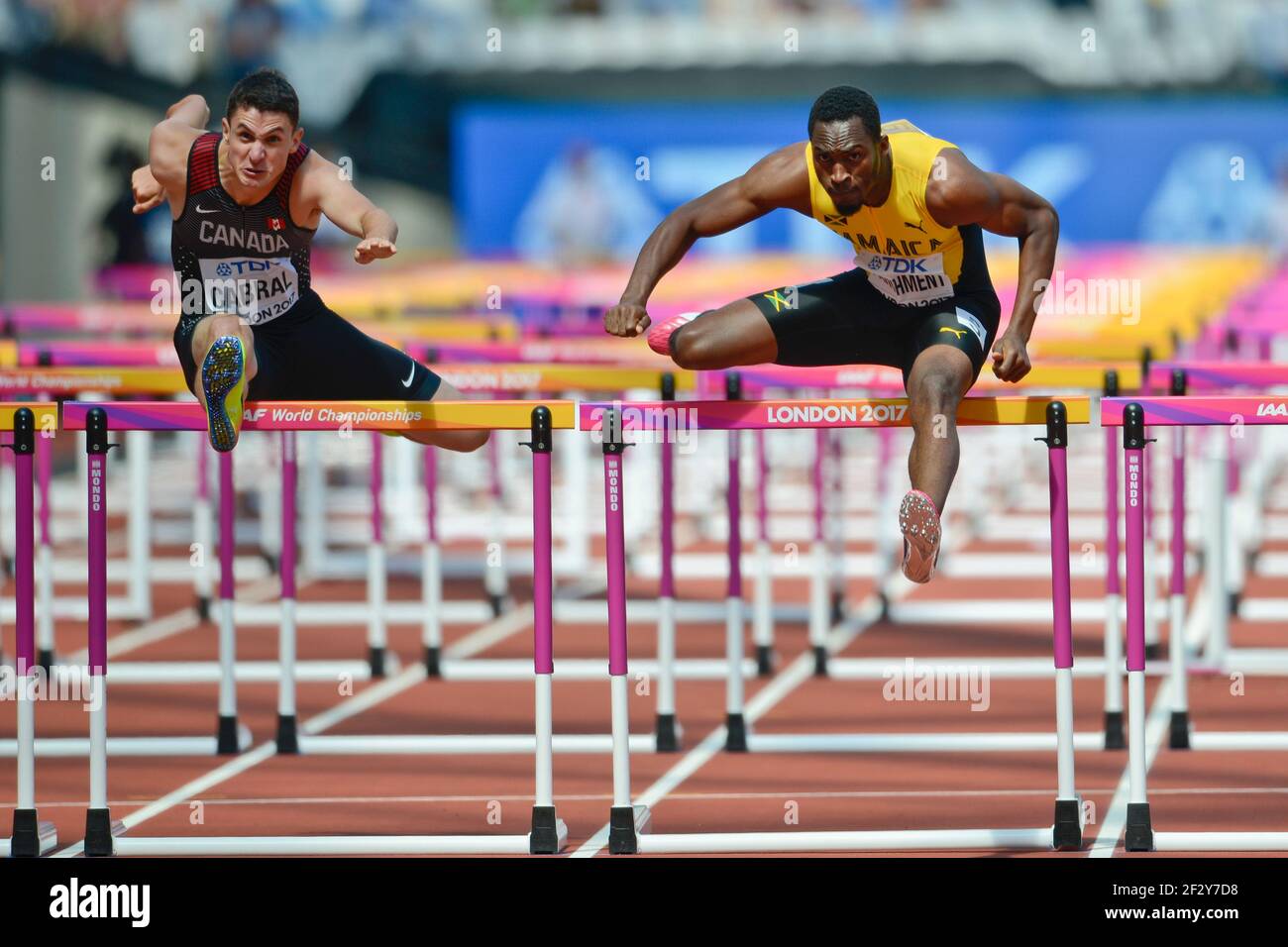
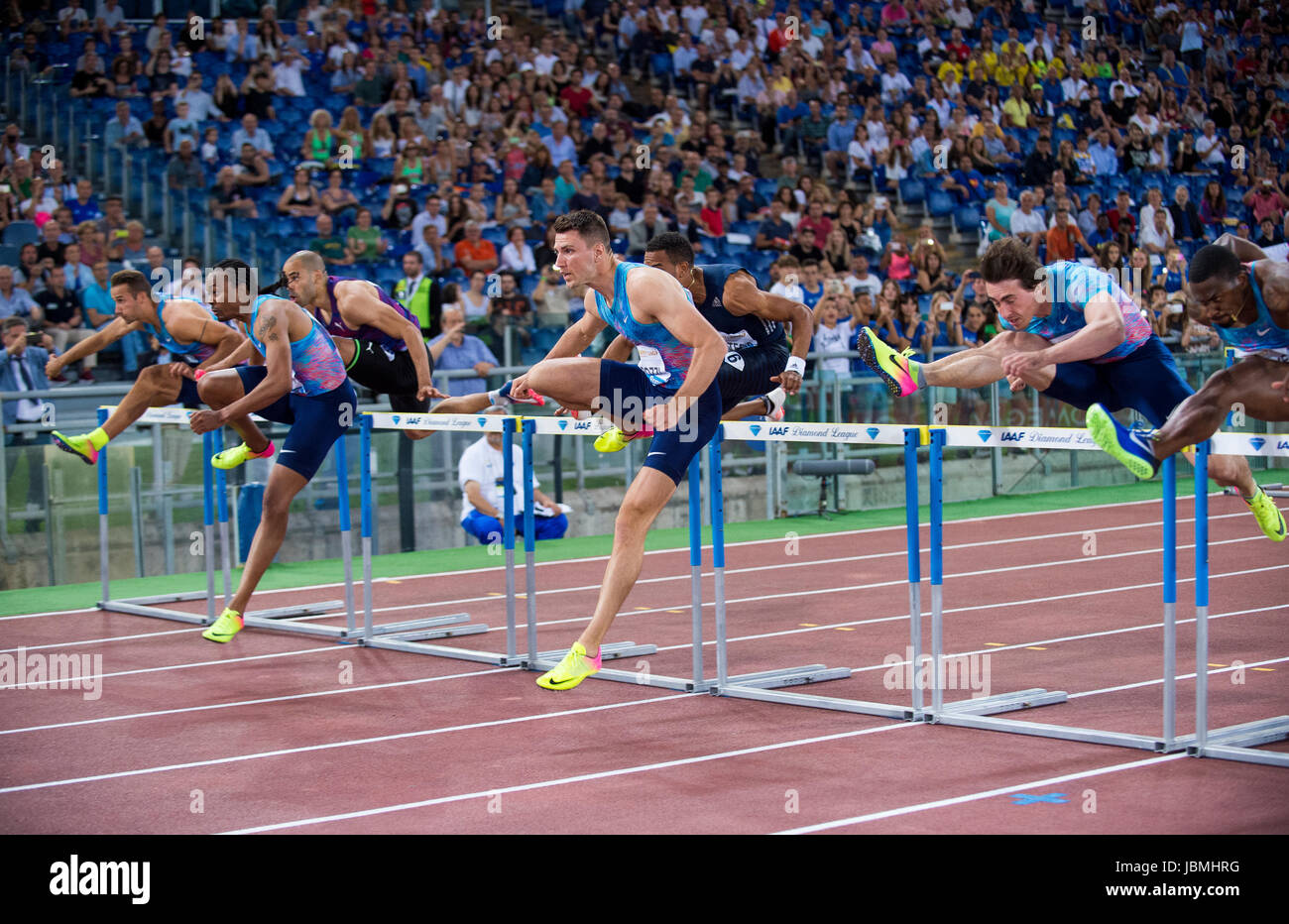
The "clearance" is the most technical phase of the race. Elite hurdlers do not "jump" over the hurdle; they "step" over it. The goal is to minimize the time spent in the air and keep the center of mass as level as possible. Any vertical oscillation—excessive rising or falling—results in lost time.
The Lead Leg
The lead leg is the first leg to cross the barrier. It begins with a high knee drive, similar to a standard sprinting stride but more exaggerated. As the knee reaches the height of the hurdle, the lower leg extends forward. Crucially, the foot must remain dorsiflexed (toes pointed up) to prevent clipping the hurdle and to prepare for a fast "snap-down" on the other side. The faster the lead leg returns to the track, the sooner the athlete can resume sprinting.
The Trail Leg
The trail leg is arguably more difficult to master. Once the lead leg has cleared the hurdle, the trail leg must be pulled through in a wide, circular motion. The knee is driven out to the side (abduction) and then pulled upward toward the armpit. The foot must be turned outward (everted) to ensure the toe does not catch the top rail of the hurdle. Mastery of the trail leg requires exceptional hip mobility and core strength.
Arm Action and Counter-Balance
To maintain balance while the legs are performing these asymmetrical movements, the arms must act as a counter-weight. When the lead leg goes forward, the opposite arm (the lead arm) reaches forward across the body. This prevents the torso from rotating too much. The other arm stays tight to the ribs in a "cocked" position, ready to drive back into a sprinting motion the moment the feet touch the ground.
The Rhythm: The Three-Step Pattern
The 110m hurdles is defined by its rhythm. Between each of the ten hurdles, elite athletes take exactly three steps. Taking four steps would require the athlete to switch their lead leg for every hurdle, which is inefficient and nearly impossible to maintain at high speeds.
- The Touchdown Step: This is the first step after clearing a hurdle. It must be active and aggressive to maintain momentum.
- The Recovery Step: This is the second step, usually the longest of the three, where the athlete re-establishes their sprinting posture.
- The Preparation Step: This is the third step, which is slightly shorter than the second. It prepares the body for the next take-off, allowing the athlete to "load" their lead leg knee drive.
Maintaining this 1-2-3 rhythm requires "hurdle endurance." As the race progresses and lactic acid builds up, the athlete's stride length naturally tends to shorten. The challenge of the final three hurdles is to maintain enough speed and power to cover that 9.14-meter gap in only three steps.
Essential Training Drills for Hurdlers
Training for the 110m hurdles is a multi-faceted endeavor that combines elements of a 100m sprinter’s workout with specialized technical drills.
Wall Drills
Wall drills are used to isolate the lead and trail leg movements without the fatigue of running. An athlete stands facing a wall and practices the "knee-up, snap-down" motion of the lead leg. For the trail leg, they stand perpendicular to the wall and practice the circular "pull-through" motion. These drills build the neurological pathways necessary for "blind" hurdle clearance.
Lead Leg and Trail Leg Isolations
Walking or jogging beside a row of hurdles, the athlete clears the barriers with only one leg while the other leg remains on the ground or follows a sprinting path. This allows the coach to analyze the height of the knee, the angle of the foot, and the timing of the arm drive.
Discounted Hurdling
To practice the three-step rhythm at high speeds, coaches often "discount" the hurdles. This involves moving the hurdles closer together (e.g., 8.0 or 8.5 meters apart instead of 9.14) or lowering the height. This allows the athlete to feel the sensation of elite-level velocity while they are still developing the strength to handle the full 110m spacing.
Rules and Disqualifications
The 110m hurdles is governed by the World Athletics Competition Rules. While the race appears straightforward, there are several nuances that can lead to disqualification.
- Trailing Leg Violation: An athlete is disqualified if their trail leg (or any part of their body) passes outside the side of the hurdle or below the horizontal plane of the top of the bar at the moment of clearance.
- Deliberate Knocking: While knocking over a hurdle is generally permitted, if the referee determines that an athlete knocked down a hurdle "deliberately" (to gain an advantage or interfere with another runner), they can be disqualified.
- Lane Infringement: Just like in the 100m, athletes must stay within their assigned lane. In the hurdles, this is particularly tricky, as the trail leg can easily drift into a neighboring lane.
- False Starts: Since 2010, the "one and done" rule applies. A single false start (reacting in less than 0.100 seconds after the gun) results in immediate disqualification.
Comparative Specifications of Hurdling Events
To understand the 110m hurdles, it is helpful to compare it to its indoor and female counterparts. Each event requires a different tactical approach due to the variation in height and spacing.
| Feature | 110m Hurdles (Men) | 100m Hurdles (Women) | 60m Hurdles (Men's Indoor) |
|---|---|---|---|
| Hurdle Height | 1.067 m (42 in) | 0.838 m (33 in) | 1.067 m (42 in) |
| Number of Hurdles | 10 | 10 | 5 |
| Start to 1st Hurdle | 13.72 m | 13.00 m | 13.72 m |
| Inter-Hurdle Space | 9.14 m | 8.50 m | 9.14 m |
| Last Hurdle to Finish | 14.02 m | 10.50 m | 9.72 m |
The Evolution of the World Record
The 110m hurdles has seen a steady progression in speed over the last century. In the early 20th century, the world record hovered around 14 seconds. The introduction of the "L-shaped" hurdle and synthetic tracks revolutionized the sport.
The modern era was defined by figures like Renaldo Nehemiah, the first man to break 13 seconds, and Colin Jackson, whose record of 12.91 stood for over a decade. In 2012, Aries Merritt set the current world record of 12.80 seconds at the Memorial Van Damme meet in Brussels. As of 2026, athletes like Grant Holloway continue to dominate the indoor 60m circuit and challenge the outdoor 110m record, utilizing a high-frequency "7-step" start to the first hurdle rather than the traditional 8-step approach.
Frequently Asked Questions
Can an athlete be disqualified for knocking over a hurdle?
Generally, no. An athlete can knock over all ten hurdles and still win the race, provided they do not use their hands to knock them down and their legs clear the height of the bar. However, hitting a hurdle is a major technical error that significantly reduces speed due to the impact and the disruption of the athlete's center of gravity.
Why is the 110m hurdles only for men?
The 110m hurdles is the standard Olympic distance for men, while women compete in the 100m hurdles. This historical distinction is based on the average differences in male and female stride lengths. However, both events are considered equal in prestige and technical difficulty within their respective categories.
What is the "7-step" start?
Traditionally, hurdlers took 8 steps to reach the first hurdle. However, many modern elite hurdlers have transitioned to a 7-step start. This requires immense power and a longer stride length right out of the blocks. By taking one fewer step, the athlete can theoretically reach their top speed faster, but it requires a very specific physical profile to execute without over-striding.
How do hurdlers avoid "clipping" the hurdle?
Avoidance is a matter of hip flexibility and "active" clearance. Athletes use mobility drills (such as hurdle overs/unders) to ensure their hips can open wide enough for the trail leg to clear the bar. Clipping the hurdle with the lead leg usually happens if the athlete "casts" their foot out too low; clipping with the trail leg usually happens if the athlete is too lazy to pull the knee through high and wide.
What equipment is needed for the 110m hurdles?
At a minimum, an athlete needs hurdle-specific track spikes. These spikes are designed with a stiffer sole plate than standard sprint spikes to handle the immense pressure of the take-off and touchdown phases. High-level competition also requires IAAF-certified hurdles that can be adjusted for height and weighted for stability.
Final Recommendations for Aspiring Hurdlers
To succeed in the 110m hurdles in 2026 and beyond, athletes must prioritize mobility as much as speed. While the event is won by the fastest runner, it is lost by the least flexible one. Focus on dynamic hip-opening exercises and consistent "over-the-hurdle" volume. For beginners, the focus should be on the three-step rhythm; if the hurdles are too high to three-step comfortably, lower them until the rhythm becomes second nature. Once the rhythm is internalized, the height can be increased. Finally, study film of world-record holders like Aries Merritt and Grant Holloway to observe the "quiet" upper body and the violent, efficient snap-down of the lead leg.