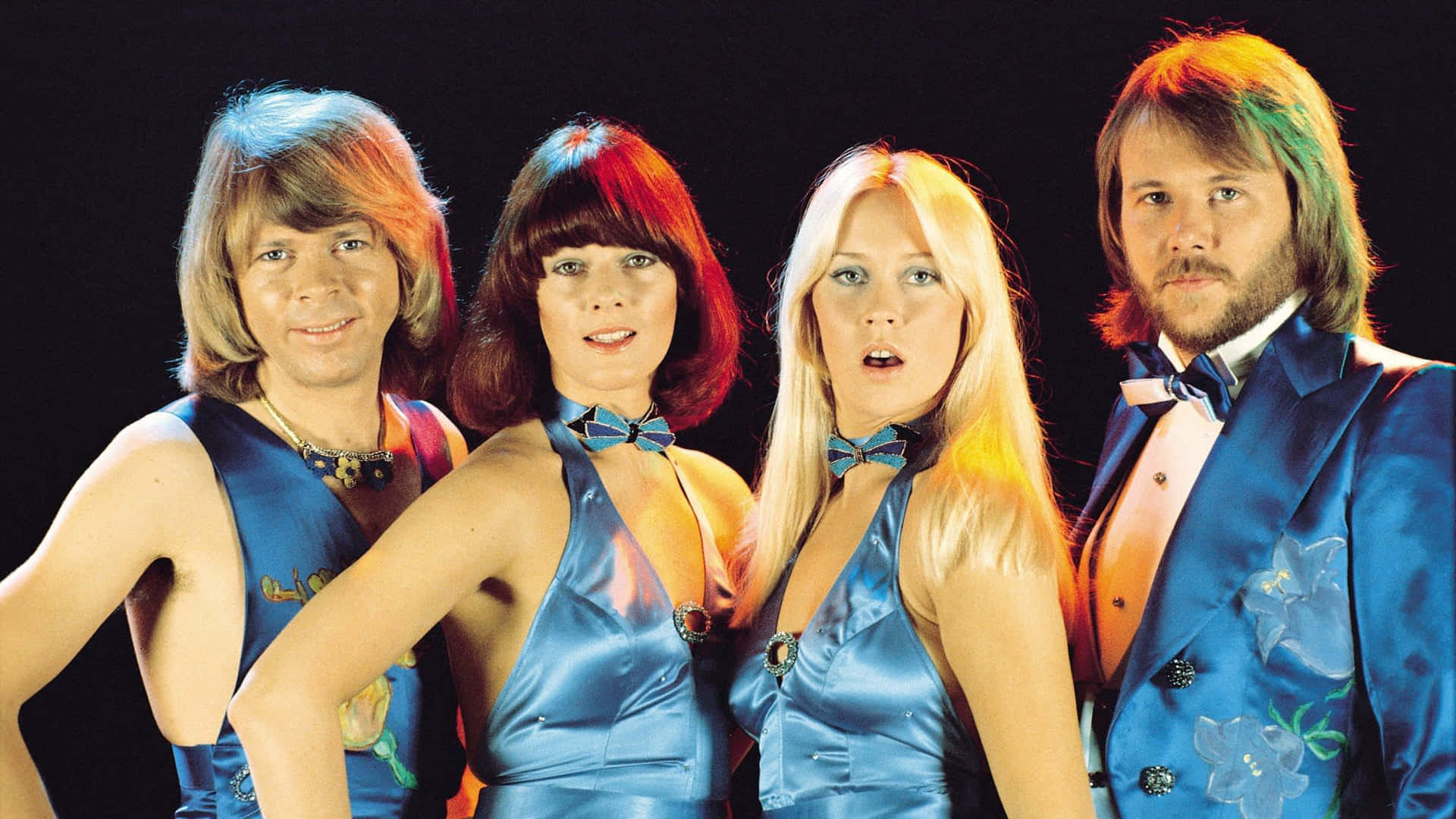
The four members of ABBA are Agnetha Fältskog (soprano lead vocalist), Björn Ulvaeus (rhythm guitarist, lyricist, and co-composer), Benny Andersson (chief composer, keyboardist, and arranger), and Anni-Frid "Frida" Lyngstad (mezzo-soprano lead vocalist). Their first initials form the acronym "ABBA," defining a balanced fourth-person musical partnership that dominated global pop music throughout the 1970s and early 1980s.
The Acronym and Formation: How ABBA Was Created
Before becoming one of the best-selling pop acts in music history, the four Swedish artists who formed ABBA were already established performers in their home country. During the late 1960s, each member pursued independent musical paths: Björn Ulvaeus was a singer and guitarist with the popular folk group Hootenanny Singers; Benny Andersson was the keyboardist for the top Swedish rock band Hep Stars; Agnetha Fältskog was a successful solo artist with multiple Swedish chart-topping singles; and Anni-Frid "Frida" Lyngstad was an acclaimed jazz cabaret singer and solo recording artist.
The four musicians first crossed paths in 1969 through various television appearances and music festival circuits. Romantic relationships quickly blossomed alongside creative ones: Björn married Agnetha in July 1971, while Benny and Frida began a long-term partnership, eventually marrying in October 1978.
Their initial collaborative performances were billed under the cumbersome title Björn & Benny, Agnetha & Frida. Under the guidance of their manager and record label owner, Stig Anderson, the group sought a punchier, international name. Anderson began referring to the group as "ABBA" in 1973, an acronym constructed from the first letters of their first names:
- A – Agnetha
- B – Björn
- B – Benny
- A – Anni-Frid
Because "Abba" was also the name of a well-known Swedish canned fish company (Abba Seafood), the group had to negotiate permission to use the name commercially. The food brand agreed, provided the pop group did not bring embarrassment to the brand. Following their landslide victory at the 1974 Eurovision Song Contest with the track "Waterloo," the name ABBA became globally recognized.
Agnetha Fältskog: The Emotional Soprano Voice
Background and Early Career
Born on April 5, 1950, in Jönköping, Sweden, Agnetha Åse Fältskog was a musical prodigy who began composing songs at the piano in her early childhood. Before joining ABBA, she achieved nationwide fame at age 17 with her self-penned debut single "Jag var så kär" ("I Was So In Love"), which topped the Swedish charts in 1968. She was an accomplished singer-songwriter, skilled pianist, and recording artist with several solo albums to her credit.
Musical Role and Vocal Characteristics
Agnetha served as ABBA’s high soprano lead vocalist. Her voice is characterized by a bright, crystal-clear timbre, extraordinary pitch precision, and a distinct emotional vulnerability. While both women shared lead vocal duties, Agnetha was frequently chosen to sing the group’s most emotionally intense, tragic, or introspective ballads.
In the studio, Agnetha worked closely with Frida to arrange complex vocal harmonies. Her ability to execute sharp, soaring melody lines gave ABBA's choruses their distinctive brilliance and punch. Beyond vocals, Agnetha contributed to the songwriting process in the group’s earliest days, composing the track "Disillusion" for their 1973 debut album Ring Ring—the only released ABBA track credited to her as a composer.
Signature Tracks and Key Contributions
- "The Winner Takes It All" (1980): Widely regarded as one of pop music’s finest vocal performances, Agnetha delivered a heartbreaking, one-take lead vocal that captured the painful aftermath of divorce.
- "SOS" (1975): Agnetha’s vulnerable verse delivery transitions into a powerful, driving chorus, creating a template for classic ABBA pop songwriting.
- "Chiquitita" (1979): Demonstrating her clear tone and dynamic range, her lead vocal anchored this international charity single for UNICEF.
- "Gimme! Gimme! Gimme! (A Man After Midnight)" (1979): Highlighted her ability to deliver urgent, rhythmic pop melodies over synth-driven disco arrangements.
- "The Day Before You Came" (1982): Featured a spoken-word style narrative vocal, widely praised for its subtle restraint and haunting atmosphere.
Björn Ulvaeus: The Lyricist, Guitarist, and Strategist
Background and Early Career
Born on April 25, 1945, in Gothenburg, Sweden, Björn Kristian Ulvaeus began his career in the early 1960s as part of the folk ensemble West Bay Singers, which later evolved into the Hootenanny Singers. The group became one of Sweden’s most popular acts, giving Björn extensive experience in acoustic arrangements, touring, and studio recording techniques.
Musical Role and Creative Contributions
Within ABBA, Björn filled multiple vital roles: primary lyricist, rhythm guitarist, co-composer, and occasional lead vocalist. While Benny Andersson focused heavily on musical composition and keyboard arrangements, Björn worked to craft precise, memorable, and rhythmically aligned English lyrics.
Because English was not his native language, Björn developed a unique lyric-writing style focused on strong rhythmic cadence, narrative storytelling, and universally relatable emotional themes. He frequently wrote phonetically to fit Benny’s pre-composed melodies, matching English syllable stress perfectly with musical accents. On stage and in the studio, his rhythm guitar playing—both acoustic and electric—provided the structural rock and folk foundation over which Benny’s keyboards and the female vocals hovered.
Signature Tracks and Vocal Leads
While Agnetha and Frida sang the vast majority of ABBA's lead vocals, Björn took lead vocals on several uptempo, rock-infused tracks:
- "Does Your Mother Know" (1979): ABBA’s most prominent male-led single, featuring Björn on lead vocals in a boogie-woogie pop-rock arrangement.
- "Rock Me" (1975): A hard-driving rock track showcasing Björn's grittier vocal register.
- "Why Did It Have to Be Me?" (1976): A duet with Frida highlighting Björn’s classic rock-and-roll influence.
- Co-writing Legacy: As a lyricist, he penned iconic narrative lines for tracks such as "Knowing Me, Knowing You," "Fernando," and "Super Trouper."
Benny Andersson: The Musical Composer and Arranger
Background and Early Career
Born on December 16, 1946, in Stockholm, Sweden, Göran Bror Benny Andersson grew up in a musical family immersed in Swedish folk music, learning the accordion at a young age before transitioning to piano. In 1964, he joined The Hep Stars, dubbed "The Swedish Beatles." As the keyboardist and main songwriter for The Hep Stars, Benny composed several top-charting singles and developed a deep mastery of pop hooks and keyboard technology.
Musical Role and Sound Architecture
Benny was the musical engine of ABBA. Serving as the primary composer, arranger, producer, and keyboardist, he brought a rich tapestry of influences to the group, blending European folk traditions, classical structures, theatrical music, and contemporary pop-rock.
Benny played a broad range of keyboard instruments, including the acoustic grand piano, Hammond organ, Mellotron, Fender Rhodes, and early polyphonic synthesizers like the Minimoog, Yamaha GX-1, and Polymoog. His signature melodic riffs—such as the shimmering piano opening of "Dancing Queen" or the synth motif of "Gimme! Gimme! Gimme!"—served as the structural hooks for ABBA’s biggest hits.
Working alongside sound engineer Michael B. Tretow at Metronome Studios and later Polar Studios in Stockholm, Benny pioneered complex studio recording techniques. He layered keyboards, acoustic instruments, and orchestral arrangements to construct a dense, multi-dimensional wall of sound.
Signature Contributions and Musical Achievements
- Melodic Hooks: Composed iconic keyboard melodies for "Mamma Mia," "Dancing Queen," and "Money, Money, Money."
- Harmonic Complexity: Introduced sophisticated key changes, counter-melodies, and modal shifts into standard pop structures.
- Vocal Backing: Provided backing vocals and harmonic counterpoints alongside Björn to reinforce the vocal mix.
Anni-Frid "Frida" Lyngstad: The Dramatic Mezzo-Soprano
Background and Early Career
Born on November 15, 1945, in Bjørkåsen, Norway, Anni-Frid Synni Lyngstad grew up in Sweden. She began performing professionally at age 13 as a dance band singer, spending over a decade mastering jazz standards, cabaret, pop, and big band repertoire. In 1967, she won a major national talent competition (Nya Ansikten), which led to a recording contract with EMI and regular appearances on Swedish television.
Musical Role and Vocal Characteristics
Frida served as ABBA’s lead mezzo-soprano vocalist. Her vocal profile is defined by a warm, rich, and velvety lower and mid-register, combined with explosive vocal power and dramatic theatrical expression. Her extensive background in jazz and cabaret gave her exceptional control over phrasing, dynamic shifts, and vocal ornamentation.
Where Agnetha’s voice provided soaring top-end clarity, Frida’s mezzo-soprano grounded ABBA’s vocal arrangements with depth, warmth, and body. When the two women sang in unison or octave intervals, their contrasting timbres blended to create what sound engineers often referred to as a unique "third voice"—a rich, shimmering vocal blend that became ABBA's hallmark. On stage, Frida was known for her vibrant dance energy and striking fashion sense.
Signature Tracks and Key Contributions
- "Fernando" (1976): Frida’s warm, atmospheric lead vocal turned this ballad into one of the best-selling singles of all time, selling over 10 million copies worldwide.
- "Knowing Me, Knowing You" (1977): Showcase of Frida’s dramatic vocal storytelling, navigating mature themes of breakup and separation.
- "Dancing Queen" (1976): Shared dual lead vocals with Agnetha, creating one of the most famous pop vocal tracks in history.
- "Super Trouper" (1980): Frida’s rhythmic, precise lead vocals drove this worldwide number-one single.
- "Money, Money, Money" (1976): Displayed her cabaret roots through dramatic phrasing, theatrical timing, and expressive dynamics.
Detailed Comparison of ABBA Members
The following table summarizes the primary individual contributions, vocal classifications, signature instruments, and key tracks associated with each member of the group:
| Member Name | Full Name | Vocal Role & Type | Primary Instruments | Core Responsibilities | Signature Lead Tracks |
|---|---|---|---|---|---|
| Agnetha Fältskog | Agnetha Åse Fältskog | Soprano Lead Vocalist | Piano, Vocals | Lead vocals, vocal arrangement co-creation | "The Winner Takes It All," "SOS," "Chiquitita," "Gimme! Gimme! Gimme!" |
| Björn Ulvaeus | Björn Kristian Ulvaeus | Tenor / Baritone (Backing & Occasional Lead) | Acoustic & Electric Guitars | Primary lyricist, rhythm guitar, co-composer, concept strategy | "Does Your Mother Know," "Rock Me," "Why Did It Have to Be Me?" |
| Benny Andersson | Göran Bror Benny Andersson | Baritone (Backing Vocals) | Piano, Synthesizers, Organ, Accordion | Chief composer, keyboardist, musical arranger, producer | "Dancing Queen" (Riff), "Mamma Mia" (Riff), "Gimme! Gimme! Gimme!" (Synth Hook) |
| Anni-Frid Lyngstad | Anni-Frid Synni Lyngstad | Mezzo-Soprano Lead Vocalist | Vocals, Percussion | Lead vocals, vocal harmonizing, dance/stage choreography | "Fernando," "Knowing Me, Knowing You," "Super Trouper," "Money, Money, Money" |
Vocal Harmony Dynamics: Crafting the "ABBA Sound"
The global success of ABBA relied heavily on a specialized division of labor that combined songwriting skill with studio engineering. Understanding how these four individual roles interacted reveals why their music resonated across international markets.
- THE ABBA SOUND
- COMPOSITION & LYRICS
- Benny (Melody/Keys)
- Björn (Lyrics/Guitar)
- VOCAL LEAD & HARMONY
- Agnetha (Soprano)
- Frida (Mezzo)
- PRODUCTION
- M. Tretow
- Wall of Sound
- COMPOSITION & LYRICS
1. The Dual Female Vocal Blend
Unlike many pop groups that feature a single lead singer backed by session vocalists, ABBA structured their sound around two distinct lead singers. Agnetha and Frida frequently sang key melody lines together in tight unison or octave intervals.
Because Agnetha’s soprano contained high harmonic brightness and Frida’s mezzo contained deep chest resonances, their combined voices produced a full, rich texture that sounded like a much larger vocal ensemble. When split into harmonies, Agnetha naturally took the upper register thirds and fifths, while Frida took the lower harmony lines, creating a wide stereo picture.
2. Studio Multi-Tracking Techniques
Under the guidance of Benny, Björn, and engineer Michael B. Tretow, ABBA embraced multi-track vocal overdubbing. Agnetha and Frida would record their lead and harmony parts multiple times onto separate tape tracks.
Tretow would then double-track or triple-track these vocals, occasionally altering tape speeds slightly to introduce subtle phase shifts and detuning. This created a chorus effect that amplified the power of the vocals without sacrificing emotional clarity.
3. Musical Contrast: Joyful Melodies with Melancholic Lyrics
A defining characteristic of ABBA’s repertoire is the juxtaposition of buoyant, upbeat musical arrangements with bittersweet or mournful lyricism. While Benny composed driving, euphoric melodies in major keys, Björn’s lyrics often explored themes of heartbreak, nostalgia, aging, and romantic breakup. This emotional tension elevated songs like "Mamma Mia," "Knowing Me, Knowing You," and "Dancing Queen" beyond simple pop tunes.
Career Stages and Evolving Roles
ABBA’s career evolved through distinct stylistic periods marked by changing personal dynamics and musical maturity.
- 1972–1974: Glam Pop / Eurovision
- "Waterloo"
- Folk-rock influences
- 1975–1978: Global Superstardom
- "Dancing Queen"
- "Fernando"
- 1979–1981: Mature Melancholy
- "The Winner Takes..."
- Synthesizer dominance
- 2021–Present: Digital Resurrection
- "Voyage" Album
- Digital ABBAtars
Eurovision and Glam Pop (1972–1974)
In their early phase, the group experimented with various styles, including glam rock, pop, and schlager music. Björn and Benny shared vocal duties more frequently with Agnetha and Frida during this period. The triumph of "Waterloo" at Eurovision in 1974 launched them into international markets, though they fought hard to prove they were not a one-hit wonder.
Global Superstardom (1975–1978)
With the release of self-titled album ABBA (1975), Arrival (1976), and ABBA: The Album (1977), the group refined their core sound. Benny and Björn delegated almost all primary lead vocal duties to Agnetha and Frida, focusing their own energies on pristine studio production, worldwide touring, and songwriting. This era produced signature global hits including "Mamma Mia," "Dancing Queen," "Money, Money, Money," and "Fernando."
Mature Composition and Studio Introspection (1979–1982)
As personal relationships within the group shifted—marked by the divorce of Björn and Agnetha in 1979, followed by Benny and Frida in 1981—the group stopped touring live and focused exclusively on Polar Studios.
The songwriting on Voulez-Vous (1979), Super Trouper (1980), and The Visitors (1981) turned noticeably darker, more complex, and heavily synth-driven. Synthesizers replaced rhythm guitars as the main backing instrument, and lyrics tackled political tension, isolation, and emotional loss.
Post-Breakup Eras, Mamma Mia!, and the Voyage Era
Following an unannounced hiatus in late 1982, the four members pursued independent artistic careers for nearly four decades:
- Benny Andersson and Björn Ulvaeus continued their songwriting partnership, achieving major critical acclaim in musical theater. They composed the hit stage musicals Chess (1984, featuring lyrics by Tim Rice) and the Swedish epic Kristina från Duvemåla (1995). In the late 1990s, they developed Mamma Mia!, a jukebox musical based on ABBA’s catalog. Premiering in London in 1999, the show became an international phenomenon, inspiring two blockbuster feature films (2008 and 2018).
- Anni-Frid Lyngstad relocated to Switzerland and launched an international solo career, releasing albums such as Something's Going On (1982), produced by Phil Collins, and Shine (1984), produced by Steve Lillywhite, before retiring from full-time recording.
- Agnetha Fältskog maintained a successful solo career, releasing several English-language solo albums in the 1980s (Wrap Your Arms Around Me, Eyes of a Woman) and returning to the charts in later decades with albums such as My Colouring Book (2004) and A (2013, re-released as A+ in 2023).
Voyage and Digital Avatars
In November 2021, ABBA achieved one of the most significant comebacks in pop history by releasing Voyage, their ninth studio album and their first new material in 39 years. Recorded at Benny’s Riksmixningsverket studio in Stockholm, the album retained the classic roles: Benny composing and playing keyboards, Björn writing lyrics, and Agnetha and Frida leading on vocals. The album earned multiple Grammy nominations and topped charts worldwide.
Alongside the album, the group launched ABBA Voyage, a concert residency held in a custom-built arena in London. The show features digital avatars ("ABBAtars") depicting the four members as they appeared in 1979. Created by Industrial Light & Magic using motion-capture performance from all four members, the production combines digital animation with a live 10-piece band, allowing audiences to experience ABBA’s classic performance dynamic in a state-of-the-art live environment.
Frequently Asked Questions
Who were the lead singers in ABBA?
Agnetha Fältskog and Anni-Frid "Frida" Lyngstad were the two primary lead vocalists in ABBA. While all four members contributed vocals, Agnetha (soprano) and Frida (mezzo-soprano) sang lead on almost all of the group's single releases, often singing together in tight harmonies or shared dual leads.
What does the acronym ABBA stand for?
ABBA is an acronym composed of the first letters of each member's first name: Agnetha Fältskog, Björn Ulvaeus, Benny Andersson, and Anni-Frid Lyngstad.
Who wrote the songs for ABBA?
The music for ABBA was composed primarily by Benny Andersson, while the lyrics were written primarily by Björn Ulvaeus. In the group’s early years, their manager Stig Anderson also co-wrote lyrics for several hits, including "Waterloo" and "Mamma Mia."
Were the members of ABBA married to each other?
Yes, the group comprised two married couples during their peak years. Björn Ulvaeus and Agnetha Fältskog married in 1971 and divorced in 1980. Benny Andersson and Anni-Frid Lyngstad married in 1978 and divorced in 1981.
Did Björn or Benny ever sing lead vocals on ABBA songs?
Yes, Björn Ulvaeus sang lead vocals on several tracks, most notably "Does Your Mother Know," "Rock Me," and "Why Did It Have to Be Me?". Benny Andersson rarely sang standalone lead vocals on ABBA studio albums, preferring to focus on backing vocals, musical arrangement, and composition.
What made the vocal blend between Agnetha and Frida so unique?
The combination of Agnetha’s soaring, bright soprano and Frida’s warm, rich mezzo-soprano created a distinct vocal contrast. When double-tracked in unison or tight harmonies in the studio, their voices fused into a lush, layered sound that became the signature vocal fingerprint of ABBA.
Recommended Next Actions for Listeners and Music Historians
To explore the distinct roles and musical contributions of each ABBA member, consider these recommended listening paths:
- Vocal Contrast Exploration: Listen to "The Winner Takes It All" (Agnetha lead) back-to-back with "Fernando" (Frida lead) to analyze the stylistic and tonal differences between the soprano and mezzo-soprano leads.
- Harmonic Synergy Study: Analyze tracks like "Dancing Queen," "Take a Chance on Me," and "Super Trouper" with headphones to hear how Benny and Björn’s backing arrangements support the multi-tracked female vocal harmonies.
- Evolutionary Listening: Compare early tracks like "Waterloo" (1974) with late-career tracks like "The Day Before You Came" (1982) and "Don't Shut Me Down" (2021) to observe how the songwriting roles mature from simple glam pop to complex pop arrangements.