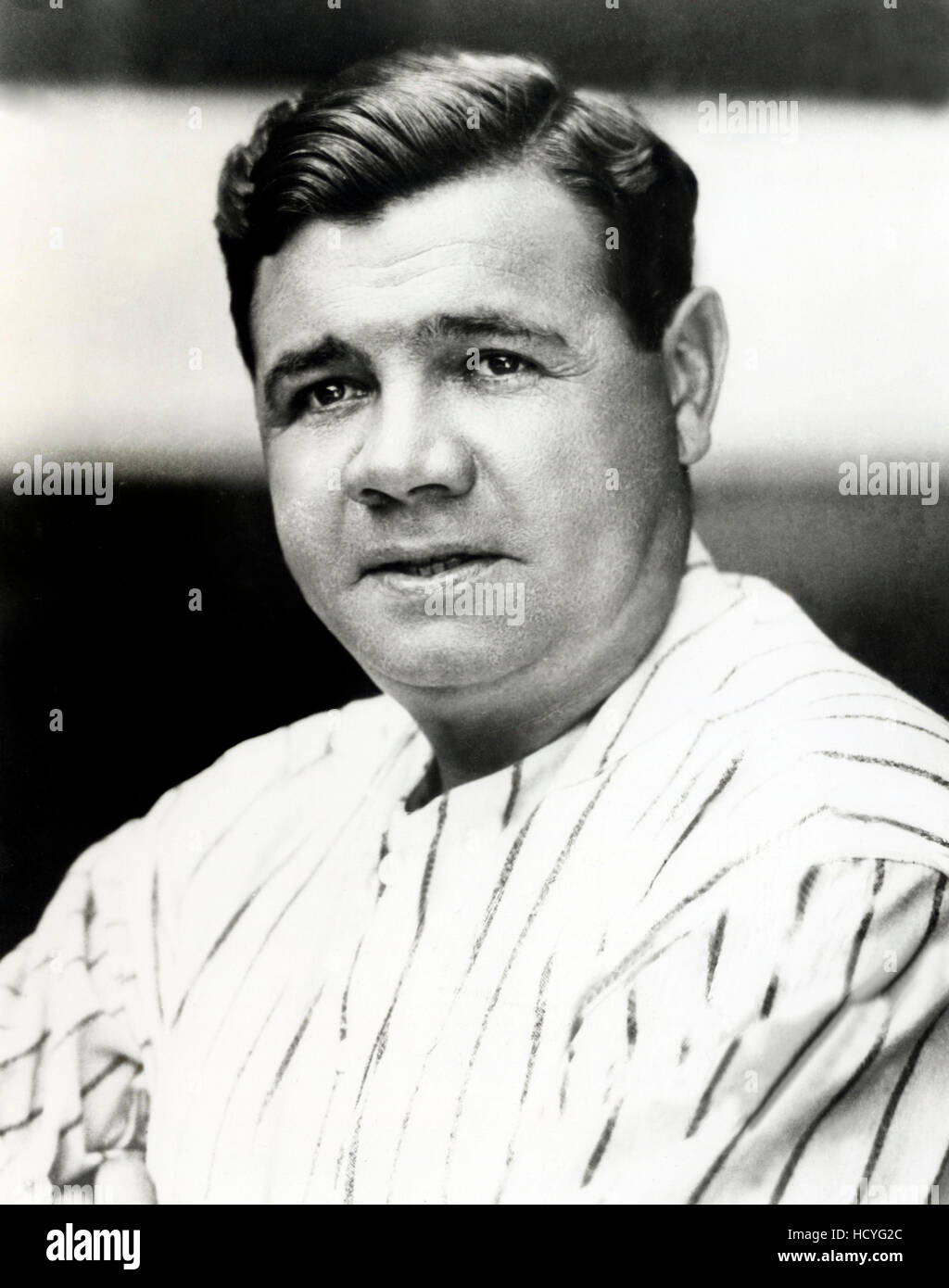
Babe Ruth’s baseball salary evolved from modest minor-league earnings to a historic peak of $80,000 per year during the Great Depression, making him the highest-paid player of his era and famously prompting him to remark that he had "a better year than President Hoover."
Introduction to Babe Ruth’s Financial Legacy
The financial career of George Herman "Babe" Ruth Jr. represents one of the most fascinating economic studies in sports history. Long before modern athletes signed guaranteed contracts worth hundreds of millions of dollars, Ruth operated in an era governed by the reserve clause, which bound a player to a single team indefinitely unless they were traded or sold. Despite these severe systemic limitations on player mobility and bargaining power, Ruth completely transformed the economic landscape of Major League Baseball (MLB).
Understanding Babe Ruth’s salary requires examining not only the raw numbers on his various contracts with the Boston Red Sox and the New York Yankees, but also the broader macroeconomic context of the 1920s and 1930s. His earnings spanned the Roaring Twenties—a period of immense economic expansion—and extended straight into the harrowing depths of the Great Depression. By charting his financial trajectory, modern observers can appreciate how a single transcendent athletic talent completely redefined the value of sports entertainment and laid the structural foundation for modern sports economics.
The Early Years: Minor Leagues and Boston Red Sox (1914–1919)
Babe Ruth entered professional baseball as a teenager out of St. Mary’s Industrial School for Boys in Baltimore, Maryland. His professional journey began in early 1914 when he signed with the minor league Baltimore Orioles of the International League.
The Baltimore Orioles and Minor League Beginnings
Ruth's initial professional contract with the Orioles carried a salary of approximately $600 per year, though contemporary accounts and historical ledgers vary slightly on the exact monthly breakdown, often cited as roughly $250 a month for the brief duration of the season. His tenure in Baltimore was short-lived. Due to severe financial strain, the owner of the Orioles, Jack Dunn, was forced to sell his star young pitcher to the Boston Red Sox later that same year.
Establishing Value in Boston
Upon joining the Boston Red Sox in July 1914, Ruth’s salary increased, though it remained modest by major league standards. His early major league contracts reflected standard rookie compensation structures of the era:
- 1914–1915: Earning roughly $2,000 to $2,500 per season, Ruth established himself primarily as a dominant left-handed starting pitcher.
- 1916–1917: As his performance on the mound reached elite status—featuring multiple 20-win seasons and stellar earned run averages—his salary climbed toward the $3,500 to $5,000 range.
- 1918–1919: Transitioning increasingly from a full-time pitcher to an everyday outfielder and power hitter, Ruth leveraged his offensive output to command a salary of $10,000 by the 1919 season, which was among the highest on the Red Sox roster at the time.
The New York Yankees Era and Peak Earnings (1920–1934)
The trajectory of Ruth's financial life shifted permanently in January 1920 when Boston Red Sox owner Harry Frazee sold Ruth’s contract to the New York Yankees for $125,000, alongside a personal loan of $300,000 secured against Fenway Park. This transaction birthed the legend of the "Curse of the Bambino," but more immediately, it placed Ruth in the media and financial capital of the United States.
| Year(s) | Annual Salary | Key Context & Milestones |
|---|---|---|
| 1920–1921 | $20,000 | First Yankees contracts; single-season home run records |
| 1922–1925 | $52,000 | Multi-year deal making him highest-paid player |
| 1927–1929 | $70,000 | 60-home-run season; peak of the Roaring Twenties |
| 1930–1931 | $80,000 | All-time peak salary during the Great Depression |
| 1932–1933 | $75,000 | Salary cuts reflecting economic downturn |
| 1934 | $35,000 | Final year with Yankees prior to Boston move |
The $80,000 Peak and the Hoover Quip
Entering the 1930 season, amidst the economic collapse that followed the 1929 stock market crash, Ruth famously negotiated a contract worth $80,000 per year for the 1930 and 1931 seasons. When Yankees General Manager Ed Barrow pointed out that this salary was higher than that of President Herbert Hoover—who earned $75,000 annually—Ruth delivered his famous retort: "I know, but I had a better year than he did."
While the quote is a cornerstone of baseball lore, it accurately highlights Ruth's unique economic position. He was not merely an employee of a baseball club; he was a primary driver of gate receipts, stadium construction (the original Yankee Stadium was widely dubbed "The House That Ruth Built"), and national sports culture.
Endorsements, Barnstorming, and Ancillary Income
While Babe Ruth's baseball salary made him extraordinarily wealthy by the standards of the 1920s and 1930s, his official club salary represented only a fraction of his total annual income. Ruth was the first modern sports celebrity to capitalize heavily on commercial endorsements, media appearances, and off-season barnstorming tours.
Commercial Endorsements and Licensing
Ruth lent his name and likeness to an array of consumer products, setting a template that modern athletes follow today. His endorsement portfolio included:
- Louisville Slugger: His signature bat endorsement was one of the most lucrative manufacturing deals in sports history, with Ruth receiving royalties for every bat sold bearing his name.
- Food and Beverage: Ruth endorsed breakfast cereals, soft drinks, and confectioneries, most famously inspiring the creation of the "Baby Ruth" candy bar (though corporate legal battles regarding the naming rights meant Ruth saw limited direct royalties from the candy's massive commercial success).
- Apparel and Tobacco: Endorsements for men's clothing, shoes, and tobacco products further padded his annual earnings, frequently doubling or tripling his official baseball salary in peak years.
Barnstorming Tours
During the off-season, baseball players were not paid by their clubs, prompting stars to travel the country playing exhibition games. Ruth formed barnstorming troupes alongside teammate Lou Gehrig and other baseball luminaries. These tours drew massive crowds across small towns and major cities alike, generating tens of thousands of dollars in cash payouts that often rivaled his entire annual salary from the Yankees.
Financial Management and Later Years with the Boston Braves
Despite earning an estimated lifetime baseball salary in excess of $1 million—an astronomical sum during the interwar period—Babe Ruth’s financial journey concluded with notable challenges regarding wealth preservation and post-playing career income.
The Move to Boston and the Final Season (1935)
By 1934, Ruth’s physical skills were in decline, and the Yankees sought to part ways with aging talent. In February 1935, he was traded to the Boston Braves, where team owner Emil Fuchs dangled the promise of a managerial position and a stake in the club's ownership. Ruth signed for a salary of $25,000 for the 1935 season.
However, the promised ownership stake and managerial role never materialized as the Braves struggled financially and on the field. Ruth played in only 28 games for Boston—highlighted by his final three career home runs on May 18, 1935, at Forbes Field against the Pittsburgh Pirates—before retiring in June 1935.
Investment Strategies and Inflation Context
Ruth’s financial portfolio was managed largely through a series of annuities and real estate investments orchestrated by his business manager, Christy Walsh. While these annuities provided a stable baseline of income during his retirement years—protecting him from total destitution—inflation, changing economic conditions, and high-profile lifestyle expenses significantly eroded his accumulated capital over time. Unlike modern athletes who benefit from sophisticated wealth management, trusts, and multi-million-dollar post-retirement media contracts, Ruth operated in an era without financial safety nets for retired ballplayers.
Frequently Asked Questions
What was Babe Ruth’s highest single-season baseball salary?
Babe Ruth’s highest single-season salary was $80,000, which he earned during both the 1930 and 1931 Major League Baseball seasons with the New York Yankees.
How does Babe Ruth's salary compare to modern MLB salaries?
In nominal terms, Ruth’s peak salary of $80,000 appears minuscule compared to modern players who earn tens of millions annually. However, adjusted for inflation, $80,000 in 1930 has the purchasing power equivalent to roughly $1.4 million to $1.5 million today. Furthermore, relative to the average American wage of his era—which was under $1,500 per year—Ruth earned over 50 times the average worker's salary, a ratio surpassed by only a few modern sports superstars.
Did Babe Ruth make money from sources other than his Yankees salary?
Yes. Ruth generated substantial additional income through commercial endorsements, product licensing, newspaper writing syndicates, and extensive off-season barnstorming tours, often doubling his official baseball salary in a given year.
Why was Babe Ruth’s salary higher than the President of the United States?
Ruth’s salary exceeded the President's salary because the New York Yankees operated as a highly profitable private enterprise that directly profited from Ruth's unmatched box-office appeal. Yankee Stadium was built to accommodate the massive crowds Ruth drew, making his economic value to the franchise vastly greater than standard government compensation scales.
Did Babe Ruth lose his fortune later in life?
While Ruth did not die in poverty, his wealth was significantly diminished compared to his peak earning years. Failed business ventures, high living expenses, and the economic shocks of the Great Depression reduced his liquid capital, though his investments in annuities provided financial stability until his death in 1948.
Conclusion and Historical Context
Analyzing Babe Ruth’s salary provides a clear window into the intersection of sports, economics, and media in early 20th-century America. By shattering financial ceilings and proving that a single athlete could generate millions of dollars in economic activity, Ruth established the modern template for athlete compensation and market valuation. While contemporary financial structures bear little resemblance to those of the 1920s, the foundational principle—that extraordinary athletic achievement combined with mass-market appeal commands premium economic value—remains a direct legacy of the Babe.