The 2020 NBA season was the most unconventional and challenging year in the history of professional basketball. Defined by a four-month hiatus due to the COVID-19 pandemic and a historic "Bubble" restart at Walt Disney World, the season concluded with the Los Angeles Lakers winning their 17th championship.
Looking back from 2026, the 2019-2020 campaign remains a case study in organizational resilience and the intersection of professional sports with global health and social justice. What began as a standard season of high-stakes transitions—highlighted by Kawhi Leonard joining the Clippers and Anthony Davis joining the Lakers—evolved into a transformative era that permanently altered how the league operates, from the introduction of the Play-In Tournament to the heightening of player activism.
The Pre-Pandemic Landscape and the Loss of Kobe Bryant
The 2019-2020 season began with a seismic shift in the league's power balance. The Golden State Warriors' dynasty had paused following injuries to Kevin Durant and Klay Thompson, leading to a "wide-open" NBA. The focus shifted toward Los Angeles, where both the Lakers and Clippers had successfully paired superstars to create title contenders.
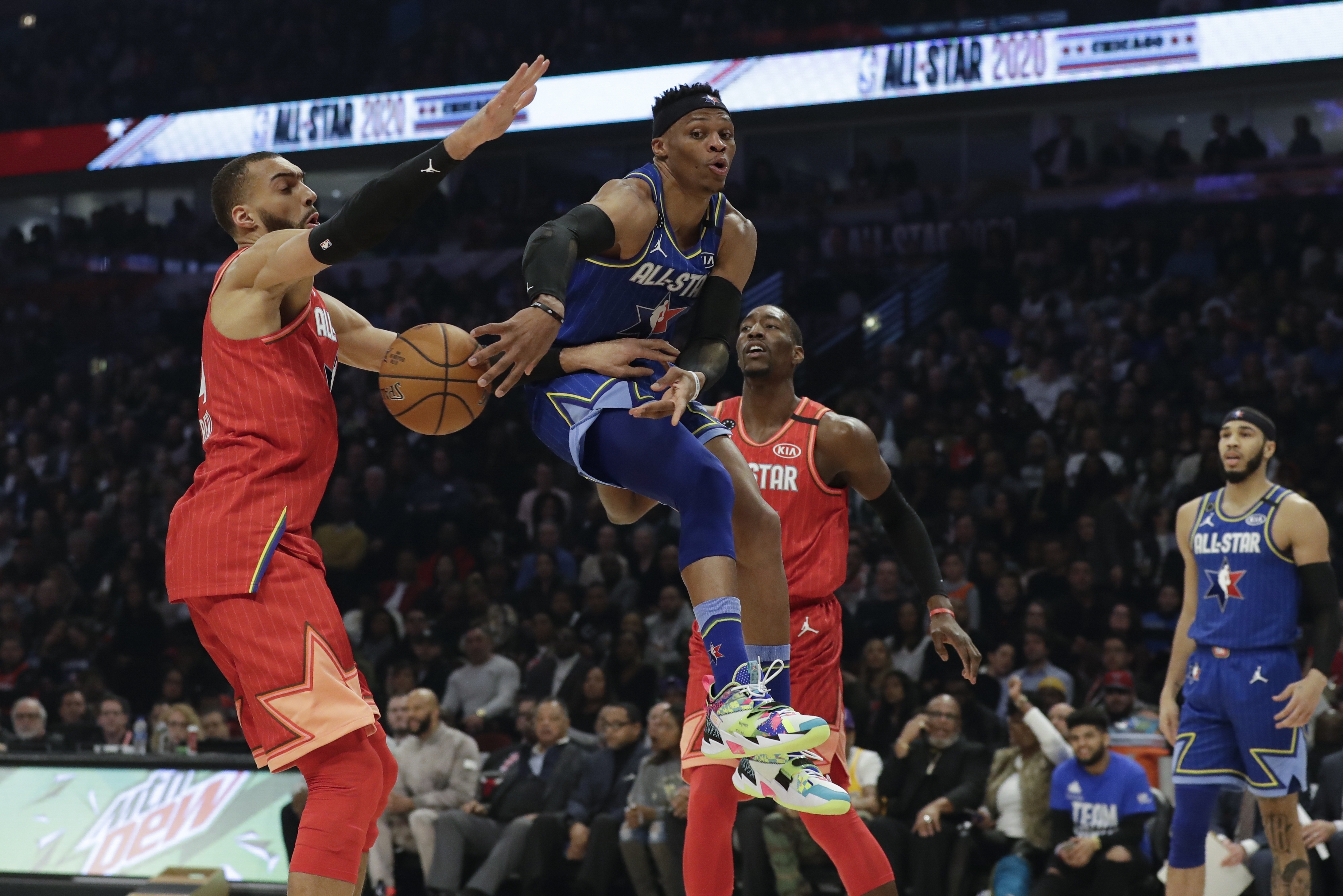
However, the basketball world was shattered on January 26, 2020, when NBA legend Kobe Bryant, his daughter Gianna, and seven others died in a helicopter crash in Calabasas, California. The tragedy cast a long shadow over the season, particularly for the Lakers organization. The "Mamba Mentality" became a rallying cry for the league, and the All-Star Game in Chicago was subsequently redesigned to honor Bryant, introducing a target-score format that is still discussed as one of the most competitive iterations of the event.
March 11, 2020: The Night the Sports World Stopped
The 2020 NBA season is inextricably linked to the onset of the COVID-19 pandemic. On the evening of March 11, 2020, a game between the Utah Jazz and the Oklahoma City Thunder was abruptly postponed seconds before tip-off. It was revealed that Jazz center Rudy Gobert had tested positive for the virus, making him the first high-profile athlete in North American sports to do so.
Within hours, Commissioner Adam Silver announced that the NBA would suspend its season indefinitely. This decision triggered a domino effect across the globe, leading to the suspension of the NHL, MLB, MLS, and eventually the postponement of the 2020 Summer Olympics. For 141 days, the NBA remained in a state of uncertainty as the league office worked with infectious disease experts, the Players Association (NBPA), and government officials to determine if and how the season could safely resume.
The NBA Bubble: A $190 Million Technical Achievement
In July 2020, the NBA executed one of the most ambitious logistical feats in sports history: the NBA Campus at Walt Disney World Resort in Orlando, Florida, commonly known as "The Bubble."
The league invited 22 teams—the 16 teams in playoff positions and the six teams within six games of a seed—to live, practice, and play in an isolated environment. The goal was to create a "clean zone" where the virus could not penetrate. The technical and medical specifications were rigorous:
- Daily Testing: Players and staff underwent daily PCR testing for COVID-19.
- Quarantine Protocols: Anyone entering the campus had to undergo a strict multi-day quarantine.
- The "Magic" Band: Wearable technology was used to facilitate contact tracing and building access.
- No Fans: Games were played in three arenas (The Arena, HP Field House, and Visa Athletic Center) with no physical spectators. Instead, the NBA utilized "Virtual Fans" displayed on massive LED screens surrounding the court.
The financial investment was significant. Reports indicated that the NBA spent roughly $190 million to operate the Bubble. The result was a resounding success for public health: during the entire three-month duration of the Bubble, there were zero positive COVID-19 cases among the players and staff who remained on campus.
Social Justice and the 2020 Player Strike
The 2020 NBA season did not exist in a vacuum. The summer of 2020 saw widespread protests across the United States following the deaths of George Floyd and Breonna Taylor. Within the Bubble, the NBA and the NBPA agreed to make social justice a central theme of the restart. The courts were painted with "Black Lives Matter," and players were permitted to wear approved social justice messages on the backs of their jerseys.
The tension reached a breaking point on August 26, 2020, following the police shooting of Jacob Blake in Kenosha, Wisconsin. The Milwaukee Bucks chose to boycott their playoff game against the Orlando Magic, leading to a three-day league-wide strike. This was a pivotal moment in sports history, as players debated whether to cancel the remainder of the season to focus on community activism. After high-level negotiations—which included consultations with former President Barack Obama—the players agreed to resume the season after the league committed to forming a social justice coalition and converting NBA arenas into voting centers for the 2020 election.
Playoff Breakdown and the Lakers' Championship Run
When play resumed, several teams emerged as "Bubble Favorites." The Phoenix Suns, led by Devin Booker, went a perfect 8-0 in the "Seeding Games" but narrowly missed the playoffs. The Miami Heat, led by Jimmy Butler and Bam Adebayo, emerged as the ultimate "Bubble Team," using their intense conditioning and culture to upset the top-seeded Milwaukee Bucks and the Boston Celtics to reach the Finals.
In the Western Conference, the Los Angeles Lakers proved to be the most dominant force. LeBron James and Anthony Davis dismantled the Portland Trail Blazers, Houston Rockets, and Denver Nuggets to secure their spot in the Finals.
2020 NBA Finals: Lakers vs. Heat
The Finals were a grueling six-game series. Jimmy Butler delivered two of the greatest individual performances in Finals history (Game 3 and Game 5), recording 40-point and 35-point triple-doubles to keep Miami alive. However, the Lakers' size and the combined excellence of James and Davis were too much to overcome.
On October 11, 2020, the Lakers won Game 6 with a 106-93 victory. LeBron James was named Finals MVP, becoming the first player in NBA history to win the award with three different franchises (Heat, Cavaliers, and Lakers).
| Category | Winner/Leader | Statistic/Note |
|---|---|---|
| NBA Champion | Los Angeles Lakers | 4-2 Series victory over Miami |
| Finals MVP | LeBron James | 29.8 PPG, 11.8 RPG, 8.5 APG (Finals) |
| Regular Season MVP | Giannis Antetokounmpo | Second consecutive MVP award |
| Defensive Player of the Year | Giannis Antetokounmpo | Joined Jordan/Olajuwon for MVP/DPOY same year |
| Rookie of the Year | Ja Morant | Memphis Grizzlies |
| Sixth Man of the Year | Montrezl Harrell | LA Clippers |
| Most Improved Player | Brandon Ingram | New Orleans Pelicans |
| Scoring Leader | James Harden | 34.3 Points Per Game |
The Legacy of the 2020 Season
As we evaluate the 2020 season from the vantage point of 2026, several lasting impacts are evident.
The Birth of the Play-In Tournament
To accommodate the shortened season and the 22-team format, the NBA introduced a "Play-In" game between the 8th and 9th seeds in the Bubble. This concept proved so popular and effective at discouraging "tanking" that it was eventually refined and adopted as a permanent fixture of the NBA postseason.
The "Asterisk" Debate
For years, critics argued that the 2020 title deserved an "asterisk" because there were no crowds and no travel. However, players from that era, including LeBron James and Damian Lillard, have frequently stated that the 2020 championship was actually the hardest to win due to the mental toll of isolation and the lack of home-court advantage. The "pure basketball" environment of the Bubble stripped away distractions, leaving only the best teams to compete.
Financial and Operational Shifts
The 2020 season cost the NBA billions in lost gate revenue, but it accelerated the league's digital transformation. The success of virtual fans and enhanced audio-visual broadcasts changed how the NBA approaches international viewership, making the league less dependent on physical attendance for its global brand.
Frequently Asked Questions
Did every team play in the 2020 NBA Bubble?
No. Only 22 of the 30 NBA teams were invited to the Orlando Bubble. The eight teams with the worst records at the time of the March 11 shutdown—the Golden State Warriors, Cleveland Cavaliers, Minnesota Timberwolves, Atlanta Hawks, Detroit Pistons, New York Knicks, Chicago Bulls, and Charlotte Hornets—were excluded from the restart. These teams were often referred to as the "Delete Eight."
How many games were played in the 2019-20 regular season?
Due to the pandemic, teams played a varying number of games, generally between 63 and 75. For the 22 teams in the Bubble, the NBA scheduled eight "Seeding Games" to determine final playoff positioning before the standard 16-team playoff bracket began.
Who was the breakout star of the 2020 Bubble?
While Jimmy Butler's stock rose significantly, the most surprising individual performance came from T.J. Warren of the Indiana Pacers. Warren averaged 31 points per game during the seeding round, including a 53-point outburst against the Philadelphia 76ers. Additionally, Devin Booker solidified his superstar status by leading the Suns to an undefeated record in Orlando.
How did the NBA handle the draft and free agency in 2020?
Because the season ended in October rather than June, the entire NBA calendar was shifted. The 2020 NBA Draft took place virtually on November 18, 2020, where Anthony Edwards was selected first overall by the Minnesota Timberwolves. Free agency began just days later, and the 2020-2021 season started on December 22, 2020, to ensure the league could play a Christmas Day schedule.
Was the 2020 NBA season shortened?
Yes, the regular season was shortened from the standard 82 games to roughly 71-75 games depending on the team. However, the playoffs remained a full four-round, best-of-seven format. The total duration of the season, from October 2019 to October 2020, made it the longest season in terms of calendar days in NBA history.
Practical Recommendation for Historians and Fans
For those looking to research the technical specifics or the cultural impact of this era, the most authoritative resource is the NBA's official archive for the 2019-20 season. Additionally, for a deep dive into the logistics of the Orlando campus, the National Basketball Players Association (NBPA) released several reports regarding player wellness and the safety protocols that allowed the season to conclude. Understanding the 2020 season is essential for anyone analyzing the modern NBA's salary cap fluctuations and the evolution of the current CBA (Collective Bargaining Agreement).