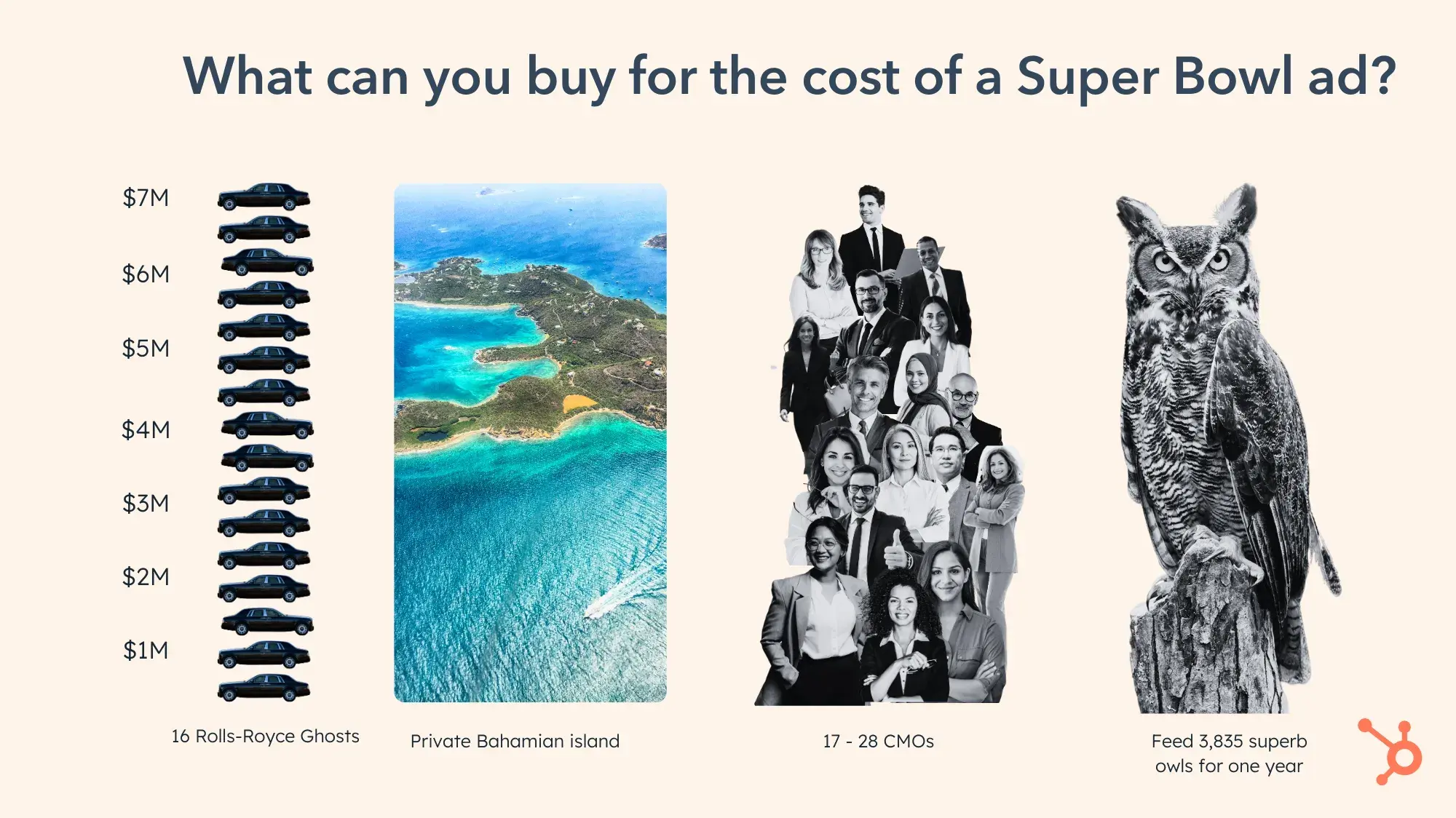
For the 2019 Super Bowl (Super Bowl LIII), the average cost for a 30-second commercial was approximately $5.2 million. This base rate, set by the broadcasting network CBS, represented a significant milestone in sports marketing, reflecting the immense value of reaching nearly 100 million viewers simultaneously in an increasingly fragmented media landscape.
The Benchmark Rate for Super Bowl LIII
When analyzing the 2019 Super Bowl commercial cost, it is essential to distinguish between the "sticker price" of the airtime and the comprehensive investment required to execute a successful campaign. CBS, the official broadcaster for the matchup between the New England Patriots and the Los Angeles Rams, initially set the asking price for a 30-second spot at a range of $5.1 million to $5.3 million. By the time the game kicked off on February 3, 2019, most inventory had been sold at an average of $5.2 million per 30-second unit.
This price point was a continuation of the steady upward trajectory of Super Bowl advertising costs. For comparison, the 2018 game on NBC saw average costs of $5.24 million, meaning 2019 remained relatively stable year-over-year. However, the stability in pricing did not indicate a cooling of interest; rather, it reflected a market that was recalibrating how it valued traditional television reach versus digital integration.
CBS reported that the game was nearly sold out by the end of 2018, with the final few spots fetching premiums or being bundled into larger corporate packages. The network's ability to command such high fees is rooted in the "Event TV" phenomenon—the Super Bowl remains one of the few televised events where viewers actively seek out and discuss the advertisements.
The Hidden Variables: What Did Ads "Really" Cost?
The $5.2 million figure only accounts for the media buy—the right to air the commercial. To understand how much ads really cost in 2019, one must factor in production, talent, and ancillary marketing expenses. For many top-tier brands, the total expenditure for a single Super Bowl campaign easily doubled the airtime cost, often exceeding $10 million in total.
Production Costs
Super Bowl commercials are rarely "standard" ads. They are cinematic productions requiring high-end visual effects, multiple locations, and top-tier directors. In 2019, production budgets for a 30-second spot typically ranged from $1 million to $5 million. A brand like Amazon, which aired the "Not Everything Makes the Cut" campaign, utilized complex sets and high production values that pushed its creative budget into the multi-million dollar range.
Celebrity Endorsements and Talent Fees
The 2019 ad roster was particularly celebrity-heavy. Talent fees can add hundreds of thousands, if not millions, to the final bill. For instance, Pepsi’s "More Than OK" ad featured Steve Carell, Cardi B, and Lil Jon. Hiring A-list talent of this caliber involves significant negotiation, often including "usage rights" that extend the ad's life on social media and international markets.
The "Surround Sound" Marketing Budget
In 2019, a Super Bowl ad was no longer a one-off event. Brands invested heavily in "pre-game" and "post-game" activations. This includes:
- Teasers: Releasing 15-second clips weeks before the game to build anticipation.
- Social Media Teams: Hiring "war rooms" of social media managers to engage with viewers in real-time during the broadcast.
- Digital Buys: Purchasing YouTube Masthead ads, Twitter (now X) trends, and Instagram sponsored posts to ensure the conversation continued after the final whistle.
Major Spenders and Inventory Trends in 2019
The 2019 broadcast saw a mix of perennial Super Bowl stalwarts and new entrants. According to data from Kantar Media, the total in-game ad spend for Super Bowl LIII surpassed $382 million.
Anheuser-Busch InBev
The most prominent spender in 2019 was Anheuser-Busch InBev. The beverage giant purchased a staggering 5 minutes and 45 seconds of airtime. Across brands like Bud Light, Stella Artois, and Michelob Ultra, the company’s total media spend alone was estimated at over $52 million. This does not include the massive creative costs for campaigns like the Bud Light "Medieval" crossover with HBO’s Game of Thrones.
The Automotive Sector
Car manufacturers remained a dominant force, though their presence was slightly more concentrated than in previous years. Brands like Audi, Hyundai, Kia, Mercedes-Benz, and Toyota all secured 30-to-60-second spots. Toyota, for example, used its time to highlight the RAV4 Hybrid, focusing on performance rather than just humor, a common strategy for brands justifying the $5.2 million price tag through specific product education.
Technology and Streaming
2019 marked a significant year for tech companies. Amazon, Google, and Microsoft were all major players. Amazon’s 90-second spot was one of the most-watched and most-discussed, costing an estimated $15.6 million just for the airtime. Meanwhile, streaming services began to assert their dominance, with Netflix and Hulu buying spots to promote original content, signaling a shift in where consumer attention was moving.
Comparative Cost Analysis: 2017–2021
To place the 2019 Super Bowl commercial cost in context, it is helpful to look at the surrounding years. The following table illustrates the average cost for a 30-second spot and the network responsible for the broadcast.
| Super Bowl Year | Game Number | Network | Avg. Cost (30-Second Spot) |
|---|---|---|---|
| 2017 | LI | Fox | $5,000,000 |
| 2018 | LII | NBC | $5,240,000 |
| 2019 | LIII | CBS | $5,200,000 |
| 2020 | LIV | Fox | $5,600,000 |
| 2021 | LV | CBS | $5,500,000 |
As shown, 2019 represented a slight dip or plateau compared to the previous year, which is rare for the Super Bowl. This was partly attributed to a more conservative bidding environment and CBS's strategy to sell out early rather than holding out for record-breaking "last-minute" prices.
Evaluating ROI: Is $5.2 Million Worth It?
The primary question for any Chief Marketing Officer (CMO) in 2019 was whether the $5.2 million investment yielded a sufficient return. Measuring the ROI (Return on Investment) of a Super Bowl ad is notoriously complex because it often focuses on "top-of-funnel" metrics like brand awareness rather than immediate "bottom-of-funnel" sales.
Brand Equity and Awareness
For a new brand, a Super Bowl ad provides instant legitimacy. In 2019, the frozen food brand Devour used a suggestive ad to skyrocket its brand recognition. For established brands, it is about maintaining "share of mind." If Pepsi doesn't advertise but Coca-Cola does, the perceived market leadership can shift.
The Digital Tail
A key component of ROI in 2019 was "earned media." This refers to the free publicity a brand receives when news outlets and consumers share the ad. According to AdAge, the most successful 2019 ads generated billions of social media impressions. When an ad goes viral, the "cost per thousand impressions" (CPM) drops significantly, making the $5.2 million investment much more efficient.
Direct Sales Impact
While harder to track, some brands saw immediate results. Movie studios, for example, often see a direct spike in ticket pre-sales or trailer views on YouTube immediately following a Super Bowl teaser. For consumer packaged goods (CPG), the goal is often to secure better shelf placement in retail stores, as retailers are more likely to stock products that are backed by a multi-million dollar Super Bowl campaign.
Challenges and Risks of 2019 Advertising
Spending $5.2 million for 30 seconds is a high-stakes gamble. If an ad is poorly received, the backlash can be damaging.
- Creative Misalignment: In 2019, some ads were criticized for being "too safe" or "unmemorable." With the Patriots-Rams game being a low-scoring defensive struggle, the energy of the broadcast was lower than usual, putting more pressure on the commercials to provide the entertainment.
- The "Distraction" Factor: As viewers increasingly use second screens (phones and tablets), the 2019 advertisers had to compete harder for attention. If a viewer is checking their fantasy scores or Twitter during the commercial break, that $5.2 million investment loses its primary value.
- Political and Social Sensitivity: By 2019, the cultural climate was highly charged. Brands had to navigate social issues carefully. Many opted for "purpose-driven" marketing, like Microsoft's "We All Win" ad featuring the Xbox Adaptive Controller. While successful, this approach requires a level of authenticity that, if faked, can lead to significant PR crises.
FAQ: 2019 Super Bowl Commercial Costs
Why was the 2019 cost slightly lower than 2018?
The 2018 cost ($5.24 million) was influenced by NBC's bundle with the Winter Olympics, which occurred in the same month. CBS's 2019 pricing of $5.2 million was considered a market stabilization. Additionally, the 2019 matchup and location (Atlanta) led to different local market dynamics for the network’s ad sales teams.
Did production costs include the price of the airtime?
No. The $5.2 million was strictly for the 30-second slot on the CBS broadcast. Production costs, which include filming, editing, and special effects, were separate and typically added another $1 million to $5 million to the total campaign budget.
Who had the most expensive commercial in 2019?
While the rate per 30 seconds was standardized, Amazon and Anheuser-Busch spent the most in total. Amazon’s "Not Everything Makes the Cut" ran for 90 seconds, costing roughly $15.6 million in airtime alone. Anheuser-Busch spent the most as a parent company, totaling over $52 million across its various brands.
How many viewers saw the 2019 Super Bowl ads?
Super Bowl LIII had a total television audience of approximately 98.2 million viewers in the United States. This was the first time in several years that the audience fell below 100 million, though the digital streaming audience grew significantly, reaching an additional several million viewers via CBS All Access and other platforms.
Did social media ads cost more during the Super Bowl?
Yes, social media platforms like Twitter and Facebook saw a "halo effect" where sponsored content during the game commanded higher premiums. However, these were still a fraction of the $5.2 million TV price tag. Brands typically allocated an additional 10-20% of their TV budget toward social media amplification.
Summary of Total Financial Commitment
To answer the question of how much 2019 Super Bowl ads really cost, one must look at the holistic budget. A brand wasn't just buying 30 seconds of video; they were buying a multi-week cultural moment.
- Airtime: $5.2 million
- Production: $2.5 million (Average)
- Talent: $1.0 million (Average for A-list)
- Promotion/Social: $1.5 million
- Total Estimated Investment: $10.2 million per 30-second campaign.
For the largest corporations in the world, this $10 million expenditure remains one of the most effective ways to reach a massive, captive audience. As we look back from 2026, the 2019 cost of $5.2 million seems almost modest compared to the record-breaking figures of the mid-2020s, yet it remains a pivotal year that defined the modern era of integrated Super Bowl marketing.