The 2020 Democratic primary was a landmark event in American politics, characterized by a historically large field and significant polling volatility. While Joe Biden eventually secured the nomination, the polling data from 2019 and early 2020 revealed a complex struggle between the party’s progressive and moderate wings, ultimately decided by a rapid consolidation following the South Carolina primary.
The Landscape of the 2020 Democratic Primary Polls
The 2020 Democratic primary cycle featured over two dozen candidates, ranging from seasoned senators and governors to entrepreneurs and mayors. Analyzing the polling results requires looking at the "invisible primary"—the period of fundraising and polling before any votes were cast—and the subsequent shift once the actual primary contests began in February 2020.
Throughout 2019, Joe Biden maintained a consistent, albeit fluctuating, lead in national polling averages. However, his "front-runner" status was frequently challenged by Senator Bernie Sanders and Senator Elizabeth Warren. Polling insights from this era show that while Biden held the "electability" mantle, Sanders and Warren captured the ideological energy of the base. This tension created a polling environment where small shifts in debate performance or policy announcements caused significant movements in the RealClearPolitics (RCP) and FiveThirtyEight (538) averages.
The primary serves as a case study in how polling "momentum" can be both a predictor and a catalyst. For example, Pete Buttigieg’s rise in Iowa and New Hampshire polling during late 2019 demonstrated how a candidate could leverage localized retail politics to challenge national front-runners, even if that momentum didn't immediately translate to a national polling lead.
Comparative Results: Polling Averages vs. Actual Outcomes
To understand the accuracy and insights of the 2020 polls, it is essential to compare the polling averages immediately preceding the early contests with the actual results. The following table highlights the performance of the top candidates in the four "early states" that traditionally set the momentum for the rest of the race.
| Contest (2020) | Leading Candidate (Polls) | Polling Average (%) | Actual Winner | Actual Result (%) |
|---|---|---|---|---|
| Iowa Caucuses | Bernie Sanders | 22.0% | Pete Buttigieg | 26.2% (SDEs) |
| New Hampshire | Bernie Sanders | 28.7% | Bernie Sanders | 25.6% |
| Nevada Caucuses | Bernie Sanders | 30.0% | Bernie Sanders | 46.8% |
| South Carolina | Joe Biden | 39.7% | Joe Biden | 48.4% |
| Super Tuesday | Variable (Sanders/Biden) | N/A | Joe Biden | Won 10 of 14 |
Note: SDEs refers to State Delegate Equivalents in the Iowa Caucuses. Results are based on finalized 2020 election data.
The Iowa Discrepancy and Polling Volatility
The Iowa Caucuses on February 3, 2020, provided an early lesson in polling limitations. While Bernie Sanders led the final polling averages, Pete Buttigieg’s narrow victory in State Delegate Equivalents (SDEs) showcased the difficulty of polling caucus environments compared to standard primaries. The "latest results" at the time were delayed by technical issues with a reporting app, which further complicated the "polling-to-momentum" pipeline. Insights from this period suggest that polling often fails to account for the secondary preferences of caucus-goers once their first-choice candidate fails to meet the 15% viability threshold.
National Polling Insights: The Rise and Fall of the Progressive Surge
In late 2019, Elizabeth Warren experienced a significant surge in national polling, briefly overtaking Joe Biden in several high-profile surveys, including the Des Moines Register/CNN/Mediacom poll. Her "I have a plan for that" platform resonated with voters seeking structural change. However, as the debate shifted toward the specifics of funding "Medicare for All," her polling numbers began to soften.
Simultaneously, Bernie Sanders maintained a remarkably stable "floor" of support. Polling insights showed that Sanders' supporters were the most committed, with the highest percentage of "definite" voters compared to Biden’s "soft" support. This stability allowed Sanders to take a commanding lead after his landslide victory in the Nevada Caucuses, leading many analysts to believe he was on an unstoppable path to the nomination.
The "Electability" Factor
A recurring theme in 2020 polling was the question of "electability"—defined by voters' perception of who could most likely defeat the incumbent, Donald Trump. According to Pew Research Center, Biden consistently led on this metric, even when he trailed in policy-specific polling. This insight proved decisive. When the field consolidated after South Carolina, voters who prioritized defeating Trump moved en masse toward Biden, a shift that polling captured only in the final 72 hours before Super Tuesday.
The Impact of Super Tuesday and Candidate Consolidation
The most dramatic shift in 2020 polling history occurred between February 29 and March 3, 2020. Joe Biden’s decisive victory in South Carolina—fueled by a late endorsement from Representative Jim Clyburn—fundamentally altered the national polling trajectory.
The Bloomberg Experiment
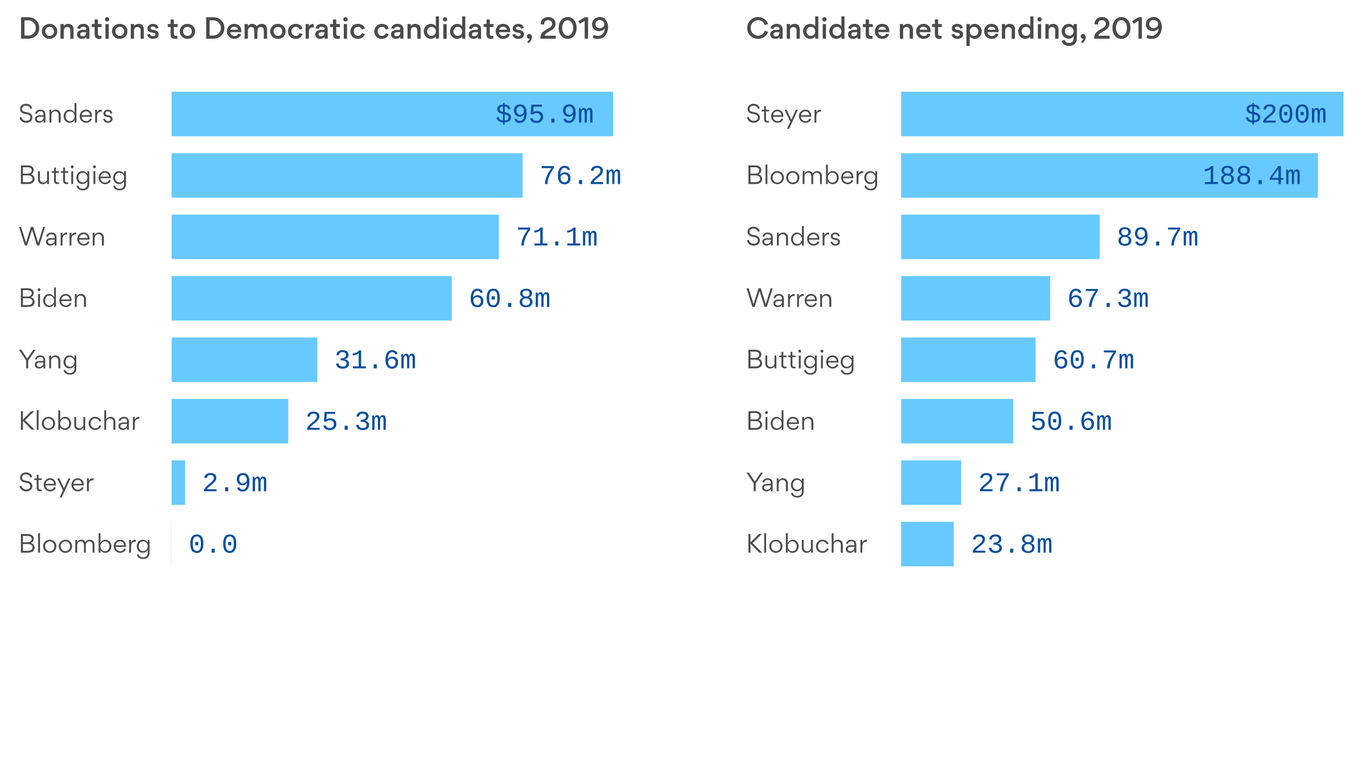
Michael Bloomberg’s entry into the race was a unique polling experiment. Choosing to skip the early states, Bloomberg spent over $500 million on advertising to influence national and Super Tuesday polling. For a brief period in February 2020, his polling average rose to nearly 15% nationally. However, his poor performance in the Las Vegas debate led to a sharp decline in polling favorability. Insights from Bloomberg’s trajectory suggest that while "paid media" can inflate polling numbers, it often lacks the resilience of "earned media" and grassroots support.
The Consolidation Shift
Following Biden’s South Carolina win, Pete Buttigieg and Amy Klobuchar withdrew and endorsed Biden. This led to a massive consolidation of the "moderate" vote. Polling data from this window showed a "coalescence" effect that is rarely seen with such speed. By the time Super Tuesday results were finalized, Biden had regained a double-digit lead in national polling, which he never relinquished.
Polling Methodology in 2020: Challenges and Innovations
The 2020 cycle faced unique challenges that impacted the "latest results" and "insights" provided by pollsters. These factors are critical for researchers looking back from 2026.
- The Shift to Cell Phones: Pollsters continued to move away from landlines, which traditionally skewed older. The 2020 polls were more successful than 2016 in reaching younger, more diverse demographics through text-to-web and mobile-first methodologies.
- The COVID-19 Variable: The onset of the pandemic in March 2020 drastically changed how the final primaries were conducted. Polling had to account for a massive surge in mail-in voting and "early voting," which changed the traditional "likely voter" models.
- Demographic Specificity: 2020 polling provided deeper insights into the "Latino vote" and "Black vote." While Biden’s strength with African American voters in the South was well-documented, the polls also highlighted a shift in Latino support toward Bernie Sanders in the West (Nevada/California), which provided a roadmap for future campaigns.
Key Takeaways from the Final 2020 Primary Results
The final results of the 2020 Democratic primary confirmed several insights that were teased by late-stage polling:
- National Polling vs. State Realities: National polls often lagged behind the reality of state-level momentum. A candidate could lead nationally for months (like Biden) and still struggle in early, less-diverse states (like Iowa and New Hampshire).
- The Power of the Minority Vote: Joe Biden’s path to the nomination was paved by the Black electorate. Polling consistently showed that while white progressive voters were split between Sanders and Warren, Black voters remained overwhelmingly loyal to Biden, a fact that was eventually reflected in the 1,100+ delegate lead he secured.
- Endorsement Impacts: While the influence of endorsements is often debated, 2020 proved that a high-profile, strategically timed endorsement (like Clyburn’s) can move polling numbers by double digits in a matter of days.
Frequently Asked Questions
Who was leading the 2020 Democratic polls before Super Tuesday?
Immediately before Super Tuesday, Bernie Sanders was the national front-runner and led in most polling averages following his dominant win in Nevada. However, Joe Biden was rapidly gaining ground in the final 48 hours following his South Carolina victory and the withdrawal of several moderate candidates.
Why did Elizabeth Warren’s polling decline in late 2019?
Warren’s polling decline is often attributed to the debate over the implementation and cost of her "Medicare for All" plan. Polling insights from Gallup and other sources indicated that as her policy details became more specific, they polarized some moderate voters who feared the plan was too radical or fiscally unfeasible.
How accurate were the 2020 Democratic primary polls compared to the 2016 polls?
Generally, the 2020 primary polls were more accurate than the 2016 primary polls. Pollsters adjusted their models to better weight by education and to account for the unique demographics of the Democratic primary electorate. While there were misses in specific states like Iowa, the overall national and Super Tuesday polling closely mirrored the final outcomes.
What role did Andrew Yang and Tulsi Gabbard play in the polls?
Andrew Yang and Tulsi Gabbard occupied a "non-traditional" polling niche. While they rarely exceeded 5% in national averages, they maintained a dedicated following that showed up in polling as high "enthusiasm" scores. Yang, in particular, outperformed his polling in terms of fundraising and digital engagement, though this did not translate into significant delegate counts.
Did the 2020 polls predict Joe Biden’s eventual win?
Yes and no. For the majority of 2019, Joe Biden was the clear polling leader. However, the polls correctly identified his vulnerability in February 2020, showing him falling to fourth or fifth place in early states. The polls also correctly captured his meteoric resurgence in late February and early March once the field consolidated.
Final Recommendations for Reviewing 2020 Data
When analyzing the 2020 Democratic candidate polls, it is vital to look beyond the top-line numbers. The true insights lie in the demographic cross-tabs and the momentum shifts triggered by specific events. For those researching these trends in 2026, the 2020 cycle remains the gold standard for understanding how a highly fractured primary field eventually finds consensus through a mix of "electability" concerns and strategic consolidation. Researchers should prioritize data from the RealClearPolitics polling archive and FiveThirtyEight’s primary forecast model for the most granular historical view.