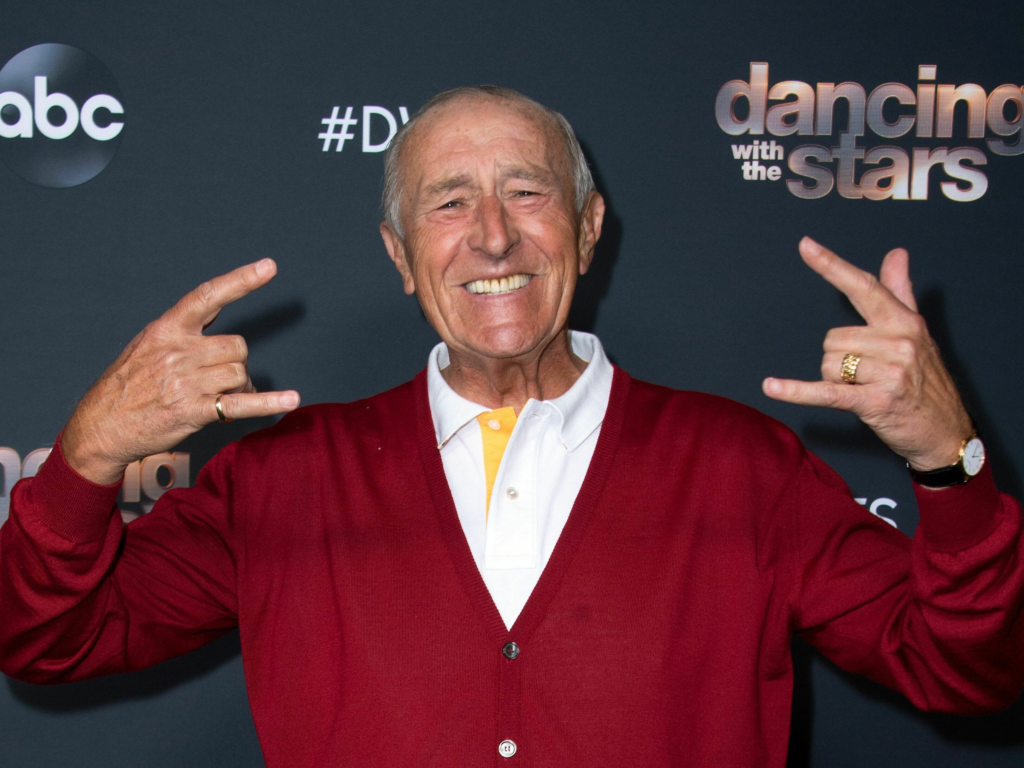
Leonard "Len" Goodman was a celebrated professional ballroom dancer, dance adjudicator, and television personality best known as the head judge on the hit competition shows Strictly Come Dancing and Dancing with the Stars. Born on April 25, 1944, in Bethnal Green, London, Goodman’s journey spanned from a career as a welder and footballer to becoming the definitive authority on ballroom technique, leaving behind an enduring legacy of integrity, humor, and passion for the dance arts.
Early Life and Formative Years
Len Goodman’s upbringing in wartime and post-war Britain shaped the pragmatic, no-nonsense attitude that would later define his judging style. Born in Bethnal Green, he moved to Blackfen, Kent, as a child. Before discovering his talent for rhythm and movement, Goodman’s primary aspirations were centered on sport. In his youth, he was a passionate footballer and spent time working as a welder at the Harland and Wolff shipyard in Woolwich.
It was not until his late teens that Goodman was introduced to the world of dance. A doctor reportedly suggested he take up dancing as a form of physical therapy to recover from a football-related foot injury. What began as a medical necessity quickly transformed into a lifelong passion. He threw himself into the world of ballroom, quickly showing a natural aptitude for the discipline and technical precision required of professional dancers. By his twenties, he was competing at a high level, eventually turning professional and winning numerous prestigious titles, including the Dual of the Giants and the British Rising Stars Professional title.
A Professional Career in Dance and Television
Goodman’s career in the dance industry was dual-tracked: he was a world-class competitor and a respected instructor. After retiring from competitive dancing, he founded the Goodman Dance Academy in Dartford, Kent, which became a breeding ground for future dance talent. His transition to television was an unexpected turning point that brought his specialized knowledge to a global audience.
In 2004, the BBC launched Strictly Come Dancing. The producers sought an adjudicator who embodied the traditionalist, disciplined spirit of ballroom dance. Goodman, with his stern but fair demeanor and his signature "seven" score—delivered with a distinct, gravelly London accent—became the show’s anchor. His success in the UK led to his recruitment as the head judge for the American iteration, Dancing with the Stars (DWTS), which premiered in 2005.
Key Professional Milestones
- 1960s-1970s: Competitive dance career, culminating in the British Rising Stars Championship.
- 2004: Appointment as the original head judge of BBC’s Strictly Come Dancing.
- 2005: Expansion into the American market as head judge of ABC’s Dancing with the Stars.
- 2006: Recipient of the Carl Alan Award for outstanding contributions to dance.
- 2016: Departure from Strictly Come Dancing to focus on his role in the United States.
- 2022: Official retirement from Dancing with the Stars during the conclusion of season 31.
Net Worth and Financial Standing
While Goodman maintained a private life regarding his personal finances, his net worth at the time of his passing in 2023 was widely estimated by industry analysts to be approximately $12 million to $18 million. This figure reflected decades of successful entrepreneurship in the dance world, lucrative long-term contracts with major broadcast networks, and supplementary income from guest appearances, radio hosting, and dance-related books and instructional materials.
Unlike many contemporary television personalities who rely solely on on-screen appearances, Goodman’s financial foundation was reinforced by his property holdings and the long-term success of his dance studio. His work spanned nearly two decades of prime-time television, allowing him to command significant fees for his role as the "chief" judge, whose opinion often served as the tie-breaker for the show’s scoring panels.
Factors Influencing Financial Success
| Income Source | Description |
|---|---|
| Television Salaries | Primary revenue from two decades of Strictly and DWTS. |
| Dance Academies | Earnings from his established teaching facility in Kent. |
| Endorsements | Occasional partnerships with health and lifestyle brands. |
| Writing & Media | Proceeds from books, including his autobiography Better Late Than Never. |
The Legacy of Len Goodman
Len Goodman’s legacy is defined by his commitment to the "basics" of dance. In an era where dance shows increasingly prioritized spectacle, stage production, and dramatic camera angles, Goodman remained the voice of the ballroom traditionalist. He championed technical accuracy, proper footwork, and frame, often criticizing contestants for ignoring the fundamental rules of waltz, tango, or foxtrot in favor of flashy tricks.
Beyond his professional technicality, he was widely regarded for his warmth. His catchphrases—"It’s a 10 from Len!" and his propensity for "pickling" or "dill-pickling" contestants—became part of the cultural lexicon. His presence bridged the gap between elite professional dance and the general public, making the nuances of competitive ballroom accessible and enjoyable for millions of viewers.
Goodman passed away on April 22, 2023, following a battle with bone cancer. The outpouring of grief from his colleagues on both sides of the Atlantic demonstrated the professional respect he commanded. He left behind a blueprint for judges in reality television: a combination of rigorous professional standards and genuine, approachable humanity.
Comparison of Judging Styles
Goodman was frequently contrasted with the other judges on his panels. Where colleagues might prioritize "entertainment value" or "artistic expression," Goodman served as the arbiter of technical rigor.
- Len Goodman: Emphasized posture, footwork, and adherence to dance syllabus. Often acted as the grounding force for the panel.
- Carrie Ann Inaba: Focused on stage presence, emotional connectivity, and overall performance flair.
- Bruno Tonioli: Focused on theatricality, energy, and the "showmanship" of the routine.
This balance created the classic "Good cop/bad cop" dynamic that ensured the longevity of Dancing with the Stars and Strictly Come Dancing.
Frequently Asked Questions
What was Len Goodman’s primary contribution to ballroom dance?
Goodman’s primary contribution was his ability to uphold professional ballroom standards on a mainstream entertainment platform. He treated the contestants like students, demanding technical growth, which elevated the quality of performance across the dance industry.
Why did Len Goodman retire from Dancing with the Stars?
Goodman announced his retirement during the live season 31 finale in November 2022. He stated that he wanted to spend more time with his family in the UK and felt it was the right time to "hang up his paddle" and enjoy the quiet life after nearly 50 years in the dance world.
Was Len Goodman involved in dance training outside of TV?
Yes, he was a lifelong instructor. He ran the Goodman Dance Academy in Dartford for decades, where he trained numerous professional dancers and adjudicators. He remained active as a dance teacher and examiner even while his television schedule was at its peak.
How did Len Goodman’s background as a welder influence his career?
Goodman often credited his working-class background for his grounded nature. His time at the shipyards gave him a strong work ethic and a disdain for pretension. He often said this background helped him judge contestants not just on their dance steps, but on their character and effort.
Conclusion and Recommendations for Further Reading
Len Goodman’s life serves as a testament to the idea that expertise, when combined with authentic personality, can captivate a global audience. Whether you are a fan of ballroom dance or interested in the mechanics of reality television, understanding his career provides a masterclass in professional integrity.
For those interested in exploring his life further, we recommend reading his 2008 autobiography, Better Late Than Never, which provides an intimate look at his early life in London and his unexpected path to stardom. Additionally, reviewing archived episodes of Strictly Come Dancing from its inception in 2004 offers the best evidence of how he shaped the modern landscape of competitive dance television.