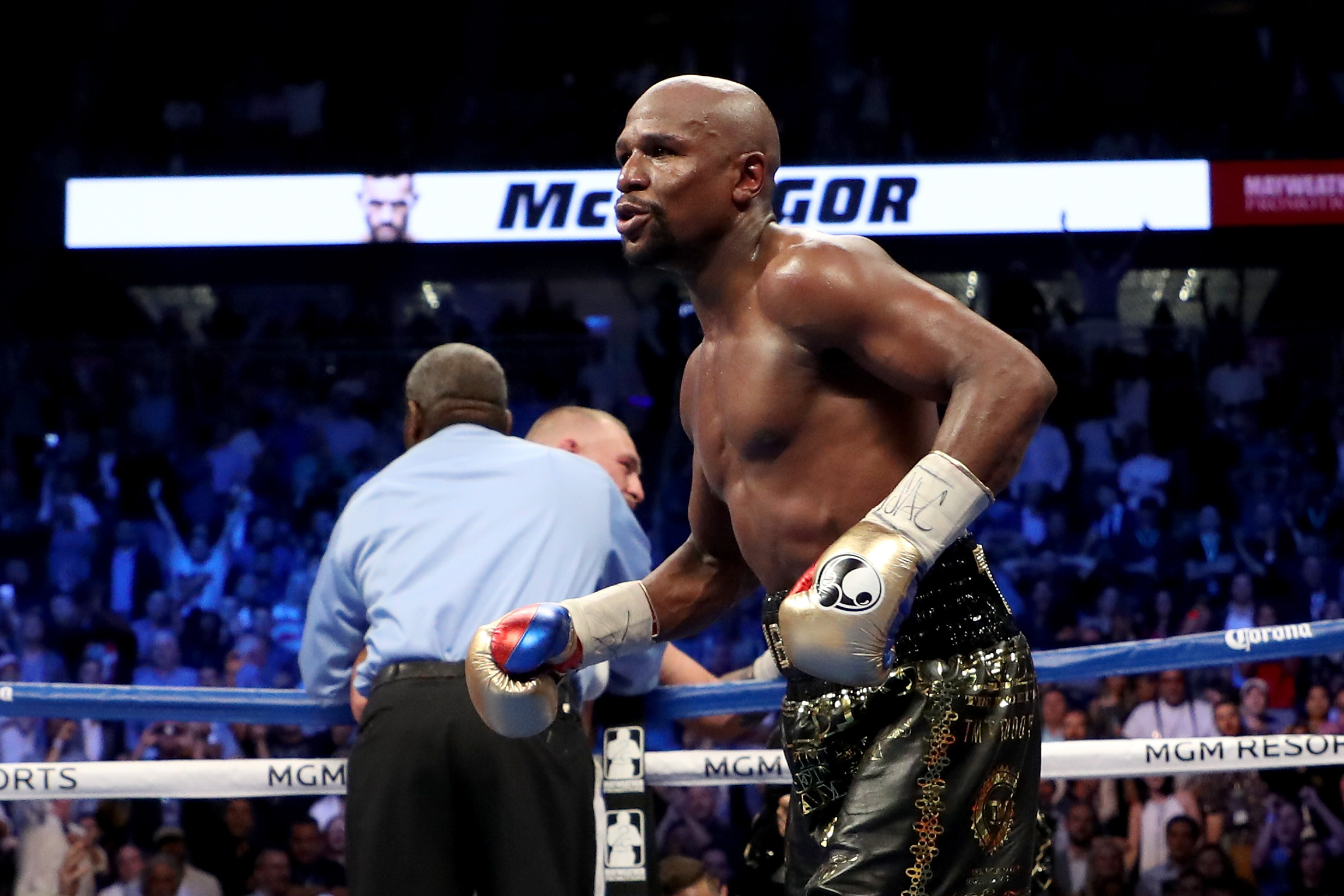
Floyd Mayweather earned approximately $280 million from his 2017 bout against Conor McGregor, while McGregor secured roughly $100 million. These figures include guaranteed purses, pay-per-view (PPV) shares, ticket sales, and sponsorships. While official purses were $100 million and $30 million respectively, backend revenue significantly increased the final payouts.
The Financial Landscape of "The Money Fight"
The August 26, 2017, clash between Floyd "Money" Mayweather and Conor "The Notorious" McGregor stands as a landmark event in the intersection of sports and finance. Often referred to as "The Money Fight," this cross-disciplinary spectacle transcended the traditional boundaries of boxing and mixed martial arts (MMA). To understand the payout breakdown, one must look beyond the initial numbers reported to the Nevada State Athletic Commission (NSAC).
As of 2026, the financial success of this event remains the gold standard for "crossover" bouts. The fight was not merely an athletic contest; it was a massive commercial enterprise co-promoted by Mayweather Promotions, UFC (Zuffa, LLC), and Showtime Sports. The revenue generated by this single night in Las Vegas rivaled the annual output of mid-sized corporations, driven primarily by a high-priced pay-per-view model and a sold-out T-Mobile Arena.
The payout structure was divided into two distinct categories: the guaranteed purse and the backend revenue. The guaranteed purse is the amount the fighters are contractually certain to receive regardless of the event's commercial success. The backend revenue, however, includes a percentage of PPV sales, international television rights, sponsorships, merchandise, and the live gate. It is in this secondary category that both fighters saw their earnings triple or quadruple.
Floyd Mayweather’s Earnings: The Lion’s Share
Floyd Mayweather entered the bout as the "A-side" of the promotion. Having already been involved in the highest-grossing fight in history against Manny Pacquiao in 2015, Mayweather understood the leverage of his brand. As both the lead fighter and the primary promoter through Mayweather Promotions, he was entitled to a significantly larger portion of the total revenue pool.
The Guaranteed Purse and Total Take-Home
Mayweather’s guaranteed purse was a flat $100 million. This amount was disclosed by the NSAC and was paid regardless of how many fans tuned in. However, the true "Mayweather payout" was realized once the PPV numbers were finalized. Mayweather has stated in various interviews, including those with Forbes and during promotional tours, that his total earnings for the 36 minutes of work (plus training and promotion) exceeded $280 million.
Promotional Ownership and Revenue Splits
Because Mayweather acted as his own promoter, he did not have to share his earnings with a traditional boxing promoter like Top Rank or Matchroom. Instead, his company, Mayweather Promotions, took a lead role in the event's logistics. This allowed him to retain a higher percentage of the "promoter’s share" of the PPV revenue. After the cable providers and satellite distributors took their standard 30% to 50% cut of the $99.95 PPV price tag, the remaining funds were split among the stakeholders. Mayweather’s contract ensured he received the largest individual slice of that remaining pie.
Sponsorships and Endorsements
Mayweather’s attire during the McGregor fight was essentially a mobile billboard. He famously wore trunks featuring the Hublot brand, which paid a premium for the placement. Additional sponsors included Burger King and Philipp Plein. Estimates suggest that Mayweather’s in-ring sponsorships alone generated an additional $20 million to $25 million.
Conor McGregor’s Earnings: A Career-Defining Payday
For Conor McGregor, the Mayweather fight represented a financial leap that was unprecedented in the history of the Ultimate Fighting Championship (UFC). Before this bout, the largest disclosed purse for a UFC fighter was roughly $3 million. McGregor’s jump to the boxing ring allowed him to command a price tag that the MMA structure of that era simply could not support.
The UFC’s Involvement and Revenue Cut
Unlike Mayweather, McGregor was under an exclusive contract with the UFC. To allow him to compete in a boxing match, the UFC had to act as a co-promoter. This meant that McGregor’s payout was not just a deal between him and Mayweather; it was a tripartite agreement involving McGregor, Mayweather Promotions, and the UFC. It is widely understood that the UFC took a substantial percentage of McGregor’s earnings—rumored to be around 20% to 30%—as a "promoter’s fee" for allowing their biggest star to compete outside the Octagon.
Total Earnings Breakdown
McGregor’s guaranteed purse was $30 million, ten times his previous high in the UFC. Once the 4.3 million PPV buys were accounted for, McGregor’s total earnings climbed to approximately $100 million. This figure includes his share of the PPV revenue, his cut of the $55.4 million gate, and his own personal sponsorships.
McGregor’s Branding and "August McGregor"
McGregor utilized the massive platform to launch and promote his own business ventures. The fight served as the primary marketing vehicle for his clothing line, August McGregor, and he heavily promoted his Beats by Dre and Monster Energy partnerships. While these are separate from the fight purse, the "McGregor earnings figures" are often bolstered by the increased brand value he achieved during the 2017 world promotional tour.
The Revenue Engines: PPV and Live Gate
The scale of the payouts was made possible by the staggering revenue generated across multiple streams. The Mayweather vs. McGregor fight was priced at $89.95 for standard definition and $99.95 for high definition in the United States, making it one of the most expensive PPV offerings in history.
Pay-Per-View (PPV) Performance
The fight garnered 4.3 million PPV buys in North America alone. This ranks as the second-highest buy rate of all time, trailing only the Mayweather-Pacquiao bout (4.6 million). When factoring in international sales, the total PPV revenue exceeded $450 million.
| Revenue Stream | Approximate Amount (USD) | Significance |
|---|---|---|
| Total PPV Revenue | $450,000,000+ | The primary source of the fighters' backend bonuses. |
| Live Gate | $55,414,860 | The second-highest gate in boxing history (T-Mobile Arena). |
| Sponsorships | $60,000,000+ | Combined total from both fighters and the event itself. |
| Merchandise | $1,000,000+ | Sales of hats, shirts, and programs at the venue. |
| Closed Circuit | $2,000,000+ | Viewing parties at various Las Vegas hotels/bars. |
The Live Gate and Ticket Sales
The "Gate" refers to the total money generated from ticket sales at the venue. Despite the T-Mobile Arena not being 100% sold out to its capacity, the high price of tickets resulted in a gate of $55,414,860.12. While this fell short of the $72 million record set by Mayweather-Pacquiao, it remains a staggering figure for a combat sports event. Average ticket prices were in the thousands, with "nosebleed" seats starting at nearly $500 during the initial sale.
Comparative Earnings Analysis
To put these figures into perspective, we must compare them to the standard earnings in both sports. In 2017, a top-tier UFC champion might earn $500,000 to $1,000,000 per fight (disclosed). McGregor’s $100 million payday was the equivalent of fighting 30 to 50 UFC bouts in a single night.
For Mayweather, the $280 million figure solidified his position as the highest-paid athlete of the decade. This fight allowed him to surpass the career earnings of icons like Tiger Woods and Michael Jordan in terms of raw "active career" revenue. It also allowed him to retire (temporarily) with a 50-0 record and a financial cushion that few athletes in history have ever approached.
Taxation and Jurisdictional Financials
It is important to note that the "take-home" pay for both fighters was subject to significant deductions. Nevada, where the fight took place, does not have a state income tax. This is a primary reason why major fights are held in Las Vegas. However, both fighters were subject to the U.S. Federal Income Tax, which for their tax bracket was 39.6% at the time.
For McGregor, who is an Irish citizen, the tax situation involved international treaties. He likely paid U.S. taxes on income earned on U.S. soil, which could then be used as a credit against his Irish tax obligations, depending on his residency status and corporate structures. For Mayweather, a U.S. citizen, the IRS was the largest "opponent," likely taking nearly $100 million of his $280 million total.
Legacy of the Payout Breakdown
The financial success of Mayweather vs. McGregor changed the landscape of combat sports. It proved that a "freak show" or "crossover" fight could generate more money than traditional championship bouts between the top-ranked fighters in a single sport.
This event paved the way for:
- Influencer Boxing: The rise of personalities like Jake Paul who utilize the "crossover" model to generate high PPV numbers.
- Increased Fighter Leverage: MMA fighters began demanding higher pay, citing the revenue McGregor was able to generate.
- Cross-Promotion Models: The UFC showed a willingness to co-promote, though they have remained protective of their brand since 2017.
As we look back from 2026, the Mayweather vs. McGregor payout breakdown remains a case study in branding, promotional synergy, and the power of the "super-fight" to distort traditional economic models in sports.
Frequently Asked Questions
Did Conor McGregor really get $100 million?
Yes, when accounting for the backend PPV revenue, sponsorships, and his cut of the gate, McGregor's total earnings reached the $100 million mark. While his official disclosed purse to the NSAC was $30 million, his contract included percentages of the event's overall success.
How much did the UFC take from McGregor's payout?
The exact percentage is confidential, but industry analysts and reports from the time suggest the UFC took between 20% and 30% of McGregor's total earnings. As McGregor was under an exclusive contract, the UFC acted as a co-promoter to facilitate the fight.
Who was the highest-paid fighter in the Mayweather-McGregor fight?
Floyd Mayweather was significantly higher paid. He earned approximately $280 million, nearly triple McGregor’s $100 million. This was due to his status as the "A-side" and his role as the primary promoter of the event.
What were the PPV prices for Mayweather vs. McGregor?
In the United States, the pay-per-view was priced at $89.95 for standard definition (SD) and $99.95 for high definition (HD). This high price point was a major factor in the massive payouts for both fighters.
Did Floyd Mayweather pay taxes on his $280 million?
Yes. Shortly before the fight, it was reported that Mayweather had an outstanding tax liability from previous years. He used a portion of his earnings from the McGregor fight to settle his debts with the IRS. As a U.S. citizen, his earnings were subject to federal income tax, which was nearly 40% for his bracket.
Practical Recommendation for Analysts
When analyzing combat sports earnings, always distinguish between the disclosed purse and the actual payout. Disclosed purses are public records provided by athletic commissions, but they rarely include PPV bonuses, which often represent the majority of a superstar's income. To get an accurate picture of an athlete's earnings, one must look at the PPV buy rates and the promotional structure (i.e., whether the fighter is also a promoter).