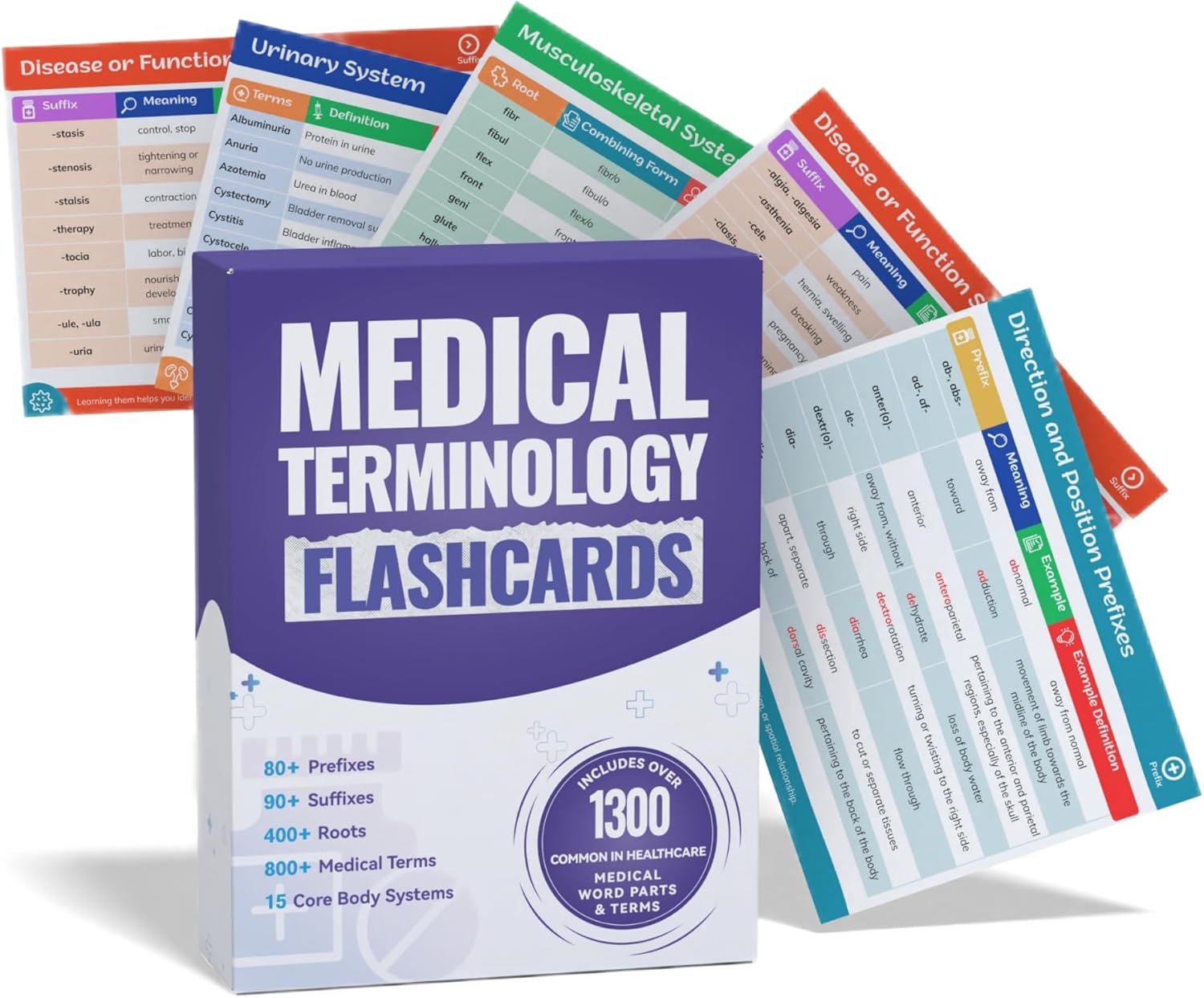
Medical terms in nursing are standardized linguistic building blocks—comprising Greek and Latin roots, prefixes, and suffixes—that allow healthcare professionals to communicate complex physiological conditions, treatments, and diagnoses with absolute precision. Mastery of this vocabulary is foundational for ensuring patient safety, maintaining accurate electronic health records (EHR), and facilitating seamless interdisciplinary collaboration across the care continuum.
The Structural Foundation of Medical Terminology
To understand medical terms in nursing, one must first master the "building block" method. Most medical language is derived from ancient Greek and Latin, structured into three distinct parts: the prefix (beginning), the root (middle/subject), and the suffix (ending).
Word Roots: The Subject of the Term
The root is the core of any medical word and typically refers to a specific body part or system. For instance, cardi- refers to the heart, while nephr- refers to the kidney. In clinical practice, recognizing the root allows a nurse to immediately identify which organ system is being discussed, even if the surrounding prefix or suffix is unfamiliar.
Prefixes: Modifying the Meaning
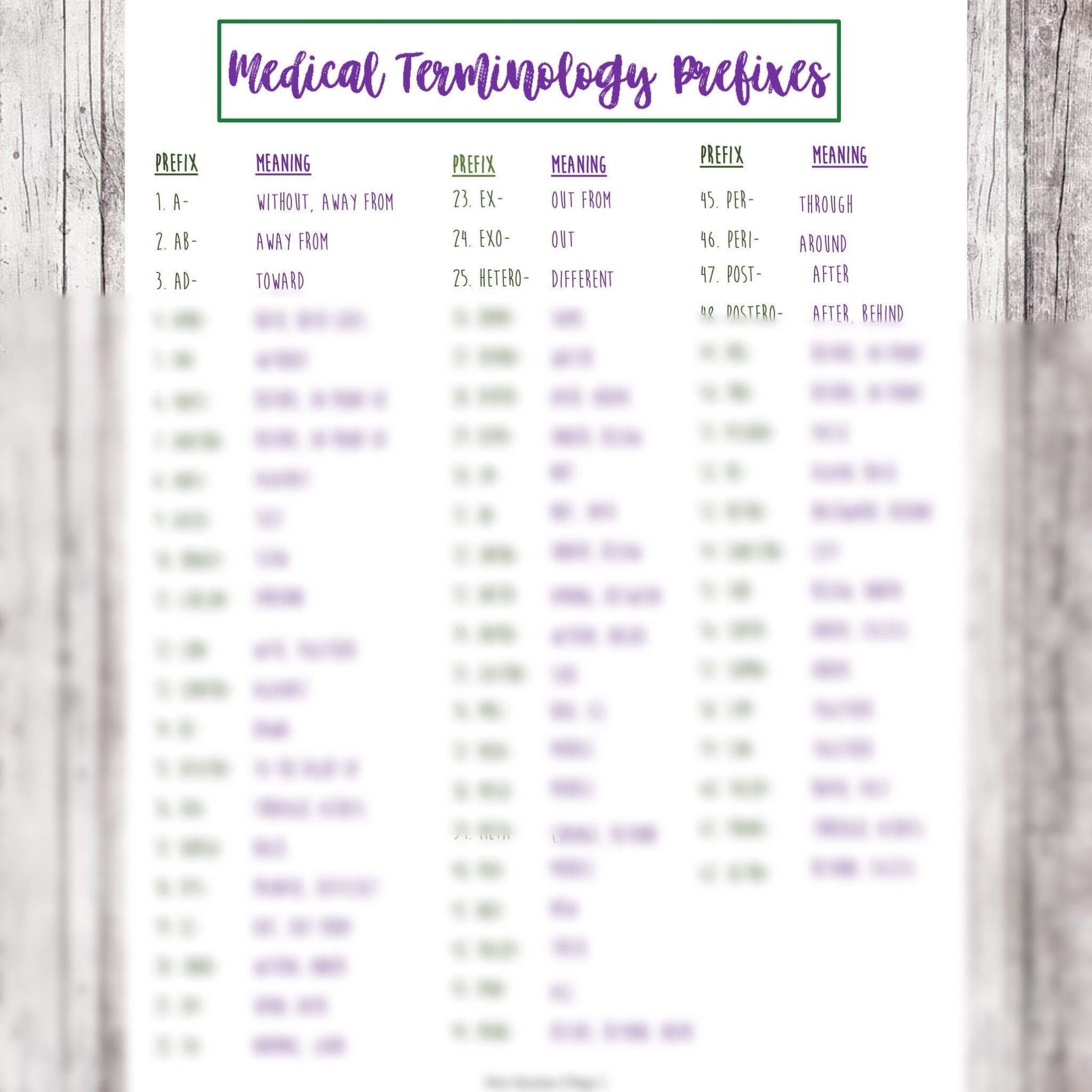
Prefixes are added to the beginning of a word to indicate location, time, number, or status. For example, tachy- (fast) combined with -cardia (heart) results in tachycardia (a fast heart rate). Conversely, brady- (slow) would indicate a slow heart rate. Understanding these modifiers is critical during rapid-response situations where every second counts.
Suffixes: Indicating Conditions or Procedures
Suffixes typically describe a condition, disease, or surgical procedure. The suffix -itis indicates inflammation (e.g., gastritis), while -ectomy signifies surgical removal (e.g., appendectomy). By breaking down a long, intimidating word like "choledocholithotomy," a nurse can deduce it involves the surgical incision (-tomy) into the common bile duct (choledocho-) to remove a stone (lith-).
The Role of Standardized Nursing Languages (SNL)
While general medical terminology describes diseases and treatments, nursing requires specialized language to describe the unique interventions and assessments performed by RNs and LPNs. As of 2026, the integration of Standardized Nursing Languages into global electronic health records has become mandatory for data interoperability.
NANDA-I (Nursing Diagnosis)
Unlike a medical diagnosis, which identifies a disease, a nursing diagnosis identifies a patient’s response to health conditions. Terms like "Impaired Gas Exchange" or "Risk for Caregiver Role Strain" are specific nursing terms that guide the care plan.
NIC and NOC
The Nursing Interventions Classification (NIC) and Nursing Outcomes Classification (NOC) provide a standardized way to document what a nurse does and the result of those actions. These systems use specific terms to ensure that a nurse in one facility can perfectly understand the care provided to a patient transferred from another facility. This standardization is vital for "meaningful use" requirements in digital health systems.
Essential Clinical Terms by Body System
A nurse’s daily vocabulary is often organized by body system to facilitate "head-to-toe" assessments. Precision in these terms prevents errors in documentation that could lead to improper treatment.
Cardiovascular and Respiratory Terms
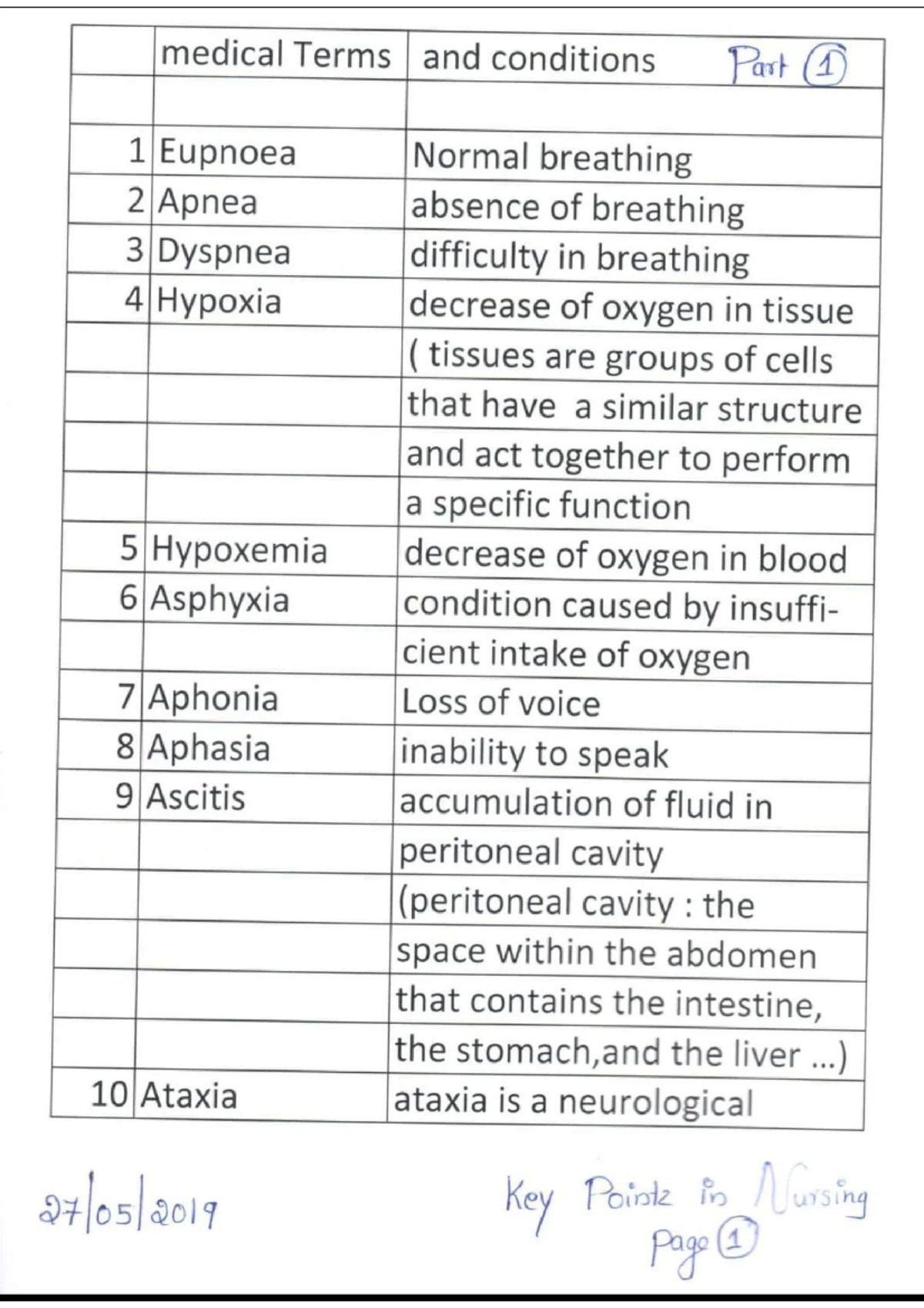
- Apnea: The temporary cessation of breathing, often monitored in sleep studies or post-operative recovery.
- Cyanosis: A bluish discoloration of the skin resulting from poor circulation or inadequate oxygenation of the blood.
- Hypoxia: A deficiency in the amount of oxygen reaching the tissues.
- Orthopnea: Shortness of breath that occurs when lying flat, a key indicator of heart failure.
Gastrointestinal and Genitourinary Terms
- Dysphagia: Difficulty swallowing, which requires immediate nursing intervention to prevent aspiration pneumonia.
- Hematuria: The presence of blood in the urine, often indicating infection, stones, or trauma.
- Oliguria: The production of abnormally small amounts of urine, a critical sign of potential kidney failure.
- Peristalsis: The involuntary constriction and relaxation of the muscles of the intestine, which nurses assess by listening for bowel sounds.
Neurological and Musculoskeletal Terms
- Aphasia: Loss of ability to understand or express speech, caused by brain damage (common in stroke patients).
- Atrophy: The wasting away of muscle tissue due to disuse or nerve damage.
- Paresthesia: An abnormal sensation, typically tingling or pricking (“pins and needles”), caused by pressure on or damage to peripheral nerves.
Standard Abbreviations and the "Do Not Use" List
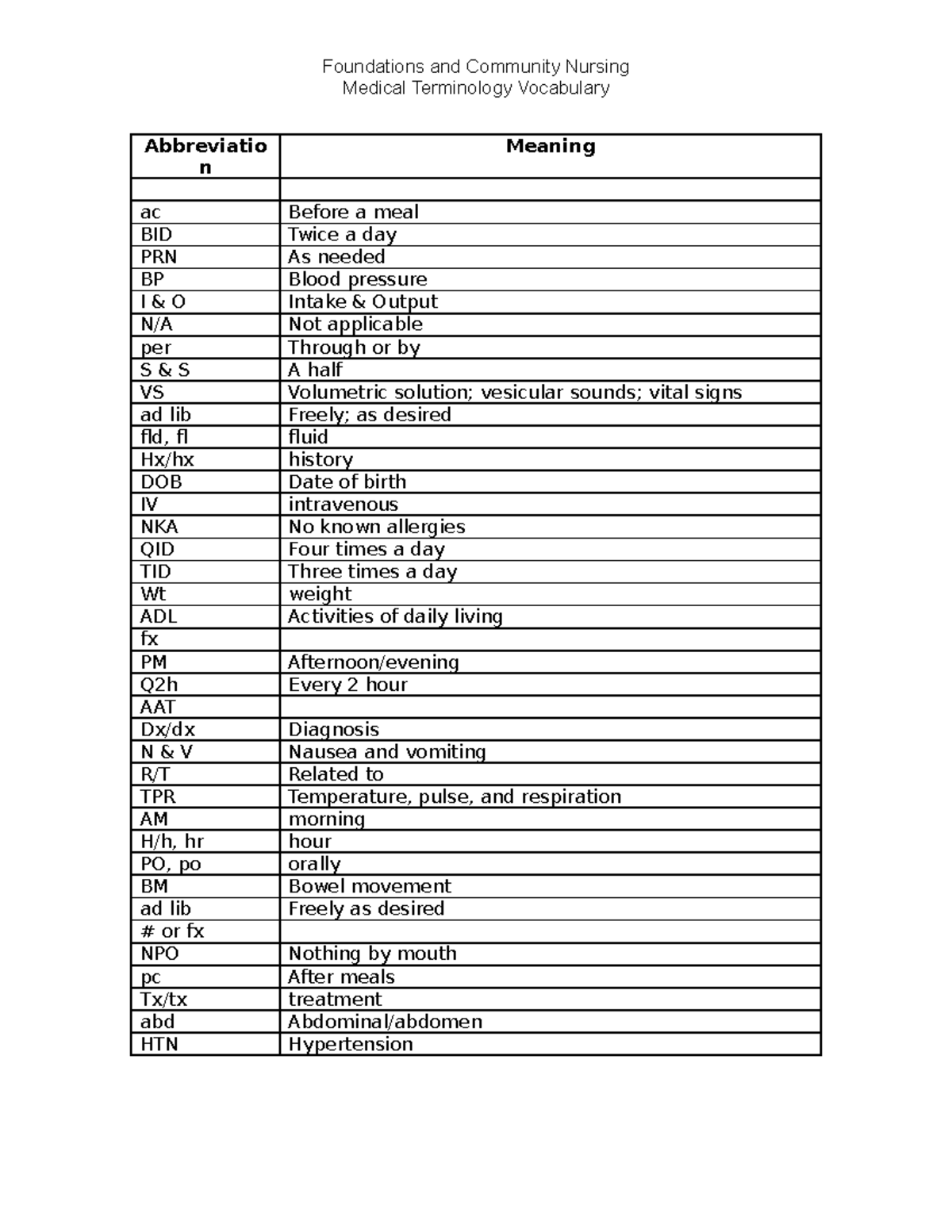
In the fast-paced nursing environment, abbreviations are used to save time. However, the Joint Commission maintains a strict "Do Not Use" list of abbreviations that are prone to misinterpretation.
| Abbreviation | Meaning | Potential Misinterpretation | 2026 Best Practice |
|---|---|---|---|
| U or u | Unit | Mistaken for "0" or "4" | Always write "Unit" |
| IU | International Unit | Mistaken for "IV" (intravenous) | Always write "International Unit" |
| Q.D. | Daily | Mistaken for "Q.O.D." | Always write "Daily" |
| MS | Morphine Sulfate | Can mean Magnesium Sulfate | Write the full drug name |
| Trailing Zero | X.0 mg | The decimal point is missed | Never use a trailing zero (write "X mg") |
| Lack of Leading Zero | .X mg | The decimal point is missed | Always use a leading zero (write "0.X mg") |
Pharmacological Terminology for Nurses
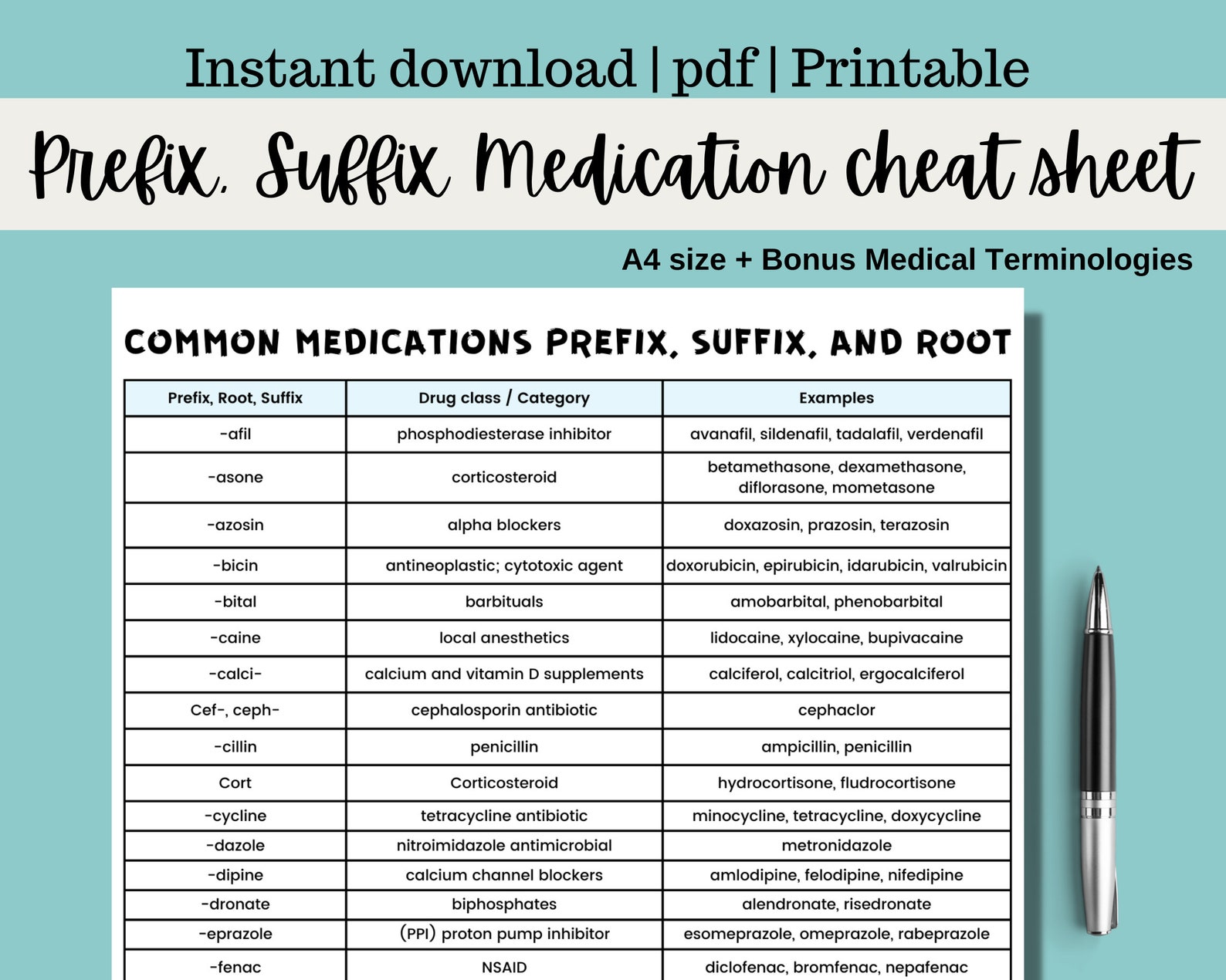
Nurses are the final line of defense in medication administration. Understanding pharmacological suffixes and prefixes is essential for recognizing drug classes and potential side effects.
Common Drug Class Suffixes
- -olol: Indicates Beta-blockers (e.g., Metoprolol), used for hypertension.
- -cillin: Indicates Penicillin-derived antibiotics (e.g., Amoxicillin).
- -statin: Indicates HMG-CoA reductase inhibitors (e.g., Atorvastatin) for high cholesterol.
- -prazole: Indicates Proton pump inhibitors (e.g., Omeprazole) for acid reflux.
Administration Terms
Understanding the route of administration is as important as the medication itself. Terms like P.O. (by mouth), I.M. (intramuscular), I.V. (intravenous), and S.C. (subcutaneous) dictate the equipment needed and the rate of drug absorption. Nurses must also distinguish between Stat (immediately), PRN (as needed), and Scheduled doses.
Directional and Positional Terminology
Accurate documentation of wounds, incisions, and pain requires a firm grasp of anatomical directions. Using "left" or "right" is insufficient without a standardized frame of reference.
- Proximal vs. Distal: Proximal means closer to the center of the body or point of attachment; distal means farther away. A wound "proximal to the elbow" is on the upper arm.
- Lateral vs. Medial: Lateral is away from the midline; medial is toward the center.
- Supine vs. Prone: Supine is lying on the back; prone is lying on the stomach. Prone positioning became a critical nursing intervention for ARDS (Acute Respiratory Distress Syndrome) patients during respiratory pandemics.
- Fowler’s Position: A semi-sitting position (45-60 degrees) used to facilitate breathing and drainage.
The Impact of Medical Terms on Patient Safety
The primary reason for the rigorous study of medical terms in nursing is the mitigation of risk. Miscommunication is a leading cause of sentinel events in healthcare.
Handoff Communication
During shift changes, nurses use the SBAR (Situation, Background, Assessment, Recommendation) framework. The use of precise medical terms during SBAR ensures that the incoming nurse has an accurate mental model of the patient’s status. For example, describing a patient as "lethargic" conveys a specific level of consciousness that "tired" does not.
Documentation and Legal Defense
In the eyes of the law, "if it wasn't documented, it wasn't done." Using correct medical terminology in the EHR provides a professional, objective account of patient care. Terms like "erythema" (redness) and "edema" (swelling) provide objective data that can be tracked over time to evaluate the effectiveness of a treatment plan.
Troubleshooting Common Terminology Challenges
Even for experienced nurses, the sheer volume of medical terms can be overwhelming. Here are strategies to handle terminology challenges in a clinical setting:
- Ask for Clarification: If a physician uses an unfamiliar term during rounds, ask for a definition immediately. This is not a sign of incompetence but a commitment to safety.
- Use Verified Resources: Use institutional resources like the National Library of Medicine (NLM) or internal hospital databases rather than general search engines.
- Confirm Phonetically Similar Terms: Many medical terms sound alike (e.g., dysphagia vs. dysphasia). Always double-check the spelling in the patient’s chart.
- Translate for Patients: While nurses must use technical terms with colleagues, they must "translate" these terms into plain language for patients. Explaining that "hypertension" simply means "high blood pressure" is essential for patient education and compliance.
Evolution of Terminology in 2026
As of 2026, the landscape of medical terminology continues to expand with the rise of genomics and personalized medicine. Nurses are now encountering terms like pharmacogenomics (how genes affect drug response) and biomarkers in routine care plans. Furthermore, the global shift toward ICD-11 has introduced more granular codes for traditional diagnoses, requiring nurses to be more specific than ever in their assessments.
Frequently Asked Questions
What is the difference between an acute and chronic condition in nursing?
An acute condition has a rapid onset and is usually severe but short-lasting (e.g., an acute myocardial infarction). A chronic condition is long-developing and persistent, often lasting three months or more (e.g., chronic obstructive pulmonary disease). Understanding this distinction helps nurses prioritize care and anticipate patient needs.
Why are Greek and Latin used for medical terms?
Greek and Latin were the universal languages of science and medicine when the foundations of anatomy and physiology were being laid. Using these "dead" languages ensures that medical terms remain stable over time and across different modern languages, providing a global standard for healthcare communication.
How do I remember all these nursing terms?
Focus on the roots, prefixes, and suffixes rather than memorizing individual words. If you know that -uria means "condition of urine," you can understand polyuria (too much), anuria (none), and dysuria (painful) without memorizing three separate definitions. Utilizing digital flashcards and participating in clinical rotations are also effective strategies.
What are "stat" and "PRN" orders?
Stat is derived from the Latin statim, meaning "immediately." A stat order must be carried out at once. PRN stands for pro re nata, meaning "as the thing is needed." These are medications or treatments given based on the nurse's assessment of the patient's symptoms (e.g., pain or nausea).
Can using medical jargon with patients be harmful?
Yes. Using complex medical terms with patients can lead to confusion, anxiety, and non-compliance. Nurses must practice "health literacy" by assessing a patient's understanding and using plain language during discharge instructions and education, while reserving technical terms for professional communication.
Next Steps for Mastering Nursing Terminology
For those entering the nursing profession or looking to sharpen their clinical skills in 2026, the best approach is a combination of academic study and practical application. Begin by creating a personal "cheat sheet" of the most common prefixes and suffixes encountered in your specific unit (e.g., "neuro" terms for a stroke unit). Regularly review the Joint Commission’s updated safety goals regarding abbreviations. Finally, always verify the meaning of a term before documenting it in a patient’s permanent record, as accuracy is the hallmark of professional nursing practice.