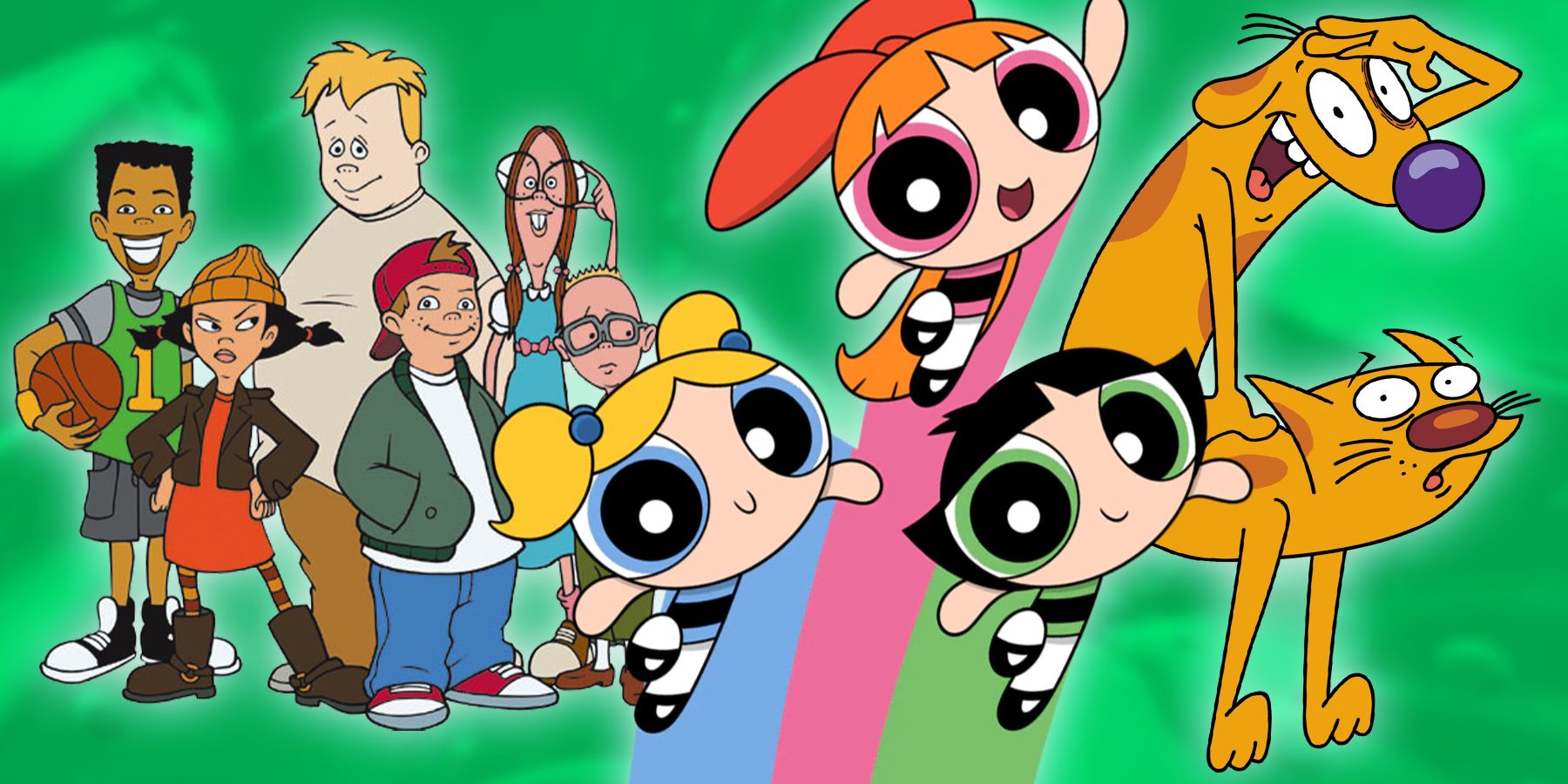
The 1990s represented a transformative decade for children’s television, marked by the rise of dedicated cable networks like Nickelodeon and Cartoon Network, the maturation of animation as an auteur medium, and a shift toward edgy, creator-driven live-action programming. This era broke traditional broadcast molds, introduced transmedia merchandising strategies, and established foundational viewing habits for an entire generation.
The Broadcast Landscape and Cable Revolution
Before the 1990s, children’s television was largely restricted to Saturday morning blocks on major broadcast networks (ABC, CBS, NBC) and syndicated afternoon programming. The emergence of cable networks changed this dynamic entirely by offering 24-hour programming blocks explicitly targeted at children, tweens, and families.
Nickelodeon, which launched in 1979, hit its cultural stride in the 1990s. The network established its distinct identity through slime, anarchic humor, and creator-first commissioning. In 1991, the network debuted its first slate of original animated series—known as Nicktoons—consisting of Doug, Rugrats, and The Ren & Stimpy Show. This move proved that cable channels could successfully incubate original intellectual property rather than relying solely on rerun syndication or toy-driven co-productions.
Concurrently, the launch of Cartoon Network in 1992 provided a 24-hour repository for classic animation while laying the groundwork for original short-form and long-form production. Shows like Dexter’s Laboratory, The Powerpuff Girls, and Cow and Chicken emerged from the network's What a Cartoon! showcase, revitalizing the creator-driven cartoon short format reminiscent of early theatrical animation studios.
| Network / Block | Launch / Peak Era | Defining Characteristics & Major Franchises |
|---|---|---|
| Nickelodeon | 1979 (Peak 1990s) | Nicktoons, sketch comedy, interactive game shows (Clarissa Explains It All, Rugrats) |
| Cartoon Network | 1992 | 24-hour animation, Hanna-Barbera archives, World Premiere Animation shorts |
| Disney Channel | 1983 (Shifted in late 1990s) | Shift from premium to basic cable, live-action sitcoms, The Mickey Mouse Club |
| Fox Kids | 1990–2002 | Syndicated block, action acquisitions, Mighty Morphin Power Rangers, Batman: TAS |
Animation Shifts: From Toy Commercials to Auteur Artistry
During the 1980s, children's television programming was heavily dictated by the Federal Communications Commission's 1984 deregulation of commercial limits on children's shows. This led to an influx of toy-etic programming—shows designed primarily to sell plastic action figures and playsets, such as He-Man and Transformers.
The 1990s reacted against this corporate-driven formula. While toy tie-ins did not disappear, regulatory pressure and shifting creative ambitions fostered a renaissance in animation quality and narrative complexity.
The DC Animated Universe and Prime-Time Sensibility
The debut of Batman: The Animated Series in 1992 on Fox Kids established a new benchmark for animated storytelling. Spearheaded by Bruce Timm and Eric Radomski, the show utilized a dark, expressionistic visual style inspired by 1940s film noir and Fleischer Studios' Superman shorts. It proved that superhero animation could appeal to adult audiences while maintaining broadcast standards for children. This success paved the way for the broader DC Animated Universe, encompassing Superman: The Animated Series, Batman Beyond, and Justice League.
Subversive and Alternative Animation
Independently produced and creator-driven animation also found a commercial foothold. The Ren & Stimpy Show utilized gross-out humor, hyper-detailed close-ups, and unstable character psychology, inspiring a wave of edgier television. Meanwhile, MTV’s Beavis and Butt-Head and Aeon Flux targeted older teens and college students, demonstrating that the animation boom extended far beyond pre-adolescent demographics.
Live-Action Programming: Sketch Comedy, Sitcoms, and Action Imports
Live-action television for kids and teens experienced an equivalent evolution during the decade, moving away from multi-camera sitcoms filmed in front of studio audiences toward innovative sketch formats and imported action serials.
- Sketch Comedy and Variety: Shows like You Can't Do That on Television set early precedents, but All That and The Adventures of Pete & Pete modernized the format for 1990s youth culture. All That served as a children's equivalent to Saturday Night Live, launching the careers of several comedic actors. Pete & Pete relied on surrealism, suburban melancholy, and indie-rock soundtracks provided by bands like Polaris.
- The Tokusatsu Wave: In 1993, Saban Entertainment localized the Japanese Super Sentai series Kyoryu Sentai Zyuranger by shooting original American framing sequences with domestic teenage actors and intercutting them with action footage from the original Japanese source material. The resulting Mighty Morphin Power Rangers became a global cultural phenomenon, triggering a multi-year craze for martial arts-based action serials and prompting networks to scour international markets for similar properties.
Production Technologies and Visual Standards
The technical production of 1990s kids television bridged the gap between analog craftsmanship and early digital integration.
- Cell Animation and Ink-and-Paint: Most traditional animation throughout the decade still relied on hand-drawn cels painted with acrylic or vinyl paints, photographed sequentially under rostrum cameras. However, the mid-to-late 1990s marked the industry-wide transition to Digital Ink and Paint (DIP). Shows like The Simpsons transitioned to digital coloring in 1998 (Season 14 officially, with experimental digital sequences earlier), drastically reducing production errors, allowing for more complex layering, and enabling dynamic digital camera moves in shows like Futurama and The Powerpuff Girls.
- CGI Integration: Early computer-generated imagery (CGI) began appearing in children's television, most notably in fully rendered 3D series like Mainframe Entertainment’s ReBoot (1994), recognized as the first fully computer-animated weekly television series. Live-action shows similarly expanded their use of practical effects augmented by early digital compositing.
Access, Preservation, and Modern Streaming Realities
For contemporary viewers seeking to revisit 1990s children's television or introduce it to new generations, the landscape of media distribution has shifted entirely from physical media to subscription video-on-demand (SVOD) platforms, digital storefronts, and niche archival projects.
However, accessing complete runs of specific 1990s television shows presents distinct challenges due to complex music licensing agreements, changing corporate ownership, and unreleased physical media libraries.
- Music Licensing Hurdles: Many live-action and animated shows from the era relied on popular licensed music cues that were cleared strictly for original broadcast. When these shows are prepared for home video or streaming releases, the cost of clearing those music rights globally can be prohibitive. As a result, several series feature altered background scores or replacement tracks, disappointing purists.
- Corporate Fragmentation: Mergers and acquisitions over the past thirty years mean that content libraries are often scattered across disparate media conglomerates. For example, a single viewer may need multiple streaming subscriptions or digital purchases to access shows produced by different entities under the same umbrella brand.
Comparison of Modern Access Channels for 1990s Kids TV
| Access Channel | Primary Benefits | Common Limitations |
|---|---|---|
| Subscription Streaming (SVOD) | Convenient access, curated libraries, minimal per-item cost. | Rotating catalogs; shows frequently leave platforms without warning. |
| Digital Purchase (VOD) | Permanent access linked to user accounts; typically uncut episodes. | High cumulative cost for complete series; occasional music substitutions. |
| Physical Media (DVD/Blu-ray) | Uncompressed or higher-quality archival preservation; immune to licensing removals. | Out-of-print status for many niche titles; region locking on international imports. |
| Archival & Fan Communities | Preservation of original broadcast commercials, continuity, and bumpers. | Varying video quality; legal gray areas regarding copyright. |
Frequently Asked Questions
Where can I stream classic 1990s Nickelodeon shows?
Streaming availability shifts frequently due to licensing agreements between Paramount Global (owner of the Nickelodeon library) and third-party platforms. Dedicated services like Paramount+ host a substantial archive of classic Nicktoons and live-action series, though availability varies by geographic region and licensing tiers.
Why are some 1990s TV shows missing from streaming services?
Many older programs face distribution roadblocks due to expired or unresolved music synchronization rights, unclear creator contracts, or low projected viewership that does not justify the legal and digital remastering expenses required by rights holders.
How was animation produced differently in the 1990s compared to today?
Most 1990s animation relied on hand-drawn ink and paint applied to physical acetate cels before transitioning to digital coloring systems late in the decade. Modern television animation relies almost exclusively on vector-based digital drawing software and paperless digital pipelines.
Did Mighty Morphin Power Rangers use original footage for all its episodes?
No. Mighty Morphin Power Rangers combined newly shot footage featuring American actors for dialogue, out-of-suit dramatic scenes, and original villain encounters with dubbed, repurposed footage of action scenes, monsters, and robot battles sourced directly from Japan's Super Sentai series.
What was the significance of the 1990 Children's Television Act in the US?
The Children's Television Act (CTA) of 1990 required commercial broadcast television stations to air a minimum amount of programming specifically designed to serve the educational and informational needs of children, fundamentally altering how broadcast networks scheduled afternoon and weekend children's blocks.
Conclusion and Next Actions
Navigating the legacy of 1990s children's television requires an understanding of its industrial history, technological transitions, and the ongoing licensing complexities that dictate modern access. To explore this era effectively, verify current streaming availability through official platform search tools, consult specialized physical media collectors' groups for out-of-print DVD releases, and support official digital storefronts to encourage studios to restore and preserve neglected archival properties.