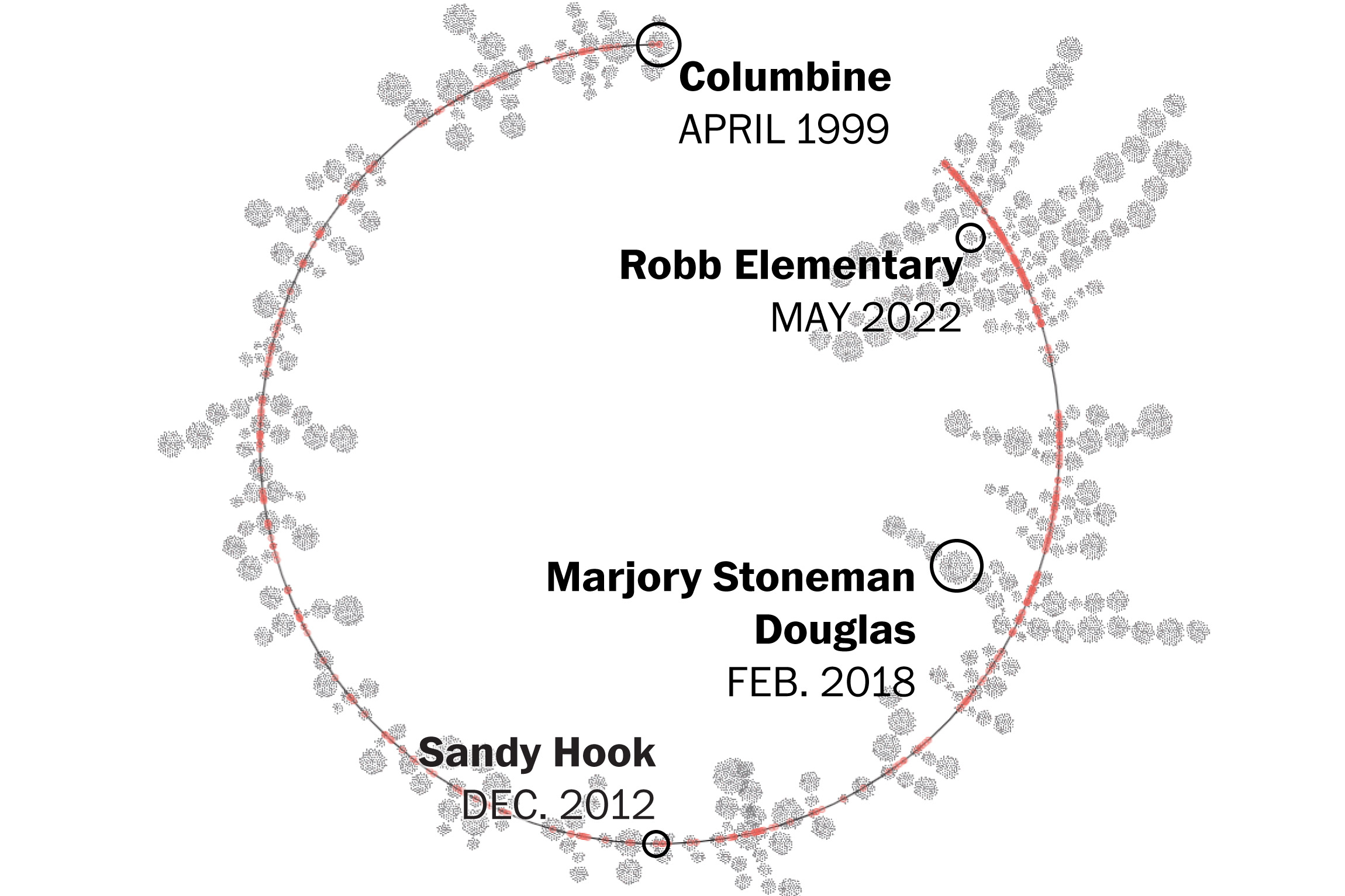
The 1999 school shooting at Columbine High School in Littleton, Colorado, fundamentally transformed public safety, law enforcement tactics, and psychological support frameworks in educational institutions across the United States. Occurring on April 20, 1999, the tragedy catalyzed an era of heightened security protocols, legislative debates, and deep-seated societal shifts regarding youth violence, mental health, and the accessibility of firearms.
Historical Context and Chronology of the Event
On the morning of April 20, 1999, two senior students at Columbine High School executed a planned assault on their school. Armed with shotguns, a semi-automatic carbine, and numerous improvised explosive devices, the perpetrators entered the campus and began firing outside before moving inside the building. The attack lasted less than an hour, resulting in the deaths of twelve students and one teacher, as well as twenty-one injuries sustained from gunfire and shrapnel. Both perpetrators died by suicide within the school library before law enforcement tactical teams fully engaged them.
The immediate aftermath brought unprecedented national media attention, transforming a localized tragedy into a watershed cultural moment. Investigators discovered extensive journals, home videos, and digital planning materials produced by the perpetrators over the preceding year. These items revealed deep grievances, social alienation, and an ambition to orchestrate a mass casualty event that would surpass previous incidents in scale and notoriety.
Evolution of Law Enforcement Response Tactics
Prior to 1999, standard law enforcement doctrine for active shooter incidents dictated that responding officers should establish a perimeter, contain the area, and wait for specialized tactical units, such as SWAT (Special Weapons and Tactics), to arrive and resolve the situation. This approach was rooted in traditional hostage-taking or barricade scenarios where negotiation and containment were prioritized.
The Columbine tragedy exposed the fatal limitations of this waiting strategy during an active, indiscriminate mass shooting. Because the perpetrators were actively murdering students and staff, every minute the perimeter was held resulted in additional casualties. This realization forced a complete overhaul of tactical training across American policing.
The Immediate Action Rapid Deployment (IARD) Doctrine
In the months following the attack, law enforcement agencies developed and standardized the Immediate Action Rapid Deployment model. Under this doctrine, the first responding officers—regardless of whether they are patrol officers or specialized personnel—are trained to:
- Form ad hoc entry teams: Combine forces immediately upon arrival, bypassing the traditional wait for a supervisor or SWAT team.
- Move directly to the threat: Enter the building and advance toward the sounds of gunfire or the last known location of the active shooter.
- Neutralize the target: Stop the threat through decisive intervention, thereby preventing further loss of life before conducting evacuations or treating the wounded.
This paradigm shift remains the cornerstone of modern active shooter response protocols taught in police academies and municipal training programs worldwide.
Transforming School Security Infrastructure
The physical architecture of American schools underwent a radical transformation following the 1999 shooting. Educational facilities transitioned from open, welcoming community centers into fortified environments designed to control and monitor access.
Key Structural and Procedural Changes
- Single Point of Entry: Schools eliminated multiple unlocked doors, requiring all visitors to enter through a main office or security vestibule where they must be buzzed in after identification.
- Surveillance Systems: The installation of closed-circuit television (CCTV) cameras covering hallways, parking lots, and perimeter doors became standard practice.
- Electronic Access Control: Exterior doors were retrofitted with magnetic locks or buzz-in systems that remain locked from the outside throughout the school day.
- School Resource Officers (SROs): Many districts increased or established dedicated law enforcement presences on campuses to deter potential threats and provide an immediate response capability.
| Security Measure | Pre-1999 Standard | Post-1999 Standard |
|---|---|---|
| Exterior Doors | Multiple unlocked doors for easy student transit | Locked from outside; single controlled entrance |
| Visitor Access | Direct entry to administrative offices or hallways | Intercom screening, ID verification, visitor badges |
| Law Enforcement | Reactive patrols called only during emergencies | Dedicated SROs stationed permanently on campus |
| Drills | Periodic fire and severe weather drills | Active shooter, lockdown, and shelter-in-place drills |
Psychological Research, Bullying, and Mental Health Interventions
In the wake of the tragedy, researchers, psychologists, and educators scrutinized the social dynamics of American high schools. Initial media narratives frequently attributed the attack to severe, relentless bullying by school athletes, leading to widespread public discussions about peer pressure, social cliques, and marginalization.
Subsequent comprehensive investigations, including reports by the Federal Bureau of Investigation (FBI) and the Colorado Department of Law, provided a more complex psychological profile. The findings indicated that while peer rejection played a role, the perpetrators suffered from severe underlying mental health issues, including clinical depression, grandiose fantasies, and psychopathic traits.
This realization shifted the focus of school counseling programs toward early identification of behavioral warning signs. Schools implemented anonymous reporting systems, student assistance teams, and threat assessment protocols designed to evaluate troubled youths and provide clinical interventions before grievances manifest into violent behavior.
Legislative Impacts and Policy Debates
The 1999 shooting ignited intense national debates concerning firearm legislation, background checks, and the legal availability of certain types of weapons and ammunition magazines. While federal legislative changes immediately following the event were limited, the incident established the foundational arguments for ongoing policy battles regarding gun control and Second Amendment rights in the United States.
At the state level, numerous legislatures introduced bills aimed at closing loopholes in background check requirements, regulating private firearm sales at gun shows, and restricting juvenile access to firearms. Simultaneously, the tragedy spurred federal funding for safe school initiatives, mental health research, and community-oriented policing grants through agencies such as the U.S. Department of Justice and the Department of Education.
Frequently Asked Questions
What was the exact date and location of the 1999 school shooting?
The shooting occurred on April 20, 1999, at Columbine High School, located in an unincorporated area of Jefferson County, Colorado, near Littleton.
How did the Columbine shooting change police tactics?
It permanently replaced the traditional "contain and wait for SWAT" strategy with the Immediate Action Rapid Deployment doctrine, which requires the first responding officers to enter the building immediately and neutralize the active threat.
Were the perpetrators students at the school?
Yes, both perpetrators were senior students enrolled at Columbine High School at the time of the incident.
What long-term changes were made to school architecture?
Schools shifted toward fortified entry points, single-door access policies, visitor management systems, security cameras, and integrated electronic locking mechanisms to control campus access.
How did the event influence mental health awareness in schools?
It catalyzed the development of formal behavioral threat assessment models, anonymous reporting hotlines, and expanded counseling services aimed at identifying troubled students before they resort to violence.
Next Actions and Further Guidance
For educators, security professionals, and policymakers studying the historical and practical implications of the 1999 school shooting, reviewing official archival reports—such as the Jefferson County Sheriff's Office Final Report or guidelines published by the Federal Bureau of Investigation’s Critical Incident Response Group—provides essential empirical data. Administrators seeking to upgrade campus security should consult current standards established by the Cybersecurity and Infrastructure Security Agency (CISA) regarding school safety infrastructure and emergency operations planning.