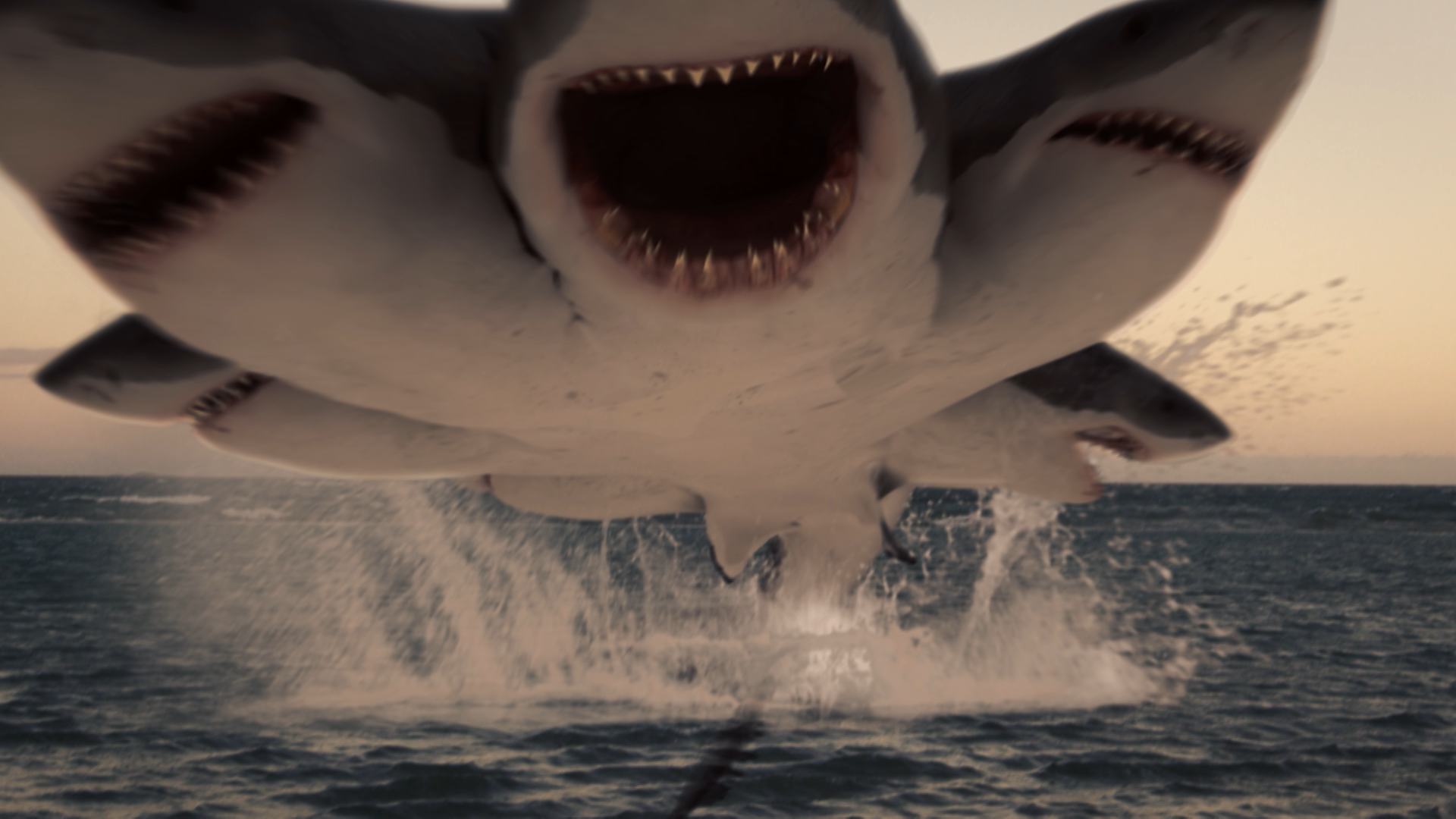
While pop culture and sensationalized media frequently depict terrifying two-headed sharks as mutant monsters spawned by radiation, toxic waste, or genetic engineering, the reality of polycephaly in marine life is a rare, naturally occurring congenital anomaly rather than a science-fiction menace. Documented instances of two-headed sharks, though extraordinarily scarce, are the result of biological developmental errors rather than aggressive aquatic predators hunting in pairs.
Understanding Polycephaly: The Biological Reality
Polycephaly—the condition of having more than one head—is not unique to sharks; it occurs across various vertebrate species, including snakes, turtles, cats, and humans. In the context of cartilaginous fish, which include sharks, rays, and skates, two-headed specimens are usually discovered as embryos inside egg cases or among prematurely delivered pups.
From a biological standpoint, this phenomenon stems from embryonic developmental anomalies. The exact triggers in wild marine populations are rarely definitively proven, but scientists attribute polycephaly to several natural factors:
- Genetic Mutations: Spontaneous, random shifts in DNA sequences during early cell division can disrupt normal body axis formation.
- Environmental Stressors: Fluctuations in water temperature, salinity, or dissolved oxygen levels during the critical stages of embryonic development can cause cellular disruptions.
- Pollution and Chemical Exposure: While often sensationalized, exposure to certain natural or anthropogenic toxins in specific marine environments can theoretically act as teratogens, though direct links in wild shark populations remain difficult to isolate and prove.
- Inbreeding: In localized or depleted shark populations, genetic bottlenecking and inbreeding depression significantly increase the rate of congenital malformations.
Separating Fact from Fiction: The B-Movie Myth vs. Marine Science
The phrase "two-headed shark attack" instantly evokes images from low-budget creature features like the Two-Headed Shark Attack film franchise, where a colossal, genetically altered predator terrorizes students on a tropical island. In reality, the physical mechanics of polycephaly severely hinder a shark's ability to survive, let alone become an apex terror.
| Feature | Pop Culture Depiction | Scientific Reality |
|---|---|---|
| Survival Rate | Thrives in the wild as an aggressive apex predator. | Rarely survives past the embryonic stage or early infancy due to competing motor functions. |
| Origin | Created by secret corporate experiments, nuclear waste, or toxic spills. | Results from natural embryonic developmental errors, genetic anomalies, or environmental stress. |
| Hunting Efficiency | Uses two brains to coordinate deadly attacks and double the biting power. | Suffers from uncoordinated motor skills, conflicting swimming directions, and impaired feeding ability. |
| Population Density | Packs of mutant sharks multiplying rapidly in coastal waters. | Exceptionally rare anatomical anomaly, with only a small handful of documented cases globally. |
As shown in the comparison above, the cinematic representation of these creatures bears no resemblance to biological reality. Most multi-headed shark embryos or neonates exhibit severe structural disadvantages. Their brains often act independently, leading to uncoordinated swimming patterns. Instead of hunting efficiently, a two-headed shark typically struggles to propel itself correctly, avoid predators, or capture prey, making long-term survival in the wild virtually impossible.
Documented Cases: What Scientists Have Actually Found
Over the years, marine biologists and commercial fishermen have occasionally encountered specimens that sparked intense scientific curiosity. These rare discoveries provide invaluable data on vertebrate teratology.
Blue Shark Embryos in the Gulf of California
One of the most notable scientific documentations occurred when researchers discovered a two-headed embryo inside a pregnant blue shark (Prionace glauca) caught by a commercial fisherman in the Gulf of California. Each head possessed its own functioning brain, eyes, and mouth, but they shared a single body cavity and digestive tract.
Bull Shark Discovery off the Florida Coast
Another heavily publicized case involved a fisherman who caught a bull shark (Carcharhinus leucas) in the Gulf of Mexico that contained a two-headed embryo. Marine biologists analyzed the specimen and confirmed it was a rare case of conjoined twinning rather than two separate sharks fused together.
Spiny Dogfish in the English Channel
Historical records and museum archives occasionally house preserved specimens, such as two-headed spiny dogfish (Squalus acanthias). These specimens confirm that polycephaly is not restricted to a single shark family but can theoretically manifest across various species within the class Chondrichthyes.
Why Two-Headed Sharks Rarely Survive to Adulthood
The primary reason humanity is not plagued by mutant two-headed sharks is the harsh reality of natural selection combined with physiological constraints. Even if a multi-headed pup is successfully born alive, several biological hurdles prevent it from reaching maturity:
- Energy Expenditure: Swimming requires precise muscular coordination controlled by the central nervous system. When two distinct brains send conflicting signals to the same spinal cord, the shark wastes precious metabolic energy fighting its own body.
- Competitive Feeding: Sharks rely on stealth, speed, and precise predatory strikes. A two-headed shark cannot effectively track or ambush prey because its visual fields and neurological processing are fractured.
- Predator Vulnerability: Because their swimming mechanics are compromised, these individuals make easy targets for larger fish, marine mammals, and other apex predators.
- Internal Organ Strain: Sharing a single liver, heart, and digestive tract creates severe physiological bottlenecks. As the shark grows, the shared organs cannot adequately support two heads and separate skeletal structures.
Frequently Asked Questions
Can a two-headed shark attack a human?
No verified accounts exist of a two-headed shark attacking a human. Because these specimens rarely survive past the embryonic stage or the first few hours of life, the likelihood of encountering a living, hunting two-headed shark in the wild is statistically negligible.
Are two-headed sharks caused by nuclear radiation?
While nuclear radiation can cause genetic mutations, documented cases of two-headed sharks are natural congenital malformations—specifically, incomplete splitting of monozygotic twins during the early embryonic stage—rather than direct results of radiation exposure.
Are these sharks a new species?
No. Polycephaly is an individual anatomical defect, not a heritable trait that establishes a new species. Two-headed sharks belong to existing, known species like blue sharks or bull sharks.
How common is polycephaly in marine life?
It is extremely rare. Out of the millions of sharks harvested or studied globally over centuries of marine research, only a tiny fraction of a percent exhibit this condition. Most discoveries are isolated incidents involving single embryos.
Summary and Practical Takeaways
While the myth of the mutant two-headed shark makes for entertaining cinema, the reality is a fascinating and tragic quirk of natural embryology. These rare specimens represent developmental anomalies where conjoined twinning failed to complete, resulting in short-lived creatures burdened by severe physical limitations. Recognizing the truth behind these marine anomalies allows us to appreciate the complexities of shark biology without falling victim to sensationalized myths.