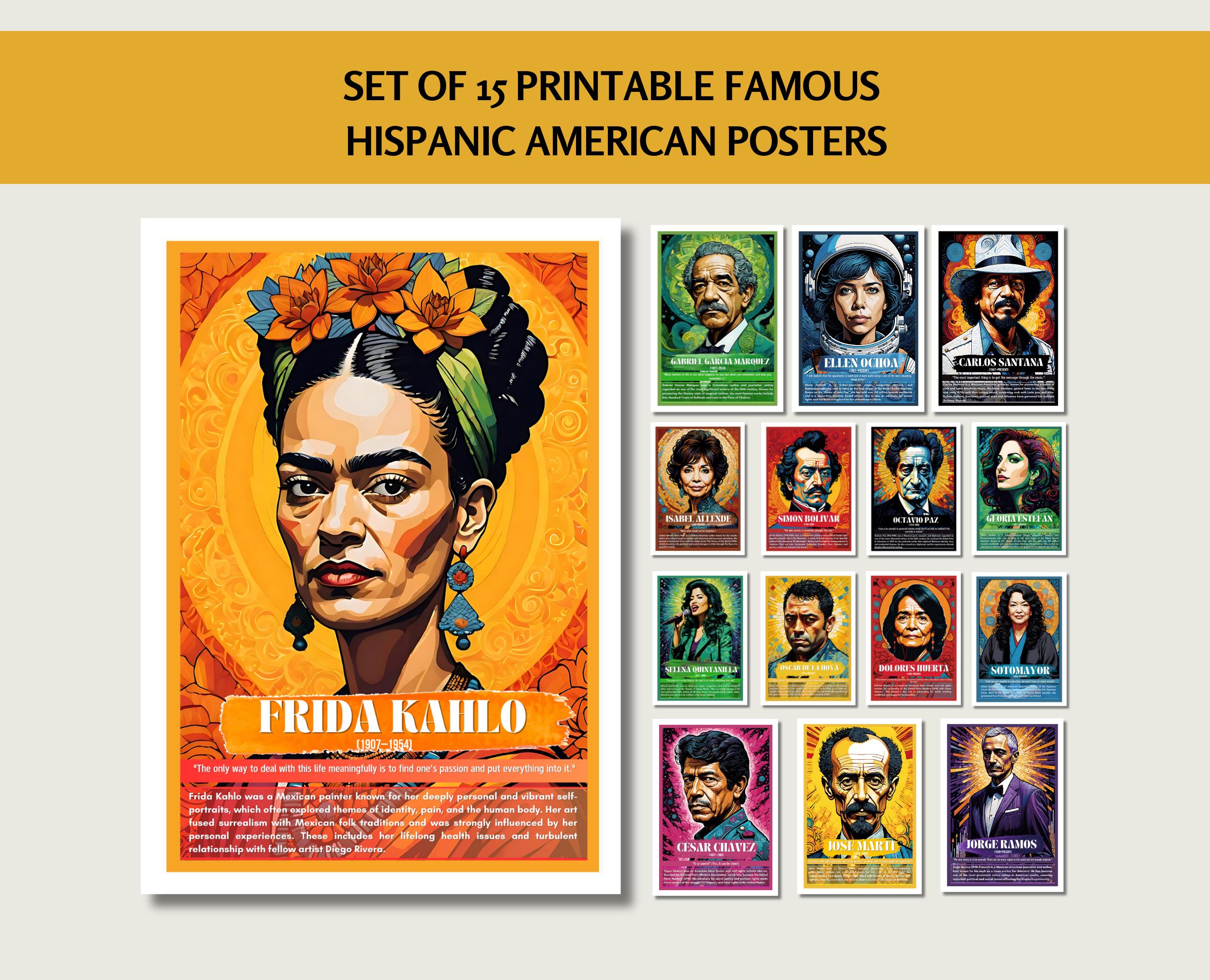
The global landscape of science, literature, politics, civil rights, and the arts has been profoundly shaped by Hispanic and Latino figures whose innovations, resilience, and vision altered history. Recognizing these leaders provides essential context for understanding how Hispanic contributions have driven modern progress across diverse disciplines.
Introduction to Hispanic Global Impact
Throughout history, individuals of Hispanic and Latino heritage have broken barriers, challenged oppressive systems, and revolutionized their respective fields. From the laboratories where life-saving vaccines were developed to the courtrooms where civil rights were won, and the stages and pages that expanded global culture, these figures left indelible marks. Understanding their journeys involves looking beyond brief biographies to examine the systemic obstacles they overcame, the methodologies they pioneered, and the lasting legacies they established for generations to come.
Pioneers in Science, Medicine, and Technology
Scientific innovation requires relentless curiosity and the courage to challenge established paradigms. Hispanic scientists and inventors have developed technologies and medical treatments that protect global health and expand human understanding.
1. Dr. Mario Molina
Born in Mexico, Dr. Mario Molina was a physical chemist who became a central figure in atmospheric chemistry. In 1974, along with F. Sherwood Rowland, Molina co-authored a groundbreaking research paper in the journal Nature detailing the threat of chlorofluorocarbons (CFCs) to the Earth's ozone layer.
Molina's research faced initial skepticism from chemical manufacturers and political entities. However, his rigorous scientific evidence ultimately led to the Montreal Protocol of 1987, a landmark international treaty designed to phase out ozone-depleting substances. For this monumental discovery, Molina was awarded the Nobel Prize in Chemistry in 1995, making him the first Mexican-born scientist to win the prize. His work established a precedent for using empirical atmospheric science to drive global environmental policy.
2. Dr. Helen Rodríguez Trías
Dr. Helen Rodríguez Trías was a pioneering pediatrician, educator, and activist who dedicated her life to improving healthcare access for women and children, particularly those from marginalized communities. Born in New York City and raised in Puerto Rico, Rodríguez Trías witnessed firsthand the health disparities affecting low-income populations.
In the 1970s, she served as the first Latina president of the American Public Health Association (APHA). Rodríguez Trías fought tirelessly against forced sterilization practices targeting Puerto Rican and low-income women in the United States, helping establish federal guidelines that ensured informed consent and protected patient rights. Her advocacy transformed medical ethics and prioritized culturally competent healthcare delivery across public health institutions.
3. Severo Ochoa
Severo Ochoa was a Spanish-American biochemist and molecular biologist whose foundational research unlocked the mechanisms of biological RNA synthesis. Working at New York University School of Medicine in 1955, Ochoa discovered an enzyme, polynucleotide phosphorylase, that allowed him to synthesize RNA in a laboratory setting.
This discovery provided the experimental tools necessary for subsequent scientists to crack the genetic code. In 1959, Ochoa was awarded the Nobel Prize in Physiology or Medicine, sharing the honor with his former student Arthur Kornberg. Ochoa's work laid the groundwork for modern molecular biology, genetic engineering, and biotechnology applications that continue to drive medical breakthroughs.
Champions of Civil Rights and Social Justice
Achieving equity requires confronting institutional injustice. Hispanic civil rights leaders have organized movements, litigated landmark legal cases, and dismantled discriminatory laws to secure fundamental human rights.
4. César Chávez
César Chávez was a labor leader and civil rights activist who co-founded the National Farm Workers Association, which later became the United Farm Workers (UFW). Alongside Dolores Huerta, Chávez organized agricultural laborers in California and across the United States to fight against exploitative working conditions, low wages, and exposure to dangerous pesticides.
Chávez utilized nonviolent tactics, including nationwide boycotts, marches, and personal hunger strikes, to draw national attention to the plight of farmworkers. The grape boycott of the late 1960s mobilized millions of consumers and resulted in the first industry-wide collective bargaining agreements for farmworkers in American history. His leadership permanently transformed the American labor movement and cemented the rallying cry "Sí, se puede" ("Yes, it can be done") in the global lexicon of social justice.
5. Dolores Huerta
Dolores Huerta is a labor leader, civil rights activist, and political strategist who co-founded the UFW alongside César Chávez. While Chávez often served as the public face of the movement, Huerta was the master negotiator and legislative strategist behind its greatest victories.
Huerta orchestrated the UFW's successful boycotts and negotiated contracts that secured better wages, healthcare benefits, and pension schemes for farmworkers. Beyond labor rights, Huerta advocated for gender equality and voter registration. She coined the phrase "Sí, se puede" and continued her advocacy into the twenty-first century through the Dolores Huerta Foundation, mentoring new generations of community organizers.
6. Sylvia Mendez
As a young girl, Sylvia Mendez stood at the center of Mendez v. Westminster (1947), a landmark federal court ruling that paved the way for the end of legal segregation in American public schools. When Mendez was barred from attending her local California school because of her Mexican heritage, her father, Gonzalo Mendez, led a coalition of families to sue four local school districts.
The Ninth Circuit Court of Appeals ruled that segregation of Mexican-American children violated the Fourteenth Amendment. This precedent was directly utilized seven years later by Thurgood Marshall in the historic Brown v. Board of Education Supreme Court decision. Mendez's early experience shaped a lifetime of educational advocacy, culminating in her receiving the Presidential Medal of Freedom in 2011.
Literary Giants Who Redefined Global Culture
Literature serves as a mirror for society and a vehicle for cultural preservation. Hispanic writers have introduced magical realism, political commentary, and profound human narratives to the global stage.
7. Gabriel García Márquez
Gabriel García Márquez, affectionately known as "Gabo," was a Colombian novelist, journalist, and screenwriter who stands as one of the most significant authors of the twentieth century. His masterwork, One Hundred Years of Solitude (1967), popularized the literary style known as magical realism, which seamlessly blends mythical elements with everyday reality.
García Márquez's writing explored themes of solitude, political corruption, and the complex history of Latin America. He was awarded the Nobel Prize in Literature in 1982. His literary output permanently altered the global perception of Latin American culture and established a new standard for narrative storytelling.
8. Isabel Allende
Isabel Allende is a Chilean-American author whose bestselling novels combine historical fiction with magical realism. Her debut novel, The House of the Spirits (1982), achieved immediate international acclaim and established her voice in contemporary literature.
Allende's works frequently examine the intersection of politics, family dynamics, and the experiences of women living under authoritarian regimes—themes drawn partly from her own life following the 1973 military coup in Chile that overthrew her cousin, President Salvador Allende. As a recipient of the Presidential Medal of Freedom, Allende has used her platform to champion human rights and educational equity through the Isabel Allende Foundation.
9. Jorge Luis Borges
Jorge Luis Borges was an Argentine essayist, poet, and short-story writer whose intellectually rigorous fiction explored the nature of time, infinity, mirrors, labyrinths, and reality. Works such as Ficciones (1944) and The Aleph (1949) transformed the trajectory of postmodern literature.
Borges's narratives functioned as philosophical puzzles that challenged readers to question the stability of identity and truth. Although his work was initially celebrated within academic and literary circles in Latin America, his influence later permeated global fiction, inspiring generations of mystery, science fiction, and magical realist authors.
Visual Arts and Cultural Icons
Artistic expression transcends linguistic barriers. Hispanic artists have challenged conventional aesthetics, chronicled social realities, and integrated cultural heritage into global fine art and entertainment.
10. Frida Kahlo
Frida Kahlo was a Mexican painter celebrated for her uncompromising self-portraits and works inspired by the nature and artifacts of Mexico. Her art frequently explored identity, the human body, pain, and the post-colonial Mexican experience.
Despite surviving polio in childhood and a devastating bus accident in her youth that caused lifelong medical trauma, Kahlo channeled her physical and emotional suffering into canvas work. Decades after her passing, Kahlo remains a global cultural icon, celebrated for her feminist perspective, unique aesthetic, and resilience in the face of adversity.
11. Rita Moreno
Rita Moreno is a Puerto Rican actress, dancer, and singer who is one of the few artists to achieve "EGOT" status—winning an Emmy, a Grammy, an Oscar, and a Tony Award. Throughout a career spanning over seven decades, Moreno broke ground for Hispanic representation in Hollywood.
Her portrayal of Anita in the 1961 film adaptation of West Side Story earned her the Academy Award for Best Supporting Actress, making her the first Hispanic woman to win an Oscar. Beyond her commercial success, Moreno used her platform to advocate for civil rights and push back against Hollywood typecasting, mentoring emerging diverse talent.
Political and Diplomatic Leaders
Political leadership requires navigating complex geopolitical environments to advance human rights, democracy, and national sovereignty. Hispanic leaders have guided nations through crises and championed international cooperation.
12. Benito Juárez
Benito Juárez was a Mexican lawyer and politician of Indigenous Zapotec origin who served as the 26th president of Mexico. He is celebrated as a national hero and reformer who defended Mexico's sovereignty against foreign occupation.
During his presidency, Juárez led the liberal movement known as La Reforma, which enacted constitutional changes reducing the political and economic power of the Catholic Church and the military while establishing civil liberties. When French forces invaded Mexico and installed Maximilian I as emperor, Juárez led the armed resistance that ultimately restored the Mexican Republic in 1967. His legacy embodies the defense of democratic institutions against authoritarianism.
13. Michelle Bachelet
Michelle Bachelet is a Chilean politician who served two terms as the president of Chile and later as the United Nations High Commissioner for Human Rights. As Chile's first female president, Bachelet implemented progressive social policies, pension reforms, and educational investments aimed at reducing economic inequality.
Drawing on her personal experience of imprisonment and exile during the military dictatorship of Augusto Pinochet, Bachelet championed international human rights standards during her tenure at the United Nations. Her leadership demonstrated how governance can be anchored in transitional justice and institutional reform.
Innovators in Exploration and Human Achievement
Pushing the boundaries of human capability involves exploring new frontiers, whether in the depths of space or through institutional reform.
14. Ellen Ochoa
Ellen Ochoa is an engineer, former astronaut, and the first Hispanic woman to go to space. A veteran of four space flights, Ochoa logged nearly 1,000 hours in orbit aboard the Space Shuttle, participating in missions dedicated to studying the Earth's ozone layer and solar activity.
Before her career as an astronaut, Ochoa was a research engineer holding patents for optical systems designed to process information in real-time. She later served as the director of the Johnson Space Center, becoming the first Hispanic director and second female director in the center's history. Her career bridges technical engineering, aerospace exploration, and institutional leadership.
15. Carlos Juan Finlay
Carlos Juan Finlay was a Cuban physician and scientist who made the decisive discovery that yellow fever was transmitted by mosquitoes rather than direct contact or poor sanitation.
In the late nineteenth century, Finlay proposed his mosquito vector theory at international medical conferences, facing initial skepticism from the medical establishment. His hypothesis was later proven correct through rigorous experiments led by Walter Reed during the American occupation of Cuba. Finlay's discovery allowed public health officials to eradicate yellow fever from major urban centers, saving hundreds of thousands of lives and enabling the construction of the Panama Canal.
Comparative Overview of Historical Impact
| Figure | Field | Primary Contribution | Key Recognition or Legacy |
|---|---|---|---|
| Dr. Mario Molina | Science | CFC research and ozone depletion | Nobel Prize in Chemistry (1995) |
| César Chávez | Civil Rights | Organizing agricultural farmworkers | UFW co-founder; Presidential Medal of Freedom |
| Gabriel García Márquez | Literature | Popularizing magical realism | Nobel Prize in Literature (1982) |
| Frida Kahlo | Fine Arts | Uncompromising self-portraiture | Global feminist and cultural icon |
| Ellen Ochoa | Aerospace | First Hispanic woman in space | Director of Johnson Space Center |
Frequently Asked Questions
Who was the first Hispanic person to win a Nobel Prize?
The first Hispanic person to win a Nobel Prize was Argentine physician and biochemist Bernardo Houssay, who won the Nobel Prize in Physiology or Medicine in 1947 for his discovery of the role played by pituitary hormone in regulating the glucose metabolism of animals. In chemistry, Dr. Mario Molina became the first Mexican-born recipient in 1995.
What was the significance of the Mendez v. Westminster court case?
Mendez v. Westminster (1947) was a federal circuit court ruling that declared the segregation of Mexican and Mexican-American children in California public schools unconstitutional. It marked the first time a federal court ruled against school segregation, establishing a critical legal precedent used seven years later in Brown v. Board of Education.
How did César Chávez influence the modern labor movement?
César Chávez transformed labor organizing by demonstrating that agricultural workers—historically excluded from federal labor protections—could successfully organize through nonviolent tactics. His use of nationwide consumer boycotts and peaceful strikes established a blueprint for grassroots advocacy that continues to influence modern social movements.
What is magical realism in literature?
Magical realism is a literary style, popularized by authors like Gabriel García Márquez and Isabel Allende, where magical or supernatural elements are presented in an otherwise realistic, mundane setting. Characters accept these fantastical occurrences as normal parts of everyday life, allowing writers to explore complex political and historical themes through mythic frameworks.
Which Hispanic scientists have made major medical breakthroughs?
Alongside Dr. Mario Molina in environmental science and Severo Ochoa in biochemistry, figures like Carlos Juan Finlay discovered the mosquito transmission vector of yellow fever, and Dr. Helen Rodríguez Trías revolutionized public health ethics regarding reproductive rights and pediatric care in marginalized communities.
Conclusion and Next Actions
Examining the lives and accomplishments of these fifteen influential Hispanic figures demonstrates how individual resilience, rigorous inquiry, and moral courage can transform global systems. To deepen your understanding of these historical impacts, consider reading primary source biographies, exploring institutional archives such as the Smithsonian Latino Center, or studying the legislative records associated with landmark civil rights cases like Mendez v. Westminster. Engaging with original literature, scientific papers, and historical documentation ensures an accurate and respectful appreciation of their enduring legacies.