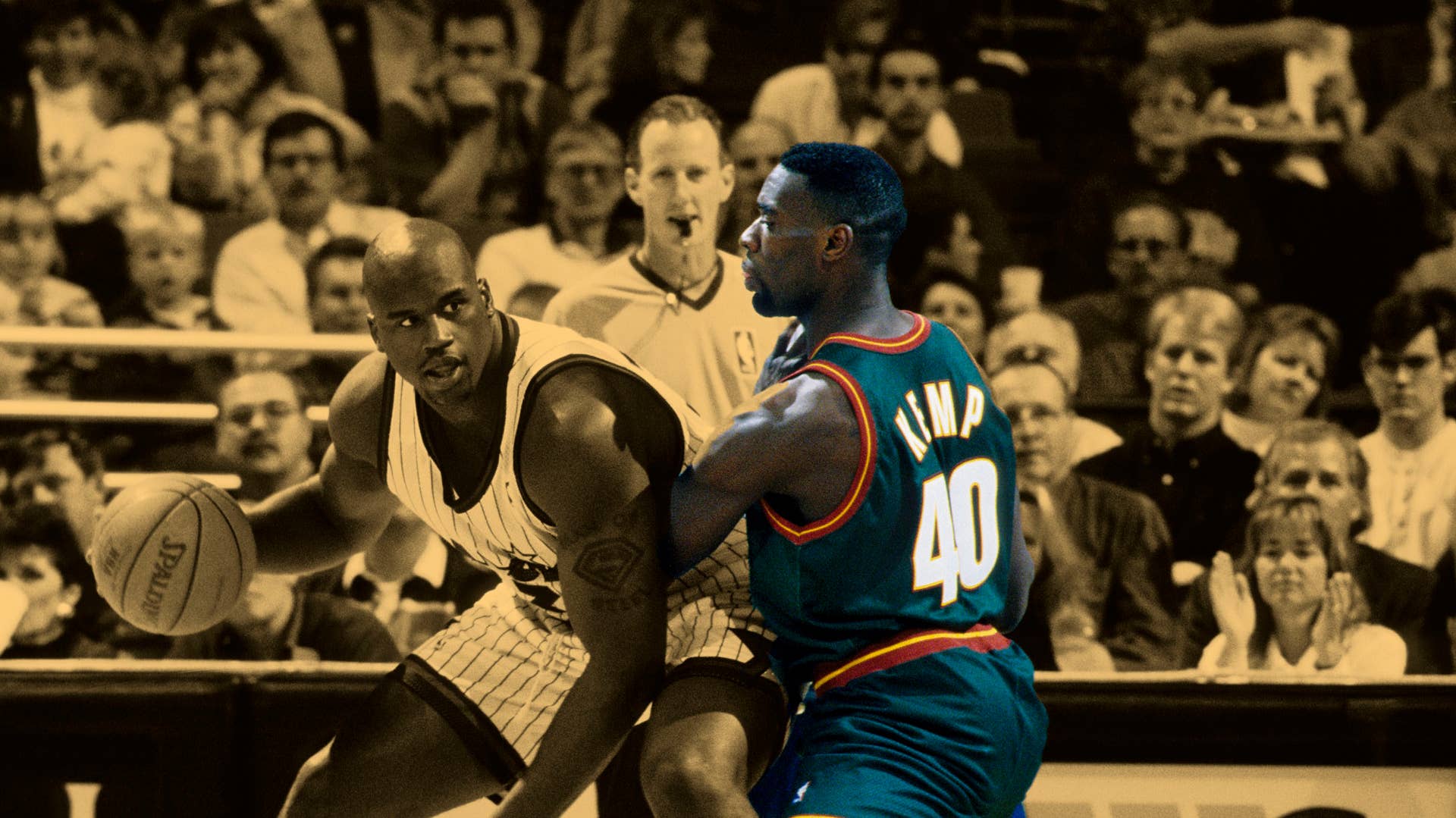
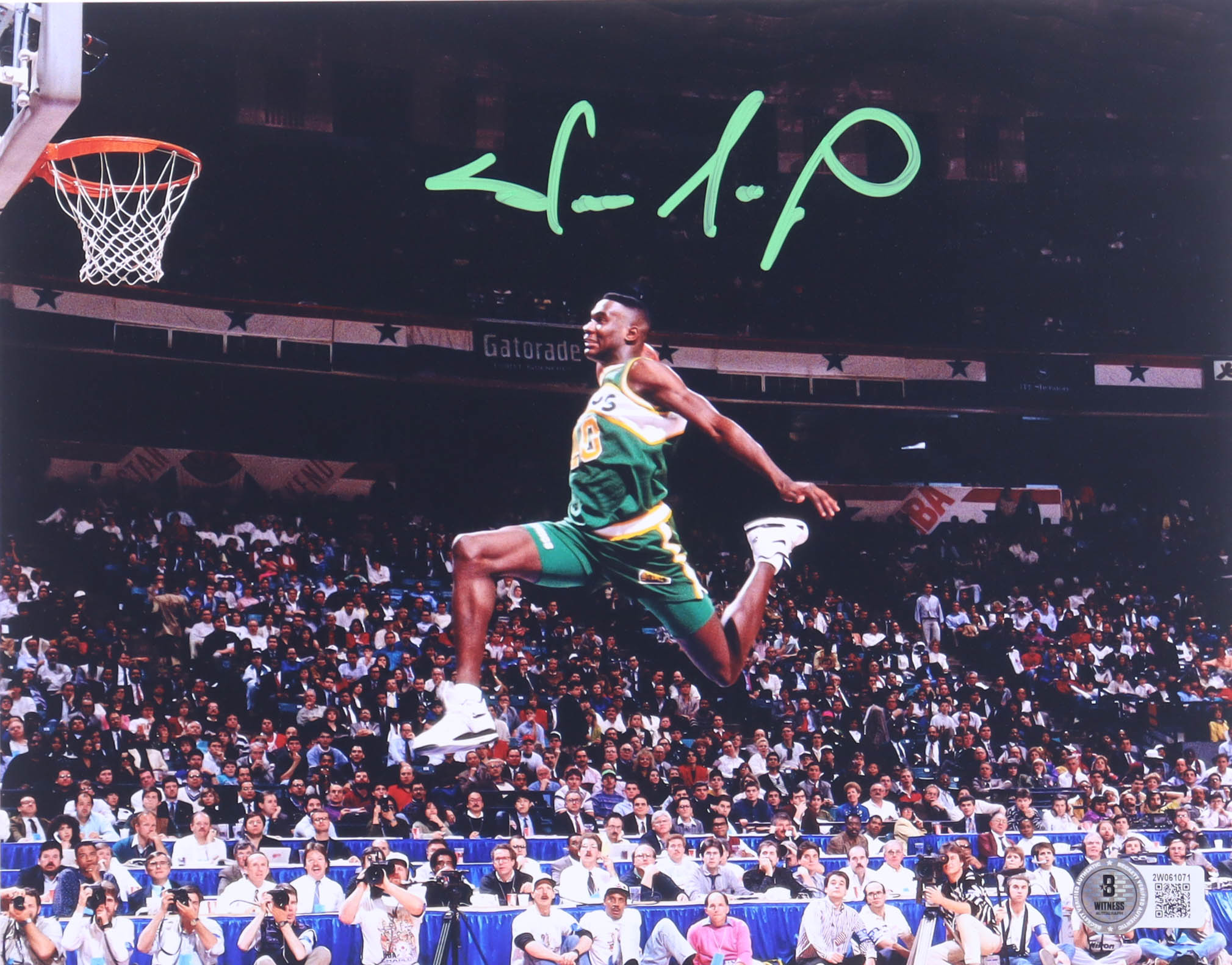
Shawn Kemp, known widely as "The Reign Man," remains one of the most explosive and athletically gifted power forwards in the history of the National Basketball Association (NBA). Rising to prominence in the 1990s with the Seattle SuperSonics, Kemp redefined the vertical game with his rim-rocking dunks and high-energy defensive presence, leaving an indelible mark on the league's tactical evolution and cultural identity.
Early Career and the Path to the NBA
Born in Elkhart, Indiana, in 1969, Shawn Kemp’s basketball journey began with immense physical promise. Unlike many of his peers in the late 1980s, Kemp bypassed the traditional four-year collegiate experience. After a brief, non-playing stint at Trinity Valley Community College in Texas, he declared for the 1989 NBA Draft. This decision was bold at the time, as few players had successfully transitioned from high school or community college to the professional ranks.
The Seattle SuperSonics selected him with the 17th overall pick. At 19 years old, Kemp was the youngest player in the NBA. His rookie season served as a period of physical maturation and tactical adaptation. Under the guidance of veteran teammates and the coaching staff, he transitioned from a raw, high-flying prospect into a disciplined frontline contributor. His early development was characterized by a rapid increase in both his field goal percentage and his ability to read pick-and-roll defensive schemes.
The "Sonic Boom": The Peak Years in Seattle
The mid-1990s marked the apex of Shawn Kemp’s professional career. Pairing with point guard Gary Payton, Kemp formed one of the most lethal pick-and-roll duos in NBA history. This partnership was not merely about individual talent; it was a fundamental shift in how power forwards were utilized.
Kemp’s ability to set a screen and immediately roll toward the rim with elite speed and verticality forced opposing defenses to collapse, creating space for shooters or setting up his iconic, thunderous dunks. The 1995-1996 season was arguably the most successful for this iteration of the SuperSonics, as they reached the NBA Finals against the Chicago Bulls. While the team ultimately fell short, Kemp’s individual performance throughout those playoffs—averaging double-doubles with high-efficiency shooting—cemented his status as one of the league’s premier power forwards.
Statistical Profile During the Seattle Years
The following table outlines Kemp's performance during his most productive seasons in Seattle, illustrating the consistency of his production:
| Season | PPG | RPG | APG | BPG | FG% |
|---|---|---|---|---|---|
| 1992-93 | 17.8 | 10.7 | 2.0 | 1.9 | 49.2% |
| 1993-94 | 18.1 | 10.8 | 2.6 | 2.1 | 53.8% |
| 1994-95 | 18.7 | 10.9 | 1.8 | 1.5 | 54.7% |
| 1995-96 | 19.6 | 11.4 | 2.2 | 1.2 | 56.1% |
| 1996-97 | 18.7 | 10.0 | 1.9 | 1.0 | 51.0% |
Tactical Evolution and Positional Versatility
Before Kemp, many power forwards were pigeonholed into "enforcer" or "rebounder" roles. Kemp helped break this mold. His skill set included a mid-range jump shot that became more refined over time, forcing defenders to play him beyond the paint. Defensively, his length and agility allowed him to challenge shots at the rim while remaining mobile enough to help on perimeter penetration.
This versatility became a blueprint for the modern "stretch-four" or "small-ball" power forward, though Kemp maintained the physical post-game associated with the traditional centers of the 1990s. His work ethic during this period, particularly his conditioning, allowed him to sustain high levels of play despite the intense physical contact inherent to the era's defensive-heavy basketball.
Career Transition and Later Tenures
Following his departure from Seattle in 1997, Kemp joined the Cleveland Cavaliers. This period marked a transition in his playing style. He adapted to a heavier role as the primary offensive focal point, leading to career-high scoring averages in the 1999-2000 season. Despite individual success, the lack of a cohesive team structure and the changing landscape of the league meant that his later years—including brief stints with the Portland Trail Blazers and the Orlando Magic—were characterized by diminishing returns due to injury and a shift toward league-wide focus on perimeter-oriented offense.
By the early 2000s, the physical toll of his high-impact playing style, which relied heavily on explosive leaping, began to manifest as chronic lower-body strain. His departure from the game in 2003 concluded a 14-season career that included six All-Star selections and three All-NBA Second Team honors.
Legacy and Cultural Impact
Shawn Kemp’s impact on basketball extends beyond his box-score statistics. He was a generational athlete whose highlight reels redefined the aesthetic of the NBA. In the 1990s, the "Reign Man" nickname was not merely a marketing label; it reflected his dominance in the paint and his ability to energize both his teammates and the home crowd in Seattle.
He served as an inspiration for subsequent generations of power forwards who prioritized vertical spacing and mobility. His influence is visible in modern players who utilize the same pick-and-roll mechanics to create chaos in transition. Furthermore, the Seattle SuperSonics’ 1996 run remains a cultural touchstone for basketball fans, representing a high-water mark for the franchise before its relocation in 2008.
Frequently Asked Questions
1. What was the primary offensive scheme that defined Shawn Kemp’s success? Kemp’s success was largely built on the pick-and-roll with point guard Gary Payton. Kemp was adept at setting physical, hard screens and then diving toward the basket with unmatched speed, often finishing with a dunk. This forced opponents to choose between stopping the ball handler or covering the rim, a dilemma that few defenses in the 90s could solve consistently.
2. Why did Shawn Kemp leave the Seattle SuperSonics? Kemp’s departure in 1997 was primarily rooted in contract disputes and frustrations regarding the management of the team’s salary cap. Despite being the team's star, he felt his contract did not reflect his contributions relative to the league’s rising salary standards at the time. This eventually led to a trade to the Cleveland Cavaliers.
3. Did Shawn Kemp ever win an NBA championship? No, Shawn Kemp did not win an NBA championship. His closest opportunity was in 1996, when the Seattle SuperSonics reached the NBA Finals. They lost the series 4-2 to the Chicago Bulls, a team often cited as one of the greatest in basketball history.
4. How does Shawn Kemp’s style compare to modern power forwards? Kemp would likely thrive in the modern NBA. While he did not rely on the three-point shot, his athleticism, mobility on defense, and ability to score in the pick-and-roll are core components of contemporary basketball. Modern spacing would arguably provide him with even more room to operate than he had in the congested paint of the 1990s.
5. What is Shawn Kemp’s current standing in NBA history? Kemp is widely recognized as one of the most talented power forwards to ever play the game. While he may not be cited in the "all-time greatest" discussions that focus on longevity or accumulation of stats, his peak years are considered among the most dominant for a frontcourt player. He remains a beloved figure, particularly in the Pacific Northwest basketball community.
Final Assessment
To understand the career of Shawn Kemp is to appreciate the transition of the NBA from a slower, half-court-heavy game to a more fast-paced, vertically explosive style of play. For those looking to study his game, the best point of entry remains the 1995-1996 season film, which captures the peak coordination of his athleticism and team-based tactical execution. His career serves as a significant case study in both the immense potential of high-school-to-pro transitions and the volatility of long-term professional health in highly athletic players.